

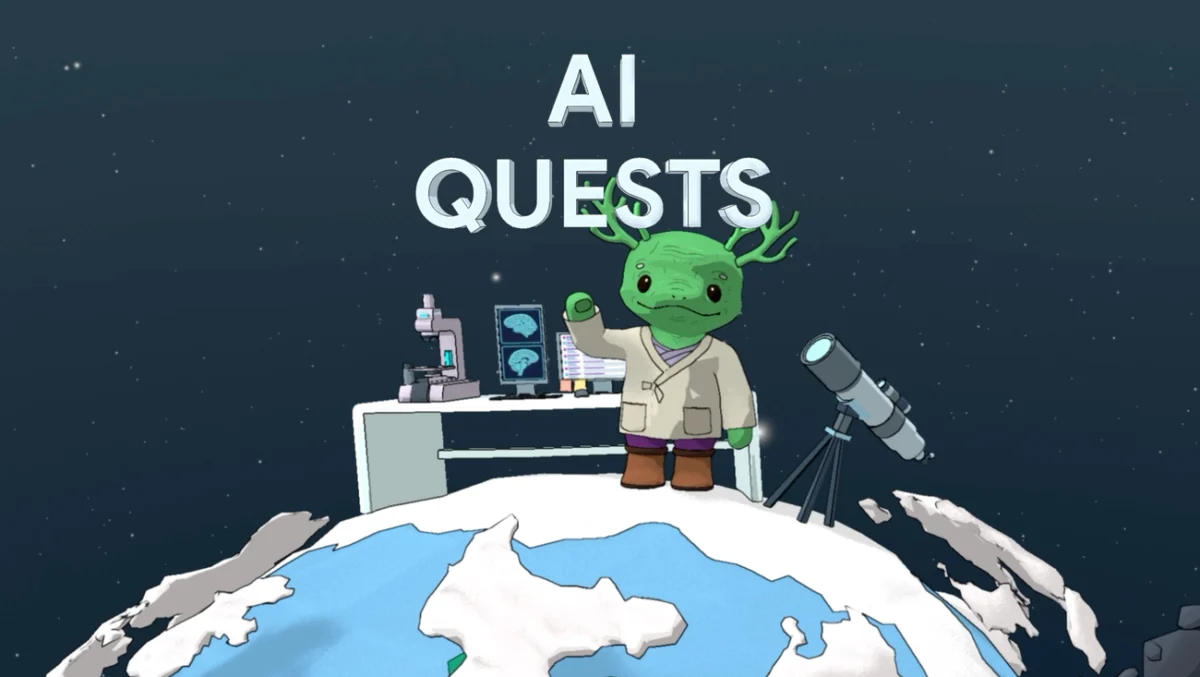
Google Research, in collaboration with the Stanford Accelerator for Learning, has officially launched "Polar Peaks," the third installment in its ambitious AI Quests educational series. Designed specifically for students aged 11 to 14, this digital learning experience integrates artificial intelligence literacy with the complex field of neuroscience. The initiative marks a significant expansion of Google’s efforts to demystify emerging technologies for the next generation, providing a structured environment where students can explore how machine learning models are applied to solve high-stakes scientific problems. Since the inception of the AI Quests program, more than 400,000 modules have been completed globally, with the curriculum now localized into 10 different languages to accommodate a diverse international student body.
The launch of "Polar Peaks" represents a pivot toward the biological sciences, following the success of previous modules that focused on environmental and medical applications. By positioning students as virtual researchers within Google’s labs, the program aims to foster critical thinking and responsible AI usage. As educational institutions worldwide grapple with the integration of generative AI and machine learning into their curricula, the partnership between Google and Stanford serves as a benchmark for pedagogical innovation, combining industry-leading technical expertise with academic research on how children learn best in digital environments.
The Evolution of the AI Quests Series
The AI Quests series was conceived as a response to the growing "AI literacy gap" in middle-school education. While students are increasingly interacting with AI-driven algorithms in their daily lives—from social media feeds to search engines—few understand the underlying mechanics or the ethical considerations involved in their development. The series began with two foundational quests: one centered on flood forecasting and the other on the detection of diabetic retinopathy.
The first quest was inspired by Google’s Flood Forecasting initiative, a real-world project that utilizes AI to provide life-saving alerts in flood-prone regions across more than 80 countries. In this module, students learn how historical data and real-time sensor inputs are used to train predictive models. The second quest focused on eye disease detection, modeled after Google Research’s Automated Retinal Disease Assessment (ARDA). This project, which has seen significant implementation in India and Thailand, demonstrates how AI can assist clinicians by screening for diabetic retinopathy through the analysis of retinal photographs.
"Polar Peaks" builds upon this foundation by moving into the frontier of connectomics—the comprehensive mapping of the brain’s neural connections. This shift from environmental and clinical applications to fundamental neuroscience highlights the versatility of AI as a tool for basic scientific discovery.
Polar Peaks: A Deep Dive into Connectomics and AI
In "Polar Peaks," students are introduced to a narrative-driven environment where they must help a character recover from memory loss. This premise serves as a gateway to the science of the human brain. Guided by in-game mentors who represent real-world Google researchers, students engage in the painstaking process of scanning and mapping neurons.
The gameplay is designed to mirror the actual workflow of a data scientist. Key tasks include:
- Data Cleaning: Students must identify and correct errors in datasets, reinforcing the concept that AI models are only as good as the data they are fed.
- Model Training: Participants observe how algorithms learn to recognize patterns in complex neural imagery.
- Human Oversight: The quest emphasizes "human-in-the-loop" systems, requiring students to verify AI-generated labels for brain scans.
This pedagogical approach addresses a common misconception that AI is an autonomous, infallible entity. By requiring students to perform manual verification and data cleaning, the quest teaches that AI is a collaborative tool that requires rigorous human supervision and ethical consideration.
The Scientific Foundation: Mapping the Fruit Fly Brain
The "Polar Peaks" quest is not merely a gamified exercise; it is rooted in over a decade of intensive research conducted by Google’s Connectomics team. Recently, Google Research, in partnership with the Howard Hughes Medical Institute’s Janelia Research Campus and other institutions, reached a historic milestone: the completion of the first full map of an adult fruit fly brain (Drosophila melanogaster).
The fruit fly brain, despite its small size, contains approximately 130,000 neurons and tens of millions of synapses. Mapping it required the use of high-resolution electron microscopy to capture trillions of images, which were then processed using advanced AI algorithms to trace the path of every individual neuron. This project resulted in the largest brain map by neuron count to date and is currently being used by neuroscientists to understand the biological basis of behaviors such as movement, vision, and memory.
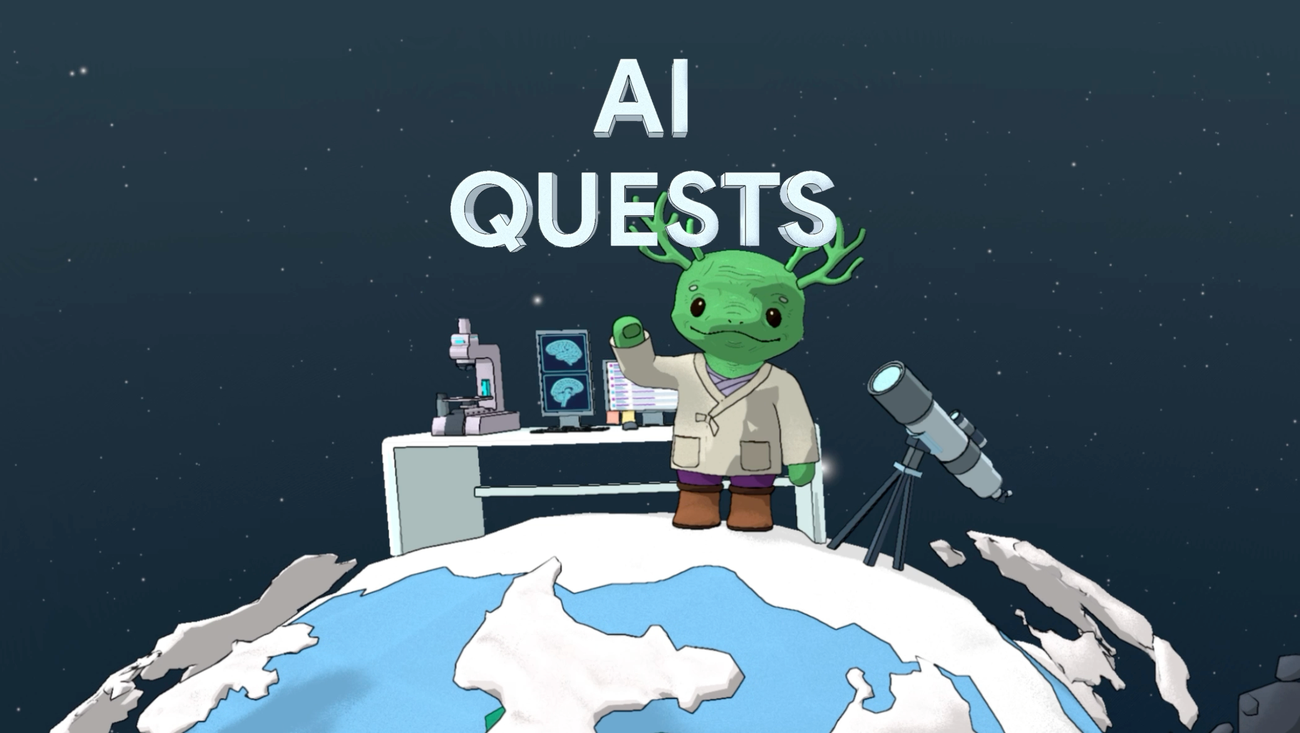
Upon completing "Polar Peaks," students are given the opportunity to hear directly from the scientists involved in these breakthroughs. This connection between classroom learning and "big science" is intended to inspire students to pursue careers in STEM (Science, Technology, Engineering, and Mathematics).
Supporting the Frontline: Teacher Training and Integration
Recognizing that technology alone cannot transform education, Google has simultaneously released a suite of training modules for educators. These modules are integrated into the Google AI Educator Series, a professional development platform designed to help teachers navigate the complexities of AI in the classroom.
The training materials provide teachers with strategies to facilitate discussions on AI ethics, data privacy, and the limitations of machine learning. While the modules for the first two quests are currently available, the training for "Polar Peaks" is scheduled for release next month. This staggered rollout ensures that educators have time to familiarize themselves with the pedagogical framework before introducing the new content to their students.
Educational experts suggest that middle school is a critical period for developing technological fluency. By providing teachers with the tools to explain why an AI makes a certain prediction—rather than just that it does—the program aims to move beyond rote learning toward a deeper conceptual understanding.
Global Recognition and Educational Impact
The AI Quests series has already garnered significant acclaim within the educational and technology sectors. In 2026, the program received a Webby Award for AI Education, Learning & Training, as well as the Best Global K–12 Learning Solution award at the ETIH Innovation Awards. These accolades reflect the program’s success in scaling high-quality, localized educational content to a global audience.
The localization of the quests into 10 languages is particularly significant. Access to high-quality AI education has traditionally been concentrated in English-speaking, tech-heavy regions. By expanding the reach of AI Quests, Google and Stanford are working to mitigate the "digital divide," ensuring that students in diverse linguistic and socio-economic contexts have the opportunity to engage with cutting-edge technology.
Analysis of Implications: AI Literacy as a Civil Right
The launch of "Polar Peaks" comes at a time when AI literacy is increasingly viewed as a fundamental skill for the 21st-century workforce. As AI begins to permeate industries ranging from healthcare to finance, the ability to understand and critique these systems will be essential for informed citizenship.
From a scientific perspective, the quest highlights the indispensable role of AI in handling "Big Data." In the field of connectomics, a single cubic millimeter of human brain tissue can generate over a petabyte of data. Without AI to automate the segmentation and tracing of neurons, mapping even a small fraction of the human brain would take human researchers hundreds of years. By introducing these concepts to 11-year-olds, Google is preparing the next generation of researchers to work alongside AI in tackling what are often called "grand challenges" in science.
However, the program also raises important questions about the role of large technology companies in public education. While the partnership with the Stanford Accelerator for Learning provides academic oversight, the use of Google-branded tools and research as the primary curriculum may influence how students perceive the tech industry. Critics often argue for a more vendor-neutral approach to technology education, though the specialized nature of AI research often necessitates involvement from the companies that own the primary compute resources and datasets.
Future Outlook
Google Research and its partners have indicated that the AI Quests series will continue to expand throughout the current school year. Future quests are expected to explore other domains where AI is making a significant impact, such as climate science and linguistics.
The success of "Polar Peaks" and its predecessors suggests a growing appetite for interactive, project-based learning that connects classroom concepts to real-world innovation. As the program moves forward, the focus will likely remain on the dual goals of scientific exploration and responsible AI stewardship. By the time the current cohort of middle-schoolers enters the workforce, the "Quests" they completed in the classroom may well have become the foundational knowledge for their careers in a world increasingly shaped by artificial intelligence.
