

The speed of this transformation is unprecedented, with AI adoption scaling four times faster than the historical rollout of mobile internet in the region. As confidence in autonomous digital systems grows, the report introduces "tokens" as the new benchmark for measuring the AI economy, projecting a staggering 60-fold surge in regional AI usage over the next five years. This evolution is being driven by "agentic commerce," a burgeoning trend where consumers increasingly trust AI agents to perform complex tasks, compare prices, and finalize transactions autonomously.
The Macroeconomic Landscape and Growth Drivers
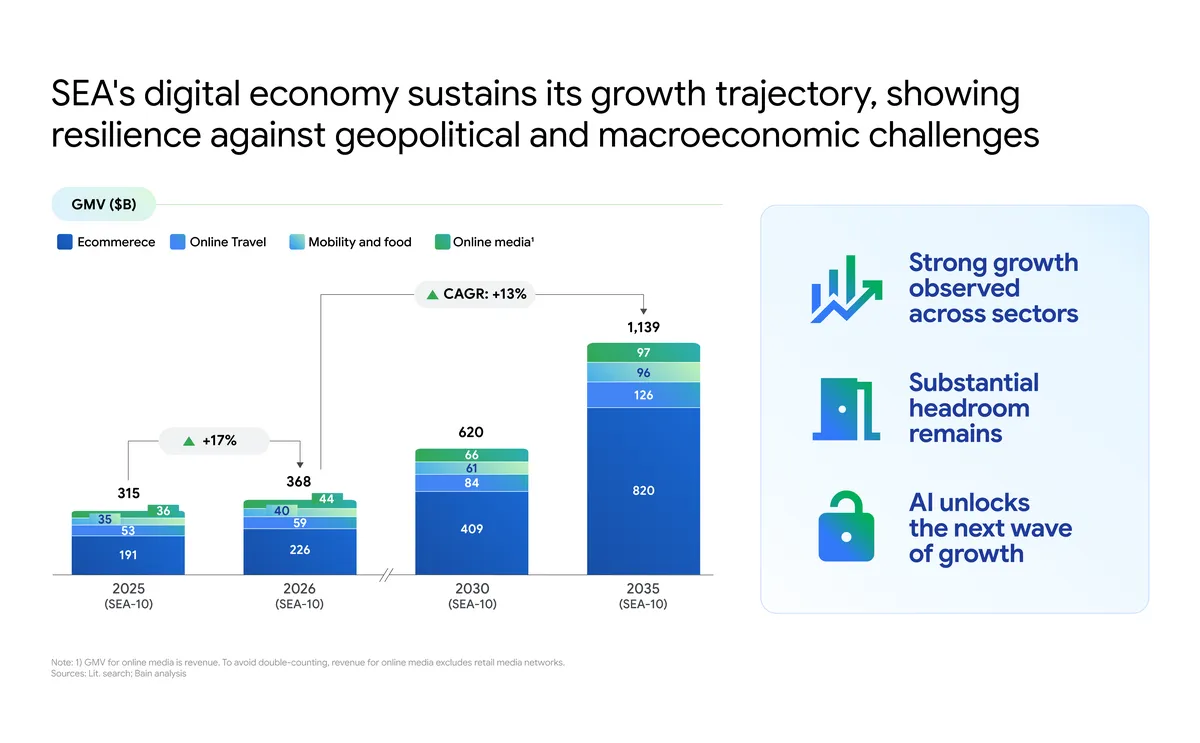
The 2024 findings reveal a digital economy that has matured beyond the volatile fluctuations of the pandemic era into a phase of sustainable, profit-oriented growth. The $368 billion milestone for 2026 reflects a robust recovery and expansion across all key digital sectors. The report highlights that while initial growth in the region was driven by basic connectivity and smartphone penetration, the current "second wave" is powered by the integration of intelligent algorithms that optimize supply chains, personalize consumer experiences, and enhance financial inclusivity.
Nitin Gajria, Managing Director for Southeast Asia and South Asia Frontier Markets at Google, noted that the region’s digital economy is no longer just about bringing people online but about making those digital interactions smarter and more efficient. The transition to an "intelligent economy" is characterized by the seamless integration of AI across e-commerce, travel, media, mobility, and financial services.
Sectoral Deep Dive: AI as a Catalyst for Efficiency
The impact of AI is most visible in the e-commerce sector, which remains the largest pillar of the digital economy. Projected to reach $226 billion in GMV by 2026 with an 18% annual growth rate, e-commerce is being reshaped by multimodal discovery tools. Shoppers are moving away from simple text searches toward image-based and voice-activated queries. In-app AI assistants are now helping users navigate complex purchase decisions, leading to a 10% increase in conversion rates and, in some instances, order volume uplifts as high as 75%.
In the online travel sector, which is expected to hit $59 billion in GMV, a significant shift in planning behavior has occurred. While traditional search engines remain the primary tool for travel research, generative AI has surpassed social media to become the second most-used tool for organizing complex, multi-city itineraries. This indicates a growing reliance on AI for logistical coordination rather than just inspiration.
Online media is also seeing a resurgence, with revenues expected to hit $44 billion by 2026, a 22% increase. The integration of AI allows for hyper-personalized content feeds and more relevant advertising, resulting in a 10% to 20% improvement in quality engagement. Furthermore, commerce media—where retailers leverage their own data to sell targeted advertising—is becoming a significant sub-sector, currently valued at approximately $4 billion.
The mobility and food delivery sectors are projected to reach $40 billion in GMV. AI-driven predictive suggestions and smarter routing are not only saving consumers time but are also enabling high-efficiency services such as pooled rides and optimized delivery windows. Meanwhile, Digital Financial Services (DFS) are witnessing a 16% growth in Gross Transaction Value (GTV), reaching $1,650 billion. AI is playing a critical role here in real-time fraud detection, broadening credit access for the unbanked through alternative data scoring, and providing personalized financial advice.
The Evolution of Consumer Trust and Agentic Commerce
A pivotal finding of the e-Conomy SEA 2026 report is the rising level of consumer trust in digital automation. Currently, 72% of users in Southeast Asia rely on automated features like price tracking and notification alerts. This familiarity has paved the way for "agentic commerce," where AI acts as a proxy for the consumer. The report finds that 75% of users express a willingness to allow AI agents to autonomously compare prices and complete transactions on their behalf.
This shift is rooted in a general sense of regional optimism regarding technology. Approximately 62% of respondents reported greater trust in AI tools today than they did a year ago. The primary drivers of this trust include a proven track record of AI performance (56%), rising familiarity through daily use (55%), and the increasing accuracy of AI outputs (53%).

However, this trust is not unconditional. To fully unlock the potential of agentic commerce, consumers have identified several necessary safeguards. These include robust privacy protections (44%), transparent disclosures regarding AI capabilities and limitations (36%), and the ability to reverse or cancel transactions initiated by an AI agent (30%).
Historical Context: A Decade of Digital Expansion
To understand the significance of the $368 billion projection, one must look at the chronology of the region’s digital development. When the first e-Economy SEA report was published in 2016, the focus was primarily on "getting the next billion online." At that time, the digital economy was valued at roughly $31 billion.
By 2020, the COVID-19 pandemic acted as a massive catalyst, forcing a decade’s worth of digital adoption into eighteen months. This era was defined by "digital necessity," as consumers turned to e-commerce and food delivery for survival. In 2024 and beyond, the region has entered the "Intelligent Era." The focus has shifted from volume to value, with companies prioritizing unit economics and profitability over aggressive subsidies. The move toward $1 trillion by 2035 is predicated on the belief that AI will find efficiencies that human-led systems could not, thereby unlocking new layers of economic value.
Strategic Imperatives for Sustained Growth
The report outlines four critical areas that must adapt to support the projected 60-fold increase in AI usage by 2030. These pillars are essential for Southeast Asia to maintain its competitive edge on the global stage:
- Infrastructure and Compute Power: The region must continue to invest in data centers and cloud computing capabilities. There is a growing need for localized AI models that understand the linguistic and cultural nuances of Southeast Asian markets.
- Renewable Energy Integration: As AI demand grows, so does the energy consumption of data centers. Aligning digital growth with sustainability goals is becoming a non-negotiable requirement for regional governments.
- Talent Development: There is a significant gap in AI-ready talent. Educational systems and corporate training programs must pivot toward data science, machine learning, and AI ethics to ensure the workforce can manage and build these intelligent systems.
- Regulatory Frameworks: Governments across the "Big 6" (Indonesia, Malaysia, the Philippines, Singapore, Thailand, and Vietnam) need to harmonize their digital policies. Clear guidelines on data privacy, AI governance, and cross-border data flows are essential to foster investor confidence.
Broader Implications and Regional Outlook
The implications of these findings extend beyond the technology sector. The growth of the digital economy is a primary driver of overall GDP growth in Southeast Asia. As AI reduces the cost of doing business and increases consumer participation, it helps bridge the gap between urban centers and rural areas.
Singapore continues to lead the region in digital wealth platforms and high-value fintech services, acting as a hub for regional innovation. Meanwhile, Indonesia remains the largest digital economy in terms of sheer GMV, driven by its massive consumer base and vibrant e-commerce ecosystem. Vietnam and the Philippines are identified as the fastest-growing markets, benefiting from young, tech-savvy populations and increasing internet penetration.
In conclusion, the 11th e-Conomy SEA report paints a picture of a region at an inflection point. The transition from a mobile-first to an AI-first economy is not merely a technological upgrade but a fundamental restructuring of how commerce, finance, and social interaction occur. With a clear path to $368 billion by 2026 and a trillion-dollar future in sight, Southeast Asia is positioning itself as a global leader in the intelligent economy. The success of this transition will depend on the region’s ability to maintain consumer trust while building the necessary physical and regulatory infrastructure to support a 60-fold increase in digital intelligence.
