

The journey of child development is a complex tapestry, and for many parents, the emergence of speech and language is a particularly anticipated milestone. However, when a child’s verbal communication seems to lag behind that of their peers, concerns about "late talking" frequently arise. This phenomenon, often clinically referred to as an expressive language delay, affects a significant portion of the preschool population, prompting parents to seek answers and effective strategies. Early identification and intervention are paramount, as the foundational period for language acquisition offers a critical window for maximizing developmental outcomes.
The Landscape of Expressive Language Delays
An expressive language delay is characterized by a child’s difficulty in producing spoken language, despite typically understanding what is said to them (receptive language). While developmental timelines can vary widely, approximately 10-15% of children under the age of three are identified as late talkers. For some, this delay may resolve spontaneously, leading to them "catching up" to their peers without formal intervention. These children are often termed "late bloomers." However, a substantial percentage of late talkers, estimated to be between 40-70%, will continue to experience language difficulties that can impact literacy, academic performance, and social-emotional development if left unaddressed.
The initial signs of an expressive language delay can manifest in various ways, from a limited vocabulary to an inability to combine words into phrases or sentences by expected ages. Parents often observe that their child communicates through gestures, pointing, or leading them by the hand, rather than using words to express wants and needs. It is crucial for caregivers to recognize that these delays are not indicators of parental failing but rather developmental challenges that warrant professional assessment and support.
Key Developmental Milestones for Speech and Language
Understanding typical language development provides a valuable framework for identifying potential delays. The American Speech-Language-Hearing Association (ASHA) and the Centers for Disease Control and Prevention (CDC) offer comprehensive guidelines for communication milestones:
- 12-18 Months: Children typically begin to use a few simple words (e.g., "mama," "dada," "dog") and understand simple instructions. They should also be using gestures like pointing and waving. A vocabulary of fewer than 5-10 words by 18 months may be a red flag.
- 18-24 Months: Vocabulary expands significantly, with many children acquiring 50 or more words. They start combining two words (e.g., "more milk," "daddy go"). They can follow two-step directions and imitate words and actions. Fewer than 50 words or no two-word combinations by 24 months are strong indicators for concern.
- 24-36 Months: By three years old, children typically use 3-5 word sentences, have a vocabulary of several hundred words, and can be understood by familiar listeners most of the time. They begin to ask "what" and "where" questions and use pronouns. Persistent difficulty forming sentences or being understood by unfamiliar listeners warrants evaluation.
While these milestones serve as general benchmarks, any significant deviation or a parent’s persistent concern should prompt professional consultation. The common advice to "wait and see" is often counterproductive, as early intervention has been consistently shown to yield the most favorable long-term outcomes. The brain’s plasticity is highest in early childhood, making this period optimal for language acquisition and intervention.
Navigating the Path to Support: Early Intervention Pathways
For parents suspecting an expressive language delay, a structured approach to seeking support is essential. This typically involves several key steps, prioritizing comprehensive assessment and timely intervention.
-
Consultation with a Pediatrician: The first point of contact is usually the child’s pediatrician. While pediatricians can offer initial guidance, their expertise in speech and language development may vary. It is important to clearly articulate concerns and advocate for further evaluation, even if the pediatrician suggests a "wait and see" approach.
-
Comprehensive Hearing Screening: Before any language intervention begins, a thorough hearing screening or evaluation by an audiologist is crucial. Undetected hearing loss, even mild or fluctuating loss due to recurrent ear infections (otitis media with effusion), can significantly impede speech and language development. Fluid in the ears can muffle sounds, making it difficult for children to distinguish speech sounds and develop a robust phonological system. This screening is a non-invasive, vital first step in ruling out a common underlying cause of speech delays.
-
Initiating Early Intervention Services: Across the United States, federally mandated Early Intervention (EI) programs provide services for infants and toddlers (birth through age three) with developmental delays or disabilities. These services are often free or low-cost and do not typically require a physician’s referral to initiate an evaluation. Parents can directly contact their state’s Early Intervention program. An evaluation conducted by a multidisciplinary team (which may include a speech-language pathologist, occupational therapist, and developmental specialist) will determine eligibility for services, leading to the creation of an Individualized Family Service Plan (IFSP). The IFSP outlines specific goals and intervention strategies tailored to the child’s needs and family priorities. The benefits of early entry into these programs are well-documented, with research consistently demonstrating improved communication skills, enhanced social development, and reduced need for more intensive services later in life.
Empowering Parents: Strategies for Fostering Language Development at Home
While professional therapy is invaluable, parents and caregivers are the primary communication partners and play a pivotal role in creating a language-rich environment. Integrating specific strategies into daily routines can significantly support a child’s language acquisition.

-
Intentional Language Modeling (Self-Talk and Parallel Talk): Parents can become active narrators of their daily lives. "Self-talk" involves describing one’s own actions (e.g., "Mommy is cutting the apple," "I’m putting on my shoes"). "Parallel talk" involves narrating the child’s actions (e.g., "You’re stacking the blocks high!" "The car is going fast!"). Using short, grammatically correct sentences provides clear language models. This constant, intentional exposure to language in context helps children associate words with actions and objects.
-
Engaging in Interactive Play: Getting down to the child’s level and engaging in interactive play is fundamental. This isn’t just about entertainment; it’s a rich opportunity for joint attention and communication. Narrate play activities using simple sentences, expanding on the child’s interests. For instance, if a child pushes a car, a parent might say, "The car goes zoom!" or "Big car!" This type of engagement fosters social interaction, which is a precursor to verbal communication.
-
Leveraging Daily Routines: Everyday routines like mealtime, bath time, and diaper changes offer predictable contexts for repeated language exposure. During a diaper change, for example, a parent can consistently say, "Diaper on," "Up, up," or "All clean!" This repetition in a familiar setting helps children build vocabulary and associate words with specific actions and objects.
-
Enhancing Engagement with Vocal Intonation and Gestures:
- Vocal Intonation (Sing-Song Voice): Using a slightly higher pitch, slower tempo, and exaggerated intonation (often referred to as "parentese" or "infant-directed speech") naturally captures a child’s attention. This melodic speech pattern highlights key words and makes language more engaging and easier for young children to process, facilitating auditory processing and word segmentation.
- Gestures and Facial Expressions: Non-verbal communication is a powerful bridge to verbal expression. Encourage and model gestures such as pointing, waving, nodding, and shaking the head. Pairing gestures with words (e.g., waving "bye-bye" while saying "bye-bye") reinforces meaning and provides multiple cues for understanding and imitation. Exaggerated facial expressions can also convey emotion and meaning, aiding comprehension.
-
Targeted Word Acquisition Through Repetition: During play, focus on modeling a single target word repeatedly. If a child is playing with blocks, consistently say "up" every time they stack one, or "down" when one falls. This focused stimulation, where a specific word is presented frequently and naturally, helps embed new vocabulary into the child’s lexicon.

-
Encouraging Sound Effects and Environmental Noises: Pre-linguistic vocalizations, such as animal sounds ("moo," "woof"), vehicle sounds ("vroom," "choo-choo"), and other environmental noises ("bang," "pop"), are excellent precursors to words. Encouraging children to imitate these sounds helps develop oral motor skills, phonological awareness, and the understanding that sounds carry meaning, laying a foundation for more complex speech.
-
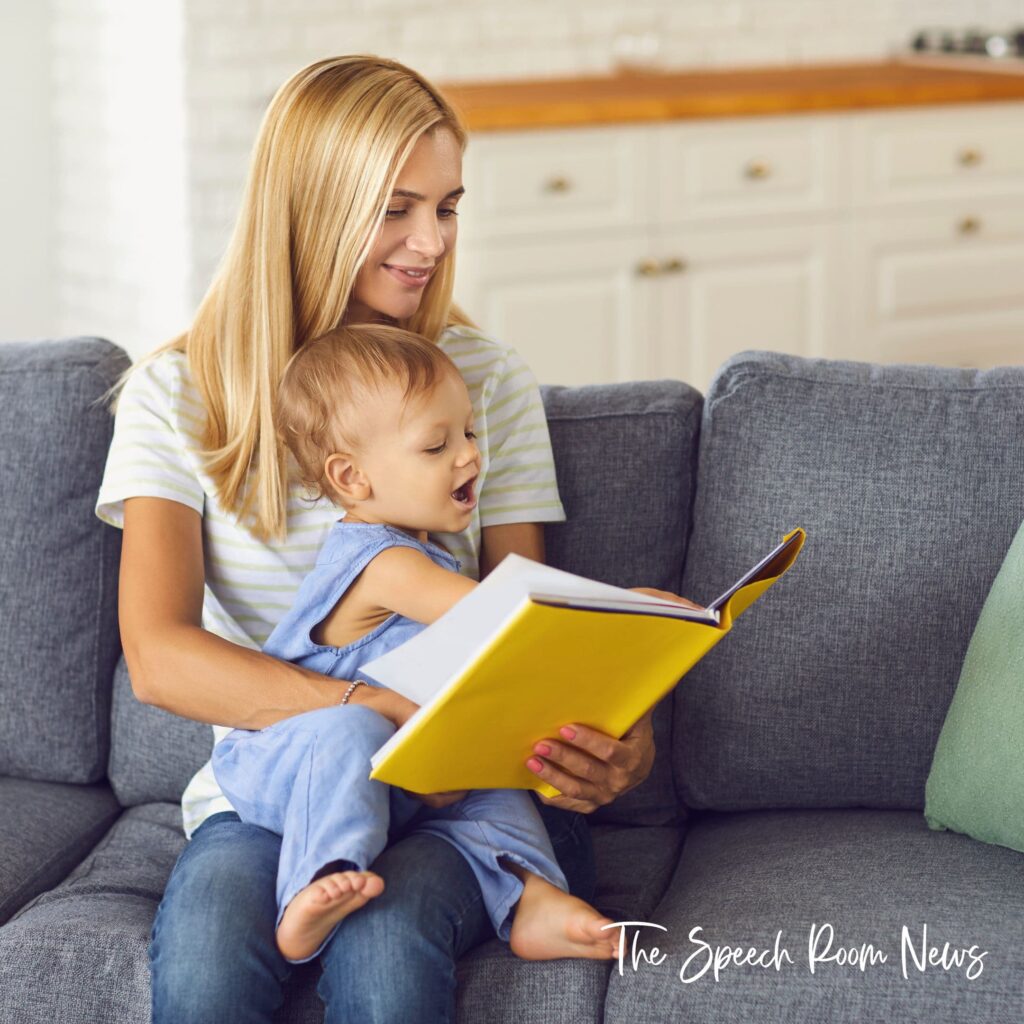
The Power of Shared Reading: Integrating reading into the daily routine is invaluable. Beyond bedtime stories, scatter books throughout the house and encourage frequent, short reading sessions. Interactive reading—pointing to pictures, asking simple questions ("What’s this?"), making animal sounds, and allowing the child to turn pages—enhances vocabulary, narrative skills, and strengthens the parent-child bond. Research indicates that children who are read to regularly develop larger vocabularies and stronger pre-literacy skills.
-
Tracking Progress: Utilizing tracking sheets or simple notebooks to document a child’s emerging words, sounds, and gestures can be incredibly beneficial. This provides concrete evidence of progress, which can be encouraging for parents, and offers valuable data for speech-language pathologists during evaluations and therapy planning. Resources like free "First Words Trackers" can be readily found online from educational and therapeutic providers.
Broader Impact and Long-Term Implications
The significance of early intervention for expressive language delays extends far beyond merely acquiring words. Strong language skills are foundational for cognitive development, literacy acquisition, social competence, and emotional regulation. Children with untreated language delays may face challenges in school, struggling with reading comprehension, written expression, and following classroom instructions. Socially, difficulties in communication can lead to frustration, withdrawal, or behavioral issues, impacting peer relationships and self-esteem.
Conversely, timely and effective intervention can significantly mitigate these risks. Children who receive early support often show marked improvements, enhancing their ability to participate fully in academic and social environments. This proactive approach not only supports the individual child but also contributes to their overall well-being and future success. Parents, as consistent advocates and implementers of home-based strategies, are critical partners in this process.
In conclusion, while the discovery of an expressive language delay can be a source of worry for parents, it is also an opportunity for proactive engagement and impactful intervention. By understanding developmental milestones, seeking professional evaluations, and consistently implementing evidence-based strategies at home, caregivers can profoundly influence their child’s communicative journey. The collaborative efforts of parents, pediatricians, audiologists, and speech-language pathologists create a robust support system, empowering late talkers to unlock their full potential and thrive in a world that increasingly values effective communication.
