

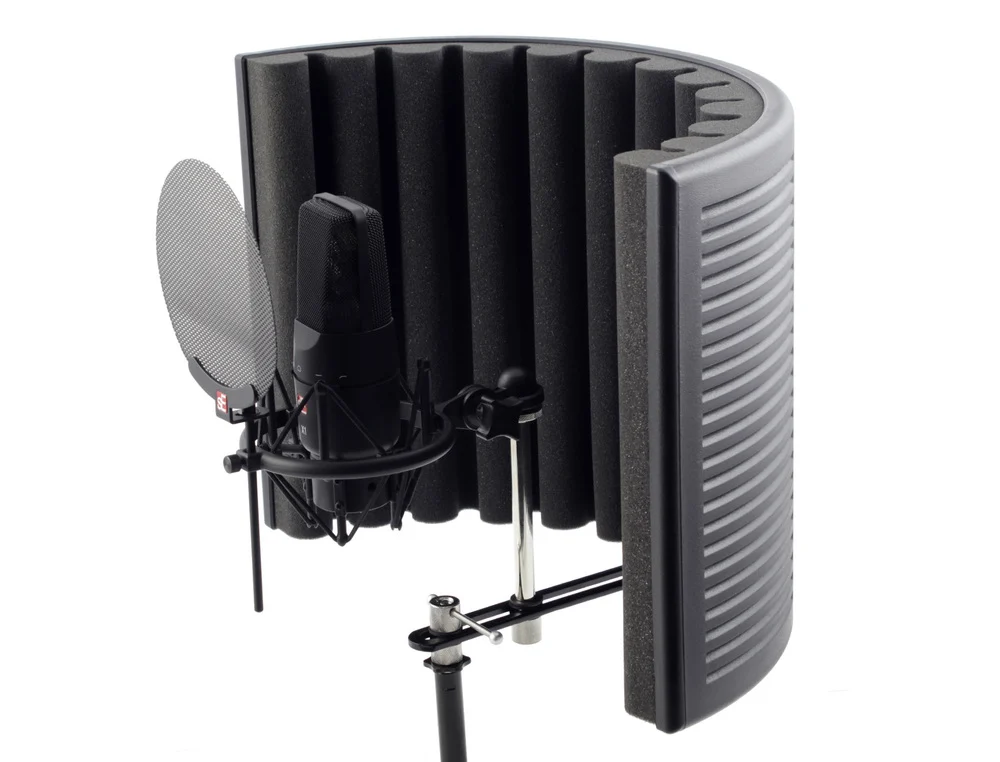
The persistent question echoing through the corridors of home recording setups, particularly within the dedicated mentoring community at Gravy For The Brain, revolves around the efficacy and necessity of sound reflection filters. This investigative piece aims to provide a definitive, evidence-based answer, dissecting the fundamental principles of home studio acoustics, microphone technology, and the often-misunderstood role of these accessories.
The Genesis of the Home Recording Studio: A Quest for Acoustic Purity
At its core, a home recording studio, or any recording studio for that matter, is designed to establish a controlled and repeatable sonic environment. The primary objectives are threefold: to prevent external sounds from intruding into the recording space (sound ingress), to ensure that the recorded audio does not leak out and disturb others (sound egress), and crucially, to minimize the detrimental impact of unwanted sound reflections within the recording space itself. These reflections, often referred to as room modes or reverberations, can significantly degrade the clarity and fidelity of audio recordings, particularly for voice-over work, podcasting, and music production.

The ultimate goal in acoustic treatment for recording is to create a "dry" recording environment. This means isolating the sound source – the voice or instrument – from the acoustic characteristics of the room. The ideal scenario, as espoused by audio engineers and acousticians, is to capture the pure, unadulterated sound of the source directly into the microphone, free from the coloration and degradation introduced by the recording space. This is typically achieved through the construction of dedicated recording booths, purpose-built studio spaces, or the strategic adaptation of existing domestic areas, such as spare rooms, garages, or even well-designed walk-in closets. Comprehensive guidance on these setup methodologies is readily available through specialized resources, including extensive online courses and webinars dedicated to home studio construction, catering to both novice and experienced audio creators.
Deconstructing Sound Reflections: The Physics of Echoes and Absorption
Understanding how to combat unwanted sound reflections requires a grasp of basic acoustic principles. Sound waves, when encountering a surface, can either be absorbed, reflected, or transmitted. Hard, flat surfaces, such as bare walls, glass, or untreated wood, are highly reflective. They bounce sound waves back into the room, creating echoes and reverberations that can muddy a recording. Conversely, soft, porous materials are effective at absorbing sound energy. Thick curtains, heavy blankets, upholstered furniture, and specialized acoustic foam tiles are designed to dissipate sound waves, converting acoustic energy into heat.
The efficacy of these materials is directly proportional to their density and thickness. For instance, a thin carpet might offer minimal absorption, while a thick, plush rug can significantly reduce floor reflections. Similarly, a single pane of glass will reflect sound, whereas a double-glazed window with a significant air gap between the panes will offer better acoustic insulation and absorption. This principle extends to everyday objects. A television screen or a computer monitor, with its smooth, hard surface, will reflect sound. In contrast, a furry pet, while not a professional acoustic treatment solution (and certainly not recommended for practical application due to hygiene and ethical concerns), exemplifies the principle of absorption through its soft, yielding texture. The humorous, yet cautionary, anecdote regarding lining a recording booth with cats serves as an exaggerated illustration of the need for appropriate sound-dampening materials, emphasizing the importance of scientifically proven methods over unconventional and impractical approaches.

The Rise of the Reflection Filter: Promise vs. Reality
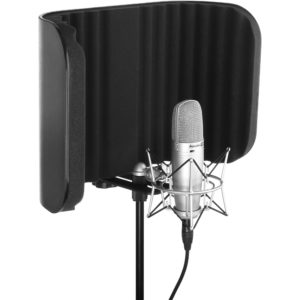
In response to the challenges of home studio acoustics, a product category known as the "sound reflection filter" emerged. These devices typically consist of a semi-circular or cylindrical baffle, lined with sound-absorbing material, designed to be placed around a microphone. Manufacturers promote these filters as a direct solution for mitigating room reflections, promising to create a more isolated and pristine recording environment. Popular examples, such as the Auray Sound Reflection Filter and the SE Electronics Sound Reflection Filter, often feature prominently in marketing materials and online tutorials aimed at aspiring audio professionals.
The typical setup involves positioning the microphone within the central cavity of the reflection filter. The user then speaks or performs into the front of the microphone, with the filter theoretically blocking ambient room noise and reflections from reaching the rear and sides of the microphone. The underlying sales proposition is that these filters, by creating a localized acoustic barrier, effectively "sweeten" the recording space, much like a professionally treated studio. However, a critical examination of the physics and microphone technology reveals a significant disconnect between this marketing narrative and actual acoustic performance.
The Crucial Element: Understanding Microphone Polar Patterns
To accurately assess the utility of a reflection filter, one must first understand the fundamental operation of a microphone, specifically its polar pickup pattern. Microphones are not omniscient sound-gathering devices; they are directional transducers, meaning they are more sensitive to sound originating from certain directions than others. This directional sensitivity is described by the microphone’s polar pickup pattern.
There are several common polar patterns, each defining a unique area of sensitivity around the microphone:
-
Omnidirectional: These microphones pick up sound equally from all directions (360 degrees). While useful for capturing ambient sound or for situations where the sound source is moving unpredictably, they are highly susceptible to room noise and reflections, making them generally unsuitable for isolated voice recording in untreated spaces.
-
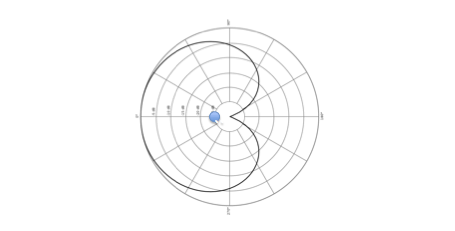
Cardioid: This is the most common pattern for voice recording. It exhibits maximum sensitivity to sound coming from the front of the microphone, with progressively less sensitivity to sounds from the sides, and near-total rejection of sounds originating from the rear. This pattern is named after its heart-like shape when viewed on a polar plot.
-
Figure-of-Eight (Bidirectional): These microphones pick up sound equally from the front and the rear, with maximum rejection from the sides. They are often used in stereo recording techniques or for capturing two opposing sound sources.
-
Supercardioid and Hypercardioid: These patterns are variations of the cardioid, offering tighter directional pickup at the front but with a small lobe of sensitivity at the rear. They provide increased side rejection compared to a standard cardioid but are more susceptible to rear-source noise.
Many professional microphones, such as the renowned Neumann U87, offer switchable polar patterns, allowing users to adapt the microphone’s sensitivity to the specific recording situation. However, most microphones intended for general-purpose voice recording are fixed in a cardioid pattern as standard. This preference for cardioid is rooted in its ability to minimize the capture of unwanted room reflections. By directing the microphone’s sensitivity towards the sound source and away from the surrounding environment, the cardioid pattern inherently reduces the amount of ambient sound and reverberation that enters the recording.
Visualizing the Pickup Pattern: A Deeper Dive into Cardioid
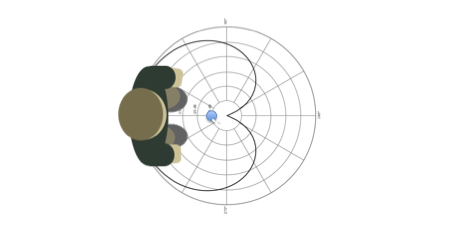
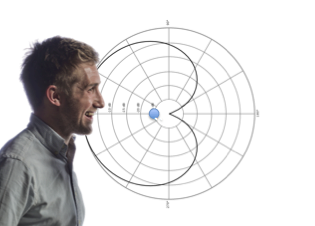
To illustrate the cardioid pattern’s behavior, consider a top-down view of a microphone. The microphone capsule is represented as a central circle, with the front of the microphone (often marked by a logo or dot) indicating the direction of maximum sensitivity. The cardioid pattern emanates from this front point, resembling a heart shape. This "bubble" of sensitivity extends forward, with a narrower focus, and tapers off towards the sides and rear.
When a voice artist speaks into the microphone, their voice is intended to fall within this forward-facing pickup pattern. The cardioid pattern ensures that the microphone primarily captures the direct sound from the speaker’s mouth, while significantly attenuating sounds arriving from the sides and the rear. This spatial selectivity is crucial for achieving clean recordings in less-than-ideal acoustic environments.
Extending this visualization to three dimensions, the cardioid pickup pattern can be imagined as a heart-shaped beanbag or a semi-spherical zone of sensitivity in front of the microphone. While there’s some latitude for slight variations in speaker position (slightly left, right, high, or low), the core principle remains: the microphone is designed to be most sensitive to sound originating directly in front of it.
The Reflection Filter in Context: A Critical Analysis
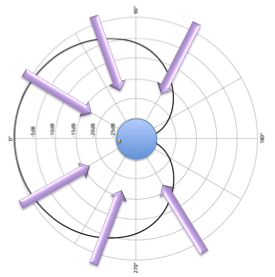
Now, let’s integrate the concept of sound reflections and the reflection filter into this understanding of microphone pickup patterns. Sound reflections, originating from walls, ceilings, floors, and any hard surfaces in the room, arrive at the microphone from all directions (360 degrees).
When a microphone with a cardioid pickup pattern is used, it inherently rejects a significant portion of these reflections. Specifically, it picks up very little sound from its rear and only a reduced amount from its sides. The reflections that do enter the pickup pattern are primarily those that bounce off surfaces located directly in front of the microphone and then reach its capsule.
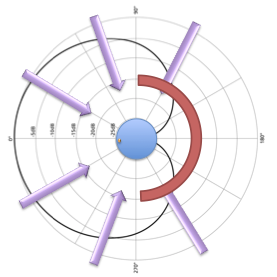
Now, consider the placement of a reflection filter. These filters are typically positioned behind and to the sides of the microphone. Their absorbent material is designed to intercept sound waves and prevent them from bouncing back towards the microphone. However, the critical observation is this: the sound waves that the reflection filter can effectively block are largely those that the cardioid microphone pattern is already rejecting.
The filter’s primary function is to absorb sound waves arriving from the sides and rear. But, due to the cardioid pattern, the microphone is already inherently insensitive to sounds from these directions. Therefore, the reflection filter is, in essence, attempting to absorb sound that the microphone is already largely ignoring. The reflections that the microphone does capture are those that arrive from the front, within the main lobe of the cardioid pattern. The reflection filter, by its very design, does not significantly impede these forward-arriving reflections because it is placed behind and around the microphone, not directly in front of the sound source in a way that would intercept these initial reflections.
Empirical testing, as conducted by audio professionals and enthusiasts, often reveals a negligible difference in the recorded audio quality when using a reflection filter compared to not using one, provided a cardioid microphone is employed in a reasonably controlled environment. This lack of discernible improvement leads to the conclusion that, for many common home studio setups utilizing cardioid microphones, the reflection filter offers minimal, if any, acoustic benefit.
The Verdict: Do You Need a Reflection Filter?
Based on acoustic principles and practical observation, the definitive answer for most home studio users employing cardioid microphones is no, you do not need a sound reflection filter. They represent a significant expenditure of money and effort that yields little to no tangible improvement in recording quality.
Why the Popularity? The Psychology of Marketing and Misinformation
The persistent presence of reflection filters in the market and their adoption by some recording artists can be attributed to several factors, primarily stemming from a lack of technical understanding among newer entrants to the audio production field.
- Visual Appeal and Perceived Professionalism: Reflection filters have a distinct, professional-looking appearance. Seeing them in studio setups, promotional materials, and online videos can lead inexperienced users to believe they are an essential piece of equipment for achieving high-quality recordings.
- Marketing Hype: Manufacturers invest in marketing campaigns that highlight the supposed benefits of these filters, often employing persuasive language and testimonials that may not be backed by rigorous scientific data.
- Peer Influence: When aspiring audio engineers see established artists or respected figures in the industry using reflection filters, they are inclined to follow suit, assuming their use is validated by expertise.
- Misunderstanding of Acoustic Principles: A fundamental lack of knowledge about microphone polar patterns and the physics of sound reflection leads many to believe that any physical barrier around a microphone will automatically improve the sound.
While a reflection filter will not actively harm your recordings, it fails to provide the significant acoustic treatment that truly improves sound quality. It is a superficial solution to a deeper acoustic problem.
The True Path to Professional Sound: Investing in Acoustic Treatment
If a reflection filter is not the answer, then what is? The key to achieving professional-sounding recordings lies in creating a properly sound-treated recording space. This is an investment in time, effort, and, to some extent, financial resources, but it yields substantial and undeniable improvements in audio fidelity.
This involves addressing the room’s acoustics directly, rather than attempting to isolate the microphone. Sound treatment can take various forms:
- Dedicated Booths: Purpose-built vocal booths, often constructed with multiple layers of drywall, insulation, and specialized acoustic baffling, offer the highest level of sound isolation and acoustic control.
- DIY Acoustic Solutions: For those on a budget, constructing homemade acoustic panels using rigid fiberglass or mineral wool, framed with wood, and covered with breathable fabric, can be highly effective. Strategic placement of these panels on walls and ceilings can significantly reduce unwanted reflections.
- Room Adaptation: Carefully selecting and treating a room within your home can also be a viable option. This might involve treating primary reflection points on walls, the ceiling, and the floor. Even strategically placed furniture, bookshelves filled with books, and thick rugs can contribute to reducing reverberation.
The crucial takeaway is that an untreated office, kitchen, or any other standard room in a house will inherently possess acoustic issues that a reflection filter cannot effectively resolve. The focus must be on modifying the acoustic environment itself. Comprehensive resources and guidance on building effective home studios and implementing sound treatment strategies are available, offering detailed blueprints and techniques for creating an acoustically optimized recording space.
In conclusion, while the allure of a quick fix like a reflection filter is understandable, the reality of professional audio production demands a more fundamental approach. True acoustic improvement comes from understanding and actively managing the sonic characteristics of your recording environment, not from a piece of equipment that, while well-intentioned, falls short of its advertised promise. The pursuit of pristine audio is a journey that requires informed choices, and in the case of reflection filters, the wisest choice is often to save your money and invest in genuine acoustic treatment.
