

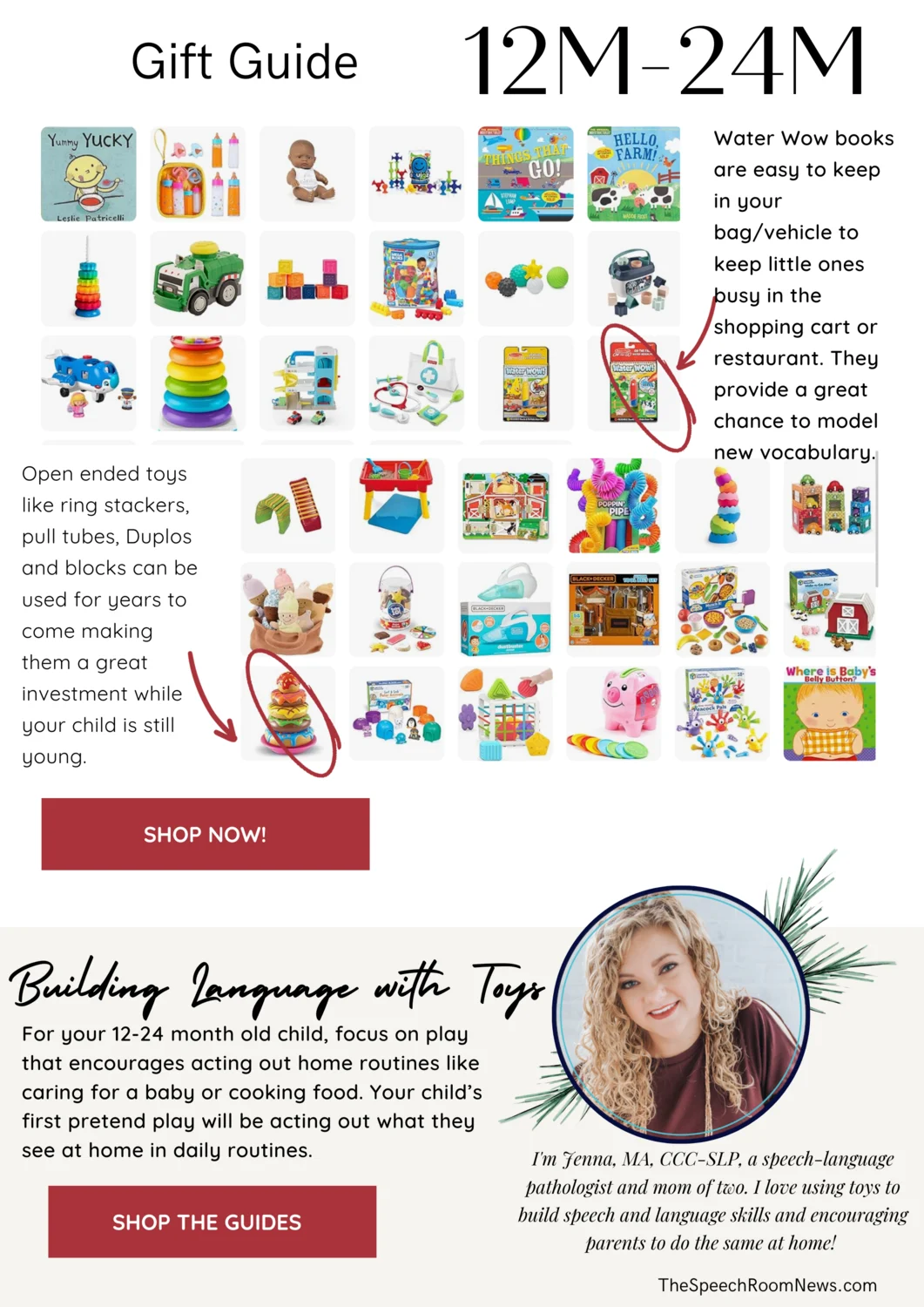
In a significant resource for parents and caregivers navigating holiday shopping, Jenna Kirk, MA, CCC-SLP, a pediatric speech-language pathologist, has released a comprehensive series of gift guides specifically designed to promote speech and language development in children. These guides, accessible via an Amazon storefront and a downloadable PDF, offer a professionally vetted selection of toys, categorized by age, with a particular emphasis on fostering crucial communication skills. Kirk’s initiative stems from her dual expertise as a certified clinician and a mother to two young children, one of whom has been diagnosed with Childhood Apraxia of Speech (CAS), providing a unique and deeply informed perspective on therapeutic play.
The creation of these specialized guides addresses a growing demand from parents seeking to make informed toy choices that transcend mere entertainment, aiming instead for developmental enrichment. As families prepare for the holiday season, the emphasis on purposeful play has gained traction, recognizing that well-chosen toys can serve as powerful tools in a child’s linguistic journey.
The Expertise Behind the Recommendations
Jenna Kirk’s credentials as a Master of Arts in Speech-Language Pathology (MA) and her certification by the American Speech-Language-Hearing Association (CCC-SLP) underscore the clinical foundation of her recommendations. Speech-language pathologists (SLPs) are highly trained professionals who evaluate and treat communication disorders in individuals of all ages. Their expertise encompasses articulation, language comprehension and expression, fluency, voice, and social communication. Kirk’s professional background equips her with an in-depth understanding of developmental milestones, common communication challenges, and effective therapeutic strategies.
Furthermore, Kirk’s personal experience as a mother whose child lives with Childhood Apraxia of Speech adds an invaluable layer of practical insight to her work. Childhood Apraxia of Speech is a neurological speech sound disorder in which the brain has difficulty planning and coordinating the muscle movements necessary for speech. This condition can significantly impact a child’s ability to articulate words and express themselves clearly. Navigating the daily realities of CAS has provided Kirk with firsthand knowledge of the types of activities and toys that can effectively support motor planning for speech, encourage vocalizations, and facilitate overall language acquisition in children with specific speech disorders. This combination of clinical knowledge and lived experience makes her guides particularly relevant and trustworthy for families seeking to optimize their children’s developmental environment.

The Foundational Role of Play in Language Acquisition
The scientific consensus firmly establishes play as a cornerstone of early childhood development, particularly for speech and language. Far from being a trivial pastime, play is the primary mechanism through which young children learn about the world, process information, and develop critical cognitive, social, and linguistic skills. Research indicates that children who engage in diverse forms of play tend to exhibit stronger language abilities, richer vocabularies, and more sophisticated conversational skills.
Beyond Entertainment: Play as a Linguistic Workshop

During play, children naturally experiment with sounds, words, and grammatical structures. They learn to take turns in conversation, understand and use non-verbal cues, and develop narrative skills through imaginative scenarios. For instance, building a block tower while describing each step ("big block," "on top," "falling down") enhances descriptive language and sequencing. Engaging in pretend play, such as a tea party or a doctor’s visit, fosters complex sentence structures, role-playing, and understanding social scripts. These seemingly simple interactions are, in fact, sophisticated linguistic workouts that lay the groundwork for effective communication.
Types of Play and Their Speech-Language Benefits
- Symbolic and Imaginative Play: This type of play, involving make-believe scenarios and role-playing, is paramount for developing narrative skills, expanding vocabulary, and practicing social communication. When a child pretends a banana is a telephone, they are engaging in symbolic thought, a precursor to abstract language. Dolls, action figures, and dress-up clothes are excellent catalysts for this.
- Constructive Play: Activities like building with blocks, LEGOs, or magnetic tiles encourage children to follow directions, describe their creations, and use spatial and descriptive language. "Put the red block under the blue one" or "I’m making a tall tower" are examples of linguistic practice inherent in constructive play.
- Interactive and Cooperative Play: Board games, puzzles, and group activities necessitate turn-taking, negotiation, and clear communication. These interactions are vital for developing pragmatic language skills – the social rules of language, such as asking questions, responding appropriately, and maintaining a topic.
- Sensory Play: Engaging with materials like sand, water, play-doh, or sensory bins provides opportunities for descriptive language related to textures, temperatures, and actions. "Sticky," "smooth," "cold," "squishy" are all vocabulary words learned through sensory exploration.
Expert Criteria for Selecting Developmental Toys

When curating her gift guides, Kirk applies a rigorous set of criteria rooted in speech and language pathology principles. These criteria ensure that each recommended toy offers maximum developmental benefit:
- Open-Ended Engagement: Toys that allow for multiple uses and encourage imaginative, child-led play are prioritized. Unlike single-purpose electronic toys, open-ended items like blocks, play-doh, or simple animal figures can be integrated into countless scenarios, fostering creativity and diverse language use.
- Facilitating Social Interaction and Turn-Taking: Toys that naturally prompt interaction between children or between a child and an adult are crucial. Board games, cooperative building sets, or even simple ball play encourage turn-taking, requesting, and responding, which are fundamental conversational skills.
- Promoting Vocabulary Expansion and Concept Development: Toys that introduce new words, categories, and concepts are highly valued. Picture books, playsets depicting various environments (e.g., farm, doctor’s office), or sorting games can significantly enrich a child’s lexicon.
- Encouraging Articulation and Auditory Processing: While not all toys directly target articulation, those that inspire vocal imitation, singing, or sound play can indirectly support speech sound development. Toys that require listening carefully to instructions also enhance auditory processing skills.
- Durability and Safety Considerations: Beyond developmental benefits, all recommended toys meet standard safety requirements and are durable enough to withstand repeated play, ensuring long-term utility and value for families.
- Minimal Electronic Interference: While some educational apps or electronic toys can be beneficial, Kirk’s selections lean towards those that foster human-to-human interaction and imaginative play over passive screen time, which can sometimes hinder spontaneous language production.
Navigating Developmental Milestones Through Play
Kirk’s guides are structured by age to align with typical speech and language developmental milestones, providing targeted recommendations for each stage:

- Infancy (0-12 months): Toys focus on sensory exploration, cause-and-effect, and early vocalizations. Soft books with varied textures, rattles, stacking rings, and simple musical instruments encourage babbling, joint attention, and early word comprehension.
- Toddlerhood (1-3 years): The emphasis shifts to early word combinations, following simple commands, and expanding vocabulary. Shape sorters, simple puzzles, baby dolls, and push-pull toys facilitate object naming, action verbs, and two-to-three-word phrases.
- Preschool (3-5 years): This stage focuses on storytelling, complex sentences, and peer interaction. Pretend play sets (kitchens, workshops), puppets, elaborate building blocks, and basic board games support narrative development, question-asking, and social problem-solving.
- Early School Age (5+ years): Toys promote logical reasoning, advanced vocabulary, and sophisticated dialogue. More complex board games, science kits, chapter books, and creative construction sets encourage critical thinking, descriptive language, and sustained conversations.
Tailoring Play for Specific Needs: The Case of Childhood Apraxia of Speech
Kirk’s personal connection to Childhood Apraxia of Speech (CAS) provides invaluable insight into selecting toys that can specifically benefit children with this diagnosis. Children with CAS often require intensive, repetitive, and motor-based speech therapy. Play-based activities can complement clinical interventions by providing a natural, motivating environment for practice.
Strategic Toy Selection for CAS

For children with CAS, Kirk emphasizes toys that:
- Encourage repetitive vocalizations: Simple instruments or toys that respond to sound can motivate repeated sound production.
- Support motor planning for speech: Activities involving precise hand movements (e.g., lacing beads, manipulating play-doh) can sometimes indirectly aid in the motor planning required for speech.
- Facilitate turn-taking and imitation: Simple games where children imitate sounds or actions can be beneficial.
- Provide visual cues: Toys with clear visual components can help children associate actions with words or sounds.
- Are highly motivating: Because speech practice can be challenging, toys that genuinely engage the child are crucial to sustain their interest and effort.
Kirk’s recommendations for children with CAS are not a substitute for professional therapy but rather a supportive home environment that reinforces therapeutic goals. Her experience underscores the importance of a holistic approach, where play is integrated into a broader intervention strategy.
The Structure and Accessibility of the Guides

To ensure widespread accessibility, Kirk has made her recommendations available through multiple channels. The primary resource is a curated Amazon storefront, allowing parents to easily browse and purchase the suggested toys. This digital format offers convenience and direct access to product details. Complementing the online storefront, a downloadable PDF guide provides a printable, structured overview of the recommendations, ideal for offline reference or sharing with other caregivers. The guides are meticulously organized by age group, from infancy through early school age, and also include a dedicated section for "stocking stuffers" – smaller, often more affordable items that can still pack a significant developmental punch. This multi-format approach ensures that parents can access the information in a way that best suits their needs.
Broader Impact and Expert Perspectives
Jenna Kirk’s initiative reflects a broader trend within the fields of child development and education: the growing recognition of purposeful play. Leading professional organizations, such as the American Speech-Language-Hearing Association (ASHA) and the American Academy of Pediatrics (AAP), consistently advocate for play-based learning as a critical component of healthy development. They emphasize that unstructured, child-led play fosters creativity, problem-solving, emotional regulation, and, critically, robust language skills.

By providing expertly curated resources, Kirk empowers parents to become more active and informed participants in their children’s speech and language development. The implications extend beyond individual families, contributing to a societal shift towards prioritizing developmental health through everyday activities. Thoughtful toy selection can complement early intervention efforts, potentially reducing the need for more intensive therapies later in life and improving overall academic and social outcomes for children. In an increasingly complex world, resources that simplify and clarify how to support fundamental skills like communication are invaluable.
Conclusion
Jenna Kirk’s release of her holiday toy guides represents a significant contribution to parents and caregivers committed to fostering their children’s speech and language development. Leveraging her extensive professional knowledge as a pediatric speech-language pathologist and her profound personal experience as a mother of a child with Childhood Apraxia of Speech, Kirk has meticulously curated a selection of toys designed to offer more than just entertainment. These guides provide a practical, evidence-based roadmap for integrating purposeful play into daily life, transforming holiday gift-giving into an opportunity for profound developmental enrichment. Her work underscores the critical role of informed choices in creating environments that nurture effective communication and support every child’s unique linguistic journey.
