

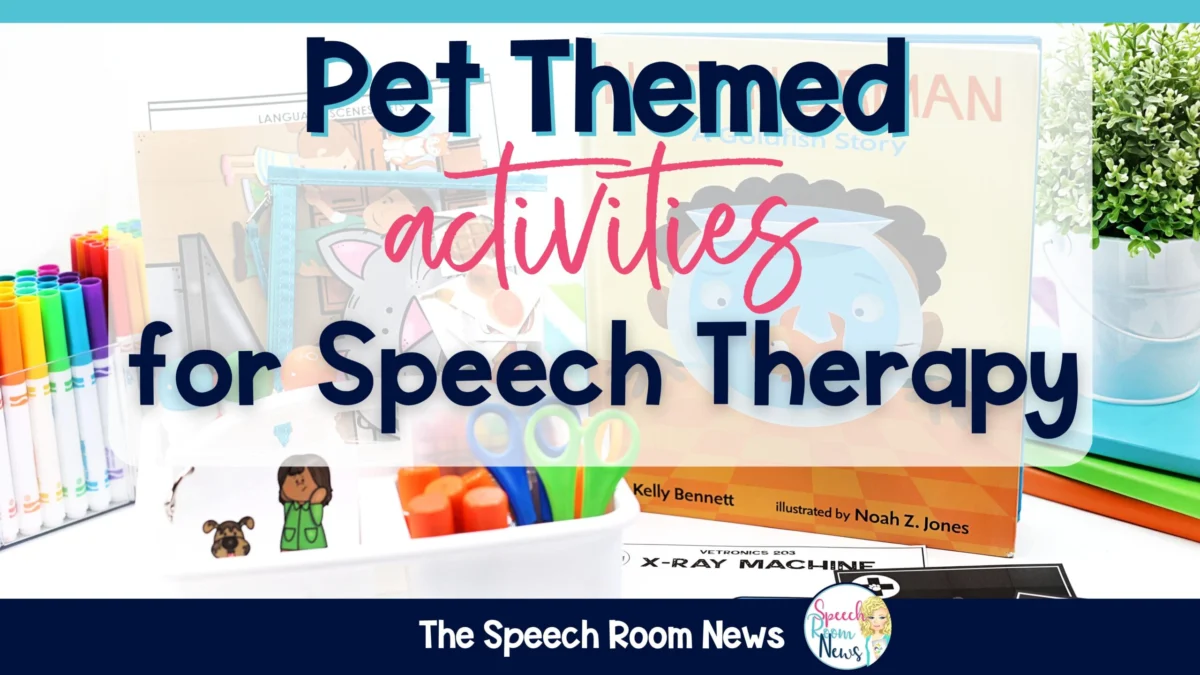
The field of speech and language pathology is continually evolving, with practitioners seeking innovative and effective methods to engage students and optimize therapeutic outcomes. Among the most impactful strategies gaining widespread adoption is the use of thematic instruction, a pedagogical approach that organizes curriculum around a central topic or theme. This method, particularly when applied to universally appealing subjects like pets, has emerged as a cornerstone for creating dynamic, engaging, and highly effective speech and language therapy sessions throughout the year. The integration of such themes not only streamlines preparation for speech-language pathologists (SLPs) but also significantly enhances student engagement, leading to more profound and lasting linguistic development.
The Pedagogy Behind Thematic Integration in Therapy
The adoption of thematic instruction in speech and language therapy is rooted in sound educational and psychological principles. Historically, speech therapy often relied on repetitive drills targeting isolated sounds or grammatical structures. While effective for specific deficits, this approach sometimes struggled with student motivation and the generalization of learned skills to natural communication contexts. The shift towards more holistic, child-centered, and play-based interventions began to gain traction in the late 20th century, influenced by constructivist theories of learning where children actively construct knowledge through experience and interaction.
Thematic units inherently support this constructivist framework by providing a rich, interconnected web of vocabulary, concepts, and experiences. For young learners, a familiar and stimulating theme like "pets" reduces cognitive load and anxiety, making the learning environment more inviting. This approach aligns with Vygotsky’s sociocultural theory, emphasizing the role of social interaction and meaningful context in cognitive development. When children are immersed in a theme, they are more likely to participate actively, ask questions, and engage in spontaneous communication, all critical for speech and language growth. Furthermore, the repetitive exposure to target sounds, words, and grammatical structures within diverse, yet related, activities helps solidify learning and promotes better generalization of skills outside the therapy room. This pedagogical shift has been lauded by experts for transforming therapy from a series of isolated tasks into an integrated, meaningful learning experience.

Unpacking the "Pets Theme": A Multifaceted Approach to Therapy Goals
A pet theme offers an exceptionally versatile platform for targeting a broad spectrum of speech and language goals across various developmental levels. Its universal appeal, drawing on children’s natural curiosity and affection for animals, ensures high levels of engagement. SLPs can leverage this theme to address:
-
Vocabulary Acquisition: Children can learn and use a vast array of nouns (e.g., dog, cat, fish, hamster, leash, collar, cage, bowl, vet), verbs (e.g., feed, play, cuddle, bark, meow, wag, fetch, groom), and adjectives (e.g., furry, scaly, big, small, friendly, playful, gentle). Concepts like "habitat," "owner," and "responsibility" also become accessible.
-
Articulation and Phonological Awareness: The theme provides natural contexts for practicing specific speech sounds (phonemes) within animal names (e.g., /d/ in "dog," /f/ in "fish," /k/ in "cat") and related vocabulary. Activities can be designed to target initial, medial, or final positions of sounds, enhancing phonological awareness skills crucial for reading readiness.
-
Language Structure and Syntax: Students can practice forming simple and complex sentences (e.g., "The dog barks loudly," "The girl feeds her cat because it is hungry"). They can work on using pronouns (he, she, it, they), prepositions (in, on, under, next to), and conjunctions (and, but, because) within the context of pet-related narratives and discussions.

-
Narrative Skills: Creating stories about pets, retelling experiences with real or imaginary animals, and sequencing events related to pet care (e.g., "First, I feed the dog; then, I walk him") are excellent ways to develop narrative structure, temporal concepts, and descriptive language.
-
Social-Pragmatic Skills: Role-playing scenarios, such as visiting a veterinarian or adopting a pet, allows children to practice turn-taking, asking and answering questions, understanding non-verbal cues, expressing empathy, and negotiating social interactions. Discussions about pet care can foster a sense of responsibility and perspective-taking.
-
Following Directions and Executive Functions: Multi-step instructions for crafts, games, or setting up a play vet clinic enhance auditory processing and the ability to follow complex commands, while managing materials and staying on task develops executive function skills.
Key Resources and Their Therapeutic Applications
Effective thematic instruction relies on a rich array of diverse resources that cater to various learning styles and therapeutic goals. For a pet theme, these resources can include literature, songs, interactive games, hands-on toys, creative crafts, and sensory play.

Literary Engagements: Books are invaluable for building vocabulary, narrative skills, and comprehension.
- Not Norman by Kelly Bennett: This humorous story about a boy who initially despises his goldfish, Norman, provides rich opportunities for discussing emotions (disappointment, affection), perspective-taking (the boy’s initial view vs. his eventual appreciation), and descriptive language. SLPs can target inferencing skills by asking why the boy changed his mind or what lessons he learned.
- Some Pets by Angela DiTerlizzi: With its vibrant illustrations and diverse cast of characters and their animals, this book is excellent for vocabulary expansion (different types of pets, their characteristics, and care), comparing and contrasting animals, and discussing the joys and responsibilities of pet ownership. It also subtly introduces the concept of diversity in pet choices.
- Lola Gets a Cat by Anna McQuinn: Lola’s journey from daydreaming about a cat to understanding the realities of pet care offers a perfect context for teaching cause-and-effect, sequencing events, and differentiating between fantasy and reality. It’s ideal for discussing responsibility and developing emotional vocabulary related to anticipation and commitment.
- Interactive Vocabulary Book about Pets: Designed specifically for therapy, these books often use repetitive structures and visual aids to target core pet-related vocabulary, categorization (e.g., "What does a dog eat?"), and attribute identification (e.g., "What color is the cat?"). They are highly effective for early language learners and those needing structured vocabulary support.
Auditory and Rhythmic Learning (Songs): Music is a powerful tool for language development, leveraging rhythm and repetition to enhance phonological awareness, memory, and expressive language.
- "I Have a Pet," "Do You Have a Pet?," "I Love Dogs," and "Wag Your Tail": These songs, often featuring simple lyrics and repetitive choruses, are excellent for practicing animal sounds, action verbs, basic vocabulary, and following simple directions (e.g., "Wag your tail"). The rhythmic nature helps with prosody and intonation, crucial aspects of natural speech.
Gamified Learning for Targeted Skills: Games make therapy engaging and provide a natural context for social interaction and skill practice.
- Color and Play Pets Bingo: This game can target articulation by having students say target words before placing a marker, vocabulary by naming the pets, following directions (e.g., "Cover the brown dog"), and social skills like turn-taking and graceful winning/losing.
- Feed the Dog Articulation Boom Cards: Digital platforms like Boom Cards offer interactive, gamified experiences. In "Feed the Dog," students "feed" the dog digital representations of words containing their target articulation sounds. The immediate auditory feedback (e.g., a "crunch" sound) enhances engagement and provides reinforcement, making high-repetition practice enjoyable.
Hands-on Experiential Play: Toys that encourage imaginative play are invaluable for developing language in a naturalistic setting.
- Critter Clinic Toy Vet Set: This popular toy, featuring small doors, stuffed animals, and veterinary tools, is a rich resource for role-playing. Students can practice social scripts (e.g., greeting a client, examining a patient), descriptive language (e.g., "The cat has a sore paw," "Use the stethoscope"), problem-solving, and fine motor skills (locking/unlocking doors). It fosters empathy and understanding of community helpers.
- Hape Family Pet Houses: These miniature sets with small pieces encourage imaginative play, allowing students to create scenarios, use prepositions (e.g., "The dog is in the house," "The bird is on the perch"), describe actions, and develop narrative skills through spontaneous storytelling.
Creative Expression and Fine Motor Development: Crafts combine artistic expression with therapeutic goals.

- Clifford the Big Red Dog Craft: A craft inspired by a beloved character like Clifford, such as a paper plate Clifford, allows students to follow multi-step directions, identify colors and shapes, develop fine motor skills (cutting, gluing), and engage in expressive language by describing their creation or sharing facts about Clifford.
Sensory Integration for Enhanced Learning: Sensory bins offer a tactile and engaging way to explore themes.
- A pet-themed sensory bin, filled with rice, beans, or shredded paper, hiding small plastic pets, bones, and food bowls, provides opportunities for tactile exploration, descriptive language (e.g., "The rice feels smooth," "I found a bumpy bone"), object identification, and inferencing (e.g., "I see a pointy black ear, it must be the dog!"). This multi-sensory approach can enhance engagement and memory.
Broader Implications and Expert Perspectives
The widespread adoption of thematic kits, such as comprehensive pet-themed kits that include therapy printables, interactive play resources, circle time lessons, parent handouts, crafts, and book companions, underscores several significant implications for the field of speech-language pathology:
-
Efficiency for Practitioners: A primary benefit highlighted by SLPs is the drastic reduction in lesson planning and material preparation time. This efficiency allows therapists to dedicate more time to direct student interaction, data collection, and individualized goal setting, rather than resource creation. The ability to reuse non-holiday themes multiple times a year also offers a significant return on investment.
-
Enhanced Student Outcomes: Educational research consistently supports that highly engaging, contextually relevant, and multi-modal learning experiences lead to better retention and generalization of skills. Thematic units provide this optimal learning environment, fostering intrinsic motivation that drives sustained effort and improved therapeutic progress.

-
Cost-Effectiveness for Schools/Clinics: Investing in comprehensive, year-round thematic resources proves more cost-effective in the long run compared to continually purchasing or creating new, single-use materials. This financial prudence benefits educational institutions and private clinics alike.
-
Professional Development and Standardization: The availability of well-designed thematic kits can serve as a form of professional development, guiding less experienced SLPs in structuring sessions and providing a framework for consistent, high-quality intervention.
-
Parent/Caregiver Involvement: Many thematic kits include parent handouts, facilitating carryover of learning into the home environment. When parents understand the theme and the targeted goals, they can reinforce concepts and practice skills in natural, everyday interactions, amplifying therapeutic gains.
Looking forward, the trend towards thematic instruction is likely to continue evolving, with potential integrations of advanced digital tools, AI-assisted resource generation, and personalized thematic pathways tailored to individual student interests and learning styles. The focus will remain on creating dynamic, evidence-based interventions that are both academically robust and deeply engaging for the child.
A Pawsitive Impact on Language Development

In conclusion, the strategic implementation of thematic instruction, exemplified by the universally cherished "pets theme," represents a significant advancement in speech and language therapy. By providing a cohesive, engaging, and resource-rich framework, SLPs can effectively target a wide array of speech and language goals, from foundational articulation and vocabulary to complex narrative and social-pragmatic skills. This approach not only streamlines the therapeutic process for practitioners but, more importantly, fosters an environment where children are motivated, active participants in their own language development. The "pawsitive" impact of such integrated, thematic learning is undeniable, contributing to more efficient, enjoyable, and ultimately, more successful outcomes for students navigating the journey of speech and language acquisition.
