

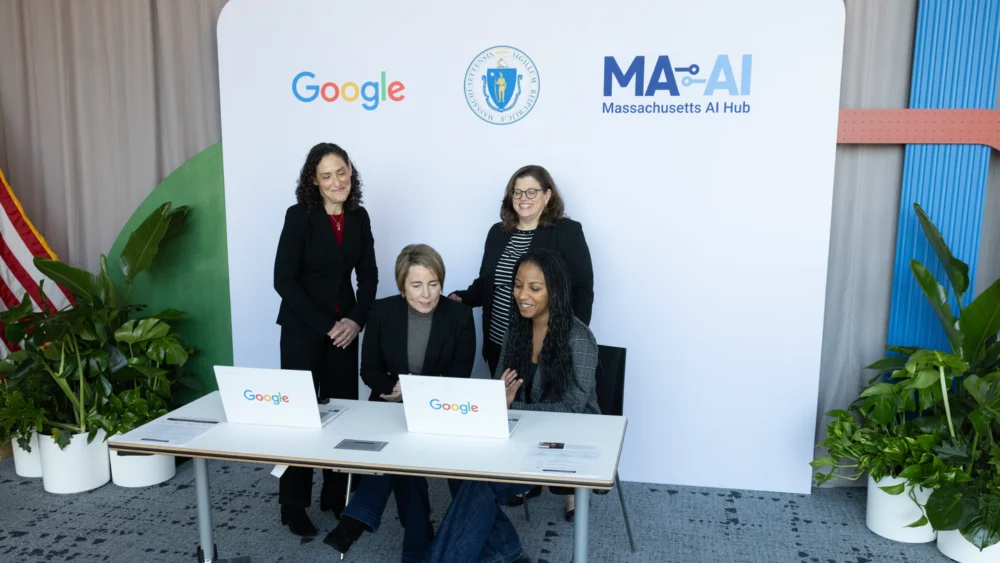
The Commonwealth of Massachusetts and Google have entered into a landmark partnership aimed at democratizing access to artificial intelligence (AI) education and professional certification. Announced by Governor Maura Healey and Google leadership, the initiative provides every resident of the Bay State with no-cost access to the Grow with Google program, including the newly launched Google AI Professional Certificate and the established suite of Google Career Certificates. This collaboration, facilitated through the Massachusetts AI Hub, marks a significant expansion of the state’s efforts to solidify its position as a global leader in technological innovation and workforce readiness.
The partnership is designed to bridge the growing digital skills gap by offering industry-recognized credentials in high-growth fields such as data analytics, cybersecurity, project management, and user experience (UX) design. By integrating AI-specific training into this curriculum, the program ensures that the Massachusetts workforce is not only prepared for current market demands but is also equipped to navigate the transformative shift toward automated and AI-enhanced workflows.
The Strategic Framework of the Massachusetts AI Hub
The partnership operates under the umbrella of the Massachusetts AI Hub, an initiative launched by the Healey-Driscoll administration to coordinate AI policy, economic development, and workforce training. Managed by the Massachusetts Technology Collaborative (MassTech), the AI Hub serves as a central node for academia, industry, and government to collaborate on responsible AI deployment.
Governor Maura Healey has emphasized that the state’s economic future depends on its ability to adapt to emerging technologies. "Massachusetts has always been a pioneer in innovation," Healey stated during the announcement. "By partnering with Google, we are ensuring that every resident, regardless of their background or current career path, has the tools they need to succeed in an AI-driven economy. This is about equity, opportunity, and maintaining our competitive edge."
The Massachusetts AI Hub was established following a 2023 executive order that created an AI Task Force. This task force was charged with identifying the risks and rewards of generative AI. The collaboration with Google represents one of the first major public-facing deliverables of this task force, moving from theoretical policy to practical, large-scale implementation.
Program Details and Curriculum Scope
The centerpiece of this announcement is the Google AI Professional Certificate. Developed by internal experts at Google, this program is designed to teach workers how to use generative AI in their everyday professional tasks. The curriculum covers a range of topics, including prompt engineering, the use of AI for data synthesis, and the ethical considerations of automated systems. Unlike highly technical computer science degrees, these certificates are designed for a broad audience, requiring no prior experience in coding or engineering.
In addition to the AI-specific training, the partnership grants residents access to the full suite of Google Career Certificates. These programs typically require three to six months of part-time study and are hosted on the Coursera platform. The fields covered include:
- Cybersecurity: Training in protecting networks, devices, and data from unauthorized access.
- Data Analytics: Focusing on the collection, transformation, and organization of data to help make informed business decisions.
- Digital Marketing & E-commerce: Skills for reaching customers through digital channels and managing online stores.
- IT Support: Troubleshooting and customer service for technology users.
- Project Management: Foundations of traditional and agile project management methodologies.
- UX Design: The process of creating products that provide meaningful and relevant experiences to users.
By providing these at no cost, the state removes the financial barrier to entry, which can often exceed several hundred dollars per student. This is particularly relevant for mid-career professionals looking to pivot or for recent graduates seeking to augment their degrees with practical, employer-vetted skills.
Chronology of Google’s State-Level Partnerships
Massachusetts is the latest in a series of states to adopt the Grow with Google model for statewide workforce development. The trajectory of these partnerships reflects a growing trend of state governments seeking private-sector expertise to address labor shortages in the tech sector.
- 2017: Google launches the "Grow with Google" initiative, initially focusing on small business workshops and basic digital literacy.
- 2021-2022: The program expands its certificate offerings, gaining recognition from over 150 US employers who agree to consider certificate holders for open roles.
- 2023: States such as Arkansas, Oklahoma, and Virginia announce statewide partnerships to integrate Google Career Certificates into community colleges and state employment agencies.
- Early 2024: Connecticut joins the initiative, focusing on bridging the digital divide in underserved urban centers.
- Late 2024: Massachusetts announces its partnership, notably being one of the first to prioritize the "AI Professional Certificate" as a core component of the rollout.
This chronology demonstrates a shift in focus from general digital literacy to specialized, high-stakes professional certification that mirrors the rapid evolution of the technology sector itself.
Supporting Data: The Economic Imperative for AI Literacy
The decision to offer AI training statewide is supported by a growing body of economic data suggesting that AI will fundamentally alter the labor market. According to a report by the McKinsey Global Institute, up to 30% of hours currently worked across the US economy could be automated by 2030, a trend accelerated by generative AI. However, the report also notes that AI has the potential to add trillions of dollars in value to the global economy if workers are successfully transitioned to new roles.
In Massachusetts, the stakes are particularly high. The state has one of the highest concentrations of technology and life sciences jobs in the world. Data from the Massachusetts Technology Collaborative indicates that the tech sector accounts for nearly 10% of the state’s private-sector workforce. As AI becomes integrated into biotechnology, financial services, and advanced manufacturing—the pillars of the Massachusetts economy—the demand for AI-literate employees is expected to surge.
Furthermore, a recent LinkedIn "Future of Work" report highlighted that job postings mentioning AI or Generative AI have more than doubled globally over the past two years. In the United States, applications for AI-related roles are growing 17% faster than for roles that do not mention the technology. By providing free training, Massachusetts is positioning its residents to capture this "AI premium" in the job market.
Institutional and Corporate Responses
The partnership has garnered positive reactions from various stakeholders across the Commonwealth. Tech sector leaders in the Cambridge-Boston corridor, where Google maintains a significant corporate presence, have praised the move as a necessary step for talent retention.
Google’s Vice President and Head of Google Cambridge, Bryan Graham, noted the company’s long-standing ties to the region. "Google is proud to call Massachusetts home. Our office in Cambridge is a hub of innovation, and we believe that the benefits of that innovation should be accessible to everyone in the state. This partnership with Governor Healey and the AI Hub is about ensuring that the next generation of tech leadership comes from right here in the Bay State."
The Massachusetts Technology Collaborative also issued a statement highlighting the program’s role in regional equity. "This initiative is not just for those in the 128 corridor or the tech hubs of Boston and Cambridge," said a spokesperson for MassTech. "Through online delivery, we are reaching residents in the Berkshires, the Pioneer Valley, and the South Shore, ensuring that the economic boost provided by AI is felt in every corner of the Commonwealth."
Broader Implications and Workforce Analysis
The implications of this partnership extend beyond individual career advancement. For the Commonwealth, it represents a strategic investment in "human capital" that could reduce long-term unemployment and underemployment. By providing a clear pathway to high-paying jobs, the state aims to increase its tax base and reduce the need for public assistance programs.
From a pedagogical perspective, the move signals a shift toward "skills-based hiring." As traditional four-year degrees become increasingly expensive, industry-recognized certificates provide a faster, more flexible alternative for many. While they do not replace the value of a comprehensive university education, they offer a specialized supplement that is often more aligned with the immediate needs of employers.
However, the success of the initiative will depend on its adoption rate and the willingness of local employers to recognize these credentials. While Google’s hiring consortium includes major names like Deloitte, Verizon, and Ford, the Massachusetts government will need to work closely with local mid-sized enterprises to ensure that a Google Career Certificate carries weight in regional hiring processes.
Conclusion and Future Outlook
The partnership between Google and the Massachusetts AI Hub sets a new benchmark for state-led workforce development in the age of artificial intelligence. By removing cost barriers and providing high-quality, industry-aligned training, Massachusetts is attempting to future-proof its economy against the disruptions of automation.
As the program rolls out, the state will likely monitor enrollment data and job placement rates to gauge its effectiveness. If successful, this model could serve as a blueprint for other states and nations looking to navigate the complexities of the fourth industrial revolution. For now, the message from Beacon Hill is clear: in the race for AI supremacy, the most valuable asset is a trained and ready workforce. Massachusetts residents interested in the program can now access the training through the official Massachusetts AI Hub portal, marking the beginning of a new chapter in the state’s storied history of technological leadership.
