

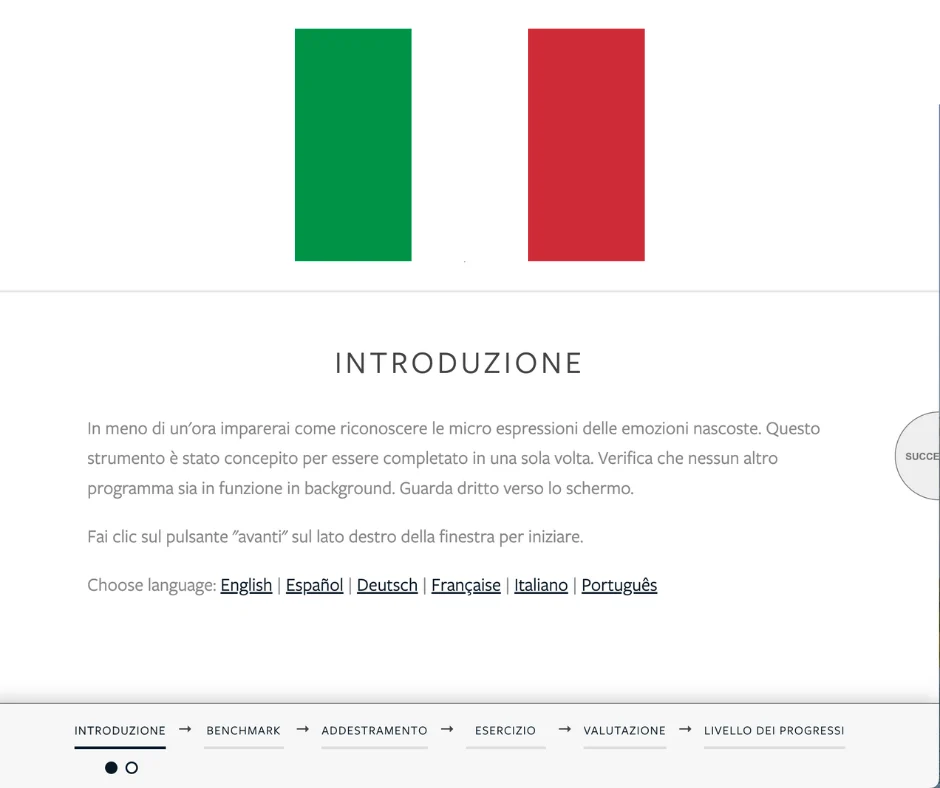
The Paul Ekman Group, a leading authority in the science of emotions and microexpressions, has significantly expanded its commitment to global accessibility with the launch of its comprehensive online training tools in Italian, French, and German. This strategic initiative, building upon existing Spanish and Portuguese offerings, aims to democratize the understanding of nonverbal emotional communication, making Dr. Paul Ekman’s groundbreaking research available to a broader international audience. The expansion underscores the organization’s enduring mission to foster greater self-awareness and interpersonal understanding worldwide through the mastery of emotional intelligence.
A Mission Rooted in Universal Understanding
At its core, the Paul Ekman Group’s mission is to empower individuals to better comprehend themselves and others by enhancing emotional awareness. The introduction of these new language options represents a pivotal step in realizing this vision on a truly global scale. For years, Dr. Ekman’s work has been characterized by its emphasis on the universality of basic human emotions and their corresponding facial expressions. This has been validated by extensive cross-cultural research, including studies conducted in diverse regions such as Papua New Guinea, which demonstrated that even in isolated cultures, people expressed and recognized fundamental emotions like happiness, sadness, anger, fear, surprise, and disgust in similar ways. This foundational understanding has been instrumental in the development of the training tools, which now cater to a more diverse linguistic landscape.
The decision to translate the training materials into Italian, French, and German is a direct response to growing demand from European markets and beyond. By offering these resources in native languages, the Paul Ekman Group aims to remove language barriers that may have previously limited access for educators, professionals, and individuals seeking to deepen their understanding of emotional cues. This expansion is particularly significant for fields that rely heavily on nuanced interpersonal communication, such as law enforcement, healthcare, education, and corporate leadership.
Comprehensive Training Now Available in Multiple Languages
The newly translated online training tools encompass all seven of the Paul Ekman Group’s core microexpression training modules. These modules are available across their established training packages, ensuring a consistent and high-quality learning experience regardless of the language chosen. Users will be prompted to select their preferred language at the commencement of each course, seamlessly integrating the learning process into their native tongue.
The existing suite of training tools, which has already benefited learners in over 230 countries, now offers a more inclusive pathway to mastering the detection of microexpressions. The addition of Italian, French, and German brings the total number of available languages to five, with further expansions anticipated in the near future. This progressive approach reflects the organization’s dedication to adapting its resources to meet the evolving needs of its global community.
The Profound Importance of Microexpression Recognition
Microexpressions are fleeting, involuntary facial expressions that betray a person’s true emotions. Typically lasting a fraction of a second, these subtle shifts in facial musculature often occur outside of conscious awareness and can be invaluable in deciphering genuine feelings, especially in situations where individuals may be attempting to conceal their emotions. Understanding microexpressions is not merely an academic pursuit; it has tangible, practical applications across a wide spectrum of human interaction.
For professionals in fields such as law enforcement, the ability to detect microexpressions can be crucial in assessing the veracity of statements, identifying deception, and ensuring public safety. In healthcare settings, recognizing subtle emotional cues can enhance patient care, improve diagnostic accuracy, and foster stronger therapeutic relationships. Educators can leverage this knowledge to better understand the emotional states of their students, leading to more effective teaching and a supportive learning environment. Business leaders and team managers can utilize these skills to navigate complex interpersonal dynamics, build trust, and foster more collaborative and productive teams.
Beyond professional applications, the ability to recognize microexpressions significantly enhances personal relationships. It allows for greater empathy, more precise responses to the emotional needs of others, and a deeper, more intuitive connection. In essence, mastering the recognition of microexpressions is a cornerstone of advanced emotional intelligence, enabling individuals to interact with greater nuance, accuracy, and insight.
A Global Footprint: The Science of Emotions for All
The work of Dr. Paul Ekman, a pioneer in the study of human emotions, has consistently been grounded in the principle of the universality of emotions and their expression. His seminal research, conducted over decades, has provided compelling evidence that certain facial expressions are innate and universally understood across cultures. This foundational research has paved the way for the development of training programs that equip individuals with the ability to recognize these subtle, yet powerful, emotional signals.
The global reach of Dr. Ekman’s tools, now accessible in a growing number of languages, signifies a profound commitment to making emotional literacy a global endeavor. The expansion into Italian, French, and German is not just about translation; it is about cultural adaptation and ensuring that the nuances of emotional communication are conveyed effectively to speakers of these languages. This effort is a testament to the organization’s belief that understanding emotions is a fundamental human skill that should not be limited by linguistic boundaries.
The Paul Ekman Group’s initiative to broaden language access is a strategic move in an increasingly interconnected world. As global communication becomes more fluid, so too does the need for a universal understanding of human emotions. By providing accessible training in multiple languages, the organization is actively contributing to a more empathetic and emotionally intelligent global community.
Looking Ahead: Continued Expansion and Community Engagement
The launch of the Italian, French, and German language versions of the microexpression training tools is a significant milestone, but it represents only a part of the Paul Ekman Group’s ongoing commitment to global accessibility. The organization has explicitly stated its intention to continue expanding its language offerings, driven by the needs and requests of its worldwide user base.
In a forward-looking statement, the Paul Ekman Group encourages its community to actively participate in shaping the future of its multilingual offerings. "If there is a language you would like to have available, please let us know here," the organization conveyed, providing a direct email link for feedback. This open invitation for input demonstrates a user-centric approach to development, ensuring that future language additions align with the most pressing global demands.
The organization expresses gratitude for its global community and reaffirms its dedication to continuing this journey of emotional understanding together, irrespective of linguistic backgrounds. This inclusive ethos is central to the Paul Ekman Group’s identity and its vision for a world where emotional intelligence is a widely shared and cultivated skill. The ongoing expansion of its training resources in diverse languages underscores its commitment to making the science of emotions accessible to everyone, fostering a more connected and understanding world, one language at a time.
