

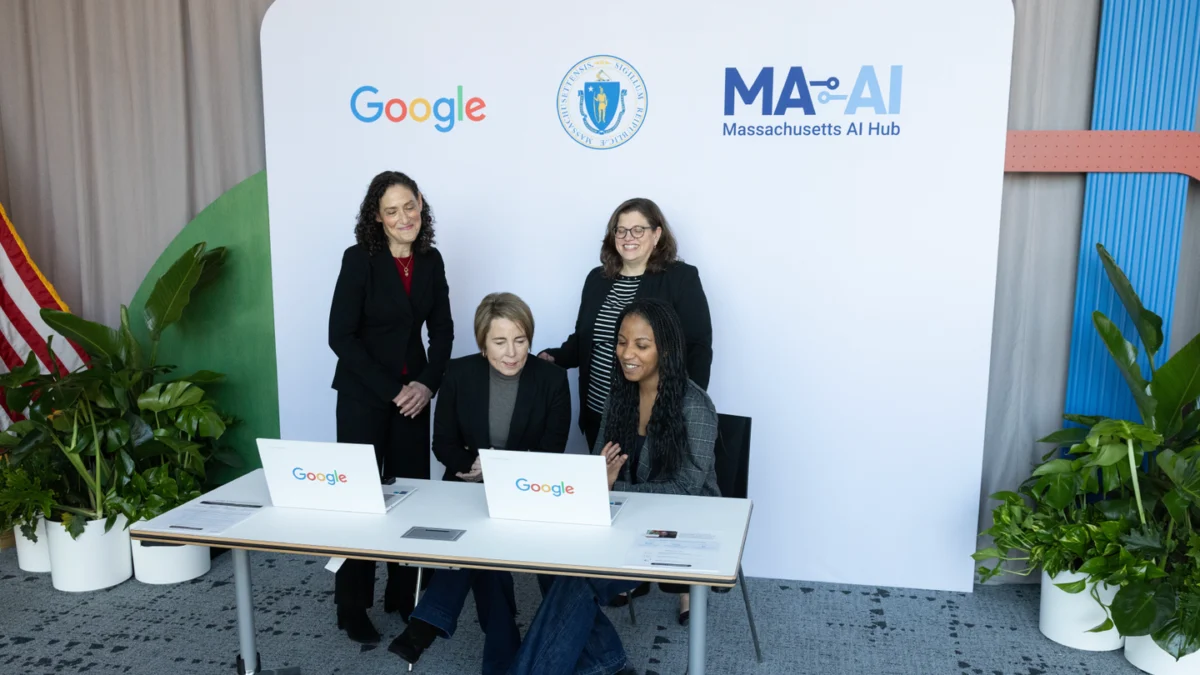
Google has announced a landmark partnership with Massachusetts Governor Maura Healey and the Massachusetts AI Hub to provide all residents of the Commonwealth with no-cost access to specialized artificial intelligence (AI) and career training. This initiative, facilitated through the Grow with Google program, aims to democratize access to high-demand technical skills, offering the new Google AI Professional Certificate alongside the established suite of Google Career Certificates. The collaboration positions Massachusetts as a leading state in the national effort to integrate AI literacy into the general workforce, ensuring that the "Bay Stater" population is equipped to navigate an increasingly automated and data-driven global economy.
By removing the financial barriers to professional certification, the partnership seeks to address the growing skills gap in the technology sector while bolstering the state’s economic resilience. Massachusetts residents can now access these resources through the Massachusetts AI Hub, a state-led initiative focused on accelerating the adoption of AI across various sectors, including government, academia, and private industry. This move follows similar successful rollouts in Arkansas, Connecticut, Oklahoma, and Virginia, signaling a strategic, multi-state expansion of Google’s workforce development efforts.
Expanding Access to Digital Skills in the Bay State
The core of this partnership is the provision of the Google Career Certificates program, which offers self-paced, online training in high-growth fields. These certificates are designed by Google experts and are intended to prepare learners for entry-level roles in fields such as Data Analytics, Cybersecurity, IT Support, Project Management, and UX Design. With the addition of the new AI Professional Certificate, the curriculum has been modernized to include generative AI applications, prompt engineering, and the ethical implementation of AI tools in professional environments.
Massachusetts has long been recognized as a global epicenter for innovation, driven by its concentration of elite academic institutions and a robust biotechnology and robotics sector. However, the rapid acceleration of AI technologies has created an urgent need for workers who can bridge the gap between traditional professional expertise and emerging digital capabilities. The no-cost access provided by this partnership ensures that even those without a traditional four-year degree or those looking to pivot careers can gain a competitive edge in the labor market.
The Strategic Role of the Massachusetts AI Hub
The Massachusetts AI Hub serves as the primary conduit for this initiative. Established under the Healey-Driscoll administration, the Hub is part of a broader strategy to maintain the state’s competitive advantage in the technology sector. By partnering with Google, the AI Hub is executing its mandate to foster a "talent-first" ecosystem.
The Hub’s involvement is critical because it integrates these training modules into the existing state infrastructure for economic development. This ensures that the training is not occurring in a vacuum but is instead aligned with the needs of local employers. The Massachusetts Technology Collaborative (MassTech), which oversees the AI Hub, will play a vital role in promoting these resources to diverse communities across the state, from the tech-heavy corridors of Kendall Square to the industrial hubs of Worcester and Springfield.
Curriculum Overview: Bridging the AI Literacy Gap
The newly introduced Google AI Professional Certificate is specifically tailored to the current demands of the workforce. Unlike deep-learning courses intended for computer scientists, this program focuses on "applied AI"—teaching professionals how to use AI tools to enhance productivity, automate repetitive tasks, and improve decision-making processes.
Key components of the training include:
- Generative AI Fundamentals: Understanding the mechanics of Large Language Models (LLMs) and their practical applications.
- Prompt Engineering: Learning how to effectively communicate with AI systems to generate high-quality outputs.
- AI Ethics and Governance: Navigating the complexities of data privacy, bias, and the responsible use of automated systems.
- Data-Driven Decision Making: Leveraging AI to interpret complex datasets and provide actionable insights for business strategy.
These skills are becoming increasingly essential across all industries. In Massachusetts, where the healthcare and financial services sectors are major employers, the ability to utilize AI for diagnostic assistance or risk assessment can significantly alter the career trajectory of an individual worker.
Economic Context and the Global AI Race
The partnership comes at a time of significant transition in the global labor market. According to recent data from the World Economic Forum, AI is expected to disrupt 40% of all jobs globally, with a higher impact anticipated in advanced economies where white-collar roles are prevalent. However, the same reports suggest that AI could also be a net job creator, provided that the workforce is adequately retrained.
In Massachusetts, the demand for tech-savvy talent remains high despite broader economic fluctuations. By providing free training, the state is effectively subsidizing the upskilling of its population, which reduces the burden on individual workers and small businesses. This proactive approach is a direct response to the "AI race," where states and nations are competing to attract investment by demonstrating a high level of digital readiness.
Supporting data suggests that the "Grow with Google" certificates have already had a measurable impact nationwide. Since the program’s inception, over 200,000 people in the United States have graduated from the certificate programs, with 75% of graduates reporting a positive career outcome—such as a new job, a promotion, or a salary increase—within six months of completion.
A Multi-State Strategy for Workforce Development
Massachusetts is the latest addition to a growing list of states partnering with Google to enhance AI literacy. This trend reflects a shift in how state governments view the role of technology companies in public education and workforce training. By leveraging the platforms and curricula developed by private sector leaders, states can deploy training programs much faster than traditional educational institutions can update their degree requirements.
Chronologically, Google’s state-level partnerships have evolved from general IT support training to specialized AI certification:
- Arkansas and Oklahoma: Focused on bridging the rural-urban digital divide through IT and data analytics.
- Virginia and Connecticut: Emphasized cybersecurity and cloud computing to support regional defense and financial industries.
- Massachusetts: Represents the most advanced iteration of this model, with a specific focus on universal AI literacy and professional-grade generative AI training.
This geographic expansion indicates that Google’s "Grow with Google" initiative is becoming a de facto standard for state-sponsored digital vocational training.
Official Responses and Implications for the Future
Governor Maura Healey has emphasized that this partnership is a cornerstone of her administration’s commitment to economic equity. In statements surrounding the launch, the administration highlighted that making these certificates free removes a significant barrier for underrepresented groups in the tech industry, including women, people of color, and veterans.
Google’s leadership has also reinforced the company’s deep ties to the region. With a major office in Cambridge, Google considers Massachusetts a key hub for its own research and development. Company representatives stated that the partnership is an extension of their commitment to the local community, ensuring that the benefits of AI technology are shared broadly rather than concentrated among a small group of specialists.
Industry analysts suggest that the implications of this partnership are two-fold. First, it sets a precedent for how public-private partnerships can address the "displacement anxiety" associated with AI. Second, it creates a standardized "credentialing" system that local employers can trust. When a resident completes a Google Career Certificate, local businesses have a clear understanding of the skill set the individual possesses, which streamlines the hiring process.
Impact on the Massachusetts Labor Market
The influx of AI-literate workers is expected to have a transformative effect on the Massachusetts labor market. Small and medium-sized enterprises (SMEs), which often lack the budget for extensive internal training programs, will be the primary beneficiaries of this initiative. As their employees gain AI skills, these businesses can implement more efficient workflows, allowing them to compete with larger corporations.
Furthermore, the initiative addresses the "talent retention" challenge. By providing residents with the tools to advance their careers within the state, Massachusetts reduces the likelihood of "brain drain" to other tech hubs like Silicon Valley or Austin. The availability of no-cost, high-tier training reinforces the state’s reputation as a place where career longevity and technical advancement are prioritized.
Conclusion and Future Outlook for AI Literacy
As the program rolls out across the Commonwealth, the focus will shift to enrollment and completion rates. The Massachusetts AI Hub and Google will likely monitor the demographic data of participants to ensure that the program is reaching its intended audience. Success will be measured not just by the number of certificates issued, but by the long-term career stability and wage growth of the participants.
The partnership between Google and the State of Massachusetts serves as a model for the future of workforce development in the age of artificial intelligence. It acknowledges that AI is not a niche field for data scientists, but a foundational skill for the modern professional. By making AI literacy accessible to every resident, Massachusetts is taking a decisive step toward a future where technology serves as a bridge to opportunity rather than a barrier to entry.
