

The Evolution of Generative Vision at Google DeepMind
The debut of Nano Banana 2 comes at a critical juncture in the competitive landscape of generative artificial intelligence. For the past several years, the industry has shifted from a focus on sheer novelty toward utility, reliability, and integration. While early generative models were celebrated for their ability to create surreal or artistic imagery from simple prompts, professional developers and enterprise users required more: consistency, factual accuracy, and the ability to render legible text.
Nano Banana 2 is the successor to a lineage of models that have prioritized speed—the "Flash" designation indicating its role as a high-throughput, low-latency solution. By integrating the Gemini 3.1 architecture, Google DeepMind has successfully combined the reasoning capabilities of its large language models with the diffusion-based techniques of image generation. This hybrid approach allows the model to "understand" the context of a prompt with a level of nuance that previous standalone image models often lacked.
Visual Grounding and Improved World Knowledge
One of the primary technical breakthroughs highlighted in the Nano Banana 2 release is its improved world knowledge, achieved through a process known as visual grounding. Traditionally, image generators have relied solely on their training data, which can lead to "hallucinations" or outdated depictions of real-world locations and events. Nano Banana 2 mitigates this by leveraging Gemini’s ability to interface with real-time web search data.
To demonstrate this capability, Google DeepMind showcased "Window Seat," an experimental application that utilizes Nano Banana 2 to generate photorealistic views from a simulated window. The application integrates live weather data and geographic coordinates to create visuals that are not only aesthetically pleasing but factually grounded in current reality. For instance, if a user requests a view of London during a specific storm, the model can reference current weather patterns and architectural landmarks to ensure the lighting, cloud cover, and street-level details are accurate. This feature is expected to be a transformative tool for travel industries, real estate marketing, and digital twin simulations.
Precision Text Rendering and Global Localization
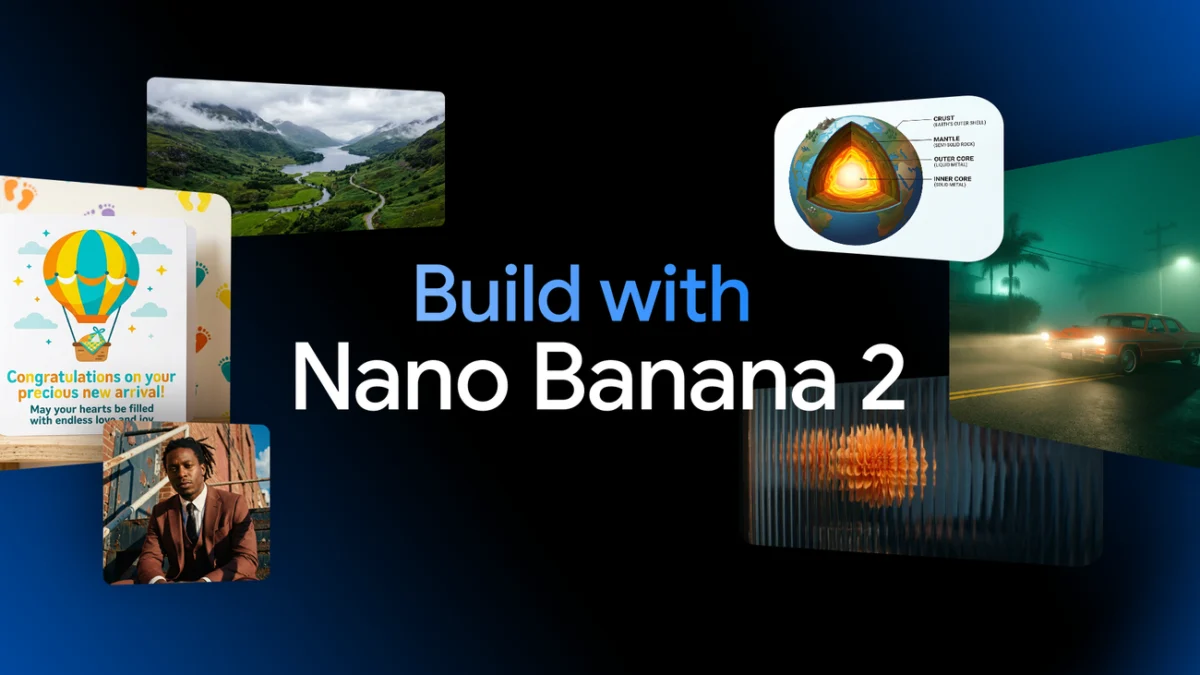
Historically, one of the most significant "pain points" for AI-generated imagery has been the rendering of text. Early models often produced garbled or nonsensical characters, a phenomenon that made them unsuitable for professional graphic design or advertising. Nano Banana 2 addresses this through a dedicated upgrade to its text-rendering engine, ensuring that characters are crisp, accurately spelled, and integrated naturally into the image’s lighting and perspective.
Beyond simple rendering, the model introduces advanced in-image localization. This allows developers to generate or translate text across multiple languages directly within the visual frame. The "Global Ad Localizer" demo illustrates this by taking a single advertisement concept and adapting it for various international markets. The model does more than just translate the words; it localizes the visual elements to suit the cultural context of the target region. This capability is particularly relevant for global brands that require the rapid production of marketing assets that must remain consistent in brand identity while varying in linguistic and cultural presentation.
Creative Control and Subject Consistency
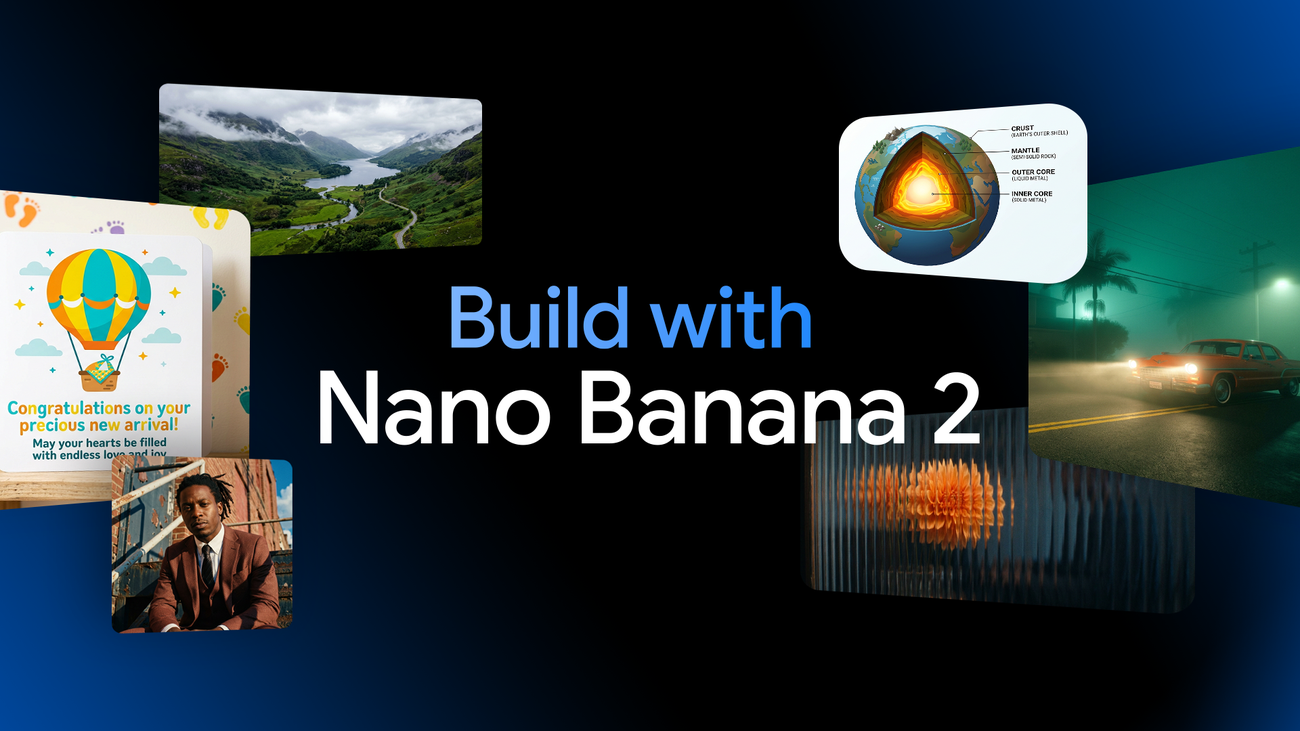
For professional creators, the ability to maintain consistency across multiple images is often more important than the quality of a single frame. Nano Banana 2 introduces enhanced creative controls that allow for richer textures, sharper details, and more vibrant lighting, while also providing tools to maintain subject identity.
The "Pet Passport" demo serves as a primary example of this consistency. By taking a single reference photo of a pet, the model can place that specific animal in various global landmarks while preserving its unique features—such as fur patterns, eye color, and silhouette. This "identity preservation" is a significant step forward for creators working on storyboards, brand mascots, or personalized user experiences. Furthermore, the model offers advanced settings for lighting and texture, giving developers the granular control necessary to match the generated output with existing professional photography or specific art styles.
Performance Metrics and Developer Feedback
The release of Nano Banana 2 is backed by significant performance data from early-access partners who have integrated the model into live production workflows. The shift toward the Gemini 3.1 Flash architecture has resulted in tangible improvements in speed and efficiency.
Sertac Cinar, Senior Product Manager at HubX, reported that his team achieved a 74% to 76% reduction in latency after integrating Nano Banana 2. This effectively made their face-editing workflows four times faster without compromising on professional-grade quality. Such metrics are vital for high-throughput production environments where real-time processing is a requirement.
Other partners have highlighted the model’s adherence to complex prompts. Madhav Jha, Co-Founder and CTO of Emergent, noted that the model performs exceptionally well on high-complexity tasks, maintaining fine-grained detail even when a prompt contains multiple simultaneous constraints. This reliability reduces the need for "prompt engineering" and repeated iterations, further lowering the operational costs for developers.
Integration within the Google Ecosystem
Nano Banana 2 is designed to be a versatile tool within the broader Google Cloud and developer ecosystem. It is currently available through the following channels:
- Google AI Studio: A web-based tool for rapid prototyping and testing.
- Gemini API: For developers looking to integrate image generation directly into their own applications.
- Vertex AI: Google’s enterprise-grade AI platform, offering additional security, scaling, and management tools.
- Firebase: Allowing mobile and web developers to add AI-driven visual features to their apps with minimal backend overhead.
- Google Antigravity: A specialized environment for high-performance computing and advanced AI research.
Access to the model through Google AI Studio currently requires a paid API key, reflecting the model’s position as a premium tool for production-ready applications.

Broader Industry Implications and Future Outlook
The launch of Nano Banana 2 signals a broader trend in the AI industry: the commoditization of high-quality image generation. As the technical barriers to creating photorealistic images fall, the value proposition for AI providers is shifting toward the "workflow" features—editing, localization, and consistency.
By focusing on the "Flash" model, Google DeepMind is targeting the middle-market of AI usage—developers who need high quality but cannot afford the massive latency or cost associated with the industry’s largest, most "over-parameterized" models. This strategy places Google in direct competition with other efficient models like OpenAI’s DALL-E 3 and specialized startups like Midjourney, though Google’s deep integration with web search and its massive cloud infrastructure provide a unique competitive advantage in terms of factual grounding.
Furthermore, the introduction of localization features suggests that Google is eyeing the multi-billion dollar global advertising and localization market. By automating the process of "transcreation"—the process of adapting a message from one language to another while maintaining its intent, style, tone, and context—Google is positioning Nano Banana 2 as an essential tool for the future of digital marketing.
Summary of Key Technical Specifications
| Feature | Specification/Detail |
|---|---|
| Model Designation | Gemini 3.1 Flash Image |
| Primary Access | Google AI Studio, Gemini API, Vertex AI |
| Key Capability | Visual Grounding via Web Search |
| Text Support | Multi-language in-image localization |
| Performance | Up to 4x faster than previous iterations |
| Use Cases | Marketing, UI Generation, Asset Consistency, Travel/Real Estate |
As AI-generated content becomes more prevalent, Google has also emphasized its commitment to responsible AI. While the technical announcement focuses on capabilities, the underlying Gemini architecture includes safeguards designed to prevent the generation of harmful content and to ensure that AI-generated images are identifiable through digital watermarking and metadata.
The arrival of Nano Banana 2 represents a maturation of Google’s AI strategy. It is no longer just about what the AI can do, but how quickly, accurately, and affordably it can do it within a professional production environment. For developers and enterprises, the model offers a robust platform for the next generation of visual applications, promising a future where high-fidelity digital creation is accessible at the touch of an API.
