


New Data Reveals a Significant Shift in Audio Consumption Habits, Highlighting the Growing Dominance of On-Demand Audio Content
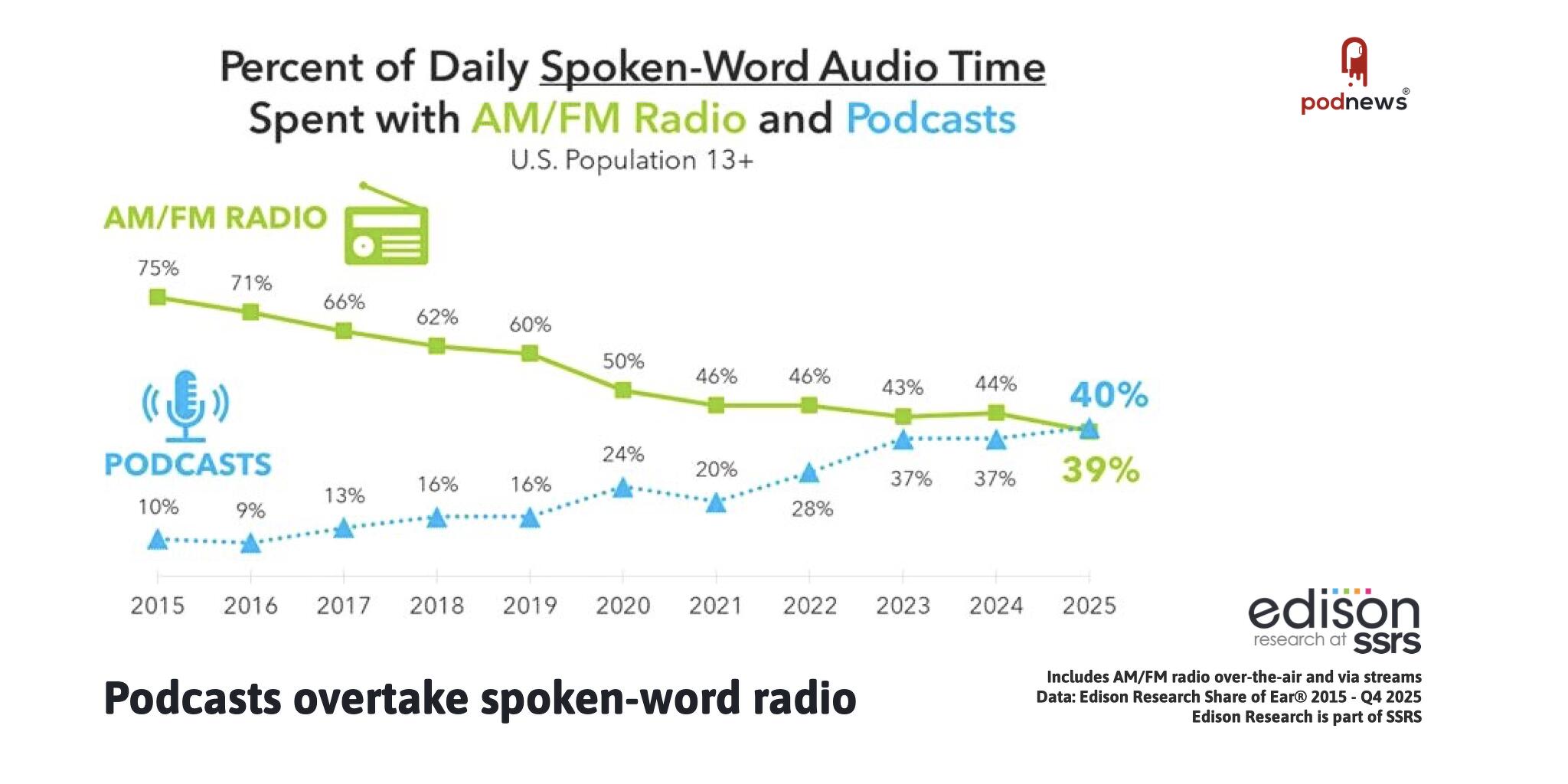
Recent data indicates a pivotal moment in audio consumption, with podcasting now surpassing traditional radio in terms of share of spoken-word listening. This seismic shift underscores the evolving media landscape and the increasing consumer preference for on-demand, curated audio experiences. The visual representation of this trend, presented in a graphic format, vividly illustrates the sustained growth of podcast listenership against a backdrop of declining or stagnant radio listenership in the spoken-word category. This development is not merely a statistical anomaly but a reflection of profound changes in how audiences engage with spoken-word content, driven by technological advancements, changing lifestyles, and the inherent appeal of personalized content delivery.
The implications of this data are far-reaching, impacting advertisers, content creators, and media organizations alike. For advertisers, it signals a necessary recalibration of media spend, with a greater emphasis potentially shifting towards the podcasting ecosystem to reach engaged and targeted audiences. Content creators, both established and emerging, find validation and a growing platform for their work, while traditional broadcasters face the imperative to adapt or risk losing significant market share.

The Rise of the Podcast: A Decade in the Making
The ascent of podcasting to the forefront of spoken-word audio consumption is a narrative of innovation, accessibility, and audience empowerment. Over the past decade, the podcasting industry has experienced exponential growth, fueled by the widespread adoption of smartphones, the proliferation of user-friendly listening apps, and a diverse array of compelling content catering to virtually every niche interest imaginable.

Initially a niche medium, podcasts have steadily gained traction, evolving from a hobbyist pursuit to a mainstream form of entertainment and information. Early adopters were drawn to the freedom of choosing what to listen to, when to listen, and where to listen, a stark contrast to the fixed schedules and limited programming of traditional radio. This on-demand nature has proven particularly attractive to younger demographics, who are accustomed to controlling their media consumption across all platforms.
The technological enablers of this growth cannot be overstated. The ubiquity of smartphones, equipped with powerful processors and internet connectivity, has made podcast listening a seamless experience. Furthermore, the development of sophisticated podcast player applications has simplified the discovery, subscription, and playback of audio content, removing barriers to entry for new listeners. Platforms like Apple Podcasts, Spotify, Google Podcasts, and a host of independent apps have curated vast libraries, making it easier than ever for users to find content that resonates with their interests.

Content diversity has been another critical factor. While radio often operates within the constraints of broad appeal and advertising demands, podcasting has flourished in specialized niches. From in-depth historical narratives and investigative journalism to comedy discussions, true crime explorations, and educational deep dives, the breadth of topics covered in podcasts is virtually limitless. This specialization allows creators to connect with highly engaged audiences, fostering a sense of community and loyalty that is often harder to achieve in traditional mass media.
Key Data Points and Analysis

While the specific figures driving the podcasting overtake are not detailed in the provided image, the visual representation strongly suggests a trend where the percentage of time spent listening to podcasts has surpassed that of radio for spoken-word content. This implies a significant reallocation of listener attention.
- Growth Trajectory: The sustained upward trend in podcast listenership, as depicted by the graphic, indicates a compounding effect. Each new listener acquired often leads to more regular engagement, contributing to the overall market share increase.
- Audience Demographics: Research consistently shows that podcast listeners are often younger, more educated, and have higher disposable incomes than the average radio listener. This demographic profile is highly attractive to advertisers seeking to reach a desirable consumer base.
- Content Engagement: The depth and breadth of podcast content encourage longer listening sessions. Listeners often subscribe to multiple shows and dedicate significant time to consuming their favorite podcasts, indicating a high level of engagement.
- Advertising Effectiveness: The intimate nature of podcasting, where hosts often have a direct and personal connection with their audience, can translate into high ad recall and conversion rates. Advertisers are increasingly recognizing the power of host-read endorsements and targeted advertising within podcast episodes.
The Golden Lobes Podcast Awards: Celebrating Laughter and Creativity

Beyond the statistical trends, the podcasting landscape is also marked by a vibrant and growing community of creators. The announcement regarding The Golden Lobes Podcast Awards highlights this creative energy. The awards, celebrating the funniest moments in podcasting, open entries with a nominal fee and a brief submission process, encouraging participation from both established and independent creators.
The Golden Lobes aim to recognize excellence across various categories, including "Best Blooper," "Best Tangent," and "Best Social," indicating a focus on the spontaneous and often humorous aspects of podcast production. With substantial prize packages valued at over £6,000, including studio time, professional memberships, trophies, and more, the awards offer significant incentives for creators. The event’s commitment to celebrating humor and creativity, with past winners including notable figures from the entertainment world, underscores the cultural impact and comedic potential of the podcasting medium. The awards ceremony itself, described as a "cabaret of laughs," suggests a lively and engaging event designed for networking and celebration within the podcasting industry. The deadline for entries, March 4th, serves as a call to action for creators to showcase their best comedic moments.

New Podcast Releases and Industry News
The provided article also features a curated selection of new and noteworthy podcast releases, offering a glimpse into the diverse content available. These include:

- The Civil War (1861-1865): A comprehensive history podcast aiming to provide an understanding of contemporary America through its past conflicts. Its extensive episode count suggests a deep dive into the subject matter.
- Podnews Weekly Review: A news and analysis podcast covering industry acquisitions, such as the reported acquisition of Supercast by Red Seat Ventures, and discussions on the nuances of audio versus video storytelling. This highlights the dynamic nature of the podcasting business and content creation strategies.
- Americans Talk Australian Survivor: A fan-focused podcast offering immediate reactions and discussions on the popular reality television show. This exemplifies the niche content catering to specific fan communities.
- Giant Ideas: Featuring insights from former UK Deputy Prime Minister Nick Clegg, this podcast delves into critical issues surrounding social media, political polarization, and the fragmentation of the internet. This points to the growing influence of podcasts in discussing complex societal and technological challenges.
- First Frame: A podcast from TELUS STORYHIVE focused on Canadian and Indigenous content creators, addressing the challenges of the creator economy in 2026. This highlights the platform’s role in supporting emerging talent and addressing industry-specific concerns.
- Frequent Miler on the Air: This podcast focuses on strategies for earning and utilizing travel points and miles, catering to a specific interest group within the travel and loyalty program space.
- Voices of Resilience: A new series examining structural inequalities affecting Black and ethnic minority communities in the UK, featuring interviews with healthcare and education professionals. This underscores the medium’s capacity to address important social issues and amplify marginalized voices.
- From Writer to Fighter: A personal narrative podcast documenting a comedy writer’s journey to transform into a boxer, exploring themes of identity, anger, love, and loss. This showcases the deeply personal and narrative-driven content that podcasts can offer.
Industry Support and Future Outlook
The mention of Areya Media as a supporter of Podnews highlights the growing network of companies and individuals investing in the podcasting ecosystem. Their support for the news podcast "To Be Clear" demonstrates a commitment to independent media and the value of timely, relevant audio content. Such partnerships are crucial for the continued growth and sustainability of platforms that serve the podcasting community.

The data showing podcasting’s ascendancy over radio in spoken-word listening is not a signal of radio’s demise, but rather an indication of a maturing and diversifying audio market. Radio retains its strength in live, local, and event-based broadcasting, particularly for music and news delivered in real-time. However, for in-depth discussions, niche interests, and personalized content consumption, podcasts have undeniably captured the attention of a significant and growing audience.
The implications of this shift are profound:

- Advertising Innovation: Advertisers will need to develop more sophisticated strategies for reaching podcast listeners, moving beyond traditional ad buys to consider dynamic ad insertion, host-read endorsements, and branded content integrations.
- Content Diversification: The success of niche podcasts encourages further exploration of specialized topics, leading to a richer and more varied content landscape.
- Platform Competition: Competition among podcast listening platforms will likely intensify, driving innovation in discovery features, user experience, and monetization models.
- Creator Economy Growth: The growing audience for podcasts continues to fuel the creator economy, providing opportunities for independent creators to build sustainable careers through their audio content.
- Cross-Media Integration: The lines between podcasting and other media formats, such as video, social media, and traditional broadcast, will continue to blur, leading to new forms of content creation and distribution.
As podcasting solidifies its position as a dominant force in spoken-word audio, its evolution is far from over. The industry is poised for continued innovation, with creators and platforms alike working to meet the ever-increasing demand for engaging, informative, and entertaining audio content. The data points to a future where listeners have unprecedented control over their audio experiences, and where the power of spoken word, delivered on demand, continues to shape how we learn, are entertained, and connect with the world around us. The ongoing growth and diversification within the podcasting sphere suggest that this trend is not a fleeting phenomenon but a fundamental and lasting shift in media consumption habits.
