

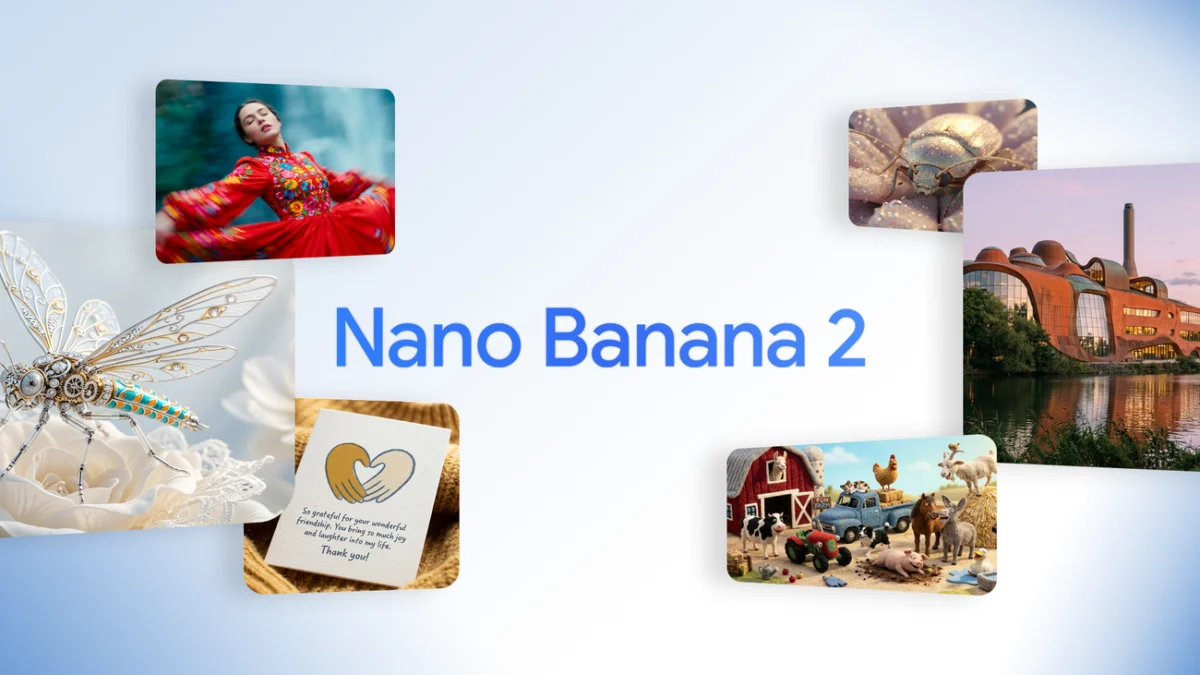
Google DeepMind has officially announced the release of Nano Banana 2, a sophisticated image generation model designed to bridge the gap between high-tier computational intelligence and the rapid processing speeds required for consumer-facing applications. Identified technically as Gemini 3.1 Flash Image, the new model represents a significant milestone in the evolution of Google’s generative AI ecosystem. By synthesizing the advanced reasoning and world knowledge found in the previous "Pro" iterations with the optimized latency of the "Flash" series, Google aims to provide a tool that supports both professional-grade creative control and near-instantaneous iteration.
The launch follows a period of intense competition in the generative media space, where tech giants and startups alike are racing to balance visual fidelity with operational efficiency. Nano Banana 2 is being integrated across the breadth of Google’s product suite, including the Gemini application, Google Search, and specialized marketing tools. This rollout signifies a strategic shift toward making "studio-quality" AI tools accessible to the general public, effectively democratizing high-end digital asset creation.
Technical Specifications and Model Capabilities
The core value proposition of Nano Banana 2 lies in its ability to maintain high levels of "subject consistency" and "instruction following" while operating at a fraction of the temporal cost associated with larger models. In the realm of generative AI, "Pro" models typically rely on massive parameter counts to ensure factual accuracy and complex reasoning, which often results in slower generation times. Conversely, "Flash" models are distilled for speed, sometimes at the expense of intricate detail. Nano Banana 2 claims to resolve this trade-off.
Key advancements in the model include enhanced world knowledge, allowing it to render complex infographics—such as the water cycle or meteorological diagrams—with high degrees of accuracy. Furthermore, the model exhibits improved localization capabilities. For instance, it can generate signage or documentation that accurately reflects local flora, fauna, and linguistic nuances, such as translating technical text into Hindi while maintaining the aesthetic integrity of the surrounding image.
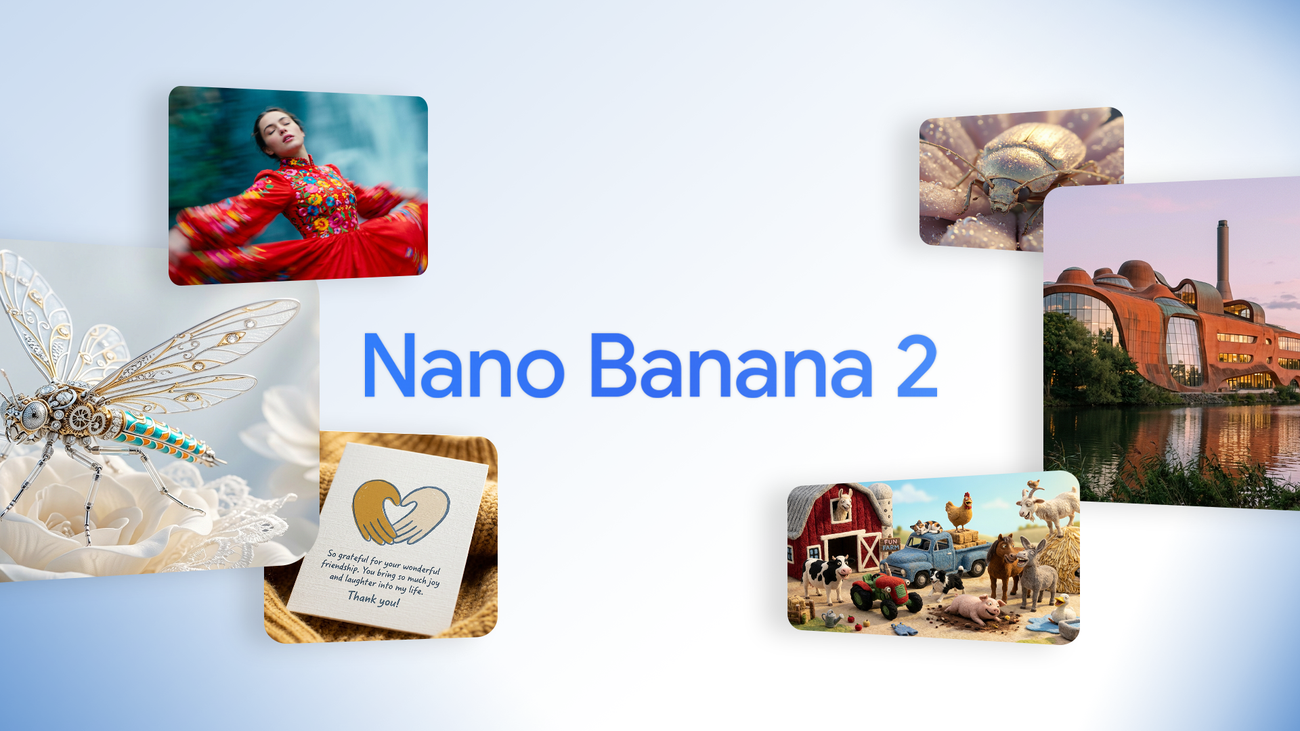
Subject preservation is another critical feature highlighted by Google DeepMind. This allows users to maintain a consistent character or object across multiple generated frames, a capability essential for storyboarding, comic creation, and brand-consistent marketing campaigns. In practical testing, the model has demonstrated the ability to keep fourteen distinct characters consistent within a single farm setting, or to follow a specific "fluffy friend" through various stages of building a treehouse.
A Chronology of Google’s Image Generation Evolution
To understand the significance of Nano Banana 2, one must look at the rapid timeline of development within Google’s AI laboratories over the past year. The trajectory illustrates a move from experimental research to refined, product-ready solutions.
- August 2024: The Nano Banana Debut. Google released the original Nano Banana model, which quickly gained viral attention for its intuitive image editing and generation capabilities. It was the first major step in integrating Gemini-class reasoning into a dedicated visual framework.
- November 2024: The Shift to Professional Standards. Recognizing the demand for higher fidelity, Google introduced Nano Banana Pro. This model prioritized "studio-quality" creative control and advanced intelligence, catering to designers and power users who required precise adherence to complex prompts.
- February 2025: The Efficiency Breakthrough. The announcement of Nano Banana 2 (Gemini 3.1 Flash Image) marks the third major iteration. It serves as the culmination of the previous two releases, merging the intelligence of the Pro version with the speed of the Flash architecture.
This timeline reflects a broader industry trend where the focus has shifted from "what can AI do?" to "how fast and reliably can it do it at scale?" By iterating every few months, Google is maintaining a high-tempo release cycle to stay ahead of competitors like OpenAI’s DALL-E and Midjourney.
Integration Across the Google Ecosystem
Nano Banana 2 is not a standalone research project; it is a functional engine being deployed across Google’s most popular platforms. Its integration into the Gemini app introduces a "templates" feature, where users can select from a grid of artistic styles—ranging from "Gothic clay" to "Steampunk"—and receive high-quality results in seconds.
In Google Search, the model powers the "AI Mode," which generates visual explanations for complex queries. This is particularly useful for scientific or educational searches where a diagram or a specific visual interpretation (such as a pufferfish nest in a scientific field notebook) can convey information more effectively than text alone.
For enterprise and marketing users, the model is being utilized in "Flow," a tool that emphasizes subject preservation and brand identity. This allows businesses to generate high-fidelity assets for social media and advertising without the long wait times typically associated with high-resolution rendering.
Provenance, Safety, and Content Verification
As the realism of AI-generated imagery reaches new heights, the potential for misinformation and digital forgery has become a primary concern for regulators and tech companies. In response, Google has deepened its commitment to "robust provenance"—the ability to track the origin and history of digital content.
Nano Banana 2 incorporates Google’s proprietary SynthID technology, a tool developed by Google DeepMind to embed imperceptible digital watermarks directly into the pixels of generated images, video, and audio. Unlike metadata-based watermarks, which can be easily stripped away, SynthID is designed to remain detectable even after the image has been cropped, compressed, or color-adjusted.
According to Naina Raisinghani, Product Manager at Google DeepMind, the SynthID verification feature in the Gemini app has been utilized over 20 million times since its launch in November. This data suggests a high level of user interest in identifying the "AI-ness" of the content they encounter.
Furthermore, Google is expanding its interoperability by adopting C2PA (Coalition for Content Provenance and Authenticity) Content Credentials. C2PA is an industry-wide standard that provides a "nutrition label" for digital media, showing not just that AI was used, but how it was used. By coupling SynthID with C2PA, Google provides a multi-layered approach to transparency, which is expected to become a requirement under emerging global AI regulations, such as the EU AI Act.
Market Analysis and Industry Implications
The release of Nano Banana 2 comes at a time when the generative AI market is projected to grow at a compound annual growth rate (CAGR) of over 17% through 2030. The demand for "Flash" speed models is driven by the high cost of inference—the computational power required to run an AI model. By optimizing the model to be faster and leaner, Google can reduce the carbon footprint and the financial overhead of its AI services, making them more sustainable in the long term.
Industry analysts suggest that the "subject consistency" featured in Nano Banana 2 is a direct challenge to specialized creative tools. "The ability to maintain a character’s likeness across different prompts is the ‘holy grail’ for AI storytellers," says one industry observer. "By bringing this to a ‘Flash’ model, Google is targeting the creator economy, where speed of iteration is just as important as the final output."
Furthermore, the focus on "integrated image-search grounding" allows the model to fact-check its visual outputs against Google’s massive index of real-world data. This reduces "hallucinations"—instances where the AI generates plausible-looking but factually incorrect imagery—thereby increasing the model’s utility for educational and journalistic purposes.
Official Responses and Forward Outlook
The internal sentiment at Google DeepMind remains focused on the "helpful AI" narrative. Product leads emphasize that Nano Banana 2 is designed to be a collaborative partner rather than a replacement for human creativity. By handling the "heavy lifting" of rendering and technical consistency, the model allows human creators to focus on conceptualization and art direction.
Looking ahead, Google is expected to bring C2PA verification to more of its mobile applications, including the Gemini app on Android and iOS. This move will likely pressure other major platforms to adopt similar transparency standards. As generative media continues to evolve, the distinction between "Pro" and "Consumer" tools is likely to blur even further, with Nano Banana 2 serving as the current benchmark for that convergence.
In conclusion, Nano Banana 2 represents a significant step forward in the practical application of generative AI. By prioritizing the dual pillars of speed and intelligence, Google is positioning its Gemini ecosystem as a versatile solution for an increasingly visual digital world. Whether used for creating a whimsical infographic for a classroom or a professional marketing asset for a global brand, the model provides a glimpse into a future where high-quality digital creation is instantaneous, verifiable, and accessible to all.
