

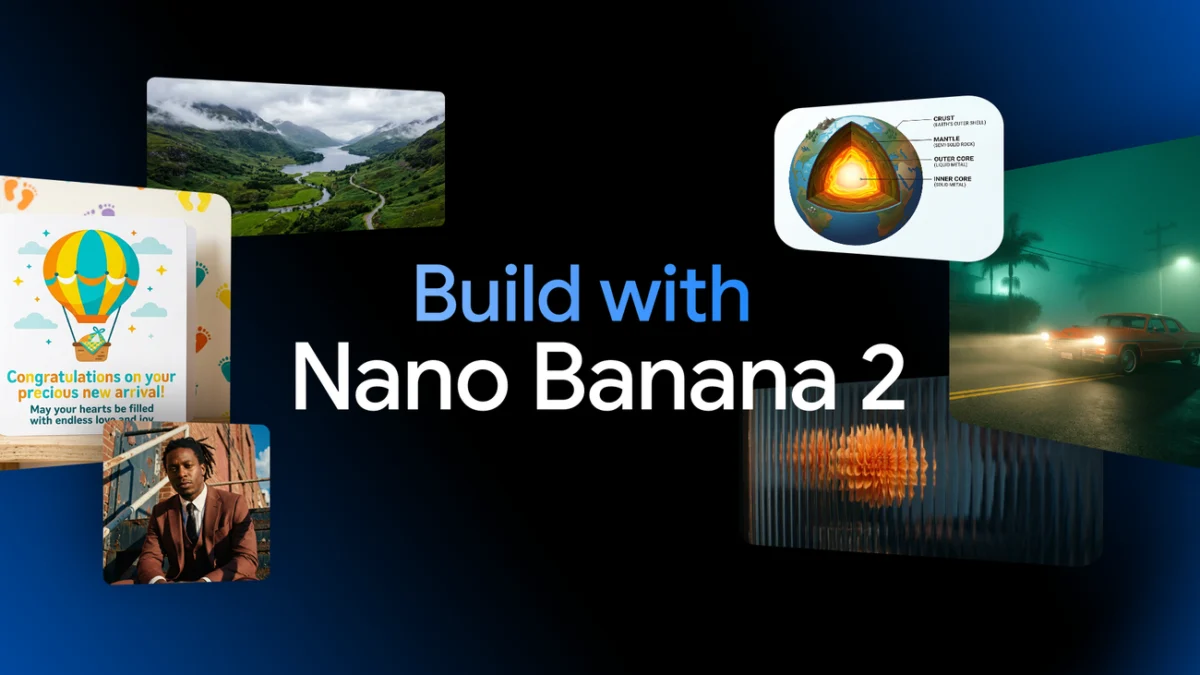
Google DeepMind has officially announced the release of Nano Banana 2, technically designated as Gemini 3.1 Flash Image, marking a significant milestone in the tech giant’s rapidly evolving generative artificial intelligence portfolio. Developed under the leadership of Product Manager Alisa Fortin and Group Product Manager Bea Alessio, the new model is engineered to provide high-fidelity image generation and accelerated advanced editing capabilities. Positioned as a "Flash" model, Nano Banana 2 is specifically optimized for speed and cost-efficiency, allowing developers and enterprises to deploy sophisticated visual creation tools at scale. The release underscores a strategic shift within Google to bridge the gap between high-end creative synthesis and the practical, low-latency requirements of production-level applications.
The Evolution of Google’s Visual AI Architecture
The debut of Nano Banana 2 represents the latest chapter in a multi-year chronology of visual AI development at Google. To understand the significance of this release, one must look back at the trajectory of the company’s image generation efforts. The journey began in earnest with the development of Imagen, a text-to-image diffusion model that prioritized photorealism and deep language understanding. As the industry moved toward multimodal capabilities, Google integrated these visual strengths into the Gemini ecosystem.
In early 2024, Google introduced the first iteration of its Gemini-integrated image models, focusing on basic prompt adherence. However, as the demand for enterprise-grade tools grew, the need for models that could handle complex text rendering and consistent subject matter became apparent. The "Flash" designation for the 3.1 series signifies a refinement in the underlying architecture, utilizing more efficient distillation techniques and optimized transformer blocks. This allows Nano Banana 2 to deliver outputs that rival larger, more computationally expensive models while maintaining the throughput necessary for real-time applications.
Technical Specifications and Performance Metrics
Nano Banana 2 is built upon the Gemini 3.1 architecture, which emphasizes a superior price-performance ratio. While specific parameter counts remain proprietary, technical documentation suggests that the model utilizes an enhanced latent diffusion process coupled with Google’s proprietary TPU (Tensor Processing Unit) infrastructure. This synergy results in several key performance upgrades over previous iterations:
- Latency Reduction: The "Flash" architecture is designed to minimize the time between prompt submission and image delivery, a critical factor for developers building interactive user interfaces.
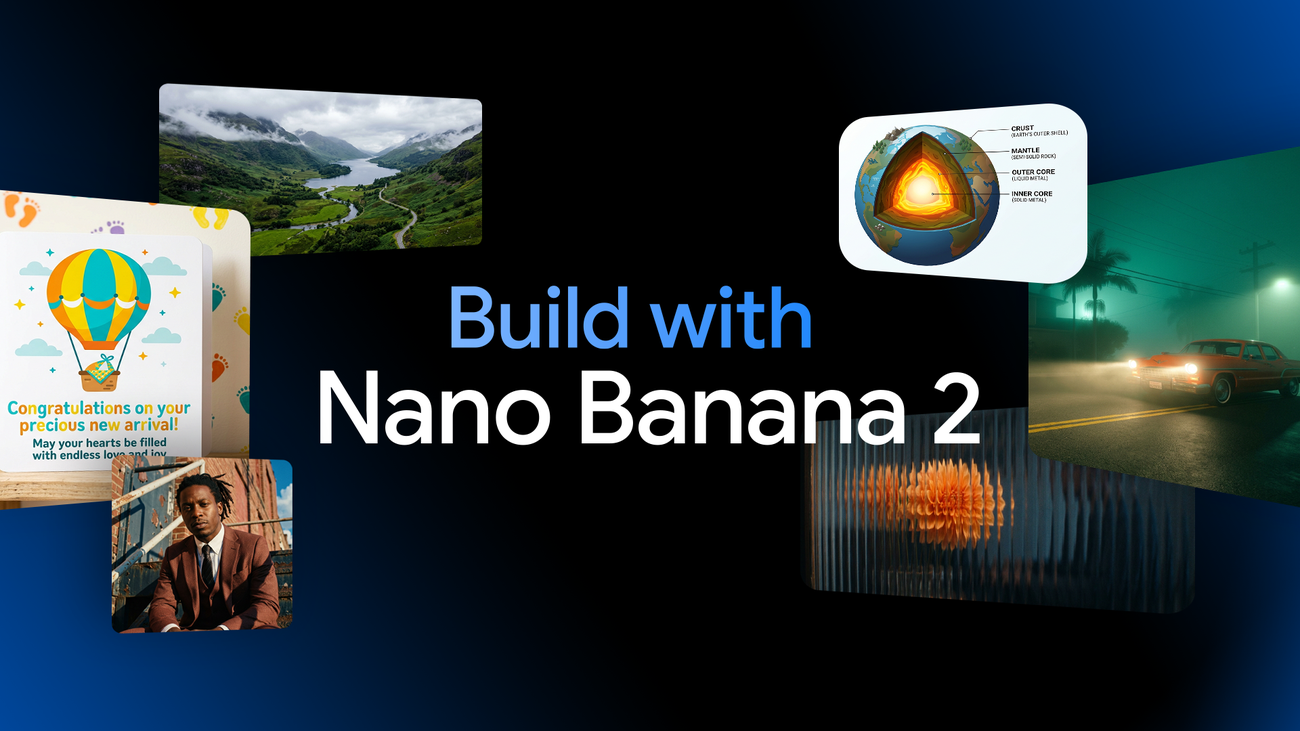
- Text Fidelity: One of the primary hurdles in generative AI has been the accurate rendering of legible text. Nano Banana 2 utilizes an upgraded spatial reasoning module that allows it to place characters with precision, reducing the "gibberish" often seen in earlier generative models.
- Visual Grounding: Unlike static models that rely solely on training data, Nano Banana 2 leverages Google’s vast world knowledge. By integrating visual grounding—essentially a mechanism that allows the model to reference real-world data and web-searched imagery—the AI can produce more contextually accurate depictions of specific locations, events, and objects.
The model is accessible via the Gemini API in Google AI Studio, requiring a paid API key for production-level access. It is also integrated into Google Cloud’s Vertex AI, Google Antigravity, and Firebase, providing a seamless pipeline for developers already embedded in the Google Cloud ecosystem.
Core Innovations: Localization and Subject Consistency
A standout feature of Nano Banana 2 is its advanced text rendering and localization capability. In a demonstration titled "Global Ad Localizer," Google DeepMind showcased the model’s ability to take a single advertisement and translate it into multiple languages while simultaneously adjusting the visual elements to suit different cultural markets. This "in-image localization" is a significant leap forward for global marketing firms, as it automates the tedious process of manual graphic redesign for international campaigns.
Furthermore, the model addresses the persistent challenge of creative control and consistency. The "Pet Passport" demo illustrates how the model can maintain the likeness of a specific subject—in this case, a domestic pet—across various generated environments. By maintaining "subject persistence," Nano Banana 2 allows users to place a specific entity into diverse scenarios (such as famous world landmarks) without losing the defining characteristics of the original input image. This is achieved through a combination of reference-based generation and fine-tuned attention mechanisms that prioritize the features of the source subject.
Industry Implications and Market Context
The release of Nano Banana 2 arrives at a time of intense competition in the generative AI space. Competitors such as OpenAI (with DALL-E 3), Midjourney, and Adobe (with Firefly) have each carved out niches within the creative and enterprise sectors. Google’s strategy with the "Flash" model appears to be a direct play for the developer and "at-scale" market, where cost per image and generation speed are often more important than the absolute peak of artistic complexity.
Industry analysts suggest that the focus on "world knowledge" and "visual grounding" is where Google holds a distinct advantage. By tethering image generation to its search index, Google can theoretically reduce "hallucinations"—instances where the AI generates factually incorrect or physically impossible structures—by cross-referencing prompts with real-world visual data. This makes the model particularly attractive for news organizations, educational platforms, and architectural firms that require a higher degree of accuracy.
Developer Ecosystem and Production Readiness
Google DeepMind has emphasized that Nano Banana 2 is "built for production." This claim is supported by the model’s availability across several enterprise platforms. For instance, the integration with Firebase allows mobile app developers to add image generation features with minimal backend configuration. Similarly, the availability on Vertex AI ensures that large-scale enterprises can manage the model with the same security, privacy, and governance standards they apply to their other cloud workloads.
Early feedback from partner organizations suggests that the model’s ability to handle "Window Seat" scenarios—generating photorealistic views based on live weather data and geographic coordinates—is being explored for use in travel apps and real estate staging. The model’s improved lighting, richer textures, and sharper details are not merely aesthetic upgrades; they represent a functional improvement that allows AI-generated content to be used in high-resolution print and digital media without extensive post-processing.

Official Responses and Strategic Vision
While official statements from external partners remain under standard non-disclosure agreements typical of such rollouts, the internal sentiment at Google DeepMind is one of aggressive expansion. Alisa Fortin and Bea Alessio noted in the release documentation that the goal was to provide a tool that "allows you to deploy sophisticated visual creation at scale." This reflects a broader corporate mandate to monetize the Gemini 1.5 and 3.1 architectures by providing tiered access: "Pro" models for deep reasoning and "Flash" models for high-velocity utility.
The requirement of a paid API key for Nano Banana 2 on Google AI Studio signals a shift toward a sustainable business model for generative AI. By charging for access, Google is positioning these models as professional-grade utilities rather than experimental novelties. This move is expected to stabilize the developer ecosystem, ensuring that those building on the platform have access to consistent uptime and dedicated technical support.
Analysis of Future Impact
Looking ahead, the trajectory of Nano Banana 2 suggests that the next frontier in generative AI will not just be about "prettier" images, but about "smarter" ones. The integration of web search and live data into the generation loop points toward a future where AI can visualize the world in near real-time. For example, a news agency could use such a model to generate a visual representation of a breaking weather event based on incoming satellite data and ground-level reports.
However, the advancement of such high-fidelity tools also brings renewed focus to ethical considerations, such as the creation of deepfakes and the infringement of intellectual property. Google has stated that Nano Banana 2 includes safety filters and watermarking technologies, likely utilizing its SynthID tool, to ensure that generated content can be identified and that the model adheres to strict safety guidelines.
In conclusion, Nano Banana 2 (Gemini 3.1 Flash Image) is a robust response to the market’s demand for faster, more accurate, and more controllable AI imagery. By prioritizing text rendering, localization, and visual grounding, Google DeepMind has provided developers with a versatile toolkit that extends far beyond simple art generation, moving into the realm of functional, global-scale digital production. As the model sees wider adoption through Vertex AI and the Gemini API, its impact on the creative and technical workflows of the modern enterprise is likely to be profound.
