

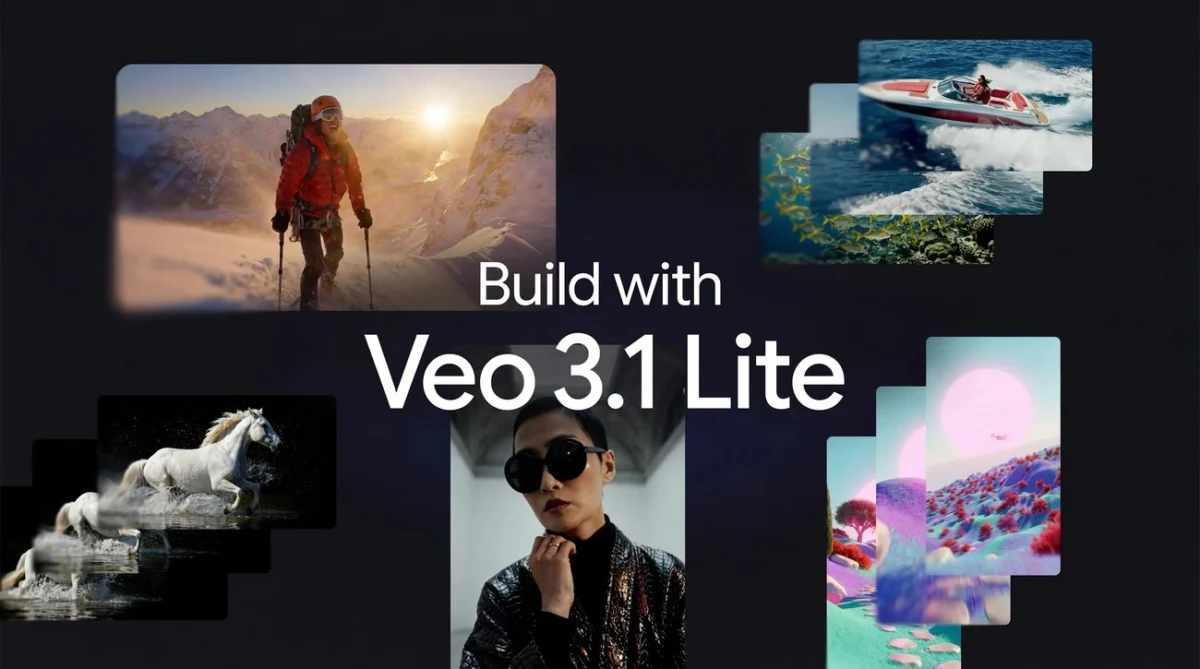
Google DeepMind has officially announced the release of Veo 3.1 Lite, a new addition to its generative video model family designed specifically to provide developers with a high-efficiency, lower-cost alternative for video creation. This new iteration enters the Gemini API ecosystem with a primary focus on scalability, offering the same generation speeds as the existing Veo 3.1 Fast model but at less than half the operational cost. The launch marks a significant shift in Google’s strategy, moving from pure technological demonstration toward the democratization of high-volume video production for developers and enterprises.
The introduction of Veo 3.1 Lite is accompanied by a broader restructuring of the Veo pricing model. Google confirmed that on April 7, the company will also reduce the pricing for the Veo 3.1 Fast model, further lowering the barrier to entry for professional-grade video synthesis. By providing a tiered approach to video generation—balancing quality, speed, and cost—Google is positioning its DeepMind-developed technology to compete directly with other major players in the generative AI space, such as OpenAI’s Sora, Runway’s Gen-3 Alpha, and Luma AI’s Dream Machine.
Technical Specifications and Capability Overview
Veo 3.1 Lite is engineered to handle the foundational requirements of modern digital content creation while maintaining a lean computational footprint. The model supports both Text-to-Video and Image-to-Video modalities, allowing users to generate cinematic sequences from prose descriptions or animate static imagery with high temporal consistency.
In terms of visual output, the Lite model offers flexibility in framing and resolution to suit various distribution platforms. It supports both landscape (16:9) and portrait (9:16) aspect ratios, making it equally viable for traditional cinematic content and short-form social media formats such as YouTube Shorts or TikTok. Developers can choose between 720p and 1080p resolutions, ensuring that the output meets the standards of modern display technology.
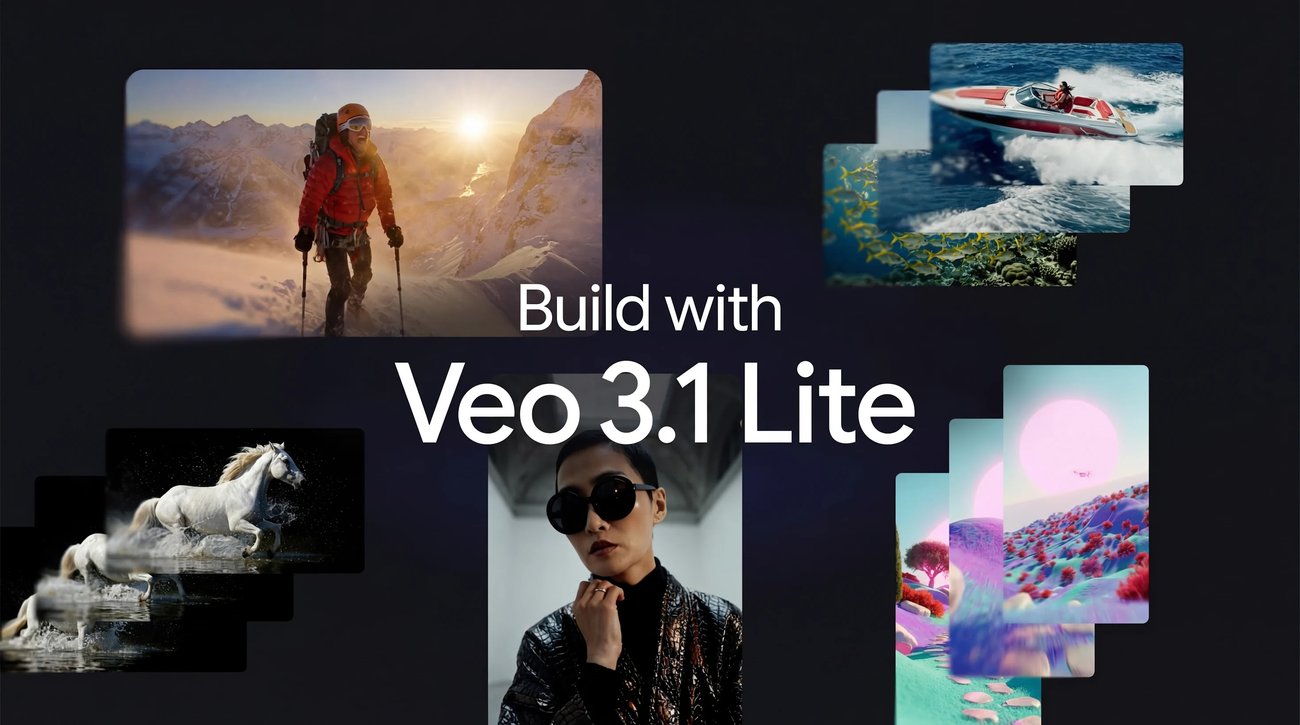
One of the most practical features introduced with Veo 3.1 Lite is the customizable duration setting. Users can generate clips in lengths of four, six, or eight seconds. This granularity allows developers to optimize their spending, as the cost of generation is directly tied to the length of the video produced. This "pay-as-you-use" efficiency is a critical factor for startups and independent developers who require thousands of short-form assets for gaming, advertising, or UI/UX prototyping.
The Evolution of Google’s Generative Video Strategy
The release of Veo 3.1 Lite represents the latest milestone in a rapid developmental timeline for Google DeepMind. The Veo lineage was first introduced as a successor to earlier research projects like Lumiere and VideoPoet, aiming to combine the best aspects of transformer architectures and diffusion models. While early models focused on achieving "cinematic" quality and photorealism, the 3.1 generation has pivoted toward commercial utility.
The chronology of this development highlights Google’s intent to lead the market:
- May 2024: Google previews the original Veo model at the I/O developer conference, showcasing its ability to generate 1080p video beyond 60 seconds.
- Late 2024: The launch of Veo 3.1 and the "Fast" variant, focusing on reducing latency for real-time or near-real-time applications.
- Early 2025: The introduction of Veo 3.1 Lite and the announcement of a revised pricing structure to incentivize large-scale adoption.
By diversifying the model family, Google is addressing a common critique of generative video: the high cost of inference. While flagship models offer breathtaking detail, they often require massive GPU clusters that make high-volume production prohibitively expensive. Veo 3.1 Lite serves as the pragmatic middle ground, offering professional-grade consistency without the "Ultra" tier price tag.
Economic Implications for the Developer Ecosystem
The primary value proposition of Veo 3.1 Lite is its cost-effectiveness. By pricing the Lite model at less than 50% of the cost of Veo 3.1 Fast, Google is effectively doubling the "video-per-dollar" yield for its API users. This is particularly relevant for the "Build with Gemini" initiative, where Google encourages developers to integrate multimodal AI into their own software products.

Industry analysts suggest that this pricing move is a preemptive strike against emerging competitors. As the generative video market matures, the competition is shifting from "who has the best video" to "who has the most sustainable unit economics." For a developer building a marketing automation tool, the difference between $1.00 per video and $0.40 per video is the difference between a viable business model and a loss-leading experiment.
The upcoming price reduction for Veo 3.1 Fast on April 7 further underscores this economic shift. It suggests that Google has achieved significant optimizations in its TPU (Tensor Processing Unit) infrastructure, allowing them to pass savings down to the consumer while maintaining their lead in the "Fast" category.
Integration with Gemini API and Google AI Studio
Accessibility remains a core component of the Veo 3.1 Lite rollout. The model is available starting today via the Gemini API and through Google AI Studio, a web-based prototyping environment. This dual-access strategy allows for two distinct workflows:
- Rapid Prototyping: Creators and product managers can use Google AI Studio to test prompts, adjust aspect ratios, and preview 8-second clips without writing a single line of code.
- Enterprise Scaling: Software engineers can utilize the Gemini API to bake video generation directly into their applications, leveraging Google’s global cloud infrastructure for reliable, low-latency delivery.
Google has also updated its developer documentation to include comprehensive specifications for the Lite model. This documentation provides guidance on prompt engineering specifically for the Lite architecture, helping users achieve the best results while navigating the model’s streamlined parameters.
Safety, Ethics, and Responsible AI Deployment
As with all of Google DeepMind’s generative releases, Veo 3.1 Lite incorporates several safety layers designed to prevent the generation of harmful or deceptive content. Google has integrated its SynthID technology—an invisible digital watermarking system—into the Veo pipeline. This ensures that any video generated by Veo 3.1 Lite carries a robust metadata tag that can be used to identify it as AI-generated, even if the file is cropped or compressed.

Furthermore, the model is governed by Google’s strict AI Principles. It includes filters to prevent the creation of sexually explicit content, copyrighted material, or the likeness of public figures without authorization. By prioritizing these safety measures in the "Lite" version, Google aims to provide a "brand-safe" environment for enterprise clients who are wary of the legal and ethical risks associated with generative media.
Broader Impact on the Creative Industry
The availability of a low-cost, high-speed video model like Veo 3.1 Lite is expected to have a ripple effect across several sectors:
- Advertising and Marketing: Small and medium-sized businesses (SMBs) can now generate personalized video ads at a fraction of the cost of traditional stock footage or motion graphics.
- Gaming: Developers can use the Lite model to generate dynamic environment backgrounds or "barks" (short character animations) that react to player choices.
- Education: Content creators can transform static lesson plans into short, engaging visual summaries, enhancing student retention through multimodal learning.
- Social Media: The 9:16 portrait support ensures that the next wave of viral content could be augmented or entirely generated by AI models optimized for mobile viewing.
Official Responses and Market Context
While Google has not released specific customer testimonials for the Lite model yet, the reaction from the developer community during the preview phase was largely focused on the model’s speed. Alisa Fortin, Product Manager at Google DeepMind, and Guillaume Vernade, Gemini Developer Advocate, emphasized in their announcement that the goal was to provide "flexibility based on needs."
The broader AI industry is currently at a crossroads where the novelty of "AI video" is wearing off, and the demand for "AI utility" is rising. Observers note that while OpenAI’s Sora remains largely behind closed doors for select creative partners, Google is aggressively moving toward a public-facing, API-first strategy. This approach may give Google a first-mover advantage in the enterprise sector, where integration and cost predictability are often more important than the absolute ceiling of visual fidelity.
As developers begin to experiment with Veo 3.1 Lite, the focus will likely shift to how these tools can be used to create "compound AI systems"—where video is not just an output, but a part of a larger, automated workflow. With the price drop on April 7 and the immediate availability of the Lite model, Google is clearly signaling that the era of experimental video generation is over, and the era of industrial-scale video generation has begun.
