

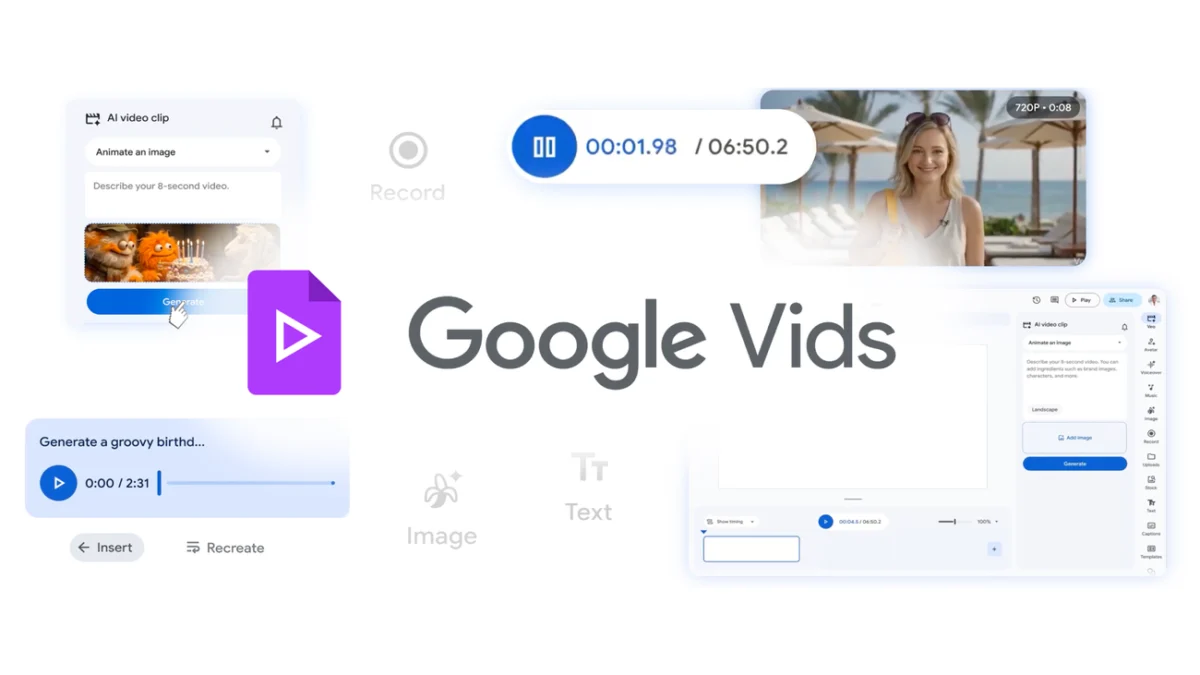
Google has announced a significant expansion of its generative artificial intelligence capabilities within Google Vids, the tech giant’s video creation and editing application for Google Workspace and personal accounts. This latest update integrates Google’s most advanced creative models, including the Veo 3.1 video generation model and the Lyria 3 music generation model, effectively lowering the barrier to entry for high-quality video production. By providing these tools at no cost to standard Google account holders, the company is positioning itself to compete more aggressively in a market currently occupied by specialized video editing software and emerging generative AI platforms. The update introduces a suite of features designed to streamline the creative process, from automated video clip generation to customizable AI-driven avatars and original music scoring.
The central pillar of this announcement is the democratization of high-end video generation. Previously restricted to enterprise-level users or specialized beta testers, the Veo 3.1 model is now accessible to the general public. This model allows users to transform text prompts or static images into high-definition video clips, facilitating the creation of marketing materials, social media content, and personal projects without the need for traditional cinematography or expensive stock footage. According to Google, personal account holders will receive 10 free video generations per month, while higher-tier subscribers, such as those on Google AI Ultra plans, will see their limits expanded to 1,000 generations per month.
Technical Evolution: Veo 3.1 and Lyria 3
The integration of Veo 3.1 represents a major technical milestone for Google DeepMind’s generative media research. Veo 3.1 is designed to understand complex cinematic language, allowing users to specify camera movements, lighting conditions, and artistic styles through natural language. The model’s ability to maintain temporal consistency—ensuring that objects and characters do not "hallucinate" or change shape between frames—is a critical improvement over earlier generative video iterations. This stability is essential for creators looking to produce professional-grade clips for business presentations or instructional tutorials.
Complementing the visual upgrades is the introduction of Lyria 3 and Lyria 3 Pro, Google’s latest audio generation models. These models are engineered to solve the "stock music" problem, where creators often struggle to find a track that matches the specific pacing and emotional tone of their video. Lyria 3 allows Google AI Pro and Ultra subscribers to generate original soundtracks ranging from 30-second snippets to full three-minute compositions. The AI considers the user’s prompt to hit specific "musical beats," ensuring that the audio rises and falls in tandem with the visual narrative. This capability is expected to significantly reduce the licensing costs and time associated with traditional music sourcing.
Chronology of Google’s Video Ambitions
The rollout of these features marks the latest phase in a timeline that began in early 2024 when Google first unveiled "Vids" at its Google Cloud Next conference. At that time, Vids was positioned primarily as a "video-first" productivity tool for the workplace, sitting alongside Docs, Sheets, and Slides.
- April 2024: Google Vids is introduced as a workspace-exclusive tool for creating collaborative video presentations.
- November 2024: The platform enters general availability for Workspace users, focusing on AI-assisted storyboarding and voiceovers.
- Early 2025: Google integrates initial Gemini-powered features, allowing for automated scriptwriting and template selection.
- Current Update (2026 Cycle): Google expands access to personal accounts and integrates the Veo 3.1 and Lyria 3 models, transitioning the tool from a corporate utility to a mainstream creative powerhouse.
This progression suggests a strategic shift from Google. While the tool was initially aimed at internal corporate communications—such as CEO messages or project updates—the new features cater to the "prosumer" and creator economy, where speed and AI-assisted creativity are paramount.
Deepening Engagement with AI Avatars and Directorial Tools
One of the more sophisticated additions to the Vids ecosystem is the introduction of customizable and directable AI avatars. Powered by Veo 3.1, these avatars provide a consistent digital spokesperson for videos. For Google AI Pro and Ultra subscribers, these avatars are no longer static; they can be directed to exhibit specific behaviors and maintain a consistent appearance across various scenes. This addresses a common pain point in video production: the difficulty of coordinating human talent for multiple takes or updates.
The "directable" aspect of these avatars allows users to control facial expressions, gestures, and tone of voice. For instance, a user could direct an avatar to deliver a technical explanation with a professional demeanor and then switch to a more enthusiastic tone for a product launch. This level of control is intended to facilitate the creation of training videos, educational content, and personalized marketing messages at a fraction of the cost of hiring live actors.

Workflow Integration and Ecosystem Connectivity
Beyond the generative features, Google is addressing the logistical challenges of video distribution. A new Chrome extension has been launched to allow for seamless screen recording directly into the Vids interface. This tool is specifically designed for software demonstrations and "how-to" guides, allowing users to narrate their screen actions and immediately incorporate them into a larger video project.
Furthermore, Google has simplified the publishing pipeline by allowing users to export and upload their creations directly to YouTube. This integration is a logical step for Google, as it connects its creation tools (Vids) with its primary distribution platform (YouTube). For small business owners and independent creators, this creates an end-to-end workflow where a video can be conceived, generated, edited, and published without ever leaving the Google ecosystem.
Supporting Data and Market Implications
Market data indicates a surging demand for AI-driven video tools. According to industry reports, the global generative AI in the media and entertainment market is expected to grow at a compound annual growth rate (CAGR) of over 25% through 2030. Google’s decision to offer a free tier for video generation is a clear move to capture market share from competitors like Canva, which recently integrated its "Magic Media" video tools, and Adobe, which is incorporating Firefly AI into Premiere Pro.
By offering 10 free generations to every Google account holder, Google is essentially providing a "loss leader" to bring users into the Gemini AI ecosystem. Analysts suggest that this move will likely drive subscriptions for the AI Premium plans, as users who find value in the initial 10 clips may be inclined to upgrade for the 1,000-clip limit and access to the Lyria 3 music engine.
Safety, Ethics, and Responsible AI Deployment
As generative video becomes more accessible, concerns regarding deepfakes and misinformation have intensified. Google has responded to these concerns by implementing several safety layers. All content generated via Veo 3.1 and Lyria 3 is embedded with SynthID, a digital watermarking technology developed by Google DeepMind. This watermark is invisible to the human eye but can be detected by specialized software, identifying the content as AI-generated even if it has been edited or compressed.
Additionally, Google has stated that its AI models are trained on diverse datasets and include filters to prevent the generation of harmful, explicit, or copyright-infringing content. The company maintains that its approach to AI avatars is focused on "commercial and instructional" use cases rather than the creation of realistic likenesses of specific public figures without consent.
Broader Impact and Future Outlook
The implications of this update extend beyond simple convenience. For the corporate world, it signals a shift toward "video-first" documentation. Just as the transition from paper to digital documents changed how offices functioned, the ease of creating high-quality video may replace lengthy text-based manuals and emails with more engaging visual content.
For the educational sector, these tools offer teachers the ability to create bespoke instructional videos tailored to their specific curricula. A history teacher, for example, could use Veo 3.1 to generate a visual representation of a historical event, accompanied by a custom soundtrack that reflects the era’s atmosphere.
In conclusion, the latest updates to Google Vids represent a comprehensive attempt by Google to lead the generative AI revolution in media. By combining powerful video and audio models with a user-friendly interface and deep integration into the Chrome and YouTube ecosystems, Google is not just providing a tool, but an entire production studio in the cloud. As these features roll out to millions of users globally, the standard for "everyday" video content is likely to rise, driven by the efficiency and creativity of artificial intelligence.
