

The podcasting industry, a vibrant and rapidly evolving medium, is currently navigating a complex intersection with artificial intelligence. While AI tools offer unprecedented opportunities for content creation, production efficiency, and audience engagement, they also raise significant ethical questions and present challenges that require careful consideration. This report delves into the current state of AI in podcasting, examining its applications, the potential impact on creators and listeners, and the ongoing discourse surrounding its responsible integration.
The Rise of AI in Podcast Production
Artificial intelligence is no longer a futuristic concept in podcasting; it is a present-day reality influencing various aspects of the production pipeline. From initial ideation to final distribution, AI-powered tools are being developed and adopted by creators of all scales.
Content Generation and Scriptwriting: AI language models, such as Google Gemini, are demonstrating remarkable capabilities in generating creative content. These models can assist in brainstorming episode ideas, drafting scripts, summarizing lengthy texts, and even creating entirely new narrative structures. For independent podcasters with limited resources, these tools can be invaluable for overcoming writer’s block and accelerating content development. Professional production studios are also exploring AI for generating initial drafts, allowing human writers to focus on refinement and creative oversight.
Audio Editing and Enhancement: The technical aspects of podcast production are also being revolutionized by AI. Sophisticated algorithms can now automate time-consuming tasks like audio cleanup, noise reduction, and even voice cloning. Tools can intelligently remove filler words, adjust audio levels for consistency, and enhance the overall clarity and professional sound of a podcast. This not only saves valuable production time but also democratizes access to high-quality audio production, enabling creators with less technical expertise to produce polished content.

Transcription and Accessibility: AI-powered transcription services have become remarkably accurate, providing near real-time conversion of audio to text. This is crucial for making podcast content accessible to a wider audience, including those who are deaf or hard of hearing, as well as for individuals who prefer to consume content in written form. Furthermore, accurate transcripts facilitate content repurposing, allowing creators to easily extract quotes, create blog posts, or generate social media content.
Personalization and Audience Engagement: Beyond production, AI is poised to transform how listeners discover and interact with podcasts. Recommendation engines powered by machine learning can analyze listener behavior and preferences to suggest highly relevant content, improving discoverability and reducing listener churn. AI can also facilitate more personalized listener experiences, such as dynamically inserting advertisements tailored to individual interests or even generating customized episode summaries.
The Ethical Tightrope: Concerns and Debates

Despite the evident benefits, the rapid advancement of AI in podcasting has ignited crucial ethical debates and concerns that demand proactive solutions.
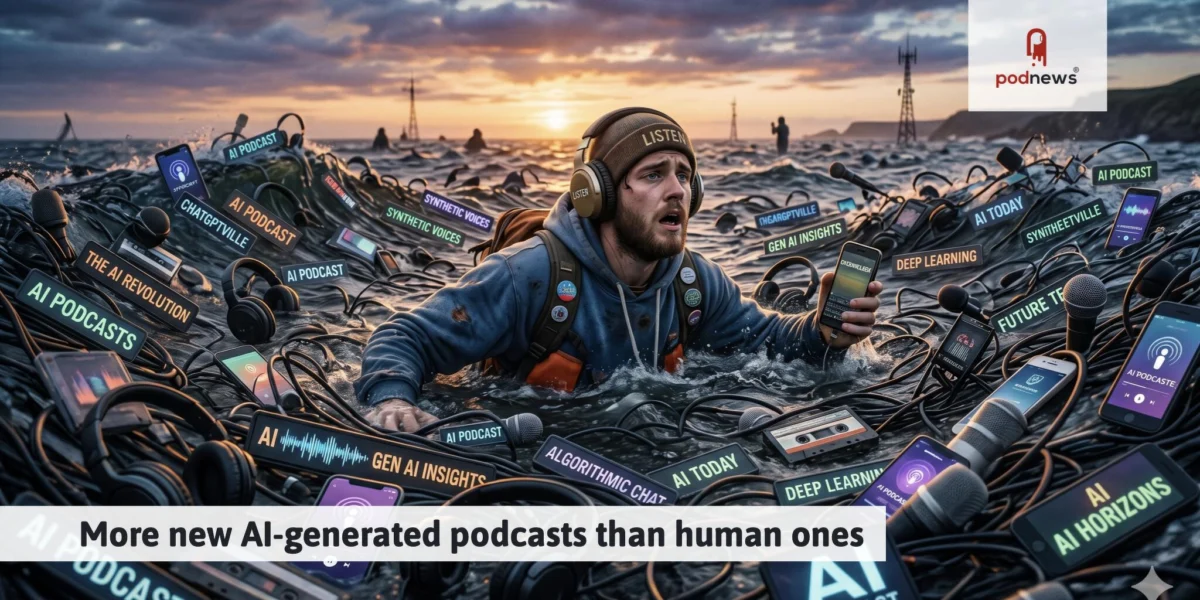
Authenticity and Originality: One of the most significant concerns revolves around the potential for AI-generated content to dilute the authenticity and originality that listeners value in podcasts. While AI can mimic human creativity, questions arise about the true authorship and the inherent value of content created without human emotional depth or lived experience. The image of a "podcast listener drowning in a sea of AI-generated shows" encapsulates this fear of being overwhelmed by mass-produced, potentially soulless content.
Intellectual Property and Copyright: The use of AI in content creation raises complex issues regarding intellectual property and copyright. If an AI model is trained on existing copyrighted material, who owns the output? How can creators protect their work from being used to train AI models without consent or compensation? These questions are at the forefront of legal discussions and will require new frameworks to address.

Bias and Representation: AI models are trained on vast datasets, and if these datasets contain inherent biases, the AI-generated content can perpetuate and even amplify those biases. This is particularly concerning in a medium that thrives on diverse voices and perspectives. Ensuring that AI tools are developed and deployed in a manner that promotes inclusivity and equitable representation is paramount.
The Specter of Misinformation: The ability of AI to generate convincing text and audio raises concerns about its potential to be used for spreading misinformation and disinformation. Malicious actors could potentially create fake podcasts or manipulate existing audio to spread false narratives, posing a threat to public discourse and trust. Robust detection mechanisms and ethical guidelines are crucial to combat this risk.
Job Displacement and the Future of Creators: The automation of certain production tasks by AI inevitably leads to discussions about job displacement for audio engineers, editors, and even some content creators. While AI can augment human capabilities, there is a need for proactive strategies to reskill and upskill the podcasting workforce, ensuring that human creativity and expertise remain central to the industry.

Industry Responses and Future Directions
The podcasting industry is actively grappling with these challenges, with various stakeholders initiating dialogues and developing strategies for responsible AI integration.
The Role of Platforms and Developers: Podcast hosting platforms and AI tool developers have a critical role to play in establishing ethical standards. This includes transparency about AI usage in content creation, developing tools to detect AI-generated content, and implementing robust content moderation policies. Companies like Nomono, which focus on enhancing recording quality, highlight the ongoing innovation in the technical aspects of podcasting, indirectly addressing the need for high-quality human-driven content.

Creator Best Practices: As AI tools become more accessible, it is incumbent upon creators to adopt them responsibly. This involves understanding the limitations of AI, prioritizing human oversight and creative input, and being transparent with their audience about the use of AI in their productions. The Podnews Report Card, while not directly addressing AI, signifies the industry’s commitment to quality and evaluation, a principle that should extend to AI-assisted content.
Listener Education and Awareness: Empowering listeners with the knowledge to discern between human-created and AI-generated content is crucial. Promoting media literacy and encouraging critical consumption of audio content will be vital in navigating the evolving podcasting landscape.
Legal and Regulatory Frameworks: As AI continues to advance, it is likely that new legal and regulatory frameworks will emerge to address issues of copyright, intellectual property, and the potential for misuse. Industry bodies and policymakers will need to collaborate to create guidelines that foster innovation while safeguarding ethical principles.

Case Studies: Navigating the AI Frontier
Several podcasts are already exploring the potential of AI in innovative ways, offering glimpses into the future of the medium.
-
"Blowback" and Webby Consideration: The podcast "Blowback" is a prime example of a show pushing boundaries, with its nomination for a Webby Award for Best Individual Episode – Documentary. While not directly AI-generated, the ambition and quality of such productions highlight the high standards that AI tools must aspire to meet, or assist in achieving, to remain relevant in a competitive landscape. The show’s focus on historical narratives and its expansion into various formats underscore the potential for AI to assist in research and content adaptation.

-
"MSP 1337" and Cybersecurity Governance: The cybersecurity podcast "MSP 1337" recently featured episodes focusing on governance, drawing an epiphany that cybersecurity and company maturity are directly tied to good governance. This highlights how AI can analyze complex data and identify nuanced connections, potentially assisting in research and the identification of critical themes for podcasts exploring technical or business-related subjects. The alignment between leadership, strategy, and culture, as discussed in the podcast, is a complex interplay that AI could help dissect and present to audiences.
-
"Change the Story" and Multilingual Narratives: The Australian podcast "Change the Story" explores how connecting to First Nations knowledge and culture through diverse languages can foster new understandings. This showcases the power of podcasts to bridge cultural divides and promote inclusivity. AI could play a role in translating content, making it accessible to a global audience, and even in assisting with the nuanced linguistic considerations required for culturally sensitive storytelling. The "My Language My Country" series, as part of "Change the Story," demonstrates the profound impact of diverse voices, a principle that AI must be programmed to uphold.
The Path Forward: A Collaborative Endeavor

The integration of AI into podcasting presents a transformative opportunity, but it is a journey that requires careful navigation. The potential for enhanced creativity, efficiency, and accessibility is immense. However, the ethical considerations surrounding authenticity, intellectual property, bias, and misinformation cannot be overlooked.
Ultimately, the future of AI in podcasting will depend on a collaborative effort involving AI developers, platform providers, content creators, and listeners. By fostering transparency, prioritizing ethical development, and engaging in ongoing dialogue, the podcasting industry can harness the power of AI to enrich the medium while preserving the human element that makes it so compelling. The goal is not to replace human creativity but to augment it, ensuring that podcasts remain a powerful tool for connection, education, and entertainment in the years to come. The ongoing evolution of AI, as exemplified by tools like Google Gemini, necessitates a continuous adaptation of best practices and ethical guidelines to ensure a healthy and vibrant podcasting ecosystem.
