

The Evolution of AI-Driven Navigation and the End of Tab Hopping
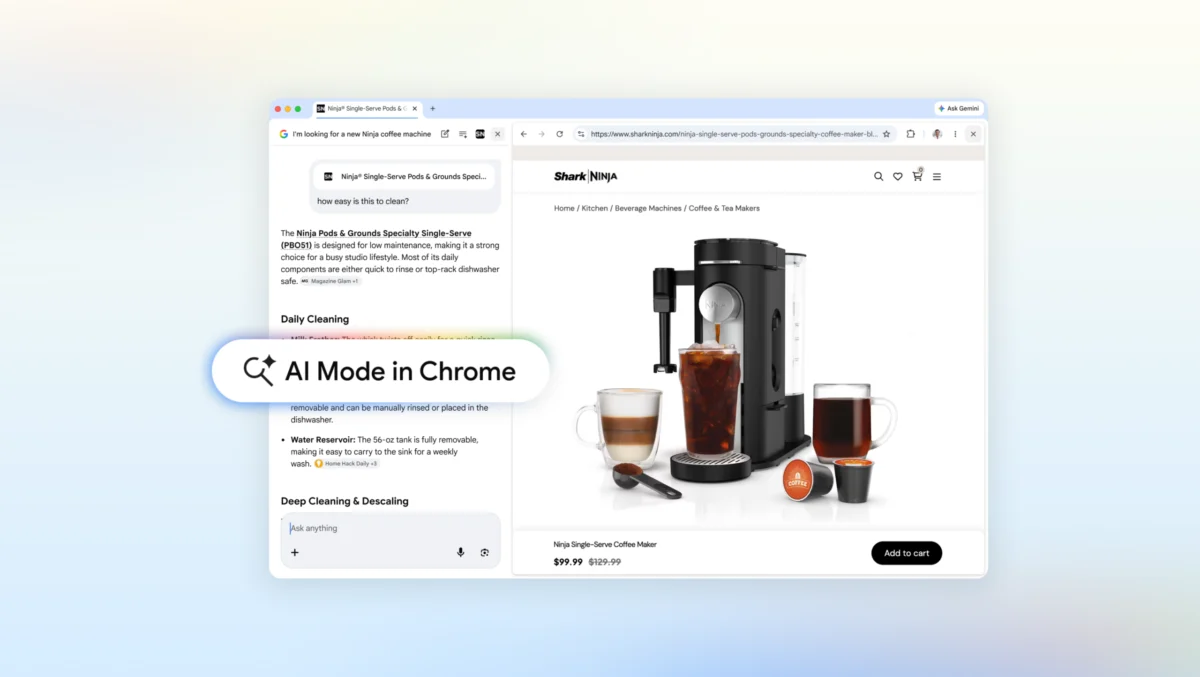
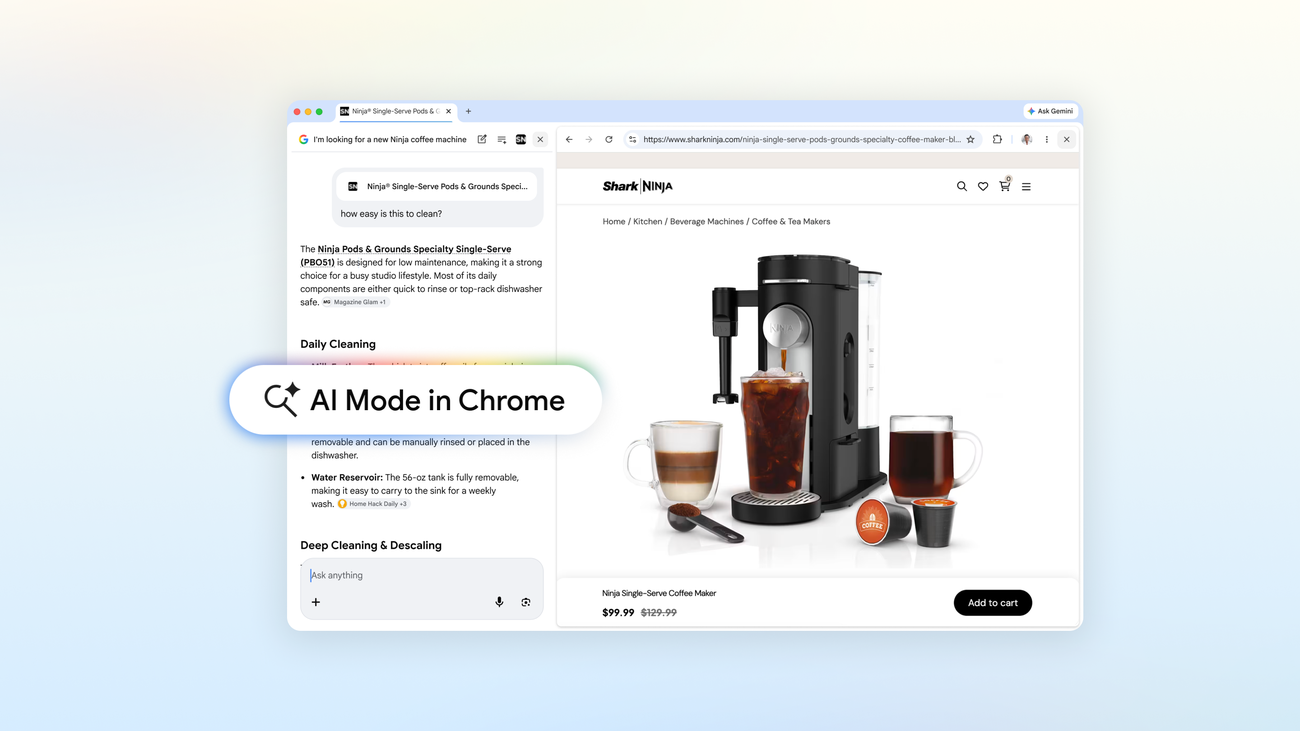
For decades, the standard workflow for online research has remained largely unchanged: a user enters a query into a search engine, receives a list of links, and opens those links in a series of new tabs. This process often leads to cognitive overload as users lose track of their original search intent while navigating deep into third-party websites. Google’s latest update to AI Mode in Chrome addresses this specific pain point by introducing a side-by-side browsing interface. Under this new system, when a user engages with AI Mode on a desktop, clicking a link no longer necessitates leaving the search environment. Instead, the chosen webpage opens in a primary window while the AI assistant remains active in a persistent side panel.
This architectural change allows for a continuous dialogue between the user, the AI, and the web content. For example, a consumer researching a complex purchase, such as a high-end espresso machine, can browse various retailer sites while simultaneously asking the AI specific questions about the product currently on screen. The AI can pull context from the active page—such as maintenance requirements or dimensions—while cross-referencing that data with information from across the broader web to provide a comprehensive answer. This fluidity is designed to keep the user’s "train of thought" intact, a metric that Google’s internal testing suggests is critical for complex decision-making and learning tasks.
Multimodal Integration: Searching Across Tabs and Files
Beyond the side-by-side interface, the Chrome update introduces an expanded "plus" menu within the search box of the New Tab page and the AI Mode panel. This feature allows users to bring external context into their AI queries with unprecedented ease. For the first time, users can select recently opened tabs, uploaded images, or local files—such as PDF documents and lecture notes—and add them directly to an AI Mode search.
This multimodal capability positions Chrome as a powerful tool for academic and professional research. A student studying for a statistics examination, for instance, can now aggregate several different sources—a PDF of a textbook chapter, a tab containing a professor’s lecture slides, and a third tab with practice problems—and ask the AI to synthesize the information or provide new examples based on the combined context of those specific documents. This moves the search experience away from a generic web-wide crawl and toward a personalized, "closed-loop" analysis of the user’s specific set of resources.
Chronology of Google’s AI Integration in Chrome
The rollout of these features is the latest milestone in a multi-year effort to pivot Google’s core products toward an "AI-first" future. The timeline of this transition highlights the rapid pace of development in the browser space:
- May 2023: Google introduces the Search Generative Experience (SGE) at its I/O developer conference, marking the first major experimental step toward bringing generative AI into the search results page.
- Late 2023: Google begins testing "Help Me Write" and other generative features within the Chrome browser, utilizing smaller, on-device models for basic text generation.
- February 2024: The company rebrands its AI efforts under the Gemini name, integrating the Gemini Pro model into various workspace and search functions.
- April 2024: Google announces the integration of Gemini directly into the Chrome address bar (Omnibox), allowing users to start a chat by typing "@gemini."
- Present Day: The current update represents the transition of these experimental features into a more stable "AI Mode," focusing on layout changes (side-by-side browsing) and multimodal context (tab and file integration).
Market Context and Competitive Landscape
Google’s move to enhance Chrome’s AI capabilities comes at a time of intense competition in the browser market. While Chrome maintains a dominant global market share—estimated by Statcounter at approximately 65% as of early 2024—it faces renewed pressure from rivals who have been aggressive in their AI deployments.
Microsoft Edge, which utilizes OpenAI’s GPT-4 technology via its Copilot integration, has already implemented a similar side-panel experience. However, Google’s advantage lies in its deep integration with the broader Google ecosystem, including Google Search, Drive, and Lens. Furthermore, the "Arc" browser by The Browser Company has gained a cult following by rethinking the browser UI entirely around AI-driven organization and summarization. By bringing these advanced features to Chrome, Google aims to prevent the "unbundling" of the browsing experience and ensure that users remain within its ecosystem for the entirety of their information-seeking journey.
Supporting Data: The Productivity Impact of Integrated Search
While Google has not released specific internal metrics from its early tester groups, industry data on generative AI usage suggests a high demand for integrated tools. According to a 2023 study on workplace productivity, the average knowledge worker switches between different apps and tabs up to 1,200 times a day, a phenomenon known as "context switching" that can result in a 40% drop in productivity.
By allowing the AI to "read" alongside the user, Google is effectively attempting to mitigate this productivity tax. In the education sector, data indicates that students are increasingly turning to AI for summarization; by integrating PDF and note-taking context directly into the browser, Chrome addresses a segment of the market that previously relied on third-party AI "chat-with-PDF" services.
Broader Implications for the Open Web and Publishers
The shift toward an AI-mediated browsing experience carries significant implications for the broader web ecosystem. For years, publishers and SEO experts have expressed concern that "zero-click" searches—where the user gets the information they need directly from the search page without clicking through to a website—could devastate ad-supported journalism and content creation.
Google’s new side-by-side model appears to be a middle-ground solution. By making it easier to open the website while keeping the AI assistant present, Google is encouraging users to actually visit the source material rather than relying solely on an AI summary. This "fluid discovery" model suggests that Google is aware of the need to maintain a healthy ecosystem of content creators. If users find it easier to digest long-form articles or complex technical documents because they have an AI assistant available to help them navigate the text, they may be more likely to engage with high-quality, deep-dive content.
Technical Foundations and Security
The AI Mode in Chrome is powered by Google’s Gemini family of models. Depending on the complexity of the task and the user’s hardware, Chrome utilizes a combination of on-device processing (for privacy and speed in basic tasks) and cloud-based processing (for complex reasoning and multimodal analysis).
Security remains a paramount concern for users uploading personal files or notes into an AI environment. Google has stated that today’s updates follow its standard privacy principles, though the company continues to remind users that generative AI is experimental and can occasionally produce inaccuracies, known as "hallucinations." The integration of "Canvas" for writing and coding, and the ability to generate images within the browser, further expands Chrome’s utility as a creative workstation, moving it closer to an operating system-like experience.
Conclusion and Future Outlook
The current suite of updates is now available to users in the United States, with a global rollout expected in the coming months. As Google continues to refine AI Mode, the industry expects further integration with Google Workspace, potentially allowing for even deeper cross-referencing between a user’s private data and the public web.
The transformation of Chrome into an AI-powered exploration tool marks a definitive end to the era of the "passive browser." As AI becomes the primary interface through which we consume digital content, the focus shifts from finding information to synthesizing and applying it. For Google, the success of AI Mode in Chrome will be measured by its ability to make the vast complexity of the internet feel manageable, keeping users engaged in a single, fluid environment that bridges the gap between searching and doing.
