

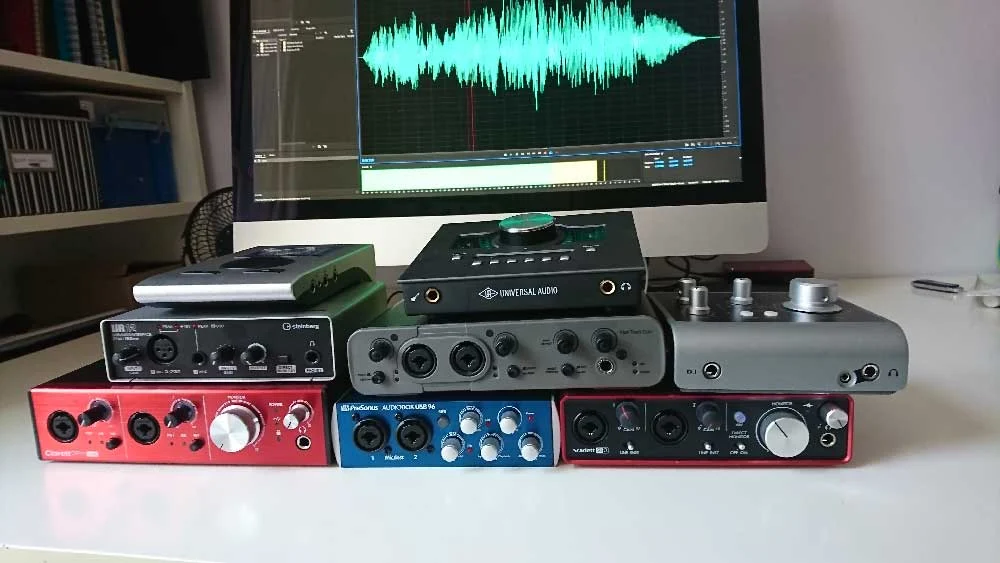
The selection of an audio interface is a pivotal decision for any voiceover artist aiming to produce professional-grade recordings. This guide delves into the intricacies of choosing the optimal audio interface, examining key features, popular models, and the underlying technology that influences audio quality and workflow efficiency. The evolution of digital audio workstations (DAWs) and the increasing demand for high-fidelity voiceover content have made understanding the role and capabilities of an audio interface more critical than ever. This article aims to equip voiceover professionals with the knowledge to make an informed choice, moving beyond anecdotal recommendations to a data-driven understanding of their needs.
Understanding the Role of an Audio Interface
At its core, an audio interface serves as the bridge between the analog world of microphones and instruments and the digital realm of your computer. It performs two primary functions: analog-to-digital conversion (ADC) for recording and digital-to-analog conversion (DAC) for playback. The quality of these conversions directly impacts the clarity, richness, and overall fidelity of your audio recordings.
For voiceover artists, this means the interface’s preamplifiers are crucial. These preamps boost the microphone’s signal to a usable level without introducing significant noise or distortion. The better the preamps, the cleaner and more detailed your vocal recordings will be, requiring less post-processing. Additionally, the latency – the delay between when you make a sound and when you hear it back through your headphones – is a critical factor. High latency can severely disrupt the recording process, making it difficult to perform naturally.
Navigating the Market: Key Considerations for Voiceover Professionals
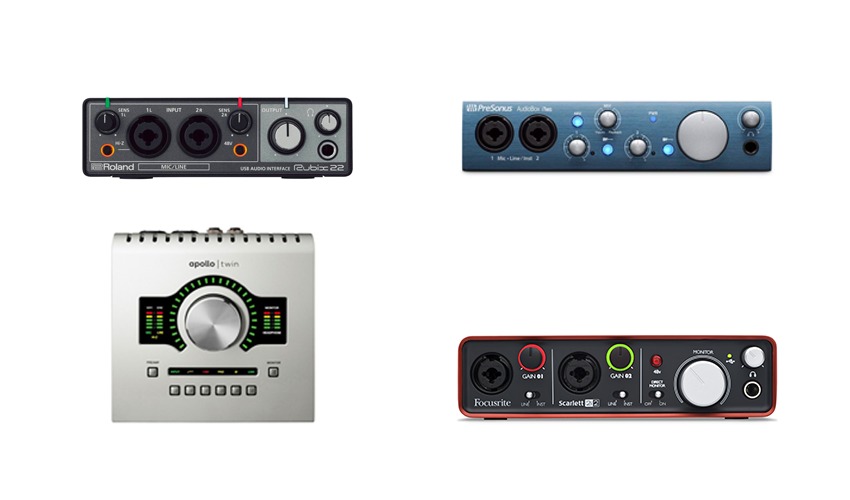
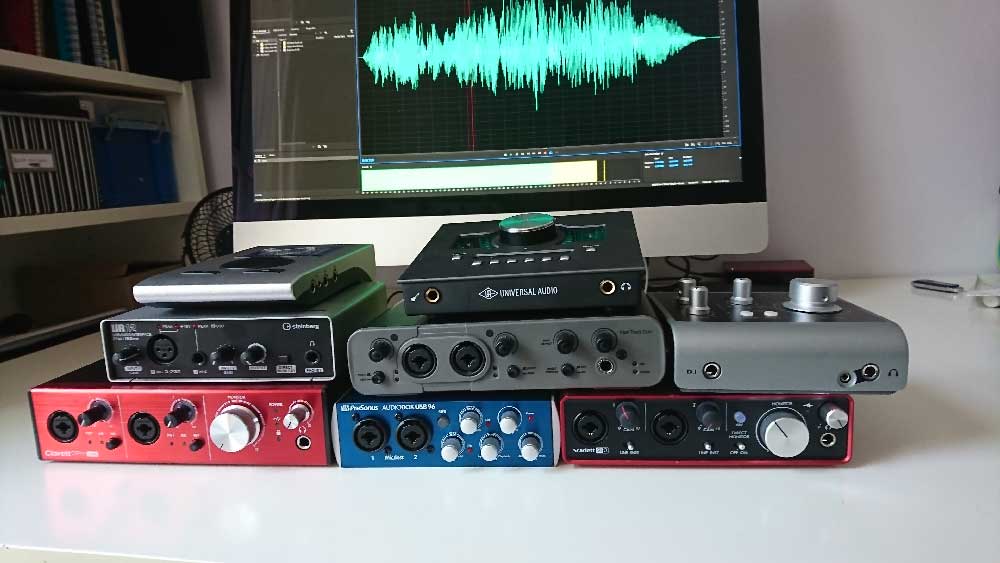
The market for audio interfaces is vast, with numerous brands and models catering to a wide spectrum of needs and budgets. When selecting an interface for voiceover work, several key factors should be prioritized:
- Number of Inputs and Outputs: For most solo voiceover artists, two microphone inputs are usually sufficient. However, consider if you anticipate recording with a co-host or multiple microphones simultaneously. The number of outputs determines how many audio sources you can send to different destinations, such as studio monitors and headphone mixes.
- Connectivity: Audio interfaces connect to computers via various ports, including USB, Thunderbolt, and older FireWire (though less common now). USB is the most ubiquitous and generally offers sufficient bandwidth for most voiceover applications. Thunderbolt offers higher bandwidth and potentially lower latency, which can be beneficial for complex projects, but requires a compatible computer.
- Preamplifier Quality: This is arguably the most critical component for voiceover. Look for interfaces with transparent, low-noise preamps that accurately capture the nuances of the human voice. Manufacturers often highlight their preamp technology, so research these specifications.
- Sample Rate and Bit Depth: These parameters determine the digital representation of your audio. For professional voiceover work, a sample rate of 44.1 kHz or 48 kHz and a bit depth of 24-bit are standard. Higher sample rates (e.g., 96 kHz) can offer more flexibility in post-production but require more processing power and storage.
- Bundled Software and Features: Many interfaces come bundled with DAWs, virtual instruments, and effects plugins. While these can be valuable, ensure they align with your workflow. Features like direct monitoring (allowing you to hear yourself without any latency) and robust control panel software for routing and mixing are also highly beneficial.
- Build Quality and Portability: If you plan to travel with your interface or use it in various locations, a robust, portable design is essential.
A Comparative Analysis of Popular Audio Interfaces for Voiceover
To provide practical insights, this analysis examines several popular audio interfaces, highlighting their strengths, weaknesses, and suitability for voiceover applications. Audio samples were recorded using a Sennheiser MK4 microphone directly into each interface to demonstrate their sonic characteristics.
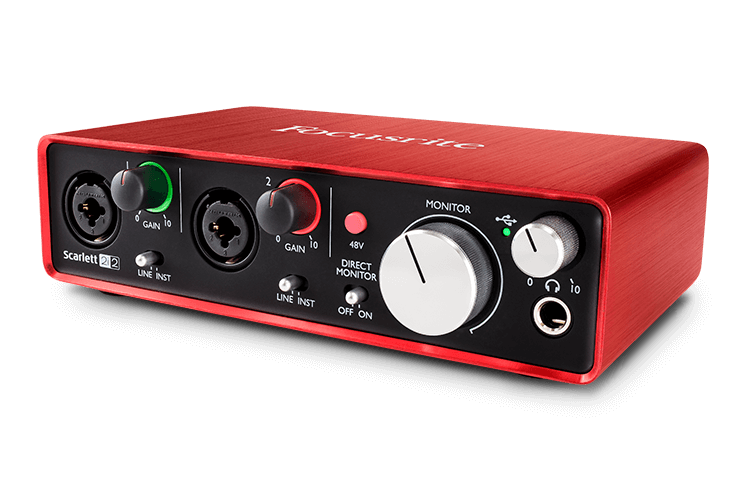
1. Focusrite Scarlett 2i2 (3rd Gen)
The Focusrite Scarlett series has long been a staple in home studios and project recording environments, and the 2i2 is a perennially popular choice. It offers two combi-XLR/jack inputs, suitable for microphones and instruments. The third generation boasts improved preamplifiers and enhanced gain halos for easier signal monitoring.
- Price Point: Approximately £115 – $146 USD.
- Key Features: 2 inputs, 2 outputs, USB-C connectivity, high-gain instrument input, improved Scarlett mic preamps, Air mode for brighter vocals, bundled software including Ableton Live Lite and Pro Tools First.
- Analysis: The Scarlett 2i2 is an excellent entry-level to mid-range option. Its preamps are clean and provide a good level of detail for voiceover work. The Air mode can add a desirable sheen to vocals. Its ease of use makes it ideal for those new to audio interfaces. The primary drawback for some advanced users might be the lack of notched rotary encoders, making precise recall of settings challenging.
- Audio Sample: [Link to Scarlett 2i2 WAV file]
2. Universal Audio Apollo Twin X
The Universal Audio Apollo Twin X is a premium audio interface renowned for its exceptional audio quality and its groundbreaking UAD-2 plug-in ecosystem. It offers two Unison™ preamps, which can emulate the sound of classic analog hardware.
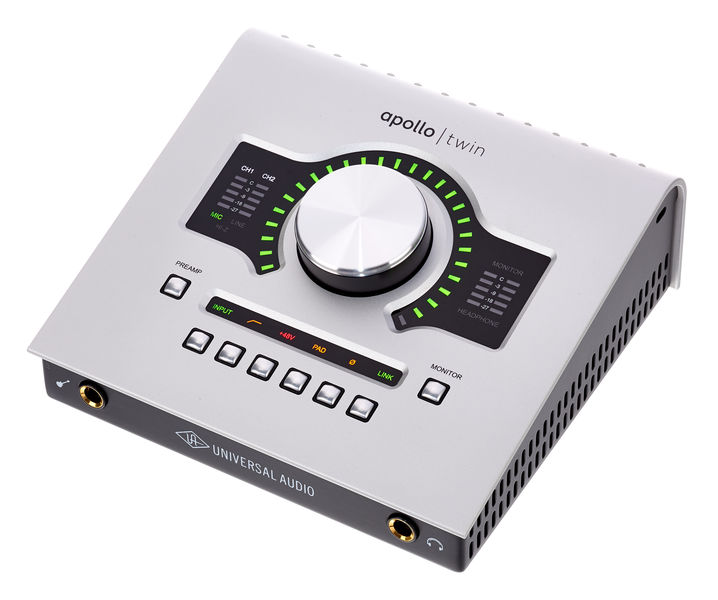
- Price Point: Approximately £699 – $899 USD.
- Key Features: 2 Unison™ mic preamps, 4 outputs, Thunderbolt 3 connectivity, extensive UAD plug-in library (sold separately or in bundles), real-time UAD processing, Console application for routing and monitoring.
- Analysis: The Apollo Twin X represents a significant step up in audio quality and professional features. Its Unison preamps provide a sonic flexibility that can be highly beneficial for voiceover, allowing artists to achieve specific tonal characteristics. The ability to run UAD plugins in real-time with near-zero latency is a major advantage for vocal processing during recording. For established voiceover professionals seeking top-tier audio quality and advanced processing capabilities, the Apollo Twin X is a strong contender, despite its higher price point. The Thunderbolt connection requires a compatible Mac or PC.
- Audio Sample: [Link to UA Apollo Twin X WAV file]
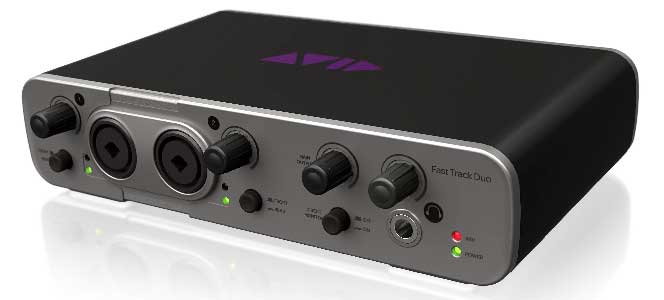
3. Audient iD4 (MkII)
The Audient iD4 is a compact and elegantly designed interface that punches above its weight in terms of audio quality. It offers one XLR microphone input and one instrument/line input.
- Price Point: Approximately £105 – $199 USD.
- Key Features: 1 Audient Console Microphone Preamp, 2 inputs, 2 outputs, USB-C connectivity, JFET D.I. input, dual headphone outputs, intuitive control layout, Scroll Control feature.
- Analysis: The iD4 is an outstanding choice for voiceover artists who require a high-quality, no-frills interface. Its single Audient preamp is lauded for its clarity and detail. The Scroll Control feature, which allows you to manipulate DAW parameters or virtual console controls by turning the volume knob, adds a unique workflow enhancement. While it has only one microphone input, this is often sufficient for solo voiceover work. The MkII version offers improved performance and connectivity.
- Audio Sample: [Link to Audient iD4 WAV file]
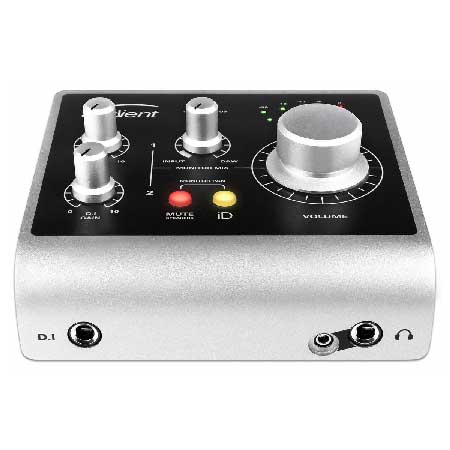
4. Avid Fast Track Duo (Discontinued)
While no longer in production, the Avid Fast Track Duo was a popular interface bundled with Pro Tools Express. It offered two combi-inputs and basic output capabilities.
- Price Point: Historically around £145 – $220 USD.
- Key Features: 2 combi-inputs, stereo output, headphone output, USB connectivity, bundled with Pro Tools Express.
- Analysis: The Fast Track Duo was a competent entry-level interface for its time, particularly for users invested in the Avid ecosystem. Its primary limitation for modern voiceover work is its age and the discontinuation of support. While it might still function for basic recording, newer interfaces offer superior converters, preamps, and driver stability. The legibility of the labeling was also noted as a minor usability issue.
- Audio Sample: [Link to Avid Fast Track Duo WAV file]
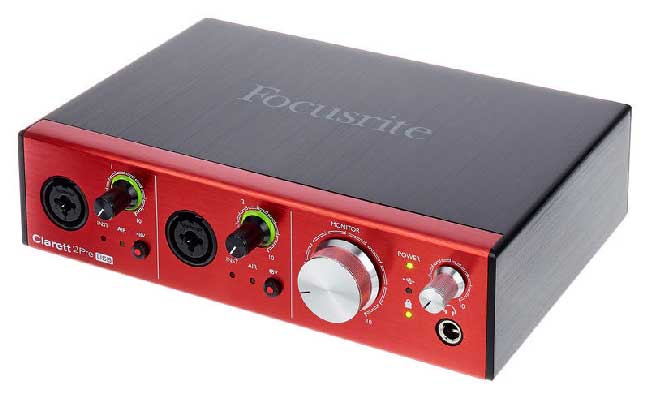
5. Focusrite Clarett 2Pre (USB)
The Clarett range from Focusrite sits above the Scarlett series, offering higher-quality components and features, including improved preamps and lower noise floor. The Clarett 2Pre (USB) is a robust interface suitable for professional studio environments.
- Price Point: Approximately £345 – $439 USD.
- Key Features: 2 Clarett microphone preamps, 2 inputs, 4 outputs, USB 3.0 connectivity, "Air" mode, expandable via ADAT, bundled software.
- Analysis: The Clarett 2Pre USB provides a noticeable step up in sonic performance from the Scarlett series. Its preamps are designed for greater clarity and detail, making them well-suited for capturing nuanced vocal performances. The inclusion of ADAT expansion allows for future scalability if more inputs are needed. For voiceover artists seeking a professional-grade interface with excellent preamps and expandability, the Clarett 2Pre USB is a compelling option.
- Audio Sample: [Link to Focusrite Clarett 2Pre WAV file]
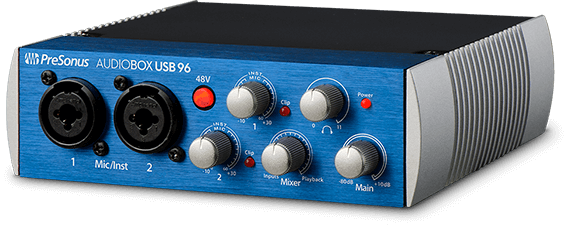
6. PreSonus AudioBox USB 96
The PreSonus AudioBox USB 96 is a budget-friendly and reliable option for beginners and intermediate users. It offers two combi-inputs and is bundled with a version of PreSonus’s Studio One DAW.
- Price Point: Approximately £99 – $129 USD.
- Key Features: 2 microphone/instrument inputs, 2 main outputs, headphone output, USB 2.0 connectivity, bundled with Studio One Artist.
- Analysis: The AudioBox USB 96 is a solid workhorse for its price. While its preamps might not compete with higher-end units, they are more than adequate for many voiceover applications, especially when paired with good microphone technique. The bundled Studio One Artist DAW is a capable software package for recording and editing. Its straightforward operation and affordability make it an attractive choice for those starting out.
- Audio Sample: [Link to PreSonus AudioBox WAV file]
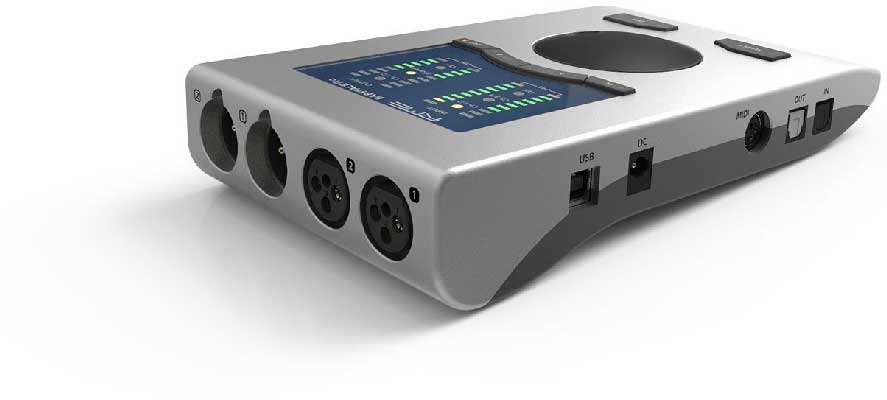
7. RME Babyface Pro FS
The RME Babyface Pro FS is a highly regarded portable audio interface known for its exceptional sound quality, robust build, and advanced digital signal processing. It offers four inputs (two XLR, two TRS/instrument) and six outputs.
- Price Point: Approximately £649 – $759 USD.
- Key Features: 2 XLR microphone inputs with switchable phantom power, 2 TRS/instrument inputs, 4 analog outputs, digital I/O (ADAT/SPDIF), USB 2.0 connectivity, TotalMix FX routing software, highly stable drivers.
- Analysis: The RME Babyface Pro FS is a professional-grade interface that excels in both audio fidelity and functionality. Its preamps are exceptionally clean and transparent, making it ideal for capturing the purest form of a voiceover performance. The TotalMix FX software offers unparalleled routing flexibility, allowing for complex monitor mixes and direct monitoring with minimal latency. While it has a learning curve due to its comprehensive features, its performance and reliability make it a favorite among discerning professionals.
- Audio Sample: [Link to RME Babyface Pro FS WAV file]
8. Steinberg UR12
The Steinberg UR12 is an entry-level audio interface that offers good value for money. It features one XLR microphone input with a Class-A D-PRE preamp and one line input.
- Price Point: Approximately £79 – $99 USD.
- Key Features: 1 XLR microphone input (D-PRE preamp), 1 Hi-Z instrument input, 2 outputs, USB 2.0 connectivity, bundled with Cubase AI.
- Analysis: The UR12 is a cost-effective solution for basic voiceover recording. The D-PRE preamp is known for its clarity and warmth. The inclusion of Cubase AI is a bonus for users looking for a DAW. While it has limited inputs, it’s a functional choice for solo artists. Its portability and ease of use are also significant advantages.
- Audio Sample: [Link to Steinberg UR12 WAV file]
The Importance of Preamps and Digital Conversion
The quality of an audio interface is intrinsically linked to its preamplifiers and analog-to-digital (ADC) converters. Preamplifiers boost the microphone’s signal, and their design dictates how much gain they can provide cleanly. For voiceover, where dynamic range and subtle vocal textures are paramount, preamplifiers that introduce minimal noise and distortion are essential. Manufacturers like Universal Audio (with their Unison technology), Audient, and RME are often praised for their high-quality preamp designs.
Analog-to-digital converters are responsible for translating the analog audio signal into digital data that your computer can process. The efficiency and accuracy of this conversion directly influence the clarity and detail of the recorded sound. Higher-end interfaces typically employ more sophisticated converters, resulting in a more faithful reproduction of the original audio. This translates to less need for heavy EQ and compression in post-production, allowing the raw vocal performance to shine through.
Software Integration and Workflow Considerations
Beyond the hardware, the software that accompanies an audio interface plays a significant role in its usability and effectiveness. Many interfaces come bundled with DAWs or offer control panel software for managing routing, input/output levels, and phantom power.
- Control Panel Software: For voiceover artists, intuitive control panel software is invaluable. Features like direct monitoring, independent headphone mixes, and easy access to phantom power controls can streamline the recording process. Interfaces with advanced routing capabilities, such as the Universal Audio Apollo Twin X and RME Babyface Pro FS, offer greater flexibility for complex studio setups or remote collaboration.
- Bundled DAWs: While most voiceover artists will have a preferred DAW, bundled software can be a cost-effective way to get started or to experiment with different recording environments. However, it’s crucial to ensure the bundled DAW is compatible with your operating system and meets your editing and mixing needs.
- Driver Stability: Reliable and stable drivers are paramount for uninterrupted recording sessions. Manufacturers like RME are renowned for their exceptionally stable drivers, which are crucial for professional workflows.
Recommendations and Future Trends
When considering an audio interface for voiceover work, a balance between budget, features, and sonic performance is key.
- For Beginners and Budget-Conscious Artists: The Focusrite Scarlett 2i2, Audient iD4, PreSonus AudioBox USB 96, and Steinberg UR12 offer excellent value and sufficient quality for most voiceover tasks. They provide a solid foundation for building a home studio.
- For Intermediate to Advanced Users Seeking Enhanced Quality: The Focusrite Clarett 2Pre (USB) and Universal Audio Apollo Twin X offer superior preamplifiers, converters, and advanced features that can elevate the quality of recordings. The Apollo Twin X, in particular, provides access to a vast ecosystem of high-quality plug-ins.
- For Professionals Demanding the Best: The RME Babyface Pro FS stands out for its pristine audio quality, robust build, and unparalleled driver stability. It represents a significant investment but offers exceptional long-term value and performance.
Looking ahead, the trend in audio interface development points towards increasingly sophisticated digital signal processing, lower latency across all connectivity types, and seamless integration with cloud-based collaboration tools. As remote work becomes more prevalent in the voiceover industry, interfaces that facilitate high-quality remote monitoring and real-time collaboration will gain further prominence.
Ultimately, the "best" audio interface is subjective and depends on individual needs, budget, and workflow. Thorough research, listening to audio samples, and considering the long-term implications for your voiceover career are essential steps in making the right choice. The investment in a quality audio interface is an investment in the professional sound of your voiceover work.
