

In the contemporary business landscape, where information overload is the norm and attention spans are fleeting, the ability to weave compelling narratives has transcended from a desirable trait to an indispensable skill. Business leaders are increasingly recognizing that mere dissemination of facts and figures is insufficient; instead, shaping information into a coherent, engaging story is the key differentiator for closing deals, securing budgets, steering teams through complex changes, and achieving strategic objectives. This shift signifies a profound understanding that human beings are wired for stories, making them the most potent vehicle for communication and persuasion across executive boardrooms, sales pitches, marketing campaigns, and critical organizational announcements.
The Strategic Imperative of Storytelling in Modern Business
The resurgence of storytelling in business circles is not a fleeting trend but a fundamental recalibration of communication strategy, rooted in cognitive science and neuroscience. Studies have consistently demonstrated that information presented in a narrative format is significantly more memorable and persuasive than raw data or bullet points. When confronted with a well-structured story, the human brain engages multiple areas, including those responsible for emotion, memory, and even sensory processing, leading to a deeper level of understanding and retention. For instance, research from Stanford University indicated that facts wrapped in stories are remembered up to 22 times more than facts alone. This cognitive advantage translates directly into tangible business benefits, enhancing audience engagement and ultimately moving individuals to action.
The historical context for this emphasis on storytelling can be traced back through various eras of communication. While rhetoric has always been a powerful tool, the digital age, with its deluge of data and constant connectivity, has amplified the need for clear, concise, and emotionally resonant messages. Early 21st-century business communication often prioritized efficiency and data density, leading to presentations that, while informative, frequently lacked the human element necessary for true connection. As organizations began to grapple with complex change management initiatives, increasingly competitive markets, and the challenge of fostering a shared vision among diverse global teams, the limitations of purely analytical communication became apparent. Experts in organizational development and communication began advocating for a return to narrative principles, recognizing their power to simplify complexity, evoke empathy, and inspire collective action.
Deconstructing the Narrative Arc: The Hero’s Journey Framework
At the heart of effective business storytelling lies a universally recognized structure: the Hero’s Journey. Popularized by mythologist Joseph Campbell, this archetypal narrative pattern underpins countless myths, legends, and modern stories across cultures. Applying this timeless framework to a business presentation provides a robust, engaging structure that guides the audience through a recognizable and emotionally resonant progression.

The basic structure of the Hero’s Journey in a business context begins with the "Ordinary World," where the audience (the hero) exists with their current challenges or unmet needs. The "Call to Adventure" identifies a significant problem, opportunity, or impending change that disrupts their status quo. Often, there is a "Refusal of the Call," representing the audience’s initial hesitations, inertia, or perceived obstacles. This is where the "Meeting with the Mentor" becomes crucial – the presenter steps in, offering guidance, insights, and a viable solution. The "Crossing the Threshold" marks the commitment to embark on the journey towards solving the problem. The "Tests, Allies, and Enemies" represent the various hurdles, stakeholders, and competitive forces that might be encountered. The "Ordeal" is the climax, the most significant challenge or decision point. Following this, the "Reward" is the initial success or benefit gained. The "Road Back" is the path to fully implementing the solution, and the "Resurrection" is the final, ultimate test, often involving a paradigm shift. Finally, the "Return with the Elixir" signifies the successful transformation, the "happily ever after" where the audience has overcome their challenge and achieved a new, improved state.
The Audience as the Protagonist, the Presenter as the Guide
A fundamental principle derived from the Hero’s Journey, and consistently emphasized by leading communication experts, is the critical distinction between the roles of the presenter and the audience. In traditional, less effective presentations, the presenter often inadvertently positions themselves as the hero, detailing their company’s illustrious history, impressive client roster, or numerous accolades. While intended to build credibility, this approach can alienate the audience by making the narrative about the presenter’s triumphs rather than the audience’s needs.
Industry analysts and communication strategists widely concur that the most impactful storytelling presentations instead cast the audience as the hero. It is the audience that faces the challenge, experiences the problem, and ultimately stands to benefit from the solution. By making the audience the protagonist, the presenter shifts focus from self-promotion to problem-solving, immediately fostering empathy and engagement. This strategic positioning allows the presenter to assume the role of the wise and trusted mentor – the guide who possesses the knowledge, tools, and experience necessary to help the hero overcome their obstacles.
Consider a sales presentation for a meal kit delivery service. An egocentric, "hero" presenter might boast, "We are the industry leader, offering the freshest ingredients, the most innovative recipes, and over a thousand five-star reviews." This focuses solely on the company’s merits. In contrast, a "mentor" presenter would frame the narrative around the customer’s dilemma: "As a busy parent, do you often feel torn between spending quality time with your children and ensuring they eat fresh, healthy meals? Our meal kit service acts as your culinary ally, streamlining your dinner prep by sending pre-portioned, high-quality ingredients directly to your door, effectively cutting cooking time in half. This empowers you to reclaim up to five hours a week, allowing you to enjoy both family moments and wholesome meals without compromise." This approach, widely endorsed by sales training programs, resonates deeply because it addresses the audience’s pain points and offers a clear path to an improved reality, solidifying the presenter’s role as a valuable guide.
Crafting Engagement Through Contrast: The Presentation Sparkline

The effectiveness of any narrative hinges on its ability to maintain engagement, and in business presentations, this often means moving beyond a purely linear delivery. A common pitfall is to present information in a flat, chronological sequence, akin to a detailed report that, while comprehensive, often fails to captivate. Similarly, a typical "pitch" might start with a brief acknowledgment of the current state before soaring into an idealized, often unbelievable vision of the future. Both approaches lack the dynamic tension essential for compelling storytelling.
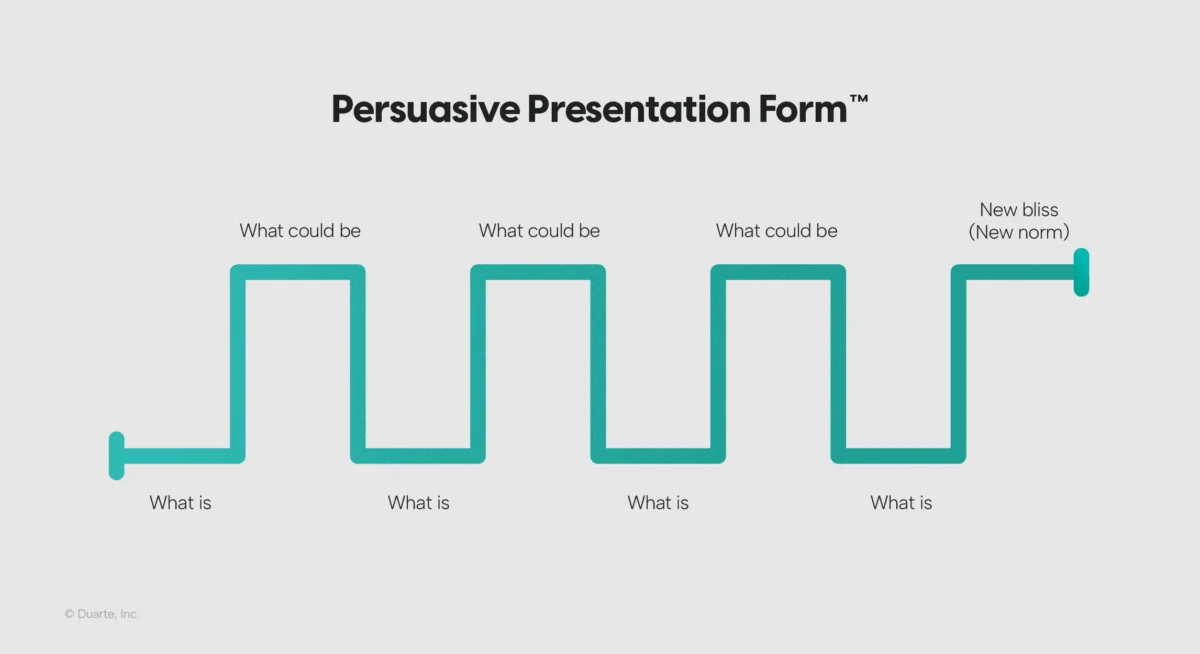
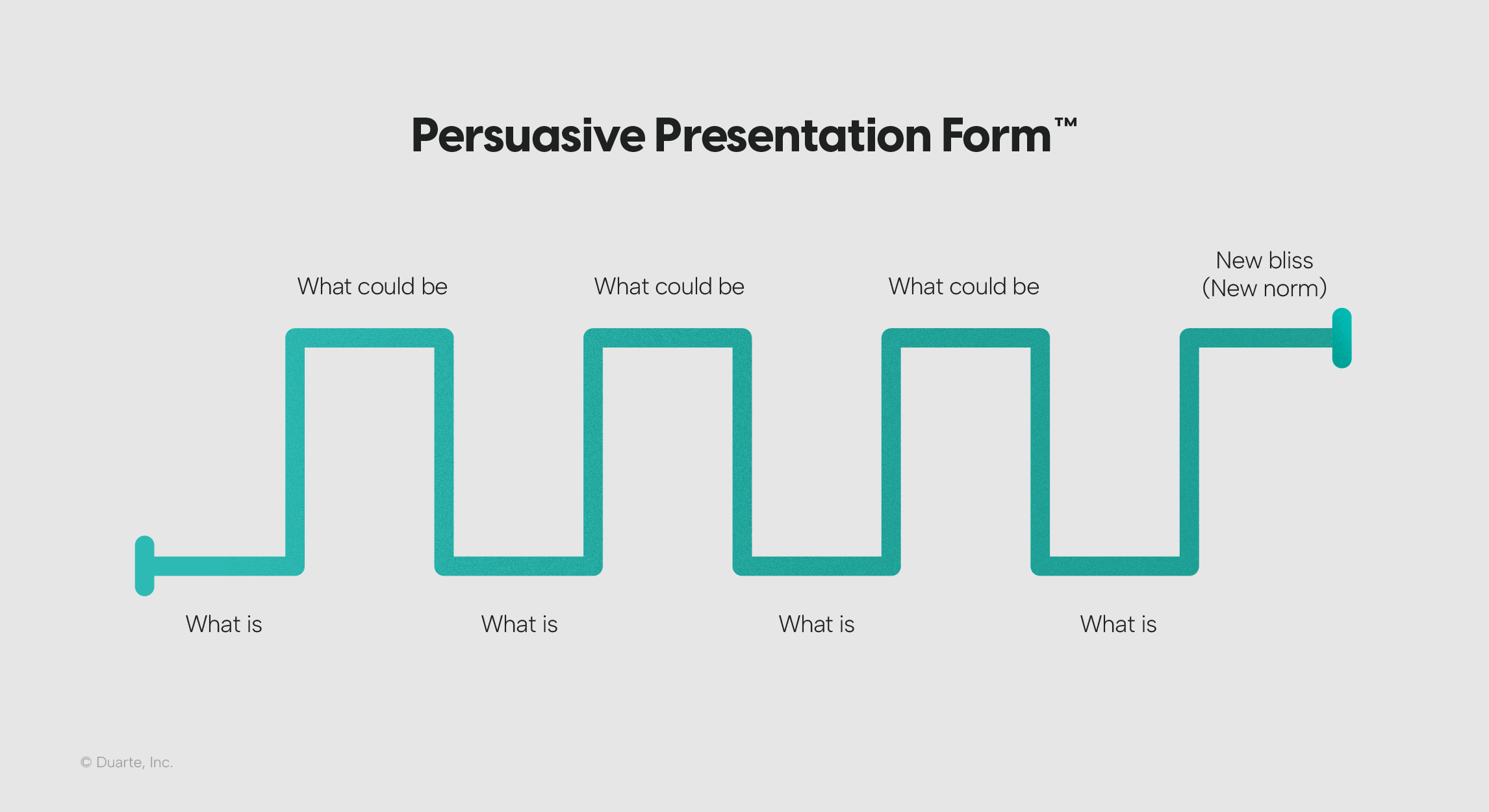
Duarte’s "Presentation Sparkline" framework offers a powerful antidote to linearity, advocating for the strategic use of contrast to hold audience attention. This framework visually represents a presentation as an oscillating line that continually moves between "what is" (the current reality, the problems, the status quo) and "what could be" (the proposed solution, the desired future, the benefits). By alternating between these two states, the presenter creates a dramatic tension that keeps the audience invested, much like the "but then" structure in a traditional story.
This rhythmic interplay of current challenges and future possibilities is evident in some of history’s most impactful speeches. Nancy Duarte, in her influential TED Talk, illustrates how both Steve Jobs’ 2007 iPhone launch and Dr. Martin Luther King, Jr.’s "I Have a Dream" speech masterfully employed this technique. Jobs repeatedly highlighted the limitations of existing phones ("what is") before unveiling the revolutionary features of the iPhone ("what could be"). King vividly depicted the injustices of racial inequality ("what is") before painting an inspiring vision of a just and equitable future ("what could be"). This constant shift prevents complacency and actively pulls the audience into the narrative, making them eager to bridge the gap between the present reality and the aspirational future. For quarterly business reviews, strategic planning sessions, or investor relations, employing the Sparkline framework can transform mundane data into a persuasive call to action, demonstrating a clear understanding of challenges while simultaneously inspiring belief in achievable solutions.
Elevating Impact: S.T.A.R. Moments and Data Storytelling
Beyond structural frameworks, individual elements within a presentation can significantly amplify its impact. Two particularly powerful techniques are the creation of S.T.A.R. Moments and the strategic incorporation of data storytelling.
Creating "Something They’ll Always Remember" (S.T.A.R. Moments)

A S.T.A.R. Moment™ refers to a specific, memorable instance within a presentation that transcends mere information delivery to create lasting emotional and cognitive resonance. In a world saturated with data, people are more likely to recall vivid experiences or specific moments than a barrage of facts. These moments can take many forms: a surprising demonstration, a powerful visual metaphor, a carefully chosen personal anecdote (used strategically to illustrate a point, not to self-aggrandize), a dramatic pause, or a compelling rhetorical question that shifts perspective.
A classic example of a S.T.A.R. Moment comes from Al Gore’s presentation on climate change, which later formed the basis of his Academy Award-winning documentary, An Inconvenient Truth. Faced with the challenge of conveying the alarming projected rise in CO2 concentration over the next 50 years, Gore moved beyond a simple graph. Instead, as the data on the chart dramatically escalated, he physically ascended a scissor lift alongside the rising line, visually embodying the dire trajectory. This experiential element transformed a dry scientific projection into a visceral, unforgettable moment that profoundly impacted audiences worldwide, underscoring the urgency of the climate crisis in a way that mere numbers could not. Such moments are crucial for embedding key messages deeply within the audience’s memory, ensuring that the presentation’s core message endures long after the event.
Transforming Numbers into Narratives: The Art of Data Storytelling
A significant challenge for many business presenters is how to communicate complex data in a compelling and accessible manner without resorting to overwhelming charts or dense spreadsheets. Data, in its raw form, often lacks inherent meaning or emotional weight; it requires a skilled presenter to imbue it with context and relevance. This is where data storytelling becomes invaluable.
Effective data storytelling employs several strategies: marveling at the magnitude, humanizing the data, or surprising the audience with the unexpected. Marveling at magnitude involves framing large numbers in a way that emphasizes their scale and significance, often through comparisons. Humanizing data connects abstract figures to relatable human experiences, focusing on the people behind the statistics. Surprising the audience with the unexpected involves presenting data in a novel or counter-intuitive way that sparks curiosity and deepens understanding.
One of the most iconic examples of surprising the audience with data comes from Steve Jobs’ 2008 Macworld keynote, where he introduced the MacBook Air. Instead of merely stating that the laptop’s thickest point measured 0.76 inches, a figure that might not immediately resonate with everyone, Jobs dramatically slid the ultra-thin device out of a standard manila envelope. This unexpected visual demonstration provided an immediate, tangible, and highly memorable representation of the MacBook Air’s revolutionary slimness, effectively transforming a technical specification into an astonishing revelation. This technique not only made the data unforgettable but also highlighted the product’s core innovation in a deeply engaging way. In an era increasingly driven by analytics, the ability to translate complex datasets into clear, compelling narratives is paramount for informing decisions and driving strategic initiatives.

The Vision of "New Bliss": Guiding Audiences to Action
Every impactful story culminates in a resolution, and for business presentations, this means painting a vivid, attainable vision of the future – what is often referred to as the "new bliss." This is the "happily ever after" of the business narrative, but it is grounded in reality, not fantasy. It is the demonstrable outcome of the proposed solution, the tangible benefits that await the audience (the hero) once they embrace the mentor’s guidance and overcome their challenges.
The "new bliss" must be more than just a vague aspiration; it must be a clear, compelling, and believable vision for a transformed future. It connects the solution directly to the audience’s strategic goals, operational improvements, or personal aspirations. For example, if the presentation is about adopting a new software, the "new bliss" might be increased efficiency, reduced operational costs, enhanced data security, and improved employee satisfaction, all quantifiable and desirable outcomes. If it’s a pitch for a new marketing strategy, the "new bliss" could be expanded market share, higher conversion rates, and strengthened brand loyalty.
The power of the "new bliss" lies in its ability to motivate action. By clearly articulating what the future could look like – how problems are solved, how opportunities are seized, and how life is improved – the presenter provides a compelling reason for the audience to move forward. This final, aspirational segment reinforces the value proposition and solidifies the presenter’s role as the guide who has provided the tools for the hero to achieve their ultimate success.
Broader Implications and the Future of Business Communication
The mastery of storytelling in business is not merely a presentation skill; it is a fundamental driver of organizational success across multiple dimensions. For leadership, it enhances emotional intelligence and the ability to inspire, influence, and rally teams around a common purpose. Leaders who can articulate a compelling vision and explain the "why" behind strategic decisions through narrative are far more effective in securing buy-in and fostering a positive organizational culture.
In terms of organizational culture, a storytelling approach encourages transparency and helps in fostering a shared identity. Companies that consistently communicate their values, mission, and achievements through stories build stronger internal cohesion and a more resilient workforce. For brand building and marketing, narrative is the bedrock, allowing companies to connect with customers on an emotional level, differentiate themselves in crowded markets, and cultivate lasting loyalty.
However, adopting a storytelling mindset within an organization is not without its challenges. It requires investment in training, a shift from purely analytical thinking to a more creative and empathetic approach, and sometimes, overcoming resistance to change from those accustomed to traditional communication methods. Despite these hurdles, the ongoing evolution of business environments, marked by rapid technological advancements and increasing global complexity, only underscores the enduring necessity of effective narrative communication. As communication channels diversify and audience expectations for authentic engagement grow, the ability to tell a powerful story will remain a critical differentiator for individuals and organizations seeking to make a lasting impact. The future of business communication is undeniably intertwined with the timeless art of storytelling, making its cultivation a strategic imperative for sustained success.
