

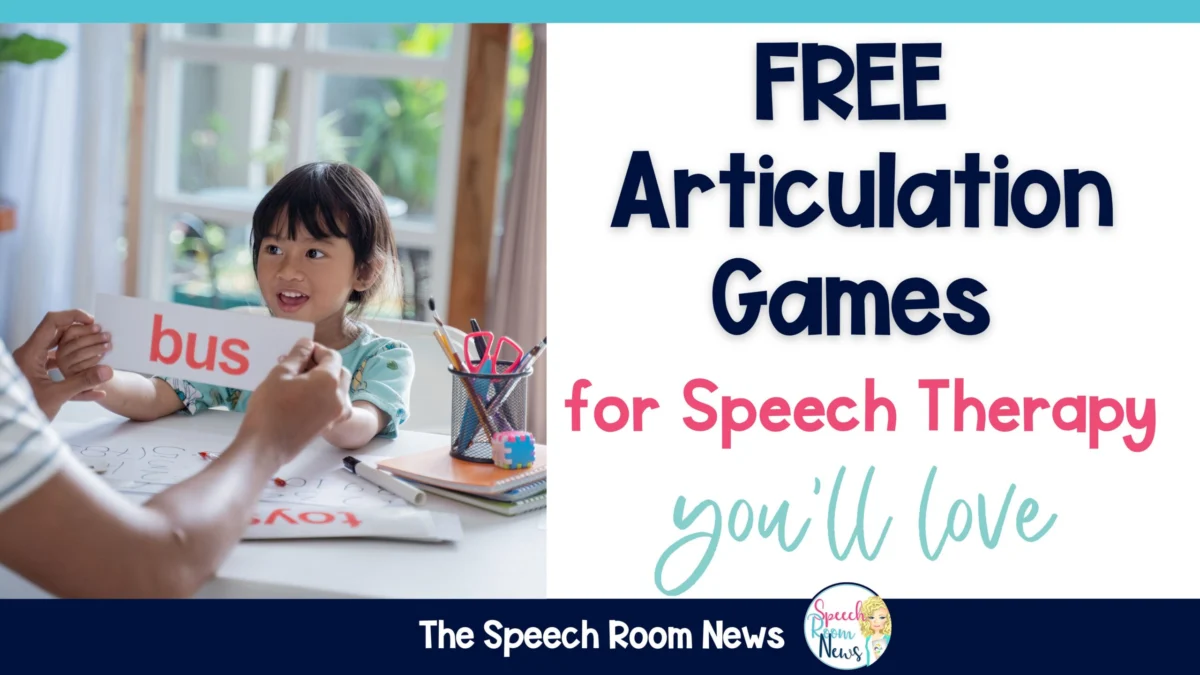
The landscape of speech-language pathology is undergoing a significant transformation, driven by an increasing emphasis on accessible, engaging, and effective therapeutic methods. A burgeoning movement, largely propelled by dedicated educators and technological advancements, is seeing a surge in free articulation games designed to support children with speech sound disorders (SSD). These resources, ranging from interactive online platforms to printable materials and even no-materials-needed activities, are proving instrumental in enhancing therapeutic outcomes, improving student engagement, and providing invaluable support to families and educators grappling with the challenges of speech development.
Understanding Speech Sound Disorders and the Need for Engagement
Speech sound disorders are common developmental conditions affecting a child’s ability to produce specific speech sounds correctly. According to the American Speech-Language-Hearing Association (ASHA), approximately 2.3% to 24.6% of children aged 5-7 years experience some form of speech sound disorder, with prevalence rates varying based on the specific sound and diagnostic criteria. These disorders can manifest in various ways, from misarticulations (e.g., lisping) to phonological processing difficulties, and can significantly impact a child’s communication, literacy development, academic performance, and social interactions. Early intervention through speech therapy is critical, but maintaining a child’s engagement throughout the therapeutic process is often a primary challenge for Speech-Language Pathologists (SLPs).
Traditional speech therapy often relies on repetitive drills and flashcards, which, while effective for some, can lead to decreased motivation and engagement, particularly in younger children. Research consistently demonstrates that incorporating play into therapy sessions not only boosts engagement but also makes learning more memorable and facilitates the generalization of language skills into everyday contexts. This recognition has spurred a shift towards more dynamic, game-based approaches, with a particular focus on leveraging readily available, cost-free resources. The integration of playful learning environments transforms therapy from a chore into an enjoyable activity, fostering intrinsic motivation and better long-term retention of target sounds.
The Evolution of Articulation Therapy Resources

Historically, SLPs and parents were largely limited to commercially produced materials, which could be expensive and often lacked the variety needed to keep children consistently engaged. The advent of the internet and digital technologies has democratized access to educational content, leading to a proliferation of free resources. This evolution has been particularly beneficial for articulation therapy, offering diverse formats adaptable to various learning styles and therapeutic settings—whether virtual, in-person, or a hybrid model.
The transition from purely physical materials to a blend of digital and printable options gained significant momentum during the COVID-19 pandemic, when remote learning and teletherapy became necessities. This period accelerated the development and adoption of online interactive games and digital platforms, proving their efficacy and convenience. This paradigm shift has permanently altered how SLPs approach therapy, integrating technology as a core component rather than a supplementary tool.
Key Categories of Free Articulation Games
The current landscape of free articulation resources can be broadly categorized into three main types: interactive online games, printable materials, and material-free activities. Each category offers unique benefits and applications, allowing SLPs to tailor interventions to individual student needs and environmental constraints.
Interactive Online Games: Bridging Technology and Therapy
Online games have emerged as a "game-changer" for enhancing articulation skills, making practice both effective and enjoyable. These platforms leverage multimedia elements, immediate feedback, and interactive challenges to captivate students.

- ABCya’s "Alphabet BINGO": This resource targets younger students, helping them practice letter sounds in a fun, familiar BINGO format. The visual and auditory cues reinforce phoneme recognition and production, laying foundational skills for more complex articulation targets. Its simplicity makes it ideal for introducing sound-letter correspondence.
- Articulation Station App (Lite Version): Widely recognized in the SLP community, the free "Lite Version" of the Articulation Station App offers a selection of sound options and interactive games. Available for download on mobile devices, it provides a portable and engaging way for students to practice specific sounds through various activities like flashcards, matching games, and sentence completion. Its intuitive interface makes it accessible for children of different ages.
- Language Playroom: This dedicated website provides a growing collection of over 20 free online games specifically focused on articulation. The platform is continuously expanding to include activities for fluency, language, and social communication, making it a versatile resource for comprehensive speech and language development. The variety of games ensures sustained interest and addresses different articulation targets.
- Phoneme Pop: An engaging online game where children pop bubbles containing words that feature their target sounds. This visual and auditory task helps reinforce sound identification and production in a dynamic, playful manner. The immediate feedback mechanism encourages self-correction and repeated practice.
- Boom Cards: These interactive, digital task cards have become a cornerstone for many SLPs. Available on platforms like Teachers Pay Teachers and Boom Learning, numerous free Boom Card decks exist for various articulation sounds. Boom Cards offer self-checking features, immediate feedback, and a highly customizable format, allowing SLPs to target specific sounds at different levels of complexity (e.g., isolation, syllable, word, sentence). The digital format also simplifies data collection for progress monitoring. Creators like Jenna Rayburn Kirk on Teachers Pay Teachers also offer affordable paid options, demonstrating the value proposition of these interactive resources.
These online tools not only provide engaging practice but also often include data tracking features, allowing SLPs to monitor progress and adjust therapy plans effectively. They also offer a valuable bridge for home practice, enabling parents to reinforce therapy goals outside of formal sessions.
Printable Games: Hands-On Learning for Every Setting
For those who prefer tactile, hands-on activities or operate in environments with limited digital access, printable games remain a fantastic and highly effective option. They can be used directly in therapy sessions or sent home for consistent practice.
- Whack-a-Sound /S/ Self-Checking Articulation Freebie: Ideal for preschool through second grade, this game helps children identify the position of a target sound (initial, medial, or final) within words. The "whack-a-mole" concept, adapted for articulation, adds an element of fun and encourages active listening and phonological awareness.
- Articulation Worksheets from Super Duper Publications: A reputable name in educational resources, Super Duper Publications offers a selection of free printable worksheets. These resources cover various articulation activities, providing structured practice in a format that can be easily integrated into lesson plans or homework assignments.
- Hot Chocolate Articulation Board Game: Perfect for seasonal themes, this board game allows for versatile use. SLPs can pair it with target word flashcards; if a child successfully articulates a word, they roll a die and advance on the board. This game encourages turn-taking, reinforces target sounds, and adds a competitive, engaging element to practice.
- 100 Trial Challenges by Peachie Speechie: These themed and holiday-specific sheets provide a structured way to achieve high trial counts for articulation practice. By incorporating fun themes, they make repetitive practice less monotonous and more engaging, ensuring students meet their articulation goals through consistent repetition.
- Color & Play Ocean Articulation Bingo: This resource combines the popular game of Bingo with articulation practice. Printable bingo cards featuring target words allow for group or one-on-one practice, encouraging auditory discrimination and accurate production of sounds in a familiar, game-like setting. The "color and play" aspect adds an artistic dimension, further engaging students.
Printable resources are often praised for their flexibility and the ability to be used without screens, offering a valuable alternative or complement to digital tools. They also empower parents to easily facilitate home practice, reinforcing concepts learned in therapy.
Material-Free Games: Articulation Anywhere, Anytime
Practicing articulation doesn’t have to be confined to a therapy room or require specific materials. "No-materials-needed" games are invaluable for promoting generalization of skills in natural environments, such as during car rides, waiting times, or everyday conversations.

- I Spy: This classic game can be easily modified to focus on finding objects that begin with, contain, or end with a specific target sound. For instance, an SLP might say, "I spy with my little eye something that starts with /s/" while focusing on words like "sun" or "sock." This encourages auditory discrimination and spontaneous production of target sounds.
- 20 Questions: This game promotes descriptive language and question-asking skills, all while subtly targeting articulation goals. Children must articulate their questions clearly and use descriptive vocabulary, providing multiple opportunities for sound practice within a communicative context.
- Rhyme Time: Taking turns saying words that rhyme with a target word is an excellent way to practice articulation and develop phonological awareness. The focus remains on the correct production of each rhyming word, reinforcing target sounds in a fun, rhythmic manner.
- The Alphabet Game: Going through the alphabet and having the child say a word that starts with each letter provides structured articulation practice. SLPs can guide the child to choose words that contain their specific articulation targets, making the activity highly adaptable.
These material-free games emphasize the portability and inherent flexibility of articulation practice, underscoring the idea that therapy can occur in any context, fostering real-world application of learned skills.
Broader Impact and Implications for Speech-Language Pathology
The proliferation of free articulation games carries significant implications for the field of speech-language pathology and beyond.
Increased Accessibility and Equity: One of the most profound impacts is the enhanced accessibility to high-quality therapeutic resources. For families in remote areas, those with limited financial resources, or individuals who face barriers to regular in-person therapy, these free tools provide a vital lifeline. They help bridge the gap in service delivery, ensuring that more children can receive the practice they need to improve their speech, regardless of socioeconomic status or geographical location. This aligns with broader efforts to promote equity in education and healthcare.
Empowerment of Parents and Educators: Free resources empower parents and general education teachers to become more active participants in a child’s speech development journey. By providing readily available and easy-to-understand tools, these resources enable consistent home practice, which is crucial for generalizing skills learned in therapy. SLPs can confidently assign "homework" knowing that families have access to engaging and effective materials without incurring additional costs. This collaborative approach strengthens the support system around the child.
Cost-Effectiveness for Institutions: Schools and private practices often operate under tight budget constraints. The availability of free articulation games significantly reduces the financial burden of acquiring therapeutic materials. This allows institutions to reallocate funds to other critical areas, such as professional development for SLPs, diagnostic tools, or specialized equipment, thereby optimizing resource utilization.

Enhanced Professional Practice for SLPs: For Speech-Language Pathologists, these free resources offer an expanded toolkit, enabling greater creativity and flexibility in session planning. They reduce the time spent creating materials from scratch, allowing SLPs to focus more on direct therapy, assessment, and individualized treatment planning. The variety also helps prevent burnout by keeping therapy fresh and engaging for both the clinician and the student.
Future Trends in Speech-Language Pathology: The success and widespread adoption of these digital and printable resources point towards a future where technology plays an even more central role in speech therapy. We can anticipate further integration of artificial intelligence (AI) for personalized feedback, virtual reality (VR) for immersive practice environments, and advanced data analytics to track progress with greater precision. The open-source and collaborative nature of many of these free resources also suggests a future where SLPs and developers continue to co-create and share innovative solutions.
In conclusion, the movement towards free articulation games represents a significant advancement in speech-language pathology. By making effective, engaging, and varied therapeutic tools widely available at no cost, these resources are not only transforming how speech therapy is delivered but also democratizing access to essential developmental support. They are fostering a more inclusive and effective approach to helping children overcome speech sound disorders, ultimately enhancing their communication abilities, academic success, and overall quality of life. The continued innovation and collaboration within this space promise an even brighter future for countless children on their journey to clear and confident communication.
