

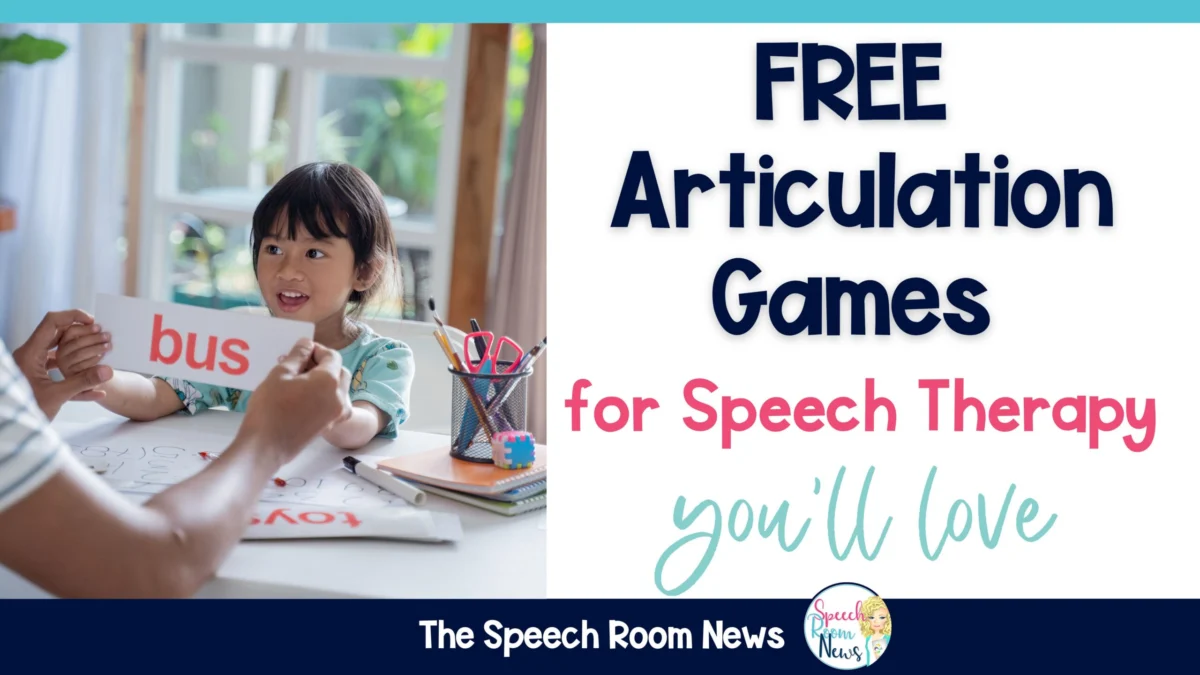
The landscape of speech-language pathology is continually evolving, with a growing emphasis on dynamic, engaging, and accessible resources that can significantly bolster therapeutic efficacy. Among the most impactful innovations is the integration of play-based learning, particularly through free articulation games, which are proving instrumental in boosting student engagement, fostering memory retention, and providing countless opportunities to generalize crucial language skills into everyday life. This shift reflects a broader recognition within the field that effective intervention must be both clinically sound and highly motivating for learners, irrespective of the therapy setting—be it virtual, in-person, or a hybrid model.
The Foundational Role of Articulation Therapy
Articulation disorders, characterized by difficulties in producing speech sounds, are a common challenge faced by children and, to a lesser extent, adults. These difficulties can range from simple sound substitutions, omissions, or distortions (e.g., saying "wabbit" instead of "rabbit") to more complex phonological processing issues. According to the American Speech-Language-Hearing Association (ASHA), approximately 8-9% of young children have a speech sound disorder, with articulation and phonological disorders being the most prevalent types. Untreated, these disorders can impact academic performance, social interaction, and overall communication confidence.
Traditionally, articulation therapy involved repetitive drills and practice with flashcards, often in structured clinical settings. While effective, this approach could sometimes struggle with maintaining the attention and motivation of younger students, or those with co-occurring attention deficits. The advent of play-based therapy emerged as a pedagogical response, recognizing that children learn best through active engagement and enjoyable experiences. By embedding articulation targets within games, therapists could transform tedious repetition into meaningful, interactive practice, thereby enhancing carryover and retention. Furthermore, the economic realities faced by many speech-language pathologists (SLPs), particularly in school settings or private practices with limited budgets, have underscored the critical need for high-quality, free resources. This necessity has driven a creative surge in the development and sharing of no-cost materials, bridging the gap between therapeutic ideals and practical constraints.
A Chronology of Accessible Therapy Resources
The evolution of accessible speech therapy resources mirrors the broader technological advancements of the past few decades. In the pre-digital era, SLPs primarily relied on physical materials—picture cards, board games, and worksheets—often created in-house or purchased from specialized publishers. While these materials formed the backbone of therapy, their acquisition could be costly, and their portability limited.
The late 1990s and early 2000s saw the nascent stages of online resource sharing. Early educational websites began offering simple printable worksheets and activities. Forums and email listservs became vital platforms for SLPs to exchange ideas and share self-made materials, fostering a nascent community of resource sharing. This period laid the groundwork for the collaborative ethos that defines much of today’s free resource landscape.

The proliferation of smartphones and tablets in the late 2000s ushered in the "app revolution." Developers began creating dedicated speech therapy applications, offering interactive exercises and games. While many were premium products, the concept of "lite" or free versions emerged, allowing users to sample functionalities and access basic articulation practice without cost. Concurrently, online marketplaces like Teachers Pay Teachers (TpT), founded in 2006, grew exponentially, providing a platform for educators to buy, sell, and share teaching resources, including a vast array of free articulation materials. Boom Learning, a digital learning platform specializing in interactive digital task cards (Boom Cards), further expanded this ecosystem in the 2010s, allowing SLPs to create and share dynamic, self-checking activities.
The COVID-19 pandemic, beginning in early 2020, served as a significant accelerant for the adoption of digital and no-cost resources. With the abrupt shift to teletherapy, SLPs were compelled to rapidly adapt their practices, often without access to their physical therapy rooms. Online games, digital interactive cards, and virtual backgrounds suddenly became indispensable tools, highlighting the urgent need for readily available, effective, and budget-friendly options. This period cemented the importance of a diverse toolkit, incorporating both digital and printable resources, alongside creative material-free activities suitable for any environment.
The Digital Frontier: Interactive Online Games for Articulation
Interactive online games have transformed articulation practice, offering dynamic and engaging experiences that resonate particularly well with digitally native students. These platforms provide immediate feedback, varied stimuli, and often integrate gamified elements that enhance motivation.
One popular example is ABCya’s “Alphabet BINGO”, a resource primarily aimed at younger students. While ostensibly an alphabet recognition game, its utility in speech therapy lies in its ability to reinforce letter-sound correspondence and initial sound production in a low-pressure, playful format. An SLP can guide a student to articulate the target sound associated with each letter or image on the BINGO card, making it a versatile tool for early phonological awareness and articulation goals. Its simple mechanics and colorful interface make it particularly suitable for pre-kindergarten and early elementary learners.
The Articulation Station App (Lite Version) offers a compelling mobile solution. Developed by speech-language pathologists, the full version is highly regarded, but the free "lite" version provides access to several foundational sounds and interactive games. This accessibility allows SLPs to introduce clients to a professional-grade tool without a financial commitment, enabling practice across word positions (initial, medial, final) and offering various activities like flashcards, matching games, and sentences. The app’s portability means therapy can extend beyond the clinic, allowing for home practice on any compatible device.
Language Playroom stands out as a dedicated online hub offering over 20 free online games specifically focused on articulation. Its commitment to continually expanding its collection to include fluency, language, and social communication activities reflects a holistic approach to speech and language development. The site’s games often feature clear visuals and auditory components, designed to engage students while providing ample opportunities for sound repetition in structured contexts. The platform serves as a testament to the power of community-driven resource creation in speech-language pathology.
For targeted phoneme practice, Phoneme Pop offers an engaging online experience where children pop bubbles containing words with their target sounds. This game is particularly effective for auditory discrimination and rapid naming, as students must quickly identify and articulate the sound embedded within a visual stimulus. The tactile (mouse click/touch screen) interaction combined with auditory feedback makes it a multi-sensory learning experience, which research suggests can enhance learning and memory in children with speech sound disorders.

Finally, Boom Cards have emerged as a powerhouse in digital speech therapy. These interactive, self-checking digital task cards are hosted on the Boom Learning platform and widely available through marketplaces like Teachers Pay Teachers. SLPs can find a plethora of free Boom Card decks targeting various articulation sounds and phonological processes. The interactive nature of Boom Cards, which often involve drag-and-drop activities, multiple-choice questions, and auditory prompts, makes them highly engaging. Their self-checking feature provides immediate feedback, reducing the need for constant therapist intervention and allowing for independent practice. For example, a student might drag an image with an /s/ sound to a "s-words" basket, receiving instant confirmation of their accuracy. This digital format also facilitates easy data collection for SLPs, tracking student responses and progress over time. While many premium Boom Card decks exist, the availability of free decks for specific sounds or as introductory samples ensures broad accessibility.
The Enduring Value of Printable Games for Articulation Practice
Despite the rise of digital tools, printable games continue to hold a significant place in articulation therapy. They offer a tangible, hands-on experience, are independent of technology, and can be easily sent home for practice, fostering greater parental involvement.
"Whack-a-Sound /S/ Self-Checking Articulation Freebie" is an excellent example of a printable resource designed for preschool through second grade. This game helps children identify the position of a target sound (initial, medial, or final) within a word. The "self-checking" aspect—often involving a simple visual cue on the back of the card or a designated answer key—empowers children to verify their own answers, promoting autonomy and reducing reliance on constant adult feedback. Such activities are crucial for developing phonemic awareness, a foundational skill for both speech and literacy.
Articulation Worksheets from Super Duper Publications offer a range of free printable activities. Super Duper is a well-established name in speech and language resources, known for its high-quality materials. Their free worksheets often include diverse activities like coloring pages with target words, cut-and-paste exercises, or simple sentence completion tasks, all designed to elicit specific articulation sounds. These worksheets serve as excellent supplementary material, reinforcing concepts taught in therapy and providing structured practice that can be easily monitored by parents or caregivers at home.
The "Hot Chocolate Articulation Board Game" exemplifies how thematic printable games can make therapy fun, especially during specific seasons. This game is highly adaptable; SLPs can prepare flashcards with target words, and students roll a dice and move spaces only if they correctly articulate the word on their card. This format encourages high repetitions in a playful context, transforming what could be mundane drill into an enjoyable competitive activity. Thematic relevance also helps in contextualizing learning, making it more memorable for students.
"100 Trial Challenges" by Peachie Speechie are widely utilized by SLPs to achieve high-repetition practice, a cornerstone of articulation therapy. These sheets often feature engaging themes or holiday motifs, where students mark off a box for each correct production of their target sound, aiming for 100 trials. This straightforward approach provides clear visual tracking of progress, motivates students to reach a numerical goal, and makes it easy to integrate articulation practice into various parts of a therapy session or as a home assignment. The thematic variety keeps the activity fresh and relevant throughout the year.
Finally, "Color & Play Ocean Articulation Bingo" combines visual engagement with articulation practice. These printable Bingo cards feature target words, allowing for group or one-on-one sessions. As target words are called out, students mark them on their cards, practicing articulation as they go. This game format promotes auditory discrimination, word recognition, and repeated articulation in a social and interactive setting, making it particularly effective for group therapy dynamics.

Material-Free Articulation Games: Fostering Generalization in Everyday Life
Perhaps the most versatile and accessible category of articulation resources are games that require no materials at all. These activities are invaluable for fostering the generalization of speech sounds beyond the therapy room, integrating practice into natural communicative contexts like car rides, waiting rooms, or family meal times.
"I Spy", a classic observational game, can be easily modified for articulation goals. Instead of simply identifying an object by color, the game leader can specify that the object must also start with a particular target sound (e.g., "I spy with my little eye something that starts with /s/"). This encourages auditory processing, vocabulary retrieval, and the production of the target sound in a spontaneous, conversational setting. It also helps children become more aware of sounds in their environment.
"20 Questions" is another excellent material-free game that promotes both articulation and broader language skills. The child, or the therapist, thinks of an object, and the other party asks up to 20 yes/no questions to guess it. The beauty of this game for articulation therapy lies in its demand for descriptive language and structured questioning. The SLP can subtly guide the child to use words containing their target sounds in their questions or answers, providing immediate opportunities for practice within a meaningful communicative exchange.
"Rhyme Time" is a simple yet powerful game for developing phonological awareness and articulation. Players take turns saying words that rhyme with a given target word, focusing on the correct articulation of each word. This activity helps children manipulate sounds, recognize sound patterns, and expand their vocabulary, all while practicing their target phonemes. It’s particularly useful for targeting sounds that frequently appear in word endings.
Finally, "The Alphabet Game" involves going through the alphabet and having the child say a word that starts with each letter. This game is highly adaptable for articulation targets; the SLP can prompt the child to find words with specific sounds, or simply use it as a broad exercise for consistent articulation practice across a wide range of initial sounds. It also supports letter-sound correspondence and vocabulary expansion, making it a multi-beneficial activity for early language learners. These no-materials games empower parents and caregivers to become active participants in their child’s therapy journey, seamlessly integrating practice into daily routines without the need for specialized equipment or preparation.
Broader Implications and the Future of Speech Therapy Resources
The widespread availability of free articulation games carries significant implications for the field of speech-language pathology. Firstly, it champions accessibility and equity, democratizing access to high-quality therapeutic tools for all. This is particularly crucial for underserved communities, families with limited financial resources, or educational institutions operating under tight budgets. By providing no-cost options, these resources help bridge the gap in access to effective intervention, ensuring that more children can receive the practice they need to improve their communication skills.

Secondly, for speech-language pathologists, these resources represent an invaluable asset for professional development and practical application. SLPs can continuously refresh and diversify their therapeutic toolkit without incurring significant personal or institutional expense. This allows for greater flexibility in tailoring interventions to individual student needs and preferences, keeping therapy engaging and relevant. The collaborative nature of platforms like Teachers Pay Teachers also fosters a sense of community among SLPs, allowing for the sharing of best practices and innovative ideas.
Thirdly, enhanced parental involvement is a direct outcome. When parents are provided with simple, free, and engaging tools, they are more likely to participate actively in home practice. Consistent practice outside of formal therapy sessions is a critical predictor of successful therapeutic outcomes. Free games empower parents, making them feel more confident and capable in supporting their child’s speech development.
Looking ahead, the trend toward innovative, accessible, and often digital resources is expected to continue. Future developments may include more sophisticated integration of artificial intelligence for personalized learning paths, adaptive game difficulty, and automated feedback mechanisms. The continued growth of virtual reality and augmented reality in educational settings could also open new frontiers for immersive and highly engaging articulation practice environments.
In conclusion, the integration of free articulation games, spanning interactive online platforms, versatile printables, and creative material-free activities, represents a pivotal advancement in speech-language pathology. This comprehensive approach underscores the synergy of play, accessibility, and diverse modalities in enhancing articulation therapy. By transforming repetitive drills into enjoyable and meaningful experiences, these resources not only boost student engagement and motivation but also facilitate the crucial generalization of skills into everyday communication. The commitment to providing high-quality, no-cost tools empowers SLPs, supports families, and ultimately fosters greater confidence and communicative competence in countless children, shaping a brighter future for speech and language development.
