

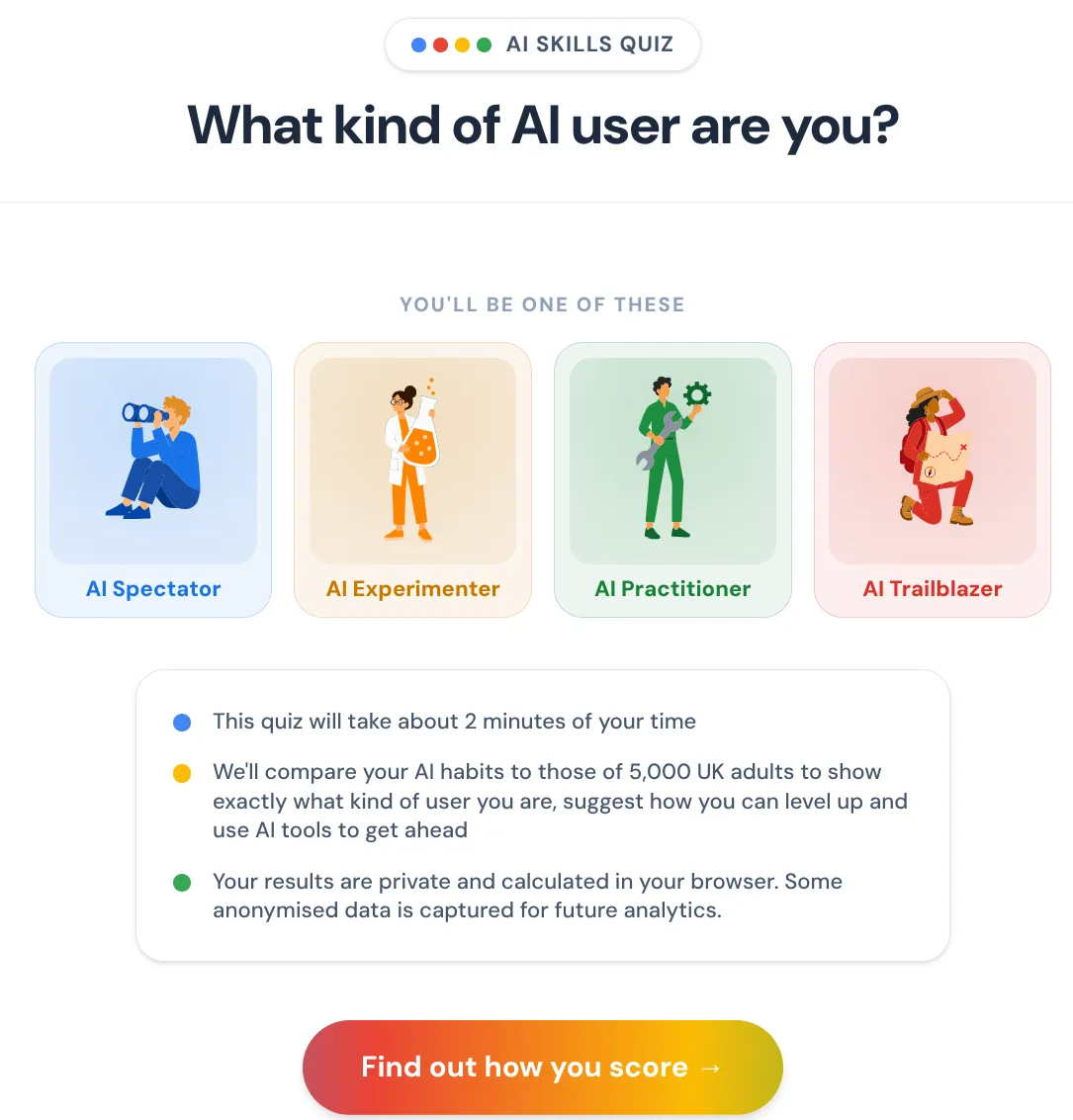
While the majority of workers are now utilizing AI in some capacity, the benefits of this technological revolution are being felt most acutely by a small minority of high-level users. This elite group, dubbed "AI Trailblazers," represents just 15% of the workforce. These individuals are reporting significantly stronger performance reviews, more frequent pay increases, and substantial time savings compared to their peers. The challenge for policymakers and corporate leaders is now shifting from encouraging initial adoption to upskilling the remaining 85% of the workforce to ensure that the dividends of productivity are distributed across the entire population.

The Four Stages of the UK AI Adoption Spectrum
The Public First study segments the British workforce into four distinct categories based on their level of engagement with AI tools. Understanding these segments is crucial for identifying where intervention is most needed.
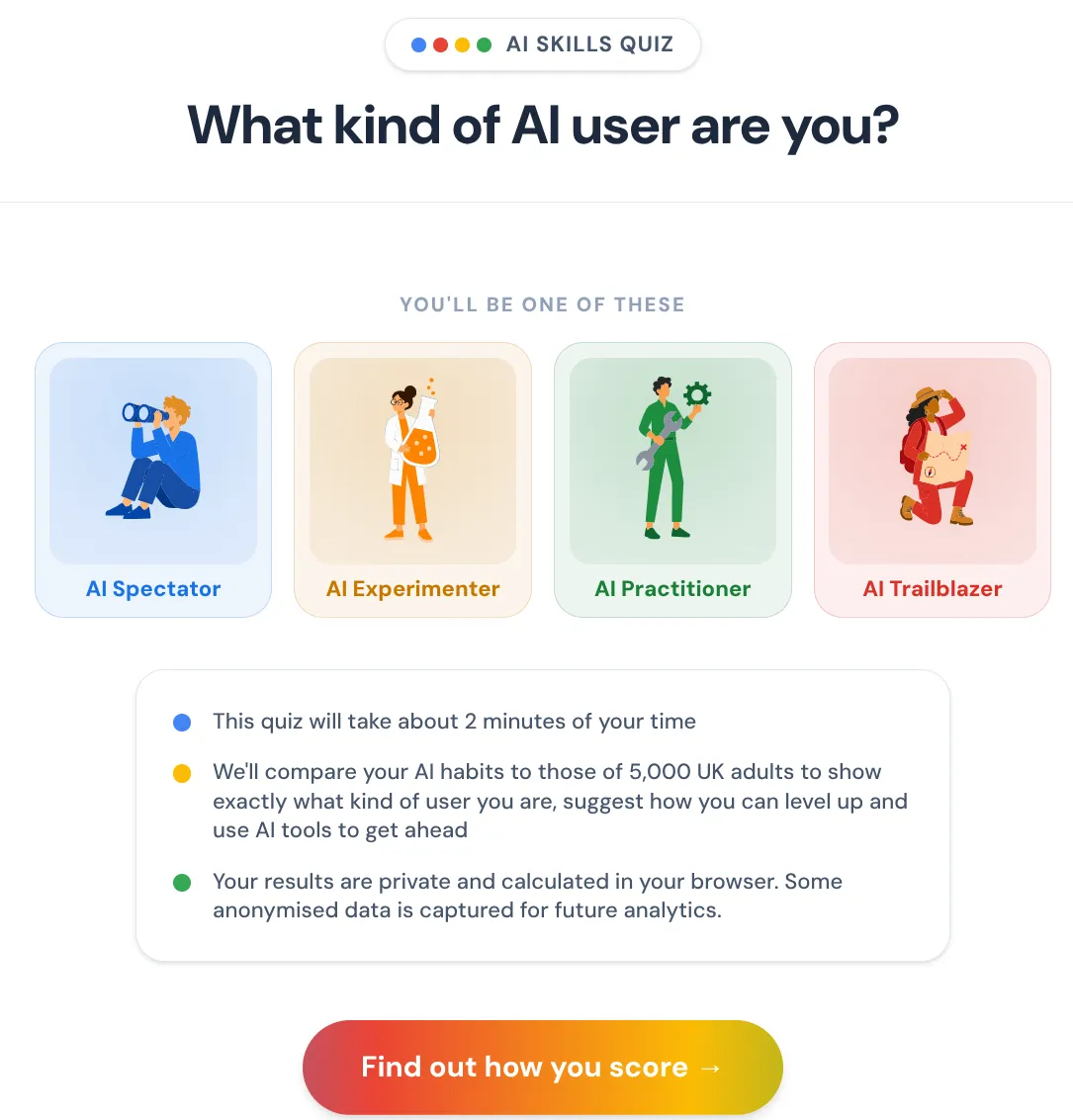
- AI Spectators (10%): These are individuals who do not use AI in their daily professional or personal lives. This group often faces the highest barriers to entry, including a lack of access to hardware or a fundamental misunderstanding of the technology’s relevance to their specific roles.
- AI Experimenters (38%): The largest segment of the workforce, experimenters use AI occasionally. Their usage is typically limited to simple tasks, such as asking quick questions or using generative tools for basic drafting. While they have crossed the threshold of adoption, they have yet to integrate AI into their core workflows.
- AI Practitioners (37%): These workers use AI regularly for research, complex problem-solving, and professional drafting. They represent a solid middle class of AI users who see the value in the technology but have not yet reached the level of automation or creative implementation seen in the highest tier.
- AI Trailblazers (15%): This group represents the vanguard of the digital economy. Trailblazers use AI in deep, creative ways, such as deploying AI agents and automating entire chains of repetitive tasks.
The disparity between these groups is stark. AI Trailblazers are not just faster at their jobs; they are fundamentally changing the nature of their work. On average, a Trailblazer saves nearly eight hours a week across their personal and professional lives—effectively gaining an extra day of productivity every week.

The Economic and Professional Dividend of AI Mastery
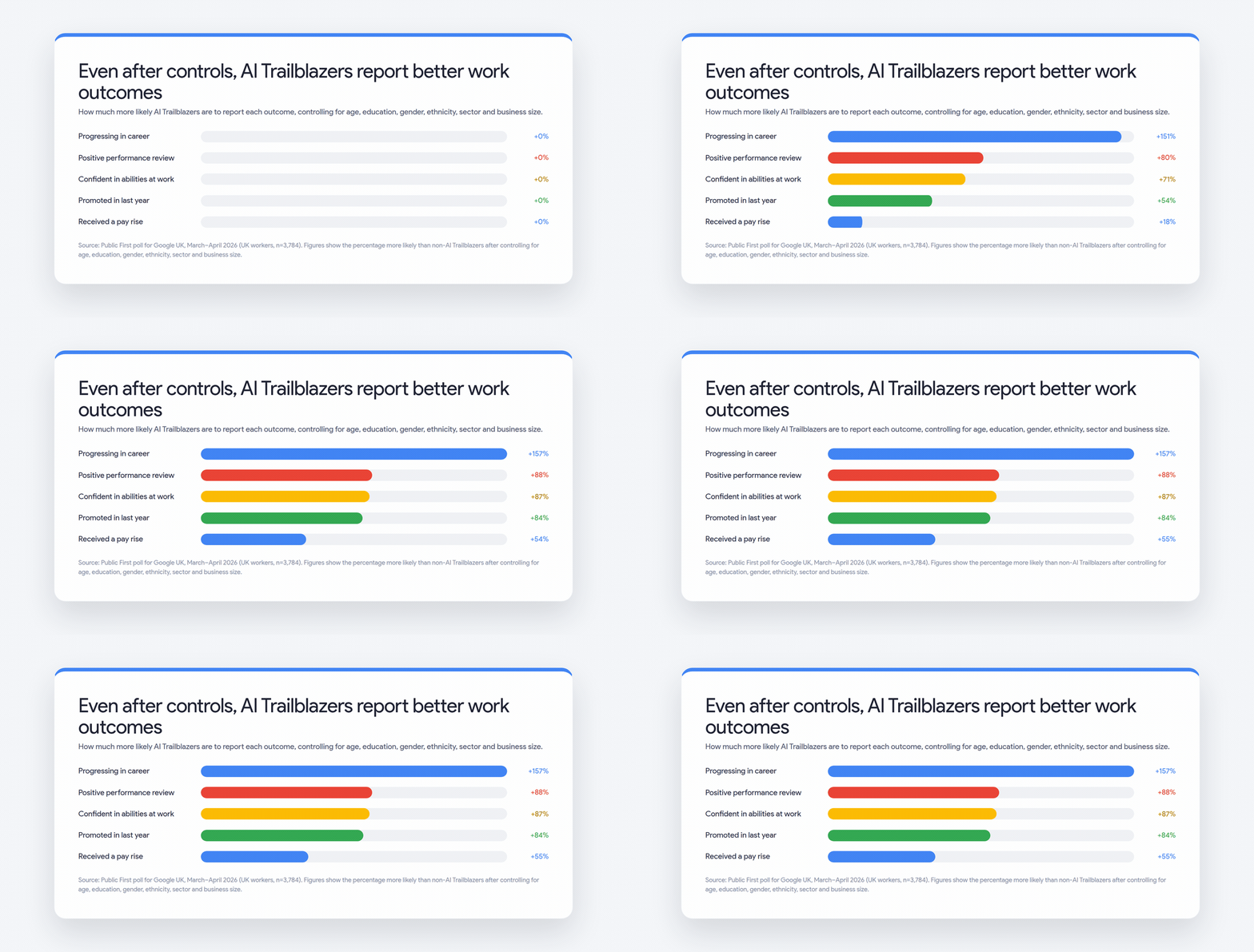
The professional advantages of reaching "Trailblazer" status are quantifiable. The research found that even when controlling for variables such as age, sector, gender, ethnicity, and education, deeper AI use is consistently associated with greater professional momentum. These high-level users are more likely to report that AI has helped them secure promotions and navigate career transitions.
From a macroeconomic perspective, the impact of these tools is already being felt across the UK. In 2025, Google’s suite of AI-powered tools—including Search, Android, Cloud, and YouTube—supported an estimated £140 billion in economic activity. This figure is roughly equivalent to the entire economy of Greater Manchester. A significant portion of this impact, approximately £60 billion, stems from the empowerment of small and medium-sized businesses (SMBs) that use AI to compete with larger corporations.
Furthermore, the aggregate time saved by British workers using these products is estimated at 51 million hours per week. To put this in perspective, this is roughly equal to the total weekly output of the entire National Health Service (NHS) workforce. As the UK continues to grapple with a long-term "productivity puzzle" that has persisted since the 2008 financial crisis, these gains represent a vital lifeline for national growth.
Identifying and Overcoming Barriers to Literacy
Despite the clear benefits, the transition from "Experimenter" to "Trailblazer" is hampered by three primary types of barriers: behavioral, cognitive, and organizational.

Behavioral barriers often involve a lack of confidence or a "fear of the blank page." Many workers are unsure how to start a conversation with an AI or how to refine their prompts to get high-quality outputs. Cognitive barriers relate to the understanding of what AI is—and isn’t—capable of. There is often a misconception that AI requires deep coding knowledge, whereas modern tools are designed for natural language interaction. Finally, organizational barriers involve a lack of clear guidance from employers. Many workers are hesitant to use AI because they are unsure of their company’s policies regarding data privacy and ethical use.
To address these hurdles, Public First has launched an interactive "AI Skills Quiz." This diagnostic tool allows workers to benchmark their skills against the national average, identify their user persona, and receive actionable advice on how to elevate their AI usage. This initiative is part of a broader effort to democratize AI literacy and ensure that technical expertise is not a prerequisite for professional success in the 2020s.
Government Collaboration and the 2030 Training Goal
The push for AI literacy is not solely a private sector endeavor. The UK Government has set an ambitious target of training 10 million workers in AI skills by 2030. This goal is central to the "AI Works for Britain" initiative, a partnership between the government and industry leaders designed to close the adoption gap.
This program builds upon a decade of digital upskilling efforts. For example, the Google Digital Garage program has already trained over 1.2 million people in the UK since its inception. However, the focus is now shifting from general digital skills to specialized AI competencies. Reactions from industry analysts suggest that this collaborative approach is essential.
"The UK has a history of being an early adopter of technology, but we often struggle with the ‘long tail’ of productivity—where the benefits don’t reach the average worker or the regional business," says a spokesperson for the Department for Science, Innovation and Technology (DSIT). "By focusing on upskilling 10 million people, we are ensuring that the AI revolution is an inclusive one."
Geographical and Demographic Disparities
A critical finding of the 2026 study is that AI adoption remains uneven across different demographics. Younger workers and those in the technology and finance sectors are significantly more likely to be Trailblazers than older workers or those in traditional manufacturing and healthcare roles. There is also a geographical divide, with London and the South East showing higher concentrations of advanced AI users compared to the North of England and the devolved nations.

The report warns that the longer the UK waits to address these disparities, the more the gap will widen. If AI proficiency becomes a primary driver of wage growth and career advancement, a lack of access to training could exacerbate existing regional inequalities.
Analysis: Implications for Britain’s Global Competitiveness
The stakes for the UK are high. As a service-based economy, the UK’s global competitiveness relies heavily on the efficiency and innovation of its workforce. Countries like the United States and Singapore are also investing heavily in national AI training programs. For Britain to maintain its position as a global tech hub, it must transition from a nation of "Experimenters" to a nation of "Trailblazers."
The shift toward AI "agents"—tools that can autonomously execute complex tasks rather than just generating text—represents the next frontier. Trailblazers are already using these agents to manage calendars, conduct market research, and even draft code. If the UK can successfully move a larger percentage of its workforce into this category, it could see a significant boost in its GDP growth rate.
Conclusion: A Roadmap for National Upskilling
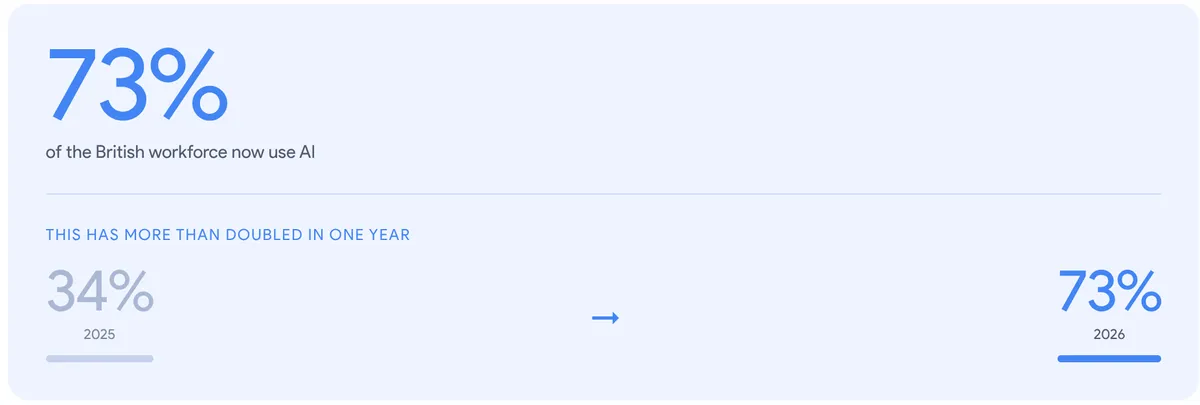
The data from 2026 makes one thing clear: the era of AI experimentation is over, and the era of AI implementation has begun. The rapid jump in adoption from 34% to 73% in just one year proves that the British workforce is willing to engage with the technology. However, the "Trailblazer Advantage" enjoyed by the top 15% shows that there is still a long way to go before the full potential of AI is realized.
Unlocking Britain’s next era of productivity will require a concerted effort from the government, the private sector, and individual workers. By breaking down the behavioral and organizational barriers to adoption and focusing on inclusive training programs like "AI Works for Britain," the UK has the opportunity to build a more productive, prosperous, and equitable economy. The goal is no longer just to use AI, but to master it, ensuring that every worker has the tools they need to unlock their full professional potential.
