

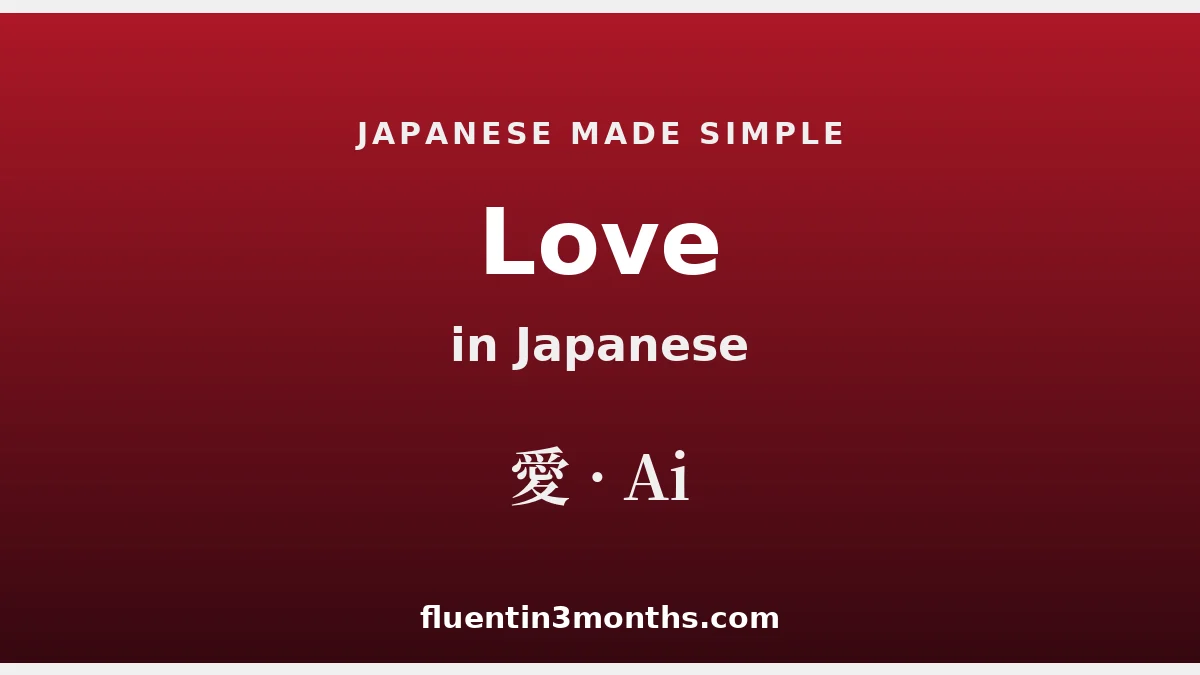
The Japanese language is renowned for its intricate layers of politeness and social hierarchy, but perhaps nowhere is its complexity more evident than in the realm of romantic expression. Unlike the English language, which utilizes the singular verb "love" to encompass a vast spectrum of emotions—ranging from the appreciation of a meal to the lifelong devotion to a spouse—Japanese necessitates a precise selection between two distinct concepts: ai (愛) and koi (恋). This linguistic duality reflects a broader cultural framework that dictates how relationships are initiated, maintained, and articulated within Japanese society. Understanding these nuances is essential for navigating the social landscape of modern Japan, where the weight of a word can define the trajectory of a relationship.
The Semantic Divide: Defining Ai and Koi
Linguists and sociologists often categorize Japanese romantic vocabulary into two primary spheres. Koi (恋) is generally characterized as "romantic love" in its most individualistic and passionate form. It represents the yearning, the excitement, and the "flutter" associated with a crush or the early stages of attraction. Etymologically and culturally, koi is often described as "selfish" love (jibun no tame), as it focuses on the feelings and desires of the person experiencing the emotion. It is the root of terms such as hatsukoi (初恋, first love) and kataomoi (片思い, unrequited love), both of which emphasize the internal state of the individual.
In contrast, ai (愛) represents a more mature, selfless, and enduring form of affection. It is the term utilized for familial love, humanitarian concern, and the deep, stable bond between long-term partners. While koi seeks to possess, ai seeks to provide. This distinction is captured in the common Japanese adage, "Koi is for yourself; ai is for the other person." When these two kanji characters are combined, they form the word ren’ai (恋愛), which serves as the formal term for "romantic love" as a concept, frequently appearing in the titles of literature and cinema.
The visual representation of these words also carries weight. In formal contexts, such as wedding invitations or legal documents, the kanji forms are used to convey gravity. However, in more intimate or casual settings, such as greeting cards or digital messages, the phonetic hiragana script—ai (あい) or koi (こい)—is often preferred for its perceived softness and warmth.
The Kokuhaku Protocol: The Formalization of Romance
One of the most distinctive aspects of Japanese dating culture is the practice of kokuhaku (告白), or the "confession." In many Western cultures, relationships often evolve organically through a period of "hanging out" or casual dating until exclusivity is eventually assumed or discussed. In Japan, however, the transition from acquaintances or friends to a committed couple is typically marked by a formal declaration of feelings.
The kokuhaku usually involves a specific phrase, such as "Suki desu. Tsukiatte kudasai" (I like/love you. Please go out with me). The verb tsukiau (付き合う), meaning "to date" or "to associate with," carries significant weight; it is a request for an exclusive, committed relationship. Until this formal exchange occurs, even if two individuals have gone on multiple outings together, they are often not considered "official." This cultural checkpoint provides a clear boundary that reduces ambiguity, although it also introduces a high-stakes moment of potential rejection that many Japanese youth find daunting.
Sociological data suggests that while the younger generation is becoming more influenced by Western dating apps and casual social norms, the kokuhaku remains a cornerstone of the romantic experience. According to various domestic surveys on dating habits, a significant majority of Japanese respondents still view the formal confession as the definitive starting point of a serious relationship.
The Linguistic Hierarchy of Affection
Once a relationship is established, the expression of affection follows a "ladder" of intensity. Japanese speakers rarely jump to the most profound terms, preferring a gradual escalation that mirrors the deepening of the emotional bond.
Suki and Daisuki: The Daily Standard
The word suki (好き) literally translates to "like," but in a romantic context, it functions as the standard "I love you." It is the most common way for couples to express their feelings. Adding the prefix dai (大, big) creates daisuki (大好き), which translates to "I really like you" or "I love you very much." Daisuki is frequently used between close friends, family members, and romantic partners to convey a high level of warmth without the overwhelming gravity of more formal terms.
Aishiteru: The Heavyweight Expression
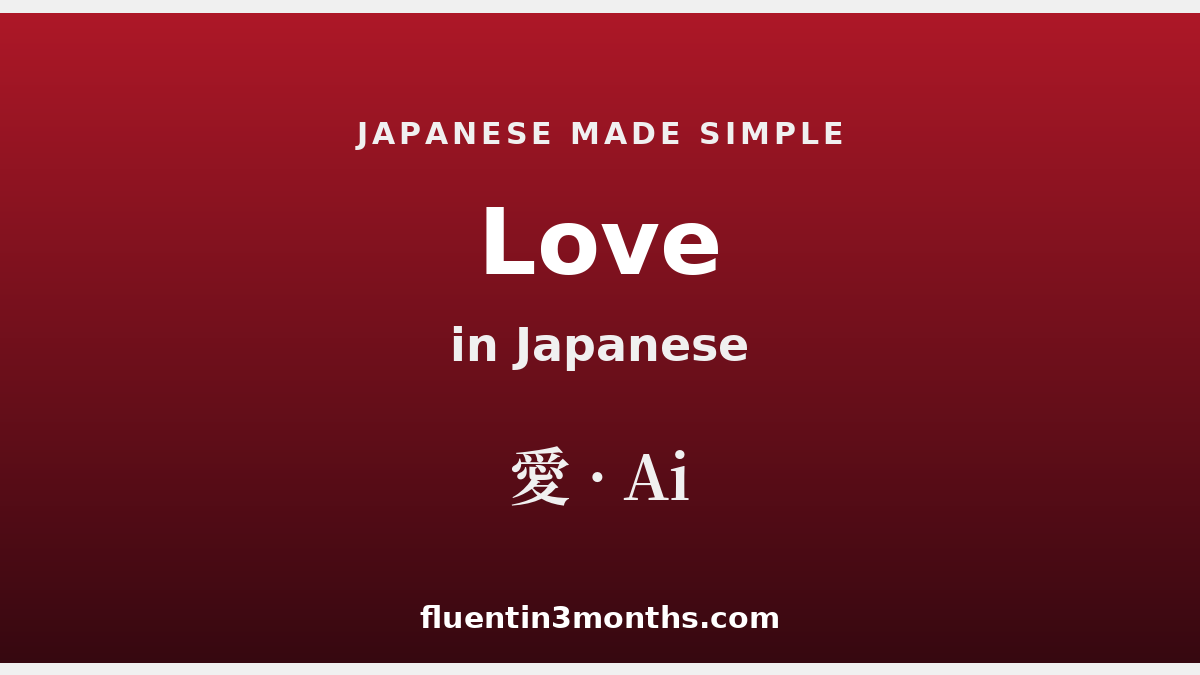
Aishiteru (愛してる) is the closest linguistic equivalent to the English "I love you," yet its usage is markedly different. It is a "heavy" word, reserved for monumental moments such as marriage proposals, significant anniversaries, or final goodbyes. Many Japanese couples, even those married for decades, may never say "aishiteru" to one another out loud.
This reticence is often misunderstood by foreigners as a lack of affection. However, in Japanese culture, the weight of aishiteru is such that frequent use is thought to diminish its sincerity. There is a cultural preference for "reading the air" (kuuki wo yomu) and expressing love through actions—such as preparing meals, providing for the family, or simply being present—rather than through verbal affirmations.
Historical and Regional Contexts
The historical evolution of romantic language in Japan reveals a long-standing preference for subtlety. During the Meiji era, as Japan began to translate Western literature, translators struggled to find a direct equivalent for "I love you." The famous novelist Natsume Soseki famously suggested that "The moon is beautiful, isn’t it?" (Tsuki ga kirei desu ne) was a more appropriate Japanese translation for the sentiment, implying that shared appreciation of beauty was a more profound declaration of love than a direct statement.
Regional dialects also play a role in romantic expression. In the Kansai region, particularly in Osaka, the standard suki is often replaced with "Suki yanen." The suffix yanen adds a layer of emphasis and regional pride, making the declaration feel more earthy, sincere, and warm compared to the more reserved standard Japanese (hyoujungo) spoken in Tokyo. This phrase is so culturally iconic that it has been used as the brand name for popular consumer products, including instant ramen.
Terms of Endearment and Idiomatic Expressions
Unlike the English language, which possesses an extensive vocabulary of "pet names" (e.g., honey, babe, sweetheart), Japanese is relatively sparse in this department. Calling a partner by a literal translation of a pet name, such as "usagi" (bunny), would likely be met with confusion. Instead, endearment is shown through the use of honorific suffixes.
Couples often move from using surnames with the polite -san suffix to using given names with more intimate suffixes like -kun (for men) or -chan (for women). In some cases, partners may drop suffixes entirely (yobisute), which signifies the highest level of intimacy. Long-married couples may address each other as "Oto-san" (Father) or "Oka-san" (Mother) once children are born, reflecting the shift in their roles within the family unit.
Idiomatic expressions further enrich the romantic lexicon. The concept of the "Red String of Fate" (Akai ito) suggests that two people are predestined to meet and love one another, a belief deeply rooted in East Asian folklore. Another common idiom, "Horete mawari ga mienai," describes the state of being so "head over heels" that one becomes oblivious to their surroundings, similar to the English "love is blind."
Sociological Implications and Modern Trends
The nuances of Japanese romantic communication have broader implications for the country’s demographic challenges. Japan is currently facing a record-low birth rate and a decline in marriage rates. Sociologists point to various factors, including economic pressures and the "herbivore men" (soshoku danshi) phenomenon—a term used to describe men who are less interested in traditional masculinity and proactive dating.
The linguistic hesitation and the pressure of the kokuhaku culture are sometimes cited as barriers to modern dating. In a society that values harmony and the avoidance of conflict, the risk of "breaking the atmosphere" with a direct confession can lead to prolonged periods of ambiguity. However, the rise of digital communication and social media is beginning to shift these norms, allowing for more frequent, albeit less formal, expressions of interest.
Technical Considerations: Pronunciation and Grammar
For those learning to navigate these expressions, Japanese phonetics offers a degree of simplicity. The language uses five consistent vowel sounds (a, i, u, e, o), and syllables generally carry equal weight. When expressing romance, the grammar often shifts from the polite desu/masu forms to casual forms. For example, "I love you" might transition from "Suki desu" to a simple "Suki da" or just "Suki" as the relationship becomes more intimate. This drop in formality is a crucial indicator of emotional proximity in Japanese social dynamics.
Conclusion: The Silent Language of Devotion
Ultimately, expressing love in Japanese is an exercise in precision and restraint. While the English "love" is a versatile tool, the Japanese ai and koi require the speaker to categorize their feelings with intentionality. From the formal protocol of the kokuhaku to the rare and weighty declaration of aishiteru, the Japanese language prioritizes the depth and sincerity of the bond over the frequency of the word. In a culture where much is left unsaid, understanding these linguistic choices provides a vital window into the Japanese heart, revealing a society that values the quiet, enduring strength of affection over outward displays of passion.
