

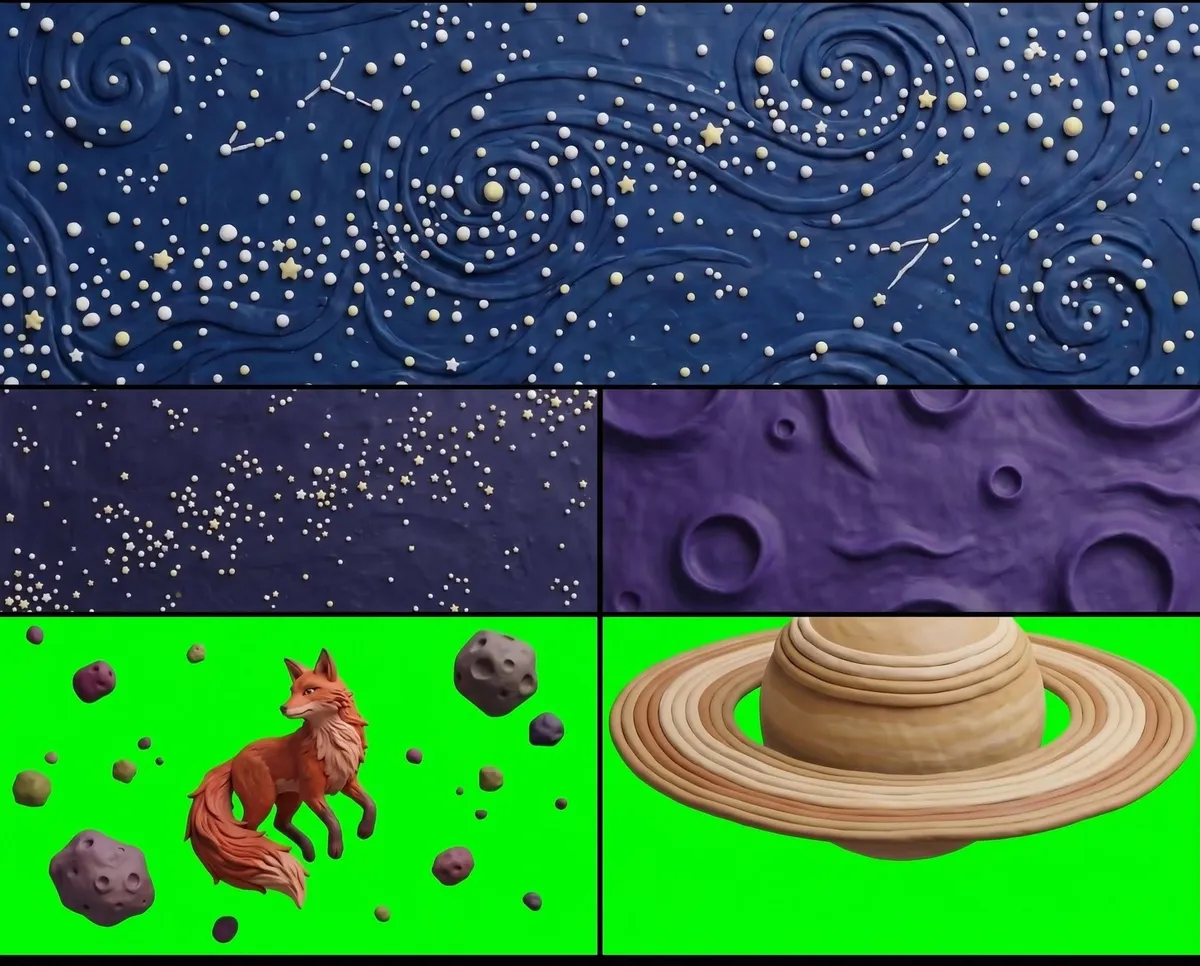
The annual Google I/O developer conference has long served as a bellwether for the tech industry, typically acting as a stage for the unveiling of software updates, hardware iterations, and breakthroughs in computer science. However, Google I/O 2026 marked a fundamental shift in the event’s own production philosophy. Rather than merely presenting artificial intelligence as a finished product, Google’s internal creative and engineering teams utilized the Gemini ecosystem of models to conceptualize, design, and execute the event itself. This "AI-first" production approach integrated generative models into every facet of the conference, from the cinematic shorts shown during the keynote to the interactive physical installations provided for on-site attendees at the Shoreline Amphitheatre.
The strategic objective for the 2026 cycle was to demonstrate that AI tools have moved beyond the experimental phase and are now capable of handling complex, high-stakes production workflows. By leveraging a suite of tools including Gemini Omni, Nano Banana, and the Lyria music generation model, Google sought to reduce the friction between human ideation and final execution. This internal case study highlights how the blending of human artistry with machine efficiency allowed the team to prototype in real-time, effectively rewriting the traditional timelines associated with large-scale corporate events.
A New Paradigm in Filmmaking: The Case of Timmy TPU
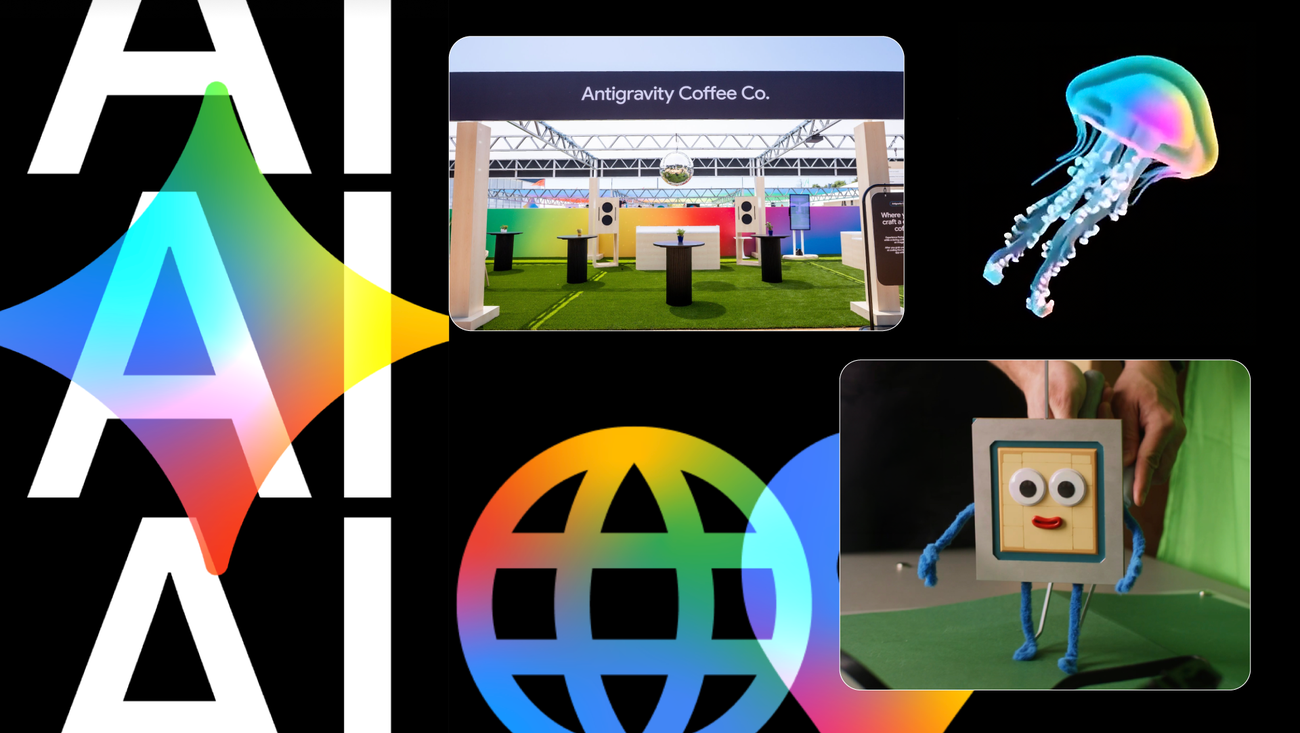
One of the most prominent displays of AI-integrated production was the short film "TPU Training Day," featuring a character affectionately known as "Timmy TPU." The film follows a group of Tensor Processing Units—Google’s custom-developed AI accelerators—as they prepare for the heavy computational demands of the I/O conference. While the final product appeared as a polished, high-fidelity animation, its origins were rooted in low-fidelity physical materials.
The production, led by director Laurie Rowan in collaboration with Nexus Studios, began with cardboard, markers, and physical puppetry. This tactile approach allowed for a level of human charm and "imperfection" that is often lost in purely digital pipelines. The team then utilized the "Nano Banana" model—a lightweight, high-speed generative model—to transform raw footage of these puppets into stylized, cinematic frames.
To maintain visual consistency—a notorious challenge in AI video generation—the engineering team developed a custom tool within Google AI Studio. This allowed them to test Nano Banana’s output at scale, ensuring that every frame matched the intended lighting and texture before generating full sequences. Gemini Omni was subsequently used to merge base animations with these stylized frames, preserving the original human performances while elevating the visual quality to a cinematic standard. This workflow demonstrated a significant reduction in the time required for traditional 3D rendering, allowing for rapid iteration during the editing process.
Reimagining Visual Brand Identity Through Generative Collaboration
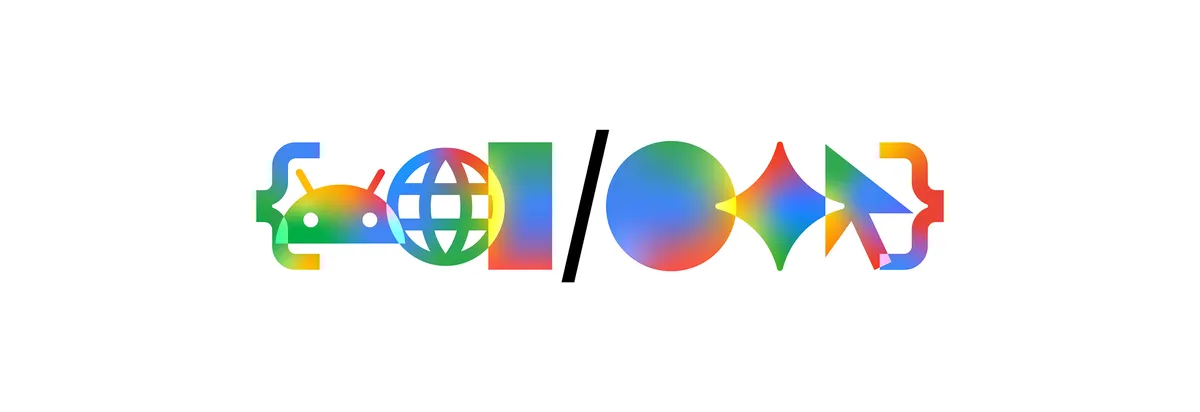
The visual identity of Google I/O 2026—characterized by a four-color gradient with overlapping transparencies and interlocking icons—was the result of a collaborative loop between human designers and Gemini models. The branding process began with an unconventional "data feeding" phase, where five years of previous I/O brand guidelines and recaps were ingested by the models to establish a baseline for the event’s aesthetic evolution.
Initial outputs from the AI were used as "mood boards" rather than final designs. The creative team engaged in micro-experiments, feeding imagery back into Nano Banana with specific feedback to refine the style of the event’s icons. This iterative process led to the development of a dynamic icon set: flat 2D shapes that could transform into hyper-textured 3D objects. These assets were deployed across the entire I/O ecosystem, including the keynote stage screens, digital applications, and physical signage throughout the venue.
The use of AI in this context did not replace the designer but rather acted as a "force multiplier." By automating the exploration of icon styles and textures, the design team was able to focus on the high-level narrative and spatial layout of the conference, leaving the iterative generation of variations to the AI.
The Pre-Show Experience: Jellectronica and Infinite Scaler
The 2026 pre-show served as a live demonstration of AI’s capabilities in multi-modal synchronization. A standout segment was "Jellectronica," a generative music experiment conducted in partnership with the Monterey Bay Aquarium. This project translated the biological movements of moon jellyfish into a live musical score.
The technical stack for Jellectronica involved training a YOLO8 (You Only Look Once) object detection model in Google Colab, which was then deployed on Google’s Coral NPU (Neural Processing Unit). This system tracked the position and velocity of jellyfish in real-time. These data points were mapped to musical parameters using Google Flow Music and the Lyria API. For instance, the density of jellyfish in specific quadrants of the tank dictated the complexity of the bass lines or the tempo of the melody. To streamline the audio production, the team used a mass stem generator within "Google Antigravity"—an internal agentic platform—to automate the creation of chords, drums, and melodies that remained harmonically consistent regardless of the jellyfish’s unpredictable movements.
Simultaneously, the "Infinite Scaler" interactive game allowed players to contribute to the event’s digital landscape. Players generated 3D game levels using 2D image prompts. Using Nano Banana via the Gemini API, user prompts were converted into sprite sheets. The system then inferred depth, mapping textures to 3D boxes rendered in WebGL. This allowed for the rapid creation of a "global stack" of player-generated worlds, showcasing how generative AI can enable user-generated content at scale with minimal latency.
On-Site Innovation: Antigravity Coffee Co. and Personalized Swag
The integration of AI extended into the physical hospitality of the event through the Antigravity Coffee Co. pop-up. This installation utilized Flutter and the A2UI (Agent-to-User Interface) protocol to build "generative UI" experiences. Attendees used an app to design custom latte art, which was then printed onto their drinks.
Unlike traditional apps with static menus, the Antigravity Coffee interface was adaptive, changing in real-time based on user interaction. The backend, powered by Firebase and Google Cloud, handled the complex reasoning required to translate artistic prompts into machine-readable instructions for the latte printers. This served as a proof-of-concept for "agentic coding," where AI agents assist in the real-time assembly of software interfaces.
In a similar vein, the "Sticker Swag" station replaced traditional pre-printed merchandise with on-demand generation. Attendees participated in a 20-second interactive game to select prompt categories—ranging from "disco balls" to "gummy bear motherboards." Nano Banana then fused these choices into a unique 3D sticker design, which was printed on-site. This level of personalization would have been logistically impossible without a high-speed, generative backend capable of producing thousands of unique, high-resolution assets in a single afternoon.

Technical Analysis and Industry Implications
The production of Google I/O 2026 highlights several critical trends in the evolution of enterprise AI. First, the shift toward "multi-model workflows"—where different models (Gemini Omni, Nano Banana, Lyria) are specialized for specific tasks—indicates that the industry is moving away from a "one size fits all" approach to generative AI.
Second, the event underscored the importance of the "human-in-the-loop" philosophy. Throughout the creation of "Timmy TPU" and the I/O branding, AI was used to offload "the mundane tasks," such as frame consistency and texture variation, while humans retained control over the narrative and emotional resonance. This suggests that the future of the creative industries lies not in the replacement of human artists, but in the augmentation of their capabilities.
From a technical standpoint, the use of Google’s internal "Antigravity" platform suggests a move toward agentic workflows, where AI can take a high-level instruction (e.g., "generate a music stem for a bass section") and execute the underlying code and processing autonomously. This has profound implications for software development and content creation, potentially reducing development cycles from months to days.

Conclusion and Broader Impact
Google I/O 2026 stands as a milestone in the practical application of generative AI. By using its own tools to build its most significant annual event, Google provided a transparent look at the current state of AI readiness. The success of the "Timmy TPU" film and the seamless execution of live generative experiments like Jellectronica offer a blueprint for other industries—ranging from film production and graphic design to software engineering and event management.
The event demonstrated that when AI is integrated thoughtfully, it becomes invisible. As noted by the production team, the ultimate goal was for the viewer to stop thinking about the AI and simply experience the event. This shift from "AI as a spectacle" to "AI as infrastructure" is likely to be the defining theme of the technology’s trajectory over the coming years. For the developer community, the message was clear: the tools are no longer just for building the future; they are ready to be used to build the present.
