

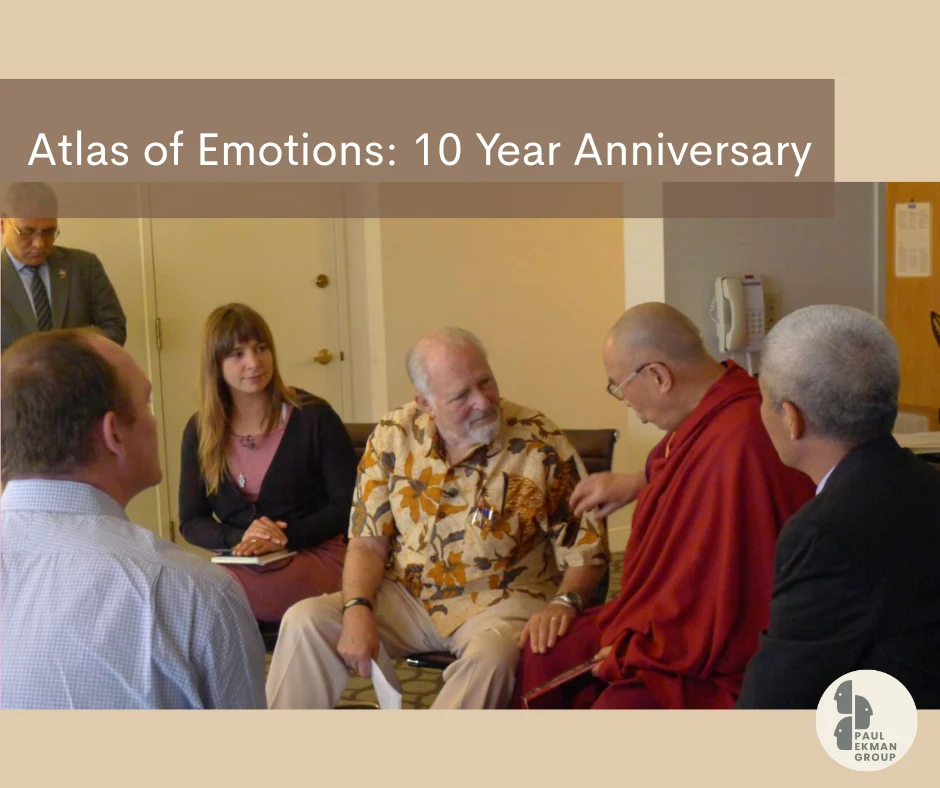
Ten years ago, a groundbreaking initiative aimed at demystifying the complex terrain of human emotions was unveiled to the world. The Atlas of Emotions, a project born from a remarkable confluence of scientific rigor, contemplative wisdom, and artistic design, has since become a pivotal resource in fostering emotional literacy and understanding across diverse populations. Launched in 2016, this innovative framework, co-created by renowned psychologist Dr. Paul Ekman, his daughter Dr. Eve Ekman, and His Holiness the Dalai Lama, has transcended its initial conception to become a widely adopted tool in educational institutions, therapeutic settings, academic research, and everyday personal development. Its enduring legacy is now being celebrated with reflections on its journey and a glimpse into its promising future.
The Genesis of Emotional Understanding: A Unique Collaborative Endeavor
The creation of the Atlas of Emotions was not a spontaneous event but the culmination of years of research and a shared vision for a more emotionally intelligent world. Dr. Paul Ekman, a pioneer in the study of facial expressions and emotions, had long been dedicated to identifying universal emotional experiences. His foundational work, including a landmark survey of nearly 250 emotion scientists, revealed a significant consensus on the nature of fundamental human emotions. This scientific bedrock provided the initial impetus for mapping these emotions in a way that could be easily understood by a broad audience.
The vision for the Atlas was to create a visual and conceptual tool that could guide individuals through the spectrum of human feelings, helping them to identify, understand, and navigate their emotional states. This ambitious undertaking required a unique collaboration, bridging the gap between empirical psychology and profound contemplative insight. His Holiness the Dalai Lama, a global advocate for compassion and mindfulness, brought his deep understanding of the human mind and his philosophical perspectives on emotions, offering a crucial dimension to the project. Dr. Eve Ekman, working alongside her father, provided essential expertise in clinical psychology and the practical application of emotional awareness techniques.
The collaborative process was characterized by a spirit of rigorous inquiry and open dialogue. Early stages involved intensive working meetings where the core concepts and visual representations of emotions were debated, refined, and integrated. This interdisciplinary approach, seamlessly blending rigorous psychological research, sophisticated graphic design, and the Dalai Lama’s contemplative wisdom, was instrumental in shaping the Atlas into a scientifically sound yet deeply accessible resource. The project aimed to identify common ground among scientists regarding the universality of certain emotions, a principle that guided its development from inception.
A Decade of Impact: From Classrooms to Global Conversations
Since its public debut in 2016, the Atlas of Emotions has experienced a trajectory of significant global adoption and impact. Its innovative approach to emotional cartography garnered immediate attention, including prominent coverage in major media outlets. The New York Times, in a 2016 article, highlighted the Atlas’s pioneering effort to map emotions and make complex psychological concepts accessible to the public, underscoring its potential to revolutionize how people think about and engage with their inner lives.
This early recognition served as a catalyst for widespread integration across various sectors. Educational institutions have embraced the Atlas as a tool for teaching emotional intelligence to students of all ages. Therapists and counselors have found it invaluable in helping clients articulate and process their feelings, leading to more effective therapeutic outcomes. Researchers continue to utilize the Atlas as a framework for exploring the nuances of emotional experience and its impact on behavior and well-being. Beyond formal settings, the Atlas has enriched everyday conversations, providing a common language and understanding for discussing emotions, fostering greater empathy and connection among individuals.
While specific quantitative data on the global reach of the Atlas is still being compiled, anecdotal evidence and reported usage highlight its far-reaching influence. Its online presence has facilitated access for millions worldwide, and its principles are being integrated into various training programs and curricula. The framework has proven particularly effective in contexts where understanding and managing emotions are critical, such as conflict resolution, leadership development, and mental health advocacy.
Unveiling the Process: A Rare Glimpse Behind the Scenes
To commemorate its 10th anniversary, the creators of the Atlas of Emotions are offering a unique and intimate look into the development process. Never-before-seen footage from a pivotal working meeting between Dr. Paul Ekman, Dr. Eve Ekman, and His Holiness the Dalai Lama has been released. This remarkable video captures a candid moment as the trio reviews the Atlas in its developing stages, providing invaluable insight into the collaborative spirit and the dedication that fueled the project.
The footage illustrates the dynamic interplay of ideas and perspectives, showcasing how scientific understanding, contemplative insights, and design considerations were harmonized. It reveals the meticulous process of translating complex psychological theories into an intuitive and engaging format. This behind-the-scenes look serves not only as a historical document of the Atlas’s creation but also as a testament to the power of interdisciplinary collaboration in addressing fundamental aspects of the human experience. The video can be accessed here.
The Foundation of Agreement: Scientific Consensus on Universal Emotions
A critical element underpinning the Atlas of Emotions is the robust scientific consensus it is built upon. Dr. Paul Ekman’s extensive research, including the comprehensive survey of emotion scientists, established that while cultural variations exist in the expression and appraisal of emotions, there is a core set of universal emotions that are recognized across human societies. This agreement on fundamental emotional experiences provided a stable foundation for mapping the emotional landscape.
The survey, detailed in Dr. Ekman’s work, identified distinct clusters of emotions that were consistently recognized and described by experts. This scientific validation lent significant credibility to the Atlas, ensuring that its framework was grounded in empirical evidence rather than subjective interpretation. The Atlas subsequently translates this scientific understanding into a user-friendly interface, allowing individuals to explore these universal emotions, their triggers, and their potential manifestations.
Shaping the Future: User Feedback and Upcoming Expansions
As the Atlas of Emotions celebrates its tenth anniversary, its creators are not only reflecting on its past but are actively engaging with its community to shape its future. They have launched an initiative to gather feedback from users, inviting them to share their experiences and insights. This proactive approach underscores a commitment to continuous improvement and ensures that the Atlas remains relevant and impactful in an ever-evolving world.
The feedback initiative poses questions such as: "How have you used the Atlas of Emotions?" and "What has it helped you see, understand, or change?" This direct engagement with users is crucial for understanding the practical applications and the transformative potential of the Atlas. The collected insights will play a vital role in informing the next phase of development, guiding the creation of new resources and the enhancement of existing ones. Users are encouraged to share their experiences through a dedicated feedback form, accessible here.
Looking ahead, significant expansions to the Atlas of Emotions are already in motion. Updates to the online, interactive Atlas are planned, promising enhanced features and an even more engaging user experience. Furthermore, Dr. Eve Ekman is currently developing a comprehensive "Atlas of Emotions" book, slated for release in 2027. This forthcoming book is expected to delve deeper into the original Atlas, offering expanded explorations of emotional nuances, incorporating updated research and insights, and presenting novel methodologies for engaging with the intricate emotional tapestry that defines human existence. This dual approach—enhancing the digital platform and producing a comprehensive literary work—signifies a sustained commitment to advancing emotional literacy and providing accessible tools for emotional well-being globally.
The continued evolution of the Atlas of Emotions, driven by scientific advancement, user engagement, and the enduring vision of its creators, signals a promising future for the field of emotional intelligence and its practical application in fostering a more understanding and compassionate world.
