

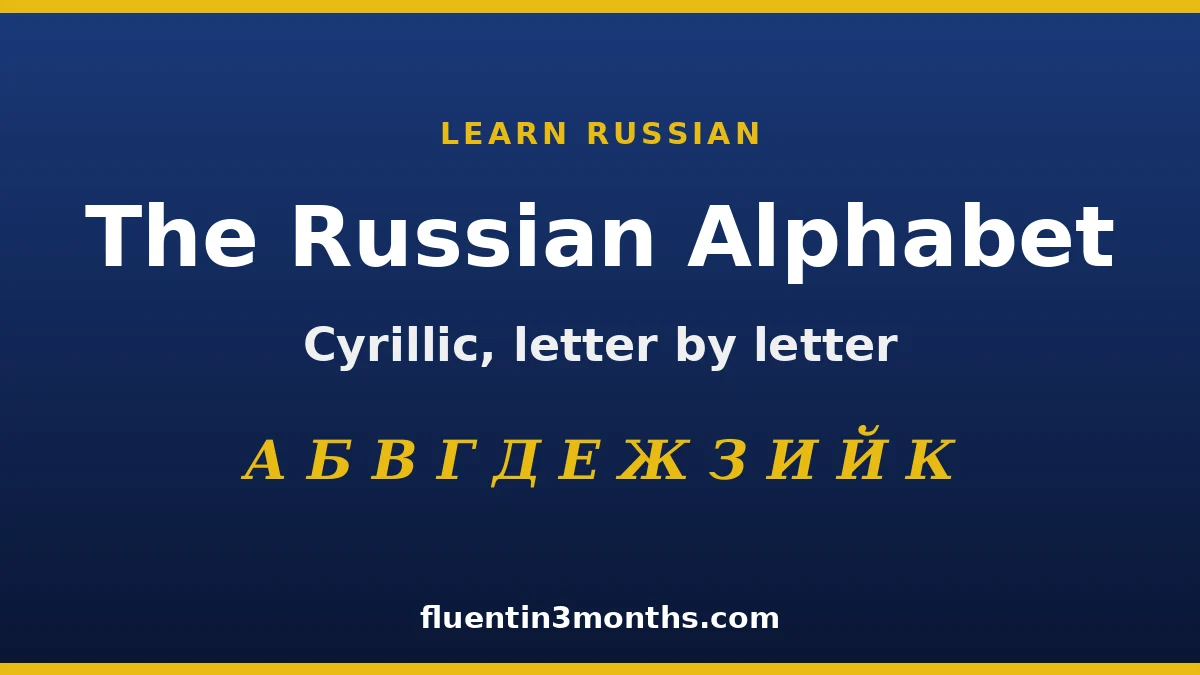
The Russian alphabet, a 33-letter system known as Cyrillic, serves as the foundational script for one of the world’s most widely spoken languages, yet it often presents a significant psychological barrier to Western learners. Despite the initial perception of the script as an impenetrable "wall" of unfamiliar symbols—including characters that resemble inverted Latin letters and signs that lack independent phonetic values—linguistic experts maintain that the system is highly logical and can be mastered within a remarkably short timeframe. As the primary writing system for approximately 258 million Russian speakers globally, as well as several other Slavic and non-Slavic nations, the Cyrillic alphabet represents a critical intersection of history, theology, and geopolitics.
Understanding the Cyrillic script requires a departure from the assumption that it is a character-based system similar to Chinese or Japanese. Instead, it is a purely phonemic alphabet where, once the 33 characters are memorized, a reader can phonetically decode almost any Russian word. This structural consistency provides a distinct advantage over English, which is notorious for its irregular spelling conventions. For the modern student or diplomat, the acquisition of this script is not merely an academic exercise but a gateway to navigating the socio-political landscapes of Eastern Europe, Central Asia, and the Balkans.
The Historical Evolution of the Cyrillic Script
The origins of the Cyrillic alphabet are rooted in the 9th-century missionary efforts of the Byzantine Empire. Saint Cyril and Saint Methodius, two brothers and theologians from Thessaloniki, were tasked with converting the Slavic peoples to Christianity. To facilitate the translation of liturgical texts into the vernacular, they initially developed the Glagolitic script. However, it was their disciples in the First Bulgarian Empire during the late 9th century who refined these characters into what is now recognized as Cyrillic, drawing heavily from the Greek uncial script.
This historical lineage explains the visual overlap between Cyrillic and the Latin alphabet used in the West. Because both systems share Greek ancestry, several letters—such as A, E, K, M, O, and T—are virtually identical in form and function. This shared heritage creates a "bridge" for learners, though it also introduces the phenomenon of "false friends," where familiar shapes represent entirely different sounds.
Throughout the centuries, the alphabet underwent several major reforms to align with the evolving Russian language. The most significant of these occurred under Peter the Great in the early 18th century, which introduced the "Civil Script" (Grazhdanskiy Shrift) to modernize the appearance of letters and bring them closer to Western European typography. Later, the 1918 orthographic reform following the Russian Revolution removed several redundant letters, such as the yat (Ѣ) and fita (Ѳ), streamlining the alphabet into the 33-letter version utilized today.
Structural Analysis: The Four Categories of Cyrillic Letters
Pedagogical research suggests that the most efficient way to acquire the Russian alphabet is through categorization rather than rote memorization of the standard alphabetical order. By segmenting the 33 letters into four distinct groups based on their relationship to the Latin alphabet, learners can reduce cognitive load and accelerate retention.
Group 1: The Transparent Cognates
This group consists of five letters that look and sound nearly identical to their English counterparts. These include А (a) as in "father," К (k) as in "kite," М (m) as in "mom," О (o) as in "more," and Т (t) as in "top." For an English speaker, these letters require zero mnemonic effort, providing an immediate foothold in the language.
Group 2: The "False Friends"
The second category is arguably the most critical for accuracy, as it contains seven letters that exist in the Latin alphabet but represent different phonemes. Failure to distinguish these can lead to chronic mispronunciation.
- В (v): Resembles a ‘B’ but sounds like the English ‘v’.
- Е (ye): Resembles an ‘E’ but carries a "ye" sound, as in "yes."
- Н (n): Resembles an ‘H’ but functions as the English ‘n’.
- Р (r): Resembles a ‘P’ but is a rolled ‘r’.
- С (s): Resembles a ‘C’ but always makes a soft ‘s’ sound.
- У (u): Resembles a ‘y’ but sounds like the "oo" in "moon."
- Х (kh): Resembles an ‘X’ but represents a guttural ‘h’ sound, similar to the Scottish "loch."
Group 3: Unique Cyrillic Shapes
This category includes 16 characters that have no visual equivalent in the Latin alphabet. While they appear daunting, they are often derived from Greek or Hebrew origins and are phonetically consistent. Examples include Б (b), Г (g), Д (d), П (p), and Л (l). Others represent sounds common in Slavic languages that require specific symbols, such as Ж (zh) for the soft "s" in "pleasure," Ш (sh), and the complex Щ (shch).
Group 4: The Phonetic Modifiers
The final group consists of three signs that do not represent independent sounds but modify the pronunciation of the preceding consonant. The Hard Sign (Ъ) acts as a separator, ensuring the consonant and the following vowel remain distinct. The Soft Sign (Ь) indicates palatalization, requiring the speaker to press the tongue against the roof of the mouth. Finally, the letter Ы (y) represents a unique, deep vowel sound that has no direct English equivalent, often described as a guttural "i."
Phonetic Nuance: The Hard and Soft Vowel System
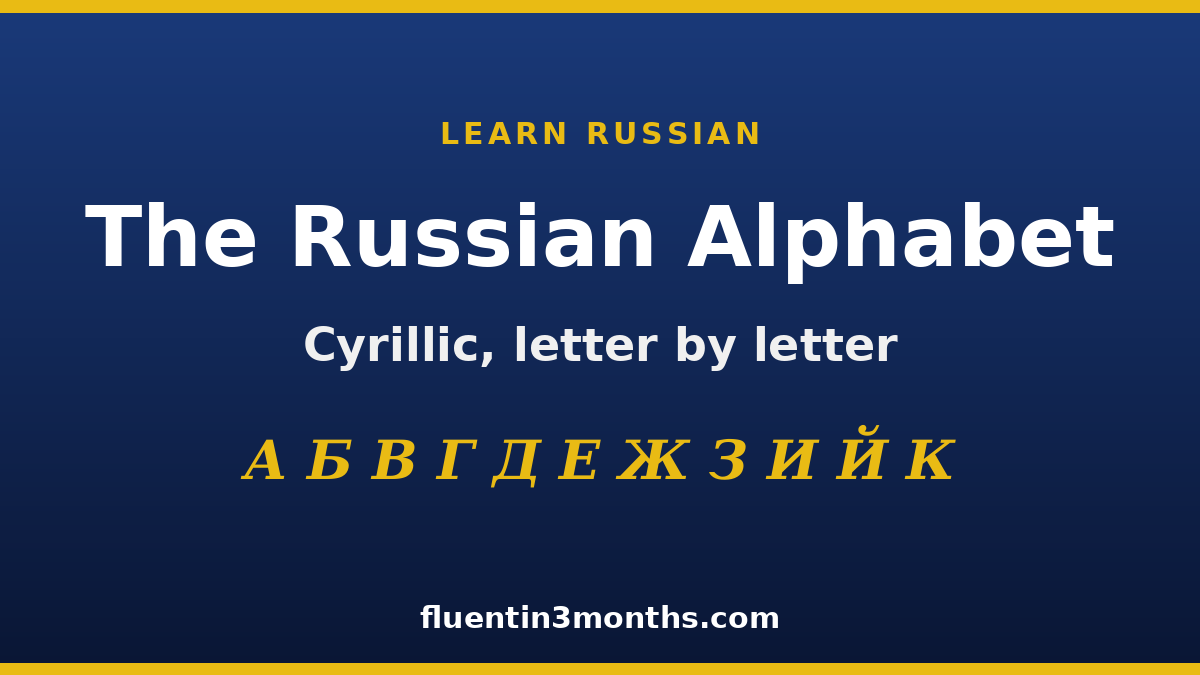
A defining characteristic of Russian phonology is the division of its ten vowels into "hard" and "soft" pairs. This duality is central to the language’s "sing-song" quality and its grammatical structure.
- Hard Vowels: А, О, У, Э, Ы
- Soft Vowels: Я, Ё, Ю, Е, И
When a soft vowel follows a consonant, it "softens" that consonant through palatalization. This means the middle of the tongue is raised toward the hard palate during articulation. Understanding this mechanic is essential for achieving a native-like accent and is one of the first hurdles encountered after mastering the basic shapes of the letters.
Geopolitical Significance and Global Usage
The Cyrillic alphabet is far more than a Russian cultural artifact; it is a transnational script with significant geopolitical weight. It is the official script for Bulgaria, Belarus, Bosnia and Herzegovina (co-officially), Montenegro, North Macedonia, Serbia, and Ukraine. Furthermore, it is used for dozens of indigenous languages within the Russian Federation and remains prevalent in several Central Asian nations, such as Kyrgyzstan and Tajikistan.
In 2007, with the accession of Bulgaria to the European Union, Cyrillic became the third official script of the EU, alongside Latin and Greek. This status underscores the script’s importance in international law, trade, and diplomacy. However, the use of Cyrillic has also become a focal point of national identity and political alignment. For instance, Kazakhstan recently announced a multi-year transition from Cyrillic to a Latin-based alphabet, a move interpreted by many analysts as an effort to distance the nation from Russian cultural hegemony and align more closely with Western and Turkic partners.
Educational Implications and Expert Perspectives
Language acquisition experts, including Benny Lewis, founder of "Fluent in 3 Months," emphasize that the alphabet should be the first priority for any serious learner. The transition from using transliteration (writing Russian words in Latin letters) to reading native Cyrillic is a pivotal moment in the learning process. Experts argue that relying on transliteration acts as a "cognitive crutch" that eventually hinders the ability to process the language at a natural speed.
Data from the Foreign Service Institute (FSI) categorizes Russian as a "Category IV" language for English speakers, meaning it is significantly more difficult than Spanish or French but easier than Arabic or Chinese. A large portion of this difficulty rating is attributed to the complex grammar (cases and aspects) rather than the alphabet itself. In fact, most intensive programs dedicate only the first few days of instruction to the script before moving into syntax, reinforcing the idea that the alphabet is a manageable hurdle.
Implications for the Digital Age
The digital landscape has presented both challenges and opportunities for the Cyrillic script. In the early days of the internet, encoding issues often led to "mojibake" (corrupted text), but the universal adoption of Unicode has largely resolved these technical barriers. Today, the ".рф" domain (the Cyrillic equivalent of .ru) represents one of the largest non-Latin top-level domains in existence, reflecting a broader trend toward a "multilingual internet."
For the global community, the ability to read Cyrillic is an increasingly valuable skill in the realms of cybersecurity, international journalism, and energy markets. As the world becomes more multipolar, the demand for professionals who can navigate primary-source Russian data—ranging from government decrees to social media trends—is expected to rise.
In conclusion, while the Russian alphabet may initially appear as an exotic and difficult system, its historical depth and logical structure make it accessible to those who approach it with a systematic strategy. By moving past the "false friends" and embracing the phonetic consistency of the 33 letters, learners unlock a vast cultural and geopolitical landscape that remains one of the most influential in the modern world.
