

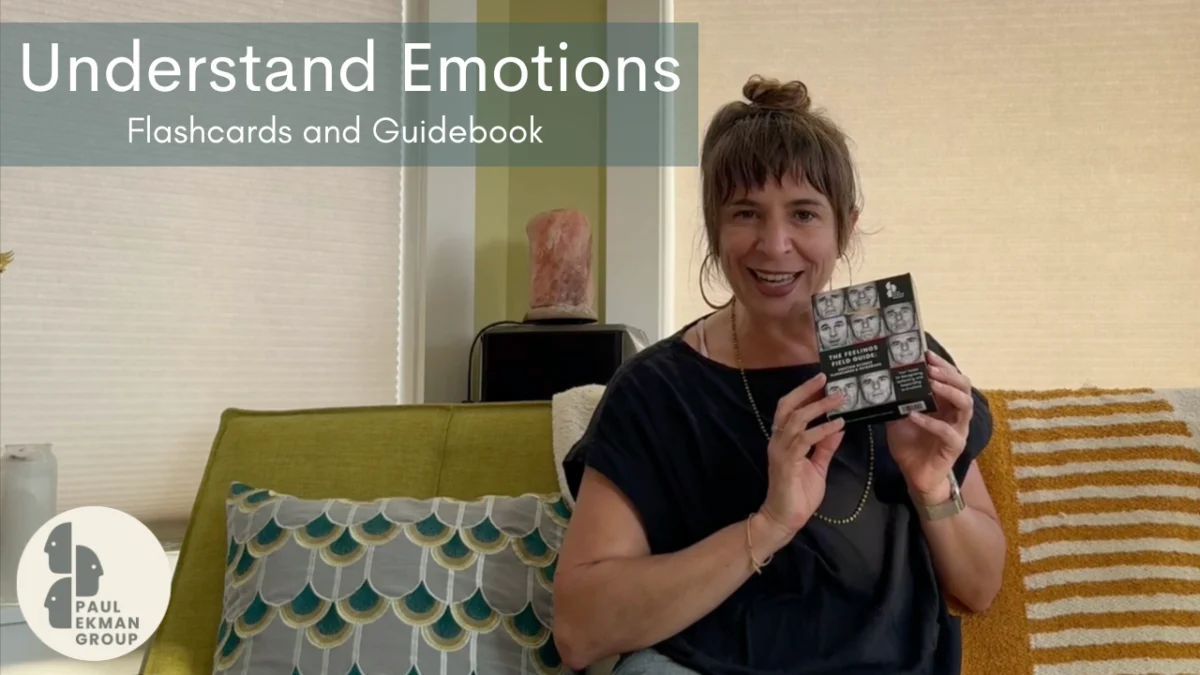
The complex landscape of human emotions, often perceived as abstract and elusive, is now being demystified and made accessible through a groundbreaking tool developed by renowned emotion researchers, Drs. Paul and Eve Ekman. Titled "The Feelings Field Guide," this innovative resource translates over five decades of rigorous scientific research into practical, everyday skills for understanding and navigating the nuances of human expression. Designed to empower individuals across various walks of life, from parents seeking to support children experiencing anxiety to professionals engaged in high-stakes negotiations, the guide offers a tangible method for identifying universal facial expressions and fostering constructive emotional responses.
At its core, The Feelings Field Guide is a comprehensive toolkit meticulously crafted to enhance emotional awareness and non-verbal communication. It comprises 92 intricately designed emotion flashcards, each depicting scientifically validated facial expressions, accompanied by a detailed scientific guidebook. This unique combination transforms complex psychological theory into an engaging and interactive learning experience. The methodology underpinning the guide is rooted in the Ekman Group’s extensive work, particularly their identification of the seven universal emotions: happiness, sadness, anger, fear, surprise, disgust, and contempt. These emotions, it is argued, manifest through distinct and recognizable facial configurations across diverse cultures, a cornerstone of the Ekman research.
Dr. Eve Ekman, a key figure in the development of the guide and a researcher in her own right, has highlighted the scientific underpinnings of their approach. In introductory materials, she explains that the guide’s methodology is not merely anecdotal but is grounded in empirical observation and validated through extensive cross-cultural studies. The visual component, featuring the flashcards, allows users to directly engage with the physical manifestations of these universal emotions. This direct engagement is crucial, as the guide aims to move beyond simply naming emotions to understanding their visual cues, a skill vital for accurate interpretation.
The genesis of The Feelings Field Guide can be traced back to the pioneering work of Dr. Paul Ekman, whose research in the mid-20th century challenged prevailing anthropological theories by demonstrating the universality of certain facial expressions of emotion. His initial studies, often conducted in remote cultures with limited exposure to Western media, revealed that individuals in vastly different societies could recognize and express basic emotions in similar ways. This groundbreaking discovery laid the foundation for a deeper understanding of human emotional expression as a biological and evolutionary phenomenon, rather than solely a cultural construct.
The development of the Facial Action Coding System (FACS) by Dr. Paul Ekman and Dr. Wallace Friesen in the 1970s marked a significant leap forward. FACS is a comprehensive, anatomically based system for describing all observable facial movements. Each specific movement of a facial muscle or muscle group is assigned a code. By analyzing the combination and intensity of these Action Units (AUs), researchers can objectively and precisely describe any facial expression. The Feelings Field Guide leverages this scientific rigor, ensuring that the expressions depicted on its cards are not subjective interpretations but are based on precise, FACS-coded data. This scientific accuracy differentiates it from many other emotional learning tools that may rely on less empirical foundations.
The guide’s transition from abstract scientific data to a practical, tactile tool is a testament to the Ekman Group’s commitment to applied psychology. The "From Insight to Action" philosophy is central to its design. It acknowledges that simply identifying an emotion is only the first step. The true value lies in understanding what to do with that awareness. This involves not only recognizing emotions in oneself and others but also developing strategies for constructive engagement and response. The accompanying guidebook provides this crucial context, offering insights into the behavioral implications of different emotional states and suggesting practical approaches for communication and interpersonal dynamics.
Inside the physical packaging of The Feelings Field Guide, users will find a curated set of 92 flashcards. Each card is a carefully selected visual representation of a specific emotion or a nuanced variation thereof, directly linked to FACS coding. The scientific guidebook serves as the interpretative key, detailing the origins of the expressions, their universal recognition, and their significance in various social contexts. The guide encourages a learning process that is not about rote memorization but about developing a keen observational skill. This emphasis on practical application is echoed in the user testimonials. Mark B., a parent navigating the challenges of his son’s anxiety and social regression, highlights the guide’s effectiveness as a tool for initiating conversations about emotions. He emphasizes his confidence in the product’s validity, stemming from Dr. Ekman’s pioneering role in the field.
Similarly, Simon B., working in information security, underscores the professional utility of the guide. He notes how understanding micro-expressions and emotions has significantly improved his interactions with colleagues, customers, and suppliers. In a field where discerning genuine sentiment from spoken words is critical, the ability to accurately read non-verbal cues offers a distinct advantage. This highlights the broad applicability of the guide beyond therapeutic or purely interpersonal contexts, extending into the realm of professional effectiveness and risk assessment.
The flexibility of The Feelings Field Guide is another key design feature. It is not intended to be used in a rigid, prescribed manner. Instead, it encourages users to adapt it to their individual learning styles and specific needs. Whether an individual chooses to quiz themselves using the expression cards, dedicate time to exploring one emotion at a time, or engage in reflective exercises, the guide supports a personalized approach. This adaptability makes it a valuable resource for a wide range of users, from individuals seeking personal growth to organizations aiming to enhance team dynamics and communication.
The broader societal implications of enhanced emotional intelligence are profound. Emotions are fundamental drivers of human behavior, influencing our thoughts, decisions, and interactions on a daily basis, often in ways we may not consciously recognize. Misinterpreting emotional cues, whether in ourselves or in others, can lead to significant misunderstandings, interpersonal conflicts, and missed opportunities for genuine connection and collaboration. Conversely, the ability to accurately recognize and respond to emotions can foster stronger relationships, improve conflict resolution, and enhance overall well-being. Research in psychology and neuroscience consistently points to the correlation between high emotional intelligence and positive life outcomes, including greater career success, improved mental health, and more fulfilling relationships. A 2019 meta-analysis published in the Journal of Personality and Social Psychology, for instance, synthesized findings from over 150 studies and found a robust positive association between emotional intelligence and both job performance and leadership effectiveness.
The Feelings Field Guide directly addresses this need by providing a grounded, practical, and repeatable method for building these essential skills. By demystifying the science of emotion and offering a structured yet flexible learning framework, it empowers individuals to become more adept at navigating the complex emotional currents of life. The guide aims to equip users with the ability to:
- Enhance Empathy: By understanding the expressions of others, individuals can better connect with their feelings and perspectives.
- Improve Communication: Accurate emotional recognition leads to more effective and nuanced communication, reducing misunderstandings.
- Strengthen Relationships: Greater emotional awareness fosters deeper connections and more supportive interpersonal dynamics.
- Boost Self-Awareness: Understanding one’s own emotional expressions can lead to better self-regulation and management.
- Navigate Conflict: Recognizing underlying emotions in tense situations can pave the way for more constructive conflict resolution.
Addressing common queries, The Feelings Field Guide distinguishes itself from other emotion-based learning tools through its direct reliance on the Facial Action Coding System (FACS). While many flashcards might simply label a feeling, this guide ensures that the depicted expressions are scientifically accurate and universally recognizable, based on precise muscle movements. This scientific grounding provides a level of reliability and validity that is often absent in less empirically driven resources.
Regarding digital accessibility, while The Feelings Field Guide is a physical, tactile tool designed for hands-on learning, it is often recommended for those seeking advanced, performance-based mastery to be used in conjunction with the Ekman Group’s Micro-expression Training Tools. These digital resources offer a more intensive, often certified, pathway to developing advanced skills in recognizing fleeting facial expressions that can betray true emotions.
The enduring legacy of Dr. Paul Ekman’s work, coupled with the contemporary application developed by Drs. Paul and Eve Ekman, positions The Feelings Field Guide as a significant contribution to the field of emotional intelligence. In an increasingly complex and interconnected world, the ability to understand and effectively manage emotions is not merely a desirable trait but a critical skill for personal and professional success, as well as for fostering a more empathetic and understanding society. The guide offers a tangible pathway to achieving this mastery, grounded in decades of scientific inquiry and presented in an accessible, user-friendly format.
