

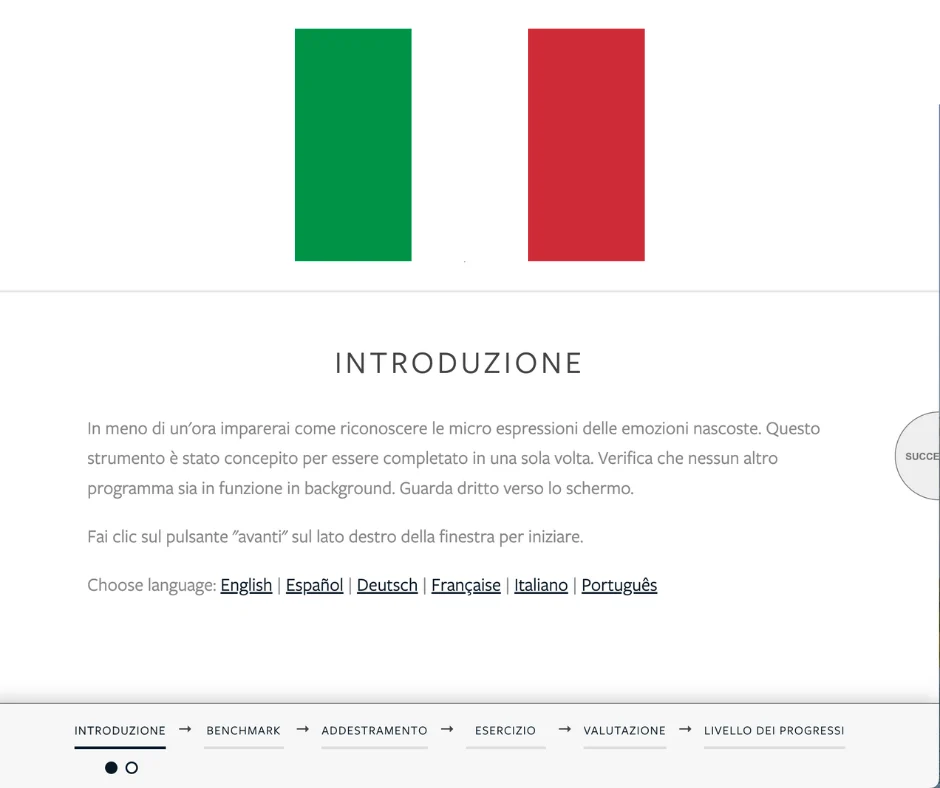
The Paul Ekman Group, a leading authority in the science of emotions and facial expressions, has announced a significant expansion of its online micro-expression training tools, now offering comprehensive courses in Italian, French, and German. This strategic move aims to democratize access to crucial emotional intelligence and deception detection skills for a wider international audience. The newly translated modules are integrated into all seven core online training programs, building upon existing Spanish and Portuguese versions and further solidifying the group’s commitment to a global learning community.
The initiative represents a pivotal moment in the dissemination of Dr. Paul Ekman’s groundbreaking research, making his scientifically validated methodologies more accessible to individuals and organizations across Europe and beyond. Previously, non-English speakers faced a linguistic barrier to acquiring these specialized skills, which are increasingly recognized for their importance in professional and personal development. This expansion directly addresses that gap, aligning with the Paul Ekman Group’s overarching mission to enhance self-awareness and interpersonal understanding worldwide.
A Mission Rooted in Universal Emotions
At its core, the Paul Ekman Group’s mission is to empower individuals with a deeper understanding of their own emotions and those of others. Dr. Ekman’s seminal work has consistently underscored the universality of basic human emotions and their corresponding facial expressions, a principle that transcends cultural boundaries. This belief forms the bedrock of the training programs, which equip learners with the ability to identify subtle, fleeting facial cues – micro-expressions – that often betray true emotional states.
The decision to introduce Italian, French, and German language options stems from a desire to translate this universal scientific understanding into tangible, accessible learning experiences. By providing training in native languages, the Paul Ekman Group facilitates more profound comprehension and application of the material. This is particularly impactful for professionals such as law enforcement officers, educators, healthcare providers, and business leaders who rely on accurate emotional interpretation in their daily work. The ability to discern micro-expressions can lead to improved communication, more effective conflict resolution, and enhanced empathy, all critical components of emotional intelligence.
Comprehensive Training Modules Now Multilingual
The newly launched multilingual offerings encompass all seven of the Paul Ekman Group’s flagship online training tools. These tools are typically delivered in three distinct training packages, catering to different levels of depth and specialization. The translation process has been thorough, ensuring that the scientific accuracy and pedagogical effectiveness of the original English modules are maintained.
Users will encounter a straightforward process for selecting their preferred language. At the commencement of any training course, participants will be prompted to choose from the available language options, including the newly added Italian, French, and German, alongside the existing Spanish and Portuguese. This user-centric design ensures a seamless and intuitive learning journey, regardless of the user’s linguistic background.
The Critical Importance of Recognizing Micro-Expressions
Micro-expressions are involuntary, momentary facial movements that can reveal a person’s concealed emotions. These fleeting signals, often occurring in less than half a second, can be crucial in discerning truth, understanding underlying feelings, and navigating complex social interactions. They are not consciously controlled and therefore offer a window into genuine emotional states that might otherwise be masked by deliberate deception or social politeness.
The ability to recognize these subtle cues offers a multitude of benefits across various professional domains. For law enforcement, it can aid in interrogation and evidence gathering. For therapists and counselors, it can deepen the understanding of a patient’s emotional landscape. For educators, it can help identify students who are struggling or disengaged. In business, it can enhance negotiation skills, improve customer service, and foster more effective team dynamics. The overarching impact is an increased capacity for empathy, precision, and insightful understanding – cornerstones of robust emotional intelligence.
A Global Footprint: Science of Emotions Reaches New Audiences
Dr. Ekman’s research has consistently demonstrated the cross-cultural universality of the seven basic emotions: happiness, sadness, anger, fear, surprise, disgust, and contempt. His work, which began with extensive fieldwork in Papua New Guinea in the 1960s, provided compelling evidence that these emotions and their associated facial expressions are innate and recognizable across diverse cultures. This scientific foundation underpins the global reach of his training programs.
With tools already utilized in over 230 countries, the addition of Italian, French, and German represents a significant stride in making emotional awareness and deception detection skills accessible to a truly global audience. This expansion is not merely about linguistic convenience; it is about empowering individuals worldwide with the tools to navigate the complexities of human emotion more effectively, fostering greater understanding and reducing misinterpretations. The Paul Ekman Group anticipates that these new language versions will provide invaluable opportunities for individuals whose primary languages are not English, Spanish, or Portuguese.
The Evolving Landscape of Emotional Intelligence Training
The introduction of these new language options is part of a broader trend towards greater accessibility and inclusivity in professional development. As the understanding of emotional intelligence (EQ) continues to mature and its importance is recognized in academic and corporate settings, the demand for high-quality, scientifically grounded training has surged. Organizations like the Paul Ekman Group are at the forefront of meeting this demand by adapting their offerings to diverse linguistic and cultural contexts.
The evolution of online learning platforms has been instrumental in this process. High-fidelity video, interactive exercises, and sophisticated assessment tools can now be delivered seamlessly across geographical and linguistic barriers. The Paul Ekman Group leverages these technological advancements to provide an engaging and effective learning experience that mirrors the rigor of in-person instruction.
Looking Ahead: Continued Expansion and Community Engagement
The Paul Ekman Group has signaled its commitment to ongoing language expansion, actively working to introduce additional languages in the future. This forward-looking approach underscores their dedication to making emotional intelligence training a truly universal resource. The organization encourages its global community to voice their preferences for future language additions, providing a direct channel for feedback and demonstrating a responsive approach to user needs.
"We are thrilled to announce these new language options, which represent a significant step in our mission to make the science of emotions accessible to everyone," stated a representative from the Paul Ekman Group. "Our goal is to empower individuals across the globe with the tools to better understand themselves and others, fostering more meaningful connections and improving professional outcomes. We believe that language should not be a barrier to acquiring these vital skills."
The message from the Paul Ekman Group emphasizes gratitude for their global community and a commitment to continuing their journey together, regardless of linguistic background. This inclusive spirit is crucial as the organization continues to evolve and expand its impact in the field of emotional intelligence and the science of facial expressions. The availability of these new language options is expected to foster a more interconnected and understanding world, one micro-expression at a time.
Background and Chronology
Dr. Paul Ekman’s research into facial expressions began in the early 1960s. His seminal work, "The Face of Man: Expressions of Universal Emotion," published in 1972, laid the foundation for understanding the universality of emotions. Over the decades, he developed various training methodologies, including the Facial Action Coding System (FACS), a comprehensive system for describing all observable muscular movements of the face. The development of online training tools represents a more recent evolution, driven by the accessibility and reach of digital platforms.
The original online micro-expression training tools were developed and launched in English. Recognizing the global demand, the Paul Ekman Group began a phased approach to translation, starting with Spanish and Portuguese due to their widespread use. The recent introduction of Italian, French, and German marks a significant acceleration of this expansion, indicating a strategic focus on key European markets and a broader commitment to continental Europe. This expansion can be seen as a direct response to the increasing demand for specialized psychological and communication skills training in these regions.
Supporting Data and Analysis
The market for emotional intelligence training has seen consistent growth. Studies by organizations like the Hay Group have indicated that EQ is a critical factor in leadership effectiveness, with individuals in the top quartile of EQ performing significantly better than their peers. A 2011 study by the Consortium for Research on Emotional Intelligence in Organizations found that organizations investing in EQ training saw substantial returns, including increased sales, improved customer satisfaction, and higher employee retention rates.
The addition of new languages to the Paul Ekman Group’s offerings directly taps into this growing global demand. By providing access to scientifically validated micro-expression training, the organization is enabling individuals and businesses to harness the power of enhanced emotional understanding. This can lead to:
- Improved Interpersonal Relationships: A better understanding of non-verbal cues can lead to more empathetic and effective communication, reducing misunderstandings in personal relationships.
- Enhanced Professional Performance: In fields requiring sensitive interpersonal interactions, such as healthcare, law enforcement, and customer service, accurate emotional detection can lead to better outcomes.
- Increased Deception Detection Capabilities: While not solely about identifying lies, the ability to recognize incongruent emotional expressions can be a valuable tool in situations where truthfulness is critical.
- Greater Self-Awareness: Understanding how emotions are expressed outwardly can also lead to a deeper introspection and awareness of one’s own emotional states.
The Paul Ekman Group’s proactive approach to language localization is a strategic move that positions them as a leader in the global emotional intelligence training market. By investing in these translations, they are not only expanding their customer base but also contributing to a more emotionally intelligent and understanding world.
Official Responses and Broader Implications
While direct quotes from individuals outside the Paul Ekman Group were not provided in the original content, the initiative itself elicits logical inferences regarding potential reactions. Professionals in fields like psychology, human resources, and organizational development are likely to welcome this expansion. Educators and trainers in Europe, in particular, may see these new language offerings as valuable resources for their students and clients.
The broader implications of this expansion are significant. In an increasingly interconnected world, the ability to communicate effectively across cultural and linguistic divides is paramount. Micro-expression training, by focusing on universal human emotions, offers a foundational skill set that transcends these divides. By making this training accessible in more languages, the Paul Ekman Group is contributing to a more harmonized global communication landscape. It empowers individuals to build bridges of understanding, fostering collaboration and reducing conflict, thereby promoting a more empathetic and connected global society.
