

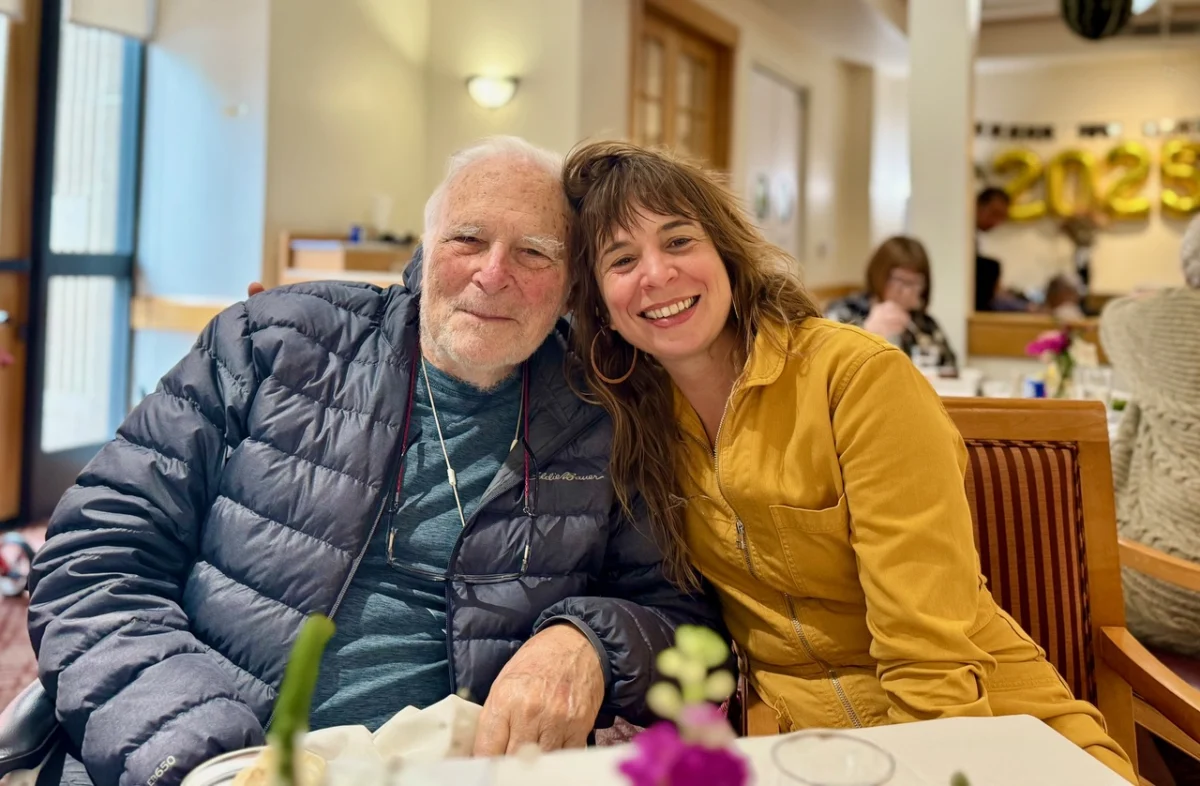
Dr. Paul Ekman, a towering figure in the field of psychology whose groundbreaking work on human emotion, facial expressions, and deception profoundly influenced numerous disciplines, passed away, leaving behind a legacy marked by both scientific rigor and remarkable personal evolution. His daughter, Eve Ekman, a clinical social worker and collaborator, shared a deeply personal reflection on his life, highlighting not only his significant academic contributions but also his journey of profound personal growth, particularly in his later years. This account offers a comprehensive perspective on Dr. Ekman’s multifaceted life, situating his scientific achievements within the context of his personal experiences and the broader trajectory of emotion research.
A Childhood Shaped by Trauma, a Career Dedicated to Understanding Emotion
Born into a world marked by the upheaval of war and personal loss, Paul Ekman’s early life was indelibly shaped by profound trauma and displacement. These formative experiences, which he candidly acknowledged, became a powerful catalyst for his lifelong pursuit of understanding the human emotional landscape. His daughter’s narrative emphasizes his deep commitment to becoming a more present and loving father than he experienced in his own childhood. This personal imperative fueled his dedication to his family, described as a conscious effort to be “present, curious, loving, and supportive.”
Ekman’s professional life was characterized by an unyielding intellectual curiosity and a rigorous approach to scientific inquiry. His early research focused on identifying universal facial expressions of emotion, a pursuit that challenged prevailing cultural relativist theories of emotion. His seminal work, often conducted in collaboration with Wallace Friesen, identified seven universal emotions—anger, fear, disgust, surprise, sadness, happiness, and contempt—each associated with a distinct facial expression. This research, supported by cross-cultural studies in places as diverse as Papua New Guinea and Japan, provided compelling evidence for the biological basis of human emotional expression, a cornerstone of modern psychology. The implications of this discovery were far-reaching, impacting fields as diverse as clinical psychology, psychiatry, neuroscience, and even artificial intelligence.
The Dharamsala Turning Point: A New Era of Scientific and Personal Discovery
A pivotal moment in Dr. Ekman’s life and career occurred in the year 2000 during a historic gathering in Dharamsala, India. This landmark meeting, facilitated by the Dalai Lama, brought together Dr. Ekman, a select group of scientists, and Buddhist contemplatives to explore the nature of "Destructive Emotions." For Dr. Ekman, this encounter proved to be a profound turning point, significantly altering his understanding of himself and the human capacity for emotional regulation.
Colleagues and friends were aware of his earlier struggles with anger, a testament to his willingness to acknowledge his own vulnerabilities. However, the impact of the Dharamsala dialogue extended far beyond mere intellectual engagement. It provided him with an “unmistakable, embodied sense” of what it might feel like to live with diminished reactivity and anger. He often spoke of this experience, admitting that its transformative power was difficult to articulate fully. This personal shift mirrored the core tenets of Buddhist philosophy, which emphasizes mindfulness, emotional intelligence, and the cultivation of compassion as pathways to reduce suffering.
The Dalai Lama’s hope for this dialogue was to disseminate tools from Buddhist practice to help individuals understand their emotions, achieve mental clarity, and foster kindness in an increasingly interconnected world. Dr. Ekman, with his characteristic scientific rigor, embraced this philosophy not just as an abstract concept but as a practical framework for alleviating human suffering. This led to a significant integration of his decades of scientific research with the ancient contemplative traditions he had come to deeply respect.
Cultivating Emotional Balance and the Atlas of Emotions: Practical Applications of Profound Insights
The profound insights gained from the Dharamsala meeting spurred the development of innovative programs and tools designed to translate complex emotional understanding into practical, everyday application. Dr. Ekman, in collaboration with Alan Wallace, developed "Cultivating Emotional Balance" (CEB), an evidence-based training program focused on emotion and compassion. Eve Ekman, leveraging her background as a clinical social worker in a level-one trauma center, became a key figure in supporting and teaching CEB, which has since been offered globally. This program exemplifies Dr. Ekman’s commitment to making his research accessible and beneficial to individuals seeking to improve their emotional well-being.
Further extending this mission, the Dalai Lama commissioned the creation of the "Atlas of Emotions," a free online tool designed to build a comprehensive vocabulary for describing emotional experiences. Launched in 2016 and slated for a ten-year anniversary relaunch, the Atlas of Emotions is a testament to Dr. Ekman’s dedication to empowering individuals with the language to understand and navigate their inner lives. Both CEB and the Atlas of Emotions reflect Dr. Ekman’s core belief that a deeper understanding of emotions is fundamental to reducing suffering, both for oneself and for others.
Addressing Scientific Discourse and Legacy: Nuance Beyond Controversy
While Dr. Ekman’s scientific contributions are widely recognized, his work has also been subject to debate within the scientific community. Eve Ekman’s reflection addresses a recent New York Times obituary that framed his work through the lens of "controversy," specifically by highlighting the critique of a single scientist. She asserts that this portrayal misrepresents the breadth and depth of his life’s work, which is supported by an extensive body of peer-reviewed research from numerous labs that have replicated, expanded, and refined his foundational findings.
Disagreement, she notes, is an inherent and welcome part of the scientific process. Dr. Ekman himself embraced intellectual challenges and welcomed dialogue. However, the emphasis on a singular critique, rather than the vast corpus of research built upon his work, risks overshadowing his significant advancements in global understanding of human emotion. His research has demonstrably impacted fields ranging from psychology and neuroscience to medicine, anthropology, national security, and the creative arts, influencing how we understand human interaction and experience.
A Life Dedicated to Service, Compassion, and Continuous Learning
Paul Ekman’s life was a testament to the power of dedication and transformation. He approached his scientific endeavors with meticulous research and a sincere desire to foster self-understanding in others. This commitment extended beyond the laboratory, manifesting in his willingness to share his vulnerabilities, mend relationships, and evolve into a man characterized by joy, open-heartedness, and generosity. His ability to forge deep and meaningful connections persisted until the final months of his life, underscoring the enduring impact of his personal growth.
His daughter’s tribute paints a picture of a complex, imperfect, yet profoundly impactful individual. He was a scientist of immense influence, a man who rebuilt himself from painful beginnings, and a collaborator who bridged ancient wisdom with modern science. Crucially, he was a human being who dedicated his later decades to embodying a life of reduced anger and increased compassion. This nuanced portrayal, encompassing both his scientific achievements and his personal transformation, offers a more complete understanding of his enduring legacy.
Conclusion: An Enduring Impact on Understanding the Human Heart
The outpouring of well wishes from near and far serves as a powerful testament to the far-reaching impact of Dr. Paul Ekman’s work and his personal journey. His legacy is not solely defined by his groundbreaking scientific discoveries in the realm of human emotion, but also by his profound personal evolution and his unwavering commitment to fostering compassion and reducing suffering. His life story, a compelling narrative of scientific inquiry interwoven with personal growth, offers an inspiring model of how individuals can continuously learn, adapt, and contribute to making the world a more understanding and compassionate place. His dedication to understanding the human heart and expanding compassion serves as a guiding light for future generations of researchers and individuals alike.
