

When delivering voiceover dialogue, achieving a natural and engaging "flow" is paramount to effective communication and listener comprehension. A common impediment to this crucial element, particularly among newcomers to the voiceover industry, is a phenomenon known as "blocking." This article delves into the intricacies of voiceover flow, defines blocking, explores its causes and consequences, and provides actionable strategies for its rectification, ultimately empowering voice actors to deliver performances that resonate with authenticity and impact.
The Essence of Voiceover Flow
The concept of "flow" in voiceover performance mirrors the natural rhythm and cadence of human conversation. To understand this, one need only observe or record informal interactions between friends. These conversations are characterized by a dynamic interplay of speech, pauses, breaths, and subtle inflections that create a seamless and comprehensible exchange. In the realm of voiceover, this naturalistic approach is essential for ensuring that the spoken word is not only heard but also readily understood and accepted by the listener.
While the specific manifestation of flow may vary across different voiceover genres – from the animated expressiveness of character work to the measured clarity of e-learning or the authoritative tone of corporate narration – the underlying principle remains consistent: the delivery must feel organic and engaging. This involves carefully managing pace, incorporating strategic silences, and often employing humanizing elements that make the voice performance relatable. The ultimate goal is to create an auditory experience where the listener does not have to exert significant cognitive effort to process the information, thereby maintaining their attention and fostering a connection with the message.
Defining and Visualizing "Blocking"
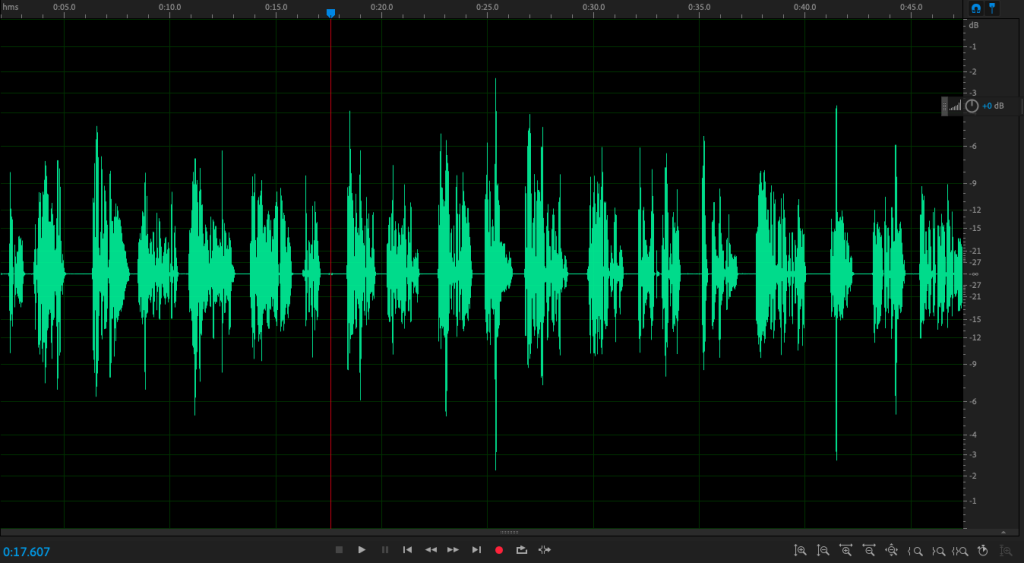
"Blocking" in voiceover refers to an unnatural interruption or fragmentation in the delivery, resulting in a disjointed and disengaging auditory experience. The term originates from its visual representation in audio editing software. When a voiceover performance exhibits blocking, the waveform display reveals distinct, isolated "blocks" of audio, separated by unnaturally long or frequent silences. This visual cue directly correlates with the perceived choppiness and lack of continuity in the spoken dialogue.
A common characteristic of blocked voiceover is a "staccato" quality, where individual words or phrases are delivered in a clipped, disconnected manner. This contrasts sharply with the smooth, connected speech patterns found in natural human conversation. The effect on the listener can be jarring, forcing them to anticipate each new segment of speech and creating a sense of unease or even frustration. This makes the listening experience laborious rather than enjoyable, hindering the effectiveness of the voiceover’s intended message.
The Visual Manifestation of Blocking
To illustrate the concept of blocking, consider the visual representation of audio waveforms. In a typical, well-paced voiceover, the waveform displays a continuous, undulating line with variations in amplitude that correspond to the spoken words and natural pauses. This "hairy caterpillar" appearance, as it’s sometimes colloquially described, signifies a healthy, flowing delivery.
Conversely, a voiceover suffering from blocking will present a drastically different waveform. Instead of a cohesive line, the display will show prominent gaps between segments of audio. These gaps are often characterized by complete silence or faint background noise, clearly demarcating the "blocks" of speech. This visual starkness underscores the unnatural rhythm and breaks in continuity that define blocking. The image provided in the original context clearly depicts these stark divisions, highlighting the fragmented nature of the audio.

The Root Causes of Blocking
Blocking is a phenomenon that, while more prevalent among those new to the voiceover profession, can affect seasoned actors as well. Understanding its origins is the first step toward prevention and correction. Several factors contribute to its occurrence:
- Anxiety and Nervousness: Performance anxiety can lead to a hesitant and choppy delivery as the voice actor becomes overly self-conscious about each word. This can manifest as holding breaths for too long or pausing excessively between phrases.
- Over-Reliance on Script Cues: New actors may rigidly adhere to punctuation marks in a script, interpreting every comma or period as a mandatory, lengthy pause. This mechanical approach disregards the natural ebb and flow of spoken language.
- Lack of Practice and Experience: Developing a natural delivery requires practice and an intuitive understanding of pacing and rhythm. Without sufficient experience, actors may struggle to internalize these nuances.
- Technical Insecurities: Some performers may focus excessively on vocal technique or the recording environment, leading to a performance that is technically sound but lacks natural human connection and flow.
- Misinterpretation of "Pacing": A misunderstanding of what constitutes appropriate pacing can lead actors to insert overly long pauses, believing they are allowing the listener ample time to digest the information. This can result in the opposite effect, creating a disjointed experience.
- Editing Practices: In some instances, excessive editing, such as over-reliance on de-breathing or cutting out natural breaths, can inadvertently contribute to a blocked sound, removing the organic elements that contribute to flow.
The Counterpoint: The "Over-Edited" Delivery
While blocking is characterized by excessive fragmentation, its opposite extreme is an equally problematic delivery: an over-edited, overly fast-paced, or completely de-breathed performance. This scenario results in a lack of sufficient space for the listener to process the information. Imagine local radio advertisements where an excessive amount of dialogue is crammed into a tight time slot. The listener is bombarded with information, leaving them unable to comprehend or retain any of it. This phenomenon, often driven by a desire to fit more content into a limited duration, creates an overwhelming auditory experience that is just as detrimental to effective communication as blocking. The crucial difference lies in the reason for the lack of clarity: blocking is due to too much space, while the opposite is due to too little.
When Blocking Becomes a Conscious Choice
It is important to acknowledge that blocking, or a deliberately staccato delivery, can sometimes be a conscious artistic choice. In certain genres or for specific character portrayals, a fragmented delivery might be employed for stylistic effect. Examples include:
- Characters Experiencing Shock or Trauma: A character in a state of shock might deliver dialogue in short, broken bursts, reflecting their disorientation.
- Robotic or Artificial Characters: A non-human character, such as a robot, might be programmed to speak with a distinct lack of natural flow, emphasizing their artificiality.
- Specific Artistic Interpretations: In certain audio dramas or experimental projects, a voice actor might intentionally employ a staccato delivery to achieve a particular artistic outcome or to convey a specific emotional state.
In these instances, the voiceover artist is making a deliberate decision to deviate from naturalistic speech patterns. The key distinction here is awareness and intent. When blocking occurs due to a lack of awareness or technical deficiency, it undermines the performance. However, when it is a calculated artistic choice, it can be a powerful tool for storytelling.
Rectifying and Preventing Blocking
Fortunately, overcoming blocking is a manageable process that primarily involves developing greater awareness and implementing specific vocal and performance techniques. The core principle is to cultivate a delivery that mirrors the natural rhythm of human speech. Key strategies include:
- Active Listening and Emulation: Pay close attention to how people speak in everyday conversations. Record yourself and compare your delivery to natural speech patterns. Identify where you are inserting unnatural pauses or cutting off your breath.
- Understanding Punctuation as Guidance, Not Dictation: Treat commas and periods in scripts as indicators of natural pauses, not as rigid commands for lengthy silences. Learn to incorporate subtle breaths and slight hesitations that mimic real speech.
- Focus on Breath Control: Proper breath management is fundamental. Instead of taking large, audible gasps between phrases, aim for smooth, quiet inhalations that integrate seamlessly into the performance. Practice diaphragmatic breathing to support longer phrases without noticeable breaks.
- The "Hairy Caterpillar" Mentality: Visualize your audio waveform as a continuous, flowing line. Aim to create a vocal delivery that translates to this visual representation. This means connecting phrases and words where appropriate, avoiding abrupt stops.
- Mastering the Art of the "Beat": Learn to use the "beat" – a brief, natural pause that allows for thought or emphasis – effectively. These are typically shorter than the silences created by blocking and contribute to the natural rhythm.
- Practice with Different Scripts and Genres: Regularly practice reading aloud from various sources, including fiction, non-fiction, and scripts from different voiceover genres. This builds versatility and helps internalize different pacing and flow requirements.
- Seek Professional Feedback: Working with a voiceover coach or experienced peers can provide invaluable insights into your performance and highlight areas where blocking might be occurring, often before you are aware of it.
- Embrace Natural Breaths: Do not shy away from incorporating natural breaths into your delivery. These are an integral part of human speech and contribute to a more authentic sound. Learn to place them strategically and subtly.
Conclusion: The Artist’s Control Over Delivery
Ultimately, the professional voiceover artist holds the reins of their performance. The ability to manipulate pace, rhythm, and emphasis – whether to achieve a natural, flowing delivery or a deliberately fragmented one – is a hallmark of a skilled professional. The critical factor is control. When a voice actor is aware of the tools at their disposal and can consciously choose how to deliver their dialogue to best serve the script and engage the listener, they are operating at a high level of artistry.
The issue of blocking arises not from the choice to deliver dialogue in a certain way, but from an unconscious tendency to do so due to a lack of awareness or technical proficiency. By understanding the principles of natural flow, recognizing the visual and auditory cues of blocking, and actively implementing corrective strategies, voice actors can elevate their performances, ensuring their deliveries are not only heard but also deeply understood and appreciated by their audience. This mastery of flow is not merely a technical skill; it is the foundation of compelling and effective voiceover artistry.
