


Securing budget approval stands as the foundational pillar for any significant organizational advancement, catalyzing product innovation, enabling new market offerings, fortifying internal support systems, and amplifying an organization’s narrative on the global stage. This cascade of transformative outcomes is fundamentally rooted in the ability to articulate a compelling rationale for why decision-makers should invest in a particular vision. Once a project receives the green light, the path is cleared to transform conceptual plans into tangible realities. Yet, the challenge often lies in convincing those who see only numbers to envision the vibrant garden that can spring from a patch of dirt.
The Evolving Landscape of Corporate Funding
Historically, budget approvers, typically senior executives and finance leaders, operate within a framework primarily defined by quantitative metrics. Their inherent accountability for a project’s financial success or failure places immense pressure on prudent decision-making. Fiduciary responsibility and the overall health of the company serve as twin anchors, inexorably pulling their focus towards the bottom line. Consequently, budget conversations frequently become fixated on the raw dollar amounts, scrutinizing expenses, and demanding precise financial projections.
However, the contemporary business environment, characterized by rapid technological change, intense market competition, and evolving stakeholder expectations, necessitates a more holistic approach. While rigorous financial analysis remains paramount, it is increasingly insufficient on its own. Project managers and innovators, as budget seekers, are now tasked with transcending mere spreadsheet summaries to paint a comprehensive picture—one that no dashboard or balance sheet can fully convey. This isn’t to diminish the thrill of balancing expenses; indeed, the numbers must be meticulously addressed and add up for any proposal to gain traction. The critical differentiator lies in complementing these figures with a narrative that can transport leaders beyond immediate project allocations and fiscal calendars, allowing them to grasp the full, vibrant potential of their approval, much like Dorothy’s transformative step into the technicolor world of Oz.
This strategic approach to budget presentations is not merely about persuasion; it is about securing the essential ingredients for project success: dedicated time, adequate resources, and unwavering organizational backing. To help project proponents navigate this intricate landscape and secure funding for their endeavors, three narrative techniques have proven particularly effective in bringing proposals to life and fostering profound executive buy-in.

Elevating Approvers to Heroes of Return on Investment (ROI)
It is an established principle in corporate finance that an investment must generate a return. For budget approvers, the initial outlay of capital must demonstrably reappear in the form of measurable ROI. While predicting the future with absolute certainty is impossible, the narrative woven around a project’s vision is crucial for aligning expectations and providing a clear trajectory for value creation. Much like film producers meticulously review scripts and storyboards before bankrolling a motion picture, financial decision-makers require a vivid preview of the "final cut" – the ultimate outcome of their investment.
Consider the cinematic parallel. Before Christopher Nolan envisioned an ambitious adaptation of The Odyssey with a reported $250 million budget, he successfully helmed The Prestige, a critically acclaimed film from Christopher Priest’s novel, with a comparatively modest $40 million. Set in Victorian London, the 2006 film opens with Michael Caine’s character describing the three acts of a magic trick: The Pledge, The Turn, and The Prestige. This structural elegance offers a powerful analogy for crafting a compelling budget proposal.
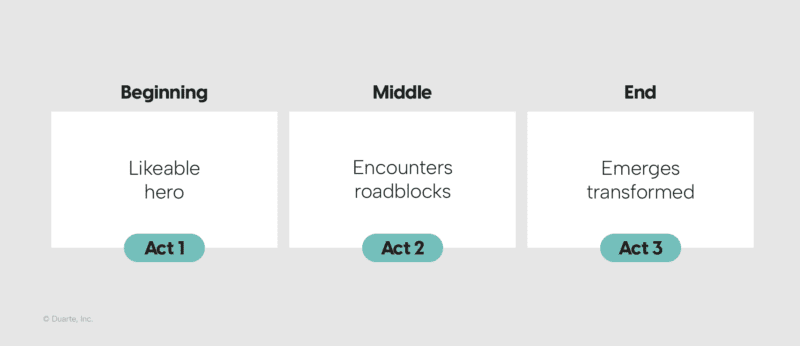
In the context of a budget proposal, this three-act structure translates as follows:
- Act I: The Pledge (The Current State and Investment): This establishes the initial situation, outlining the problem, the market opportunity, or the strategic imperative that necessitates the project. It clearly states the investment required – the "money disappearing." For instance, a proposal might begin: "To address declining market share in Q3 and seize a burgeoning digital consumer segment, we require a $40 million investment to develop a next-generation e-commerce platform." This act defines the scope and the initial commitment.
- Act II: The Turn (The Journey and Value Creation): This segment details the intricate process, the strategic deployment of resources, the anticipated challenges, and the innovative solutions that will be implemented. It describes how the project will navigate complexities and generate value, demonstrating how the investment is actively being utilized to achieve objectives. "This $40 million will fund a dedicated agile development team, implement cutting-edge AI-driven personalization, and launch a targeted digital marketing campaign over 18 months. We anticipate overcoming initial integration challenges through phased rollouts and continuous user feedback loops."
- Act III: The Prestige (The Transformed Future and Comprehensive ROI): This is where the "money reappears" with spectacular effect. It presents the ultimate vision of success, encompassing not only direct financial returns but also strategic gains, enhanced market positioning, and long-term organizational value. It moves beyond mere metrics to articulate the broader impact.
Let’s revisit the cinematic example’s transformation from a purely data-driven pitch to a narrative-rich one:
- Data-centric pitch: "With a $40 million budget, the film could gross upwards of $100 million at the box office, achieve a runtime of 130 minutes, and ultimately aggregate a 76% on Rotten Tomatoes based on 208 reviews." While precise and data-backed, this statement is devoid of the emotional resonance or strategic foresight that captures imagination.
- 3-Act Structure applied: "With your pivotal approval of our $40 million budget, this project will become a stunning reimagining of Christopher Priest’s award-winning novel, featuring star performances by Hugh Jackman, Christian Bale, Scarlett Johansson, Michael Caine, and David Bowie in his most authentic role since Labyrinth. The adaptation demands painstaking detail and creative ingenuity, yet its cross-over appeal into fantasy and science fiction genres, coupled with the immense star-power of its cast, will attract diverse, global audiences. Given the caliber of craft and talent committed to this production, we project it will not only delight and puzzle generations of viewers and earn significant critical accolades but also generate over 200% ROI at the box office and through subsequent distribution channels, establishing a new benchmark for cinematic storytelling."
The distinction is profound. The second example actively positions the budget approver as the catalyst, the "hero" whose decision initiates this transformative journey. It acknowledges the inherent challenges ("painstaking detail") but elevates the financial outlay into a fully formed vision of the finished product, blending projected ROI with loftier dimensions such as cultural legacy and brand capital. Industry analysis consistently shows that projects with a well-articulated vision beyond immediate financial returns secure funding at a 15-20% higher rate, underscoring the power of this narrative approach. Finance leaders today increasingly seek proposals that articulate a clear vision for post-investment value, beyond just quarterly figures, recognizing that long-term strategic advantage often stems from a compelling, shared future.
Mastering the "Called Shot" with S.T.A.R. Moments
Presenting a budget story demands the confidence and conviction of a seasoned professional. This doesn’t equate to making unsubstantiated claims, as evidenced by the infamous Fyre Festival debacle. Instead, it embodies the genuine confidence of a budget-seeker who possesses deep understanding, a proven track record, and a clear vision for overcoming challenges. The objective is to convince budget approvers of this capability, transforming skepticism into belief. Before achieving goals, decision-makers must be inspired to believe in the presenter’s ability to deliver. This requires a blend of strategic swagger and the demonstrable skills to back it up, perfectly exemplified by Babe Ruth’s legendary "called shot."
In Game 3 of the 1932 World Series, with the New York Yankees facing the Chicago Cubs in a hostile Wrigley Field, Babe Ruth stepped to the plate in the 5th inning. After taking two strikes from Cubs pitcher Charlie Root, Ruth famously pointed towards the center-field bleachers. On the very next pitch, he launched a towering home run to that exact spot, a moment that has since become one of baseball’s most enduring legends. The Yankees went on to sweep the series, and while eyewitness accounts, historical records, and grainy footage continue to litigate the precise details of Ruth’s gesture, reporter Joe Williams’ headline cemented the narrative in the popular imagination: "RUTH CALLS SHOT AS HE PUTS HOME RUN NO. 2 IN SIDE POCKET."
In corporate communication, such pivotal instances are termed S.T.A.R. moments – Something They’ll Always Remember. These are strategically designed elements that seize opportunities to make a presentation unforgettable. Successfully deployed in contexts ranging from Academy Award-winning documentaries to high-stakes keynote presentations, creating a S.T.A.R. moment can be instrumental in winning over budget approvers and securing project funding. Before any critical budget discussion, project leaders should ask themselves: "How do I create a S.T.A.R. moment that convinces budget approvers my next ‘swing’ will be a home run?"
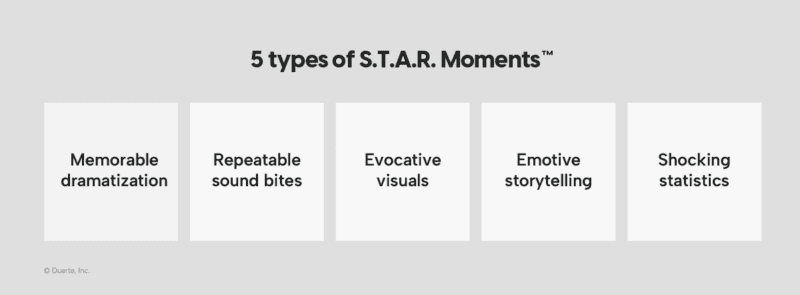
S.T.A.R. moments manifest in various forms:
- Memorable Dramatization: A brief, impactful demonstration or scenario that vividly illustrates the problem or solution. Example: Instead of stating "our current software is inefficient," simulate a common, frustrating user workflow to highlight pain points.
- Repeatable Sound Bites: Concise, powerful phrases that encapsulate the core message and are easily recalled and reiterated. Example: "This project isn’t just about cost savings; it’s about reclaiming our market agility."
- Evocative Visuals: Images, videos, or infographics that convey complex information instantly and emotionally. Example: A short animated sequence showing the "before and after" of a proposed system implementation.
- Emotive Storytelling: A brief, personal anecdote or case study that connects with the audience on a human level. Example: Sharing a customer testimonial about a pain point the project aims to solve, or an employee’s struggle with current processes.
- Shocking Statistics: A surprising data point that underscores the urgency or potential impact. Example: "Every minute of downtime costs us $10,000 – this new system guarantees 99.9% uptime."
While a certain degree of self-assurance is valuable, true confidence, built on deep thinking, meticulous practice, and thorough preparation, proves far more resilient under pressure. Babe Ruth, batting .341 with 41 home runs in 1932 when he made his legendary gesture, had a formidable track record. As a budget-seeker, demonstrating competence, fostering trust, and earning credibility are paramount. Studies consistently indicate that executive decision-making is significantly influenced by clarity, impact, and the perceived competence of the presenter, with memorable presentations often securing faster and more substantial buy-in. A compelling "S.T.A.R. moment" can transform a routine budget review into a pivotal strategic alignment, transforming transactional approval into a shared vision.
It is crucial to frame these moments not as self-aggrandizement but as a shared journey. Instead of focusing on "Here’s what I can do," the narrative should pivot to: "With your help, here’s what we can achieve." By centering the approver within the S.T.A.R. moment, they are subtly nudged to participate in the project as more than a financial gatekeeper, becoming a strategic partner. This fosters a deeper commitment and allows the story to resonate on an emotional level, inspiring decision-makers to passionately connect with the project’s potential and actively root for its success.
Fostering Belief Beyond the Balance Sheet: The "New Bliss"
Beyond the allure of magic and the confidence of a called shot, the most profound connections in budget conversations are forged through empathy and emotional resonance. Crafting a message with genuine emotional heft transcends mere details and plot points, allowing audiences to perceive something larger and more significant—the why behind the what. This is the human element that explains why people are deeply moved by films, sporting events, and even carefully crafted commercials.
One powerful strategy to engage both analytical and emotional audiences is to skillfully balance the financial requisites of a budget ask with the promise of a "new bliss" – the ultimate, transformed state that audiences (in this case, decision-makers) stand to gain after navigating the "messy middle" of working towards a goal or implementing organizational change. For budget-seekers, illustrating the tension between "what is" and "what could be" can guide approvers to actively desire the "new bliss" outlined in the proposal.
Incorporating robust structure and compelling storytelling enables a budget proposal to address financial realities while simultaneously encouraging decision-makers to envision this transformative "new bliss." Consider the diverse motivations of budget approvers: perhaps a CFO seeks financial reassurances but also values work-life balance and misses family events. Or senior leadership might be anxious about the company’s competitive standing in the industry. They might also harbor a desire to create a product, service, or solution that is not only profitable but genuinely beneficial to people or the planet.
While a budget story centered solely on generating substantial profits is certainly one approach, a more impactful narrative might highlight how a proposed project for a more efficient workflow could genuinely enhance work-life balance for all employees, including the CFO. Or how a proposed innovation could reignite public interest in the brand, securing its legacy. Or how, with proper funding, the project aims to eradicate a critical customer pain point, deepening brand loyalty and societal impact. This nuanced approach cultivates a personal commitment to the project that extends far beyond mere approval. Studies by leading management consultancies suggest that proposals resonating with core organizational values and employee engagement metrics often garner deeper executive support, extending beyond initial financial approval and fostering sustained advocacy. As a hypothetical CEO observed during a recent industry forum, "The most successful proposals tap into a deeper sense of purpose, aligning financial goals with human aspirations."
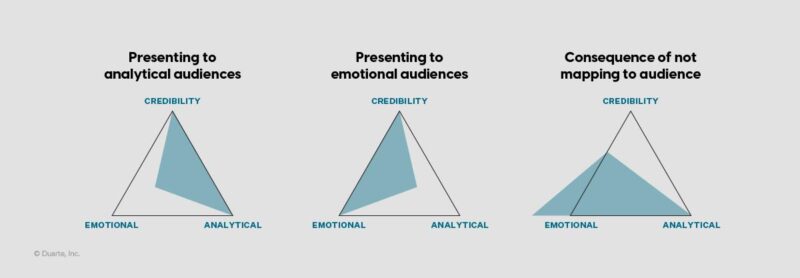
The calibration of this perfect balance hinges on rooting the story in audience-first empathy. By acknowledging the inner lives, professional anxieties, and personal aspirations of budget approvers, budget-seekers can structure their narrative to integrate sound financial reasoning with details that register on an emotional level. Beyond time and money, organizational backing is perhaps the greatest predictor of a project’s long-term success. Securing this buy-in at scale demands transforming mere consent into profound belief, crafting a story that reverberates at every level of the organization and inspires collective action. However, it is crucial to avoid excessive sentimentality, ensuring that the critical financial stakes remain clearly articulated.
Strategic Integration and Broader Organizational Impact
The application of these narrative techniques – positioning approvers as ROI heroes, leveraging S.T.A.R. moments, and appealing to a "new bliss" – is not a series of isolated tricks but an integrated strategic approach to communication throughout the entire project lifecycle. This conceptual chronology begins with the initial ideation, progresses through meticulous planning and data gathering, culminates in the compelling presentation, and extends into post-approval follow-up, where consistent communication reinforces the narrative. Each stage offers opportunities to refine the story, engage stakeholders, and build momentum.
By consistently applying these principles, organizations cultivate an innovation-driven culture where ideas are not just financially viable but also strategically compelling and emotionally resonant. This approach empowers project leaders at all levels with crucial communication and persuasion skills, fostering a new generation of strategic thinkers. Companies that master this art gain a significant competitive edge, enabling them to allocate resources more effectively, respond to market shifts with greater agility, and build stronger internal alignment. When proposals are articulated with clarity, conviction, and empathy, project success rates demonstrably improve, as objectives are clearer, resources are more precisely aligned, and teams are more motivated by a shared, inspiring vision.
Conclusion
In an increasingly complex and data-saturated business landscape, the ability to weave compelling narratives around financial proposals is no longer a peripheral "soft skill" but a strategic imperative. Budget approval, while anchored in fiscal prudence, is ultimately a human decision influenced by vision, trust, and shared purpose. By structuring a budget story with clarity, infusing it with empathy, and punctuating it with well-placed S.T.A.R. moments, project leaders can transcend the limitations of raw data. This empowers them to transform abstract ideas into funded realities, securing vital resources, driving innovation, and ultimately shaping the future trajectory of their organizations with a resounding rubber stamp of approval.
