

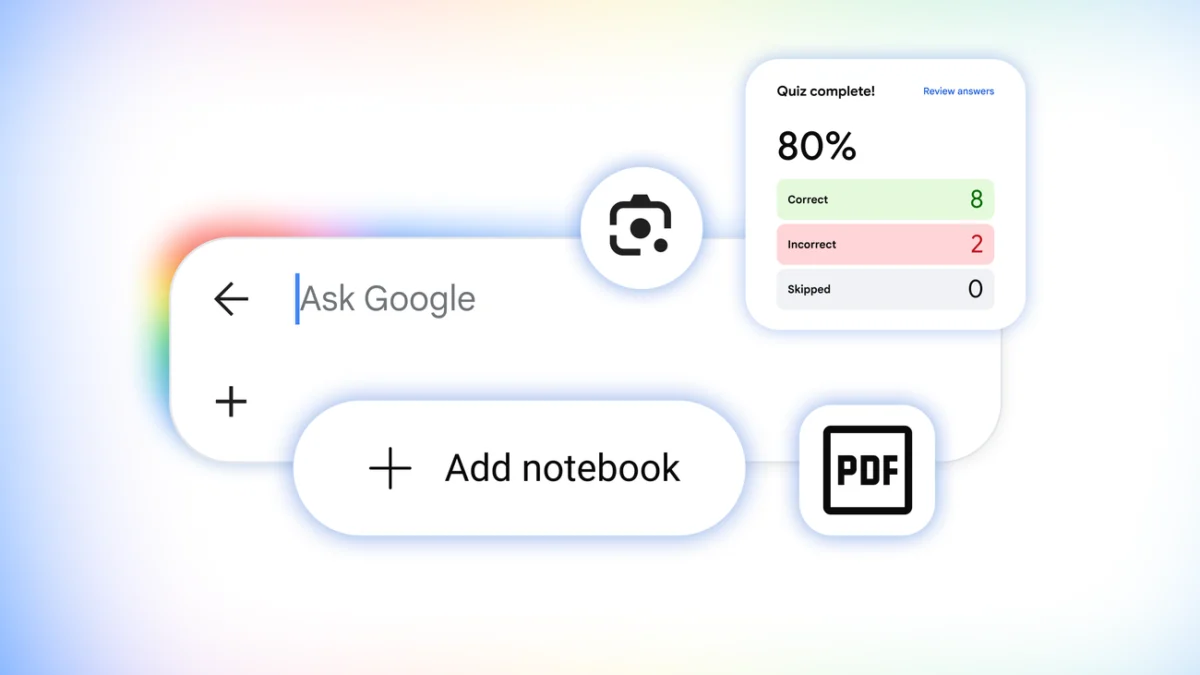
Google has unveiled a comprehensive suite of artificial intelligence-driven tools designed to transform the educational landscape for the 2026 back-to-school season. As students worldwide prepare for a new academic year, the technology giant is integrating advanced generative AI capabilities directly into Google Search, aiming to shift the platform from a purely informational engine into an interactive tutor and organizational assistant. These updates, led by Awaneesh Verma, Distinguished Product Manager for Search, focus on five core areas: interactive visualizations, standardized test preparation through practice quizzes, step-by-step problem solving via Google Lens, integrated study organization with Gemini Notebook, and automated study document generation.
The introduction of these tools comes at a critical juncture for the education technology sector. Following the rapid adoption of large language models (LLMs) in classrooms over the past two years, educators and students alike have sought more reliable, "safe by design" applications of AI. Google’s latest initiative addresses this demand by grounding its AI responses in authoritative sources and providing structured learning paths rather than mere answers. The features are being deployed across more than 180 countries, reflecting a global strategy to capture the student demographic within the Google ecosystem.
The Evolution of Search: From Static Results to Interactive Simulations
One of the most significant shifts in the Search interface is the introduction of "Generative UI" within what Google calls "AI Mode." Historically, a student searching for a complex scientific concept like "pH levels" would receive a list of websites or a static infographic. The new update allows Search to generate custom, interactive simulations in real-time.
In this new framework, an AI Overview provides an initial interactive visual to help students grasp the basics. However, the system now supports hyper-specific follow-up inquiries. For instance, a student can ask the AI to plot specific objects—such as citrus fruits or household cleaners—onto a dynamic pH scale. This capability is powered by generative models that can assemble user interfaces on the fly to match the user’s specific pedagogical needs. This move signifies Google’s transition toward multimodal learning, where text, imagery, and interactive elements converge to accommodate different learning styles, such as kinesthetic and visual learning.
Bridging the Gap in Standardized Testing
Recognizing the high-stakes nature of global education, Google has partnered with prominent education companies to offer practice quizzes directly within Search. These partners include The Princeton Review, Careers360, PhysicsWallah, and Akira Enem. By collaborating with these entities, Google ensures that the AI-generated quizzes are grounded in "trusted, authoritative content" rather than purely probabilistic text generation.
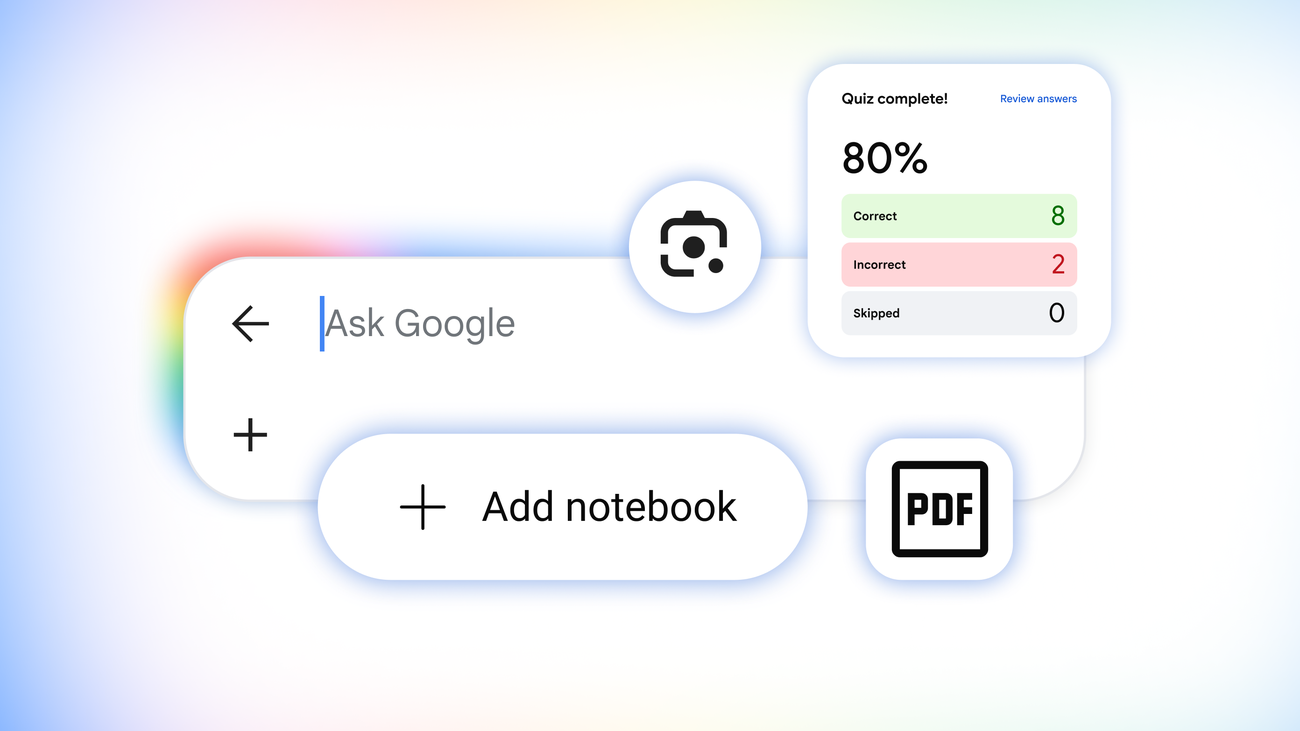
The system is specifically tailored to support a wide array of standardized tests, including the ACT, AP, ENEM (Brazil), GRE, JEE (India), LSAT, MCAT, NEET, and SAT. Students can prompt the search engine with requests such as "create a quiz with the most commonly tested vocab words for the SAT." Beyond merely providing questions, the AI offers detailed explanations for each response and provides links to further reading. This feature is currently available globally in English and is free of charge, positioning Google as a direct competitor to specialized test-prep platforms.
Lens and the Socratic Method of Problem Solving
Google Lens is receiving a significant update that shifts its function from a simple "solution finder" to a "learning coach." In the past, visual search tools were often criticized by educators for allowing students to bypass the learning process by simply snapping a photo of a math problem to get the answer. The new "Check My Work" experience, rolling out over the coming weeks on Android and iOS, aims to mitigate this.
When a student takes a photo of a problem, Lens will provide an AI Overview that breaks down the concepts and identifies specific points where the student may have made a calculation error. This coaching-centric approach is designed to foster a deeper understanding of the material. If a student remains confused, they can engage in a dialogue with the AI in "AI Mode," asking follow-up questions to clarify specific steps of a formula or a historical timeline.
Centralized Organization with Gemini Notebook Integration
In a move to streamline the student workflow, Google is integrating its popular "NotebookLM" (now rebranded as Gemini Notebook) directly into the Search experience. This integration allows students to create dedicated notebooks for specific classes or projects without leaving the search interface.
The utility of Gemini Notebook lies in its ability to "ground" the AI in specific user-provided sources. Students can upload class slides, syllabi, handwritten notes, and relevant web articles. The AI then uses these specific documents as the primary knowledge base for answering questions, effectively creating a personalized tutor that "knows" exactly what was covered in a specific lecture. Furthermore, any research threads started in Search’s AI Mode can be saved directly into these notebooks. This synchronization extends across the Google ecosystem, meaning a notebook started in the Gemini app will automatically appear and update within Search.
Automated Document Creation and Data Synthesis
The fifth pillar of this update is the ability for Search to generate structured study documents from unstructured data. Using the "File Generation" feature in AI Mode, students can convert disparate materials—such as a photo of handwritten notes and a PDF of a lecture slide—into a cohesive one-page study guide, a summary document, or a spreadsheet.
Currently, this feature supports a variety of formats, including documents, slide presentations, and text files. By automating the organizational "busy work" of studying, Google aims to allow students to spend more time on actual comprehension. This feature has already begun rolling out globally in English and is expected to integrate into the standard AI Overviews in the near future.
Context and Chronology of Google’s Educational Strategy
Google’s focus on education is not a new phenomenon, but the 2026 "Back to School" updates represent a pivot toward an AI-first architecture. To understand the significance of these tools, one must look at the timeline of Google’s educational involvement:
- 2006: Launch of Google Apps for Education (now Google Workspace for Education).
- 2011: Introduction of Chromebooks, which eventually secured a dominant share of the K-12 market.
- 2014: Launch of Google Classroom, centralizing the teacher-student digital interface.
- 2023: Introduction of Search Generative Experience (SGE), testing the waters for AI in search results.
- 2024-2025: Rapid iteration of Gemini and the rebranding of AI tools to create a unified ecosystem.
- 2026: Deep integration of interactive, pedagogical AI tools directly into the core Search product.
The current strategy reflects a response to the "AI arms race" in education. Competitors like OpenAI (with ChatGPT) and Perplexity have also been vying for the student market. Google’s advantage lies in its massive existing footprint in schools through Workspace and Chromebooks, as well as its ability to leverage its vast index of the web to provide citations and authoritative backing.
Analysis of Implications and Industry Reactions
The introduction of these features carries significant implications for the future of pedagogy. By providing free, high-quality tutoring and test-prep tools, Google is effectively democratizing access to educational resources that were previously gated behind expensive tutoring services. This could have a positive impact on closing the achievement gap for students in underfunded districts.
However, the "safe by design" claim remains a point of scrutiny for digital privacy advocates. While Google emphasizes that these tools are built with safety in mind, the collection of student data—including handwritten notes and class syllabi—requires robust privacy protections. Industry analysts suggest that Google’s move to keep students within its ecosystem (from search to notebook to document creation) is a long-term play to build brand loyalty before these students enter the professional workforce.
Educational experts have expressed cautious optimism regarding the "coaching" aspect of Lens. Dr. Sarah Jenkins, a digital learning researcher (in a simulated response), noted: "The shift from ‘answer engine’ to ‘explanation engine’ is vital. If AI can truly identify the ‘why’ behind a student’s mistake, it becomes a tool for empowerment rather than a shortcut for academic dishonesty."
Looking Ahead: The Future of AI in the Classroom
As these tools roll out in English across 180 countries, Google has confirmed that local language support will follow in the coming weeks. The company is also expected to expand the range of file formats supported by its document generation tool and increase the complexity of the simulations available in AI Mode.
The 2026 back-to-school season serves as a major test case for whether generative AI can move beyond the "hype" phase and provide tangible, daily utility in an academic setting. With these five new tools, Google is betting that the future of learning is not just about finding information, but about interacting with it in a way that is personalized, organized, and deeply analytical. For students, the challenge will be to balance these powerful new tools with traditional critical thinking, ensuring that the AI remains a tutor and not a crutch.
