

The quest for the perfect audio interface is a pivotal journey for any voiceover artist aiming to elevate their craft and deliver pristine vocal recordings. This comprehensive guide delves into the intricacies of choosing the right equipment, offering insights into popular models and the critical factors that influence purchasing decisions. Understanding the function and capabilities of an audio interface is paramount, as it acts as the crucial bridge between your microphone and your digital audio workstation (DAW), shaping the very quality of your recorded voice.
The Foundation of Professional Voiceover Audio
At its core, an audio interface is a hardware device that converts analog audio signals from a microphone into digital data that a computer can process, and vice-versa for playback. For voiceover artists, this means capturing the subtle nuances of their vocal performance with clarity and fidelity. The choice of interface can significantly impact the final sound, affecting everything from signal-to-noise ratio to the warmth and presence of the voice.
The market is saturated with options, each touting unique features and price points. However, a common pitfall for aspiring voiceover professionals is the tendency to rely solely on the recommendations of peers without a thorough understanding of their own specific needs. While peer testimonials can offer valuable insights, it’s essential to approach them with a critical eye, recognizing that individual studio setups and vocal requirements can vary dramatically. As the original article wisely points out, "Some people are so passionate about their studio that they convince themselves that the equipment they have bought is the right equipment, and anyone who has bought different from them is just plain wrong." This highlights the importance of independent research and a personalized approach.
Key Considerations When Selecting an Audio Interface
The selection process for an audio interface should begin with a clear assessment of your current and future recording needs. This involves a multi-faceted evaluation:
1. Input and Output Requirements
The number of inputs and outputs on an interface is a primary determinant of its suitability. For most solo voiceover artists, two microphone preamps (inputs) are generally sufficient to accommodate a primary microphone and potentially a backup or a secondary instrument if required. Two outputs are typically needed for connecting studio monitors and a headphone output for monitoring during recording.
- Inputs: These are where your microphones or other audio sources connect. Look for interfaces with XLR inputs for microphones, ideally with phantom power (+48V) to support condenser microphones. Some interfaces offer "combo" jacks that accept both XLR and 1/4-inch TRS connectors, providing flexibility for microphones and line-level instruments.
- Outputs: These are for connecting your speakers (line-level outputs) and headphones. Having a dedicated headphone output with its own volume control is crucial for monitoring.
2. Connectivity Type
Audio interfaces connect to your computer via several interface types, each with its own characteristics regarding speed, latency, and compatibility:
- USB: The most common and widely compatible interface. USB 2.0 is sufficient for many basic setups, while USB 3.0 and above offer higher bandwidth, reducing latency and allowing for more complex configurations.
- Thunderbolt: Known for its high speed and low latency, Thunderbolt is favored by professionals working with demanding audio tasks and multiple high-resolution tracks. It requires a compatible Thunderbolt port on your computer.
- FireWire (IEEE 1394): Once a popular choice for its speed, FireWire has largely been superseded by USB and Thunderbolt, though some older systems may still utilize it.
- Ethernet: Less common for consumer-level interfaces, but found in some professional rackmount units.
For most voiceover artists, a robust USB connection will provide more than adequate performance.
3. Preamplifier Quality
The preamplifiers within an audio interface are responsible for boosting the microphone’s signal to a usable level. The quality of these preamps directly influences the clarity, detail, and noise floor of your recordings. Higher-end interfaces often feature more sophisticated, lower-noise preamps that can capture a wider dynamic range and a more natural tonal character.
4. Digital-to-Analog Converters (DACs) and Analog-to-Digital Converters (ADCs)
These components are critical for translating analog audio to digital and vice-versa. High-quality DACs and ADCs ensure that your audio is converted accurately, preserving the integrity of your vocal performance without introducing unwanted artifacts or coloration.
5. Software and Drivers
The accompanying software and drivers are as important as the hardware itself. Reliable drivers ensure stable performance and low latency. Many interfaces come bundled with "control panel" software that allows for detailed routing, mixing, and monitoring adjustments. Some also include bundled DAW software or plugins, which can be a significant value-add.
6. Build Quality and Portability
For voiceover artists who may travel or record in different locations, the build quality and portability of an interface are important. Metal chassis and robust connectors are generally preferred for durability.
A Comparative Look at Popular Audio Interfaces for Voiceover
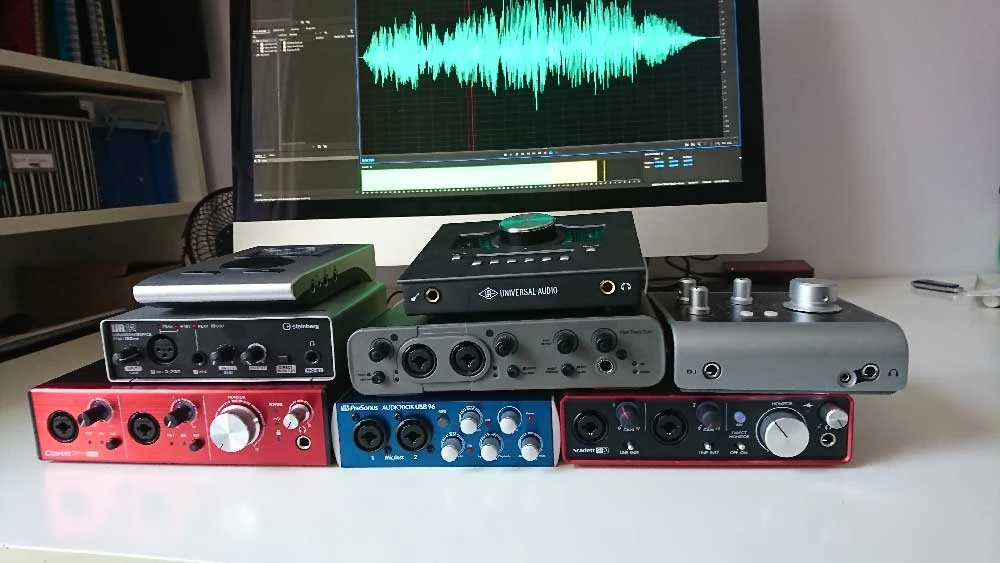
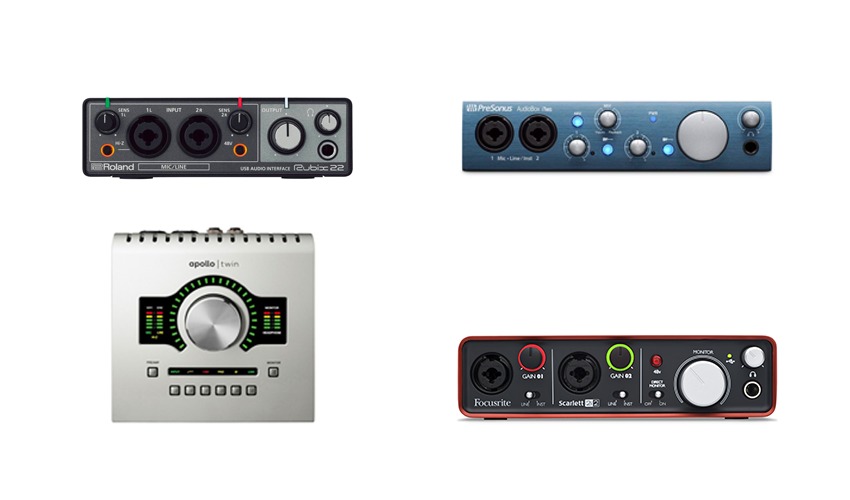
To provide a practical understanding, let’s examine several audio interfaces that are frequently considered by voiceover professionals, based on their features, performance, and market positioning. The audio samples provided in the original article (though not directly replicable here) serve as a crucial reference for evaluating the sonic differences.
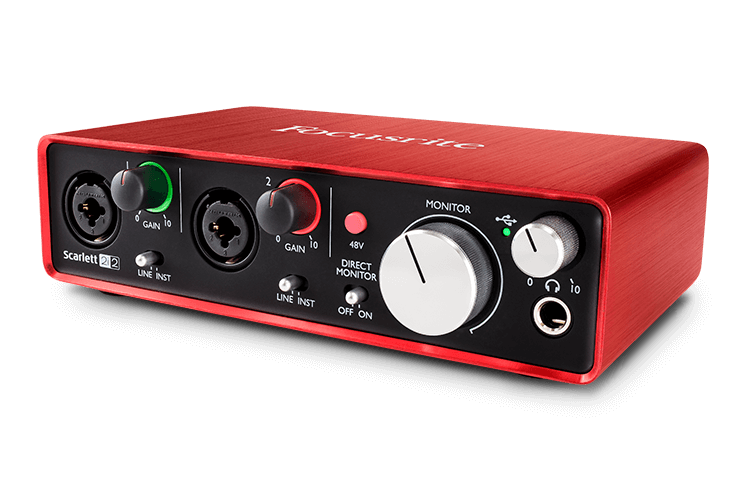
1. Focusrite Scarlett 2i2
The Focusrite Scarlett series, particularly the 2i2, has become a ubiquitous choice for home studio enthusiasts and emerging voiceover artists. Its popularity stems from its excellent balance of affordability, user-friendliness, and competent audio performance.
- Key Features: 2 inputs (XLR/TRS combo), 2 outputs, USB 2.0 connectivity, dedicated headphone output. Often bundled with entry-level DAW software and plugins.
- Analysis: The 2i2 offers a straightforward setup and reliable performance for basic voiceover tasks. Its preamps are generally considered clean and capable for its price point. The "Air" mode on some Scarlett models can add a subtle brightness to vocals, mimicking classic console preamps. For those starting out, it’s a solid investment that provides a good entry into professional audio recording. The availability of various Scarlett models (e.g., 4i4, 8i6) allows for scalability as your studio needs grow.
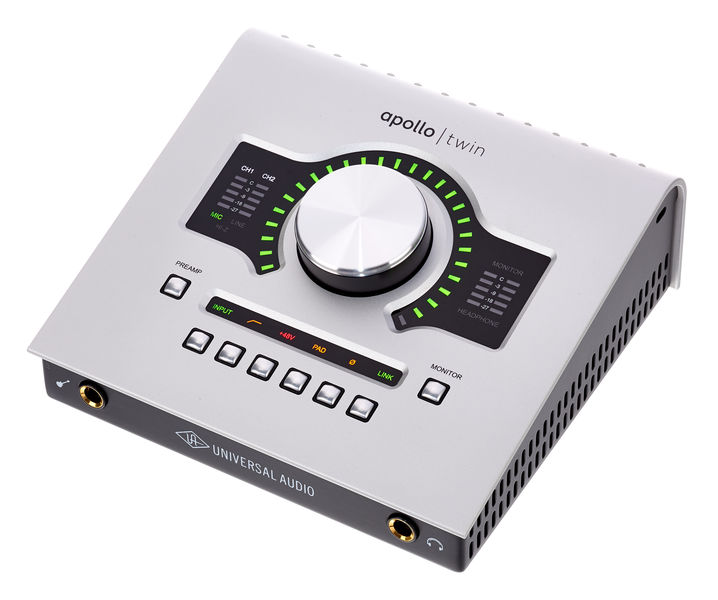
2. Universal Audio Apollo Twin
The Universal Audio Apollo Twin is a premium audio interface that positions itself at the higher end of the market, favored by many established voiceover professionals. Its appeal lies in its exceptional sound quality, powerful onboard DSP (Digital Signal Processing), and extensive plugin ecosystem.
- Key Features: 2 inputs (1 Hi-Z instrument/line, 1 mic/line), 4 outputs, Thunderbolt connectivity, onboard UAD-2 SOLO/DUO processing, extensive library of emulated analog hardware plugins.
- Analysis: The Apollo Twin’s primary advantage is its ability to run UAD plugins in near real-time with minimal latency, allowing voiceover artists to apply high-quality processing (like compression and EQ) during tracking without taxing their computer’s CPU. The preamps are renowned for their clarity and sonic character, often compared to high-end analog gear. For professionals seeking a top-tier sound and the ability to utilize sought-after analog emulations, the Apollo Twin is a compelling, albeit more expensive, option. Its "Console" software provides a sophisticated routing and monitoring environment.
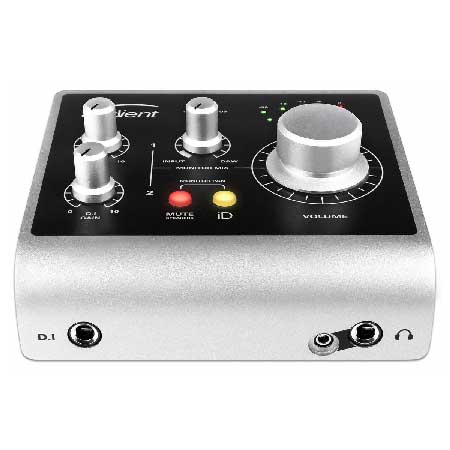
3. Audient iD4
The Audient iD4 is another highly regarded interface, particularly for its robust build quality and impressive sonic performance at its price point. It’s a favorite among those who prioritize analog sound character and intuitive operation.
- Key Features: 2 inputs (1 XLR mic/line, 1 instrument/line), 2 outputs, USB connectivity, "Audient Console" mic preamps, JFET DI, dual headphone outputs.
- Analysis: Audient is known for using its own console-designed preamplifiers, which are praised for their warmth and detail. The iD4 offers a simplified yet effective feature set, making it ideal for solo vocalists. The inclusion of a dedicated speaker control knob (like a large volume encoder) and a "Scroll Control" feature that allows virtual knobs in your DAW to be controlled by the interface’s encoder add to its user-friendliness.
4. Presonus AudioBox USB 96
The Presonus AudioBox series offers an accessible entry point into professional audio recording, often bundled with Presonus’s own Studio One Artist DAW.
- Key Features: 2 combo mic/instrument inputs, 2 main outputs, USB 2.0 connectivity, MIDI I/O.
- Analysis: The AudioBox USB 96 is a no-frills, workhorse interface. Its preamps are decent for the price, and it provides the essential features needed for basic voiceover recording. The bundled Studio One Artist DAW is a capable environment for editing and mixing. It’s a good option for those on a tight budget who need a reliable device to get started.
5. RME Babyface Pro
RME has built a reputation for exceptional driver stability, pristine audio quality, and robust build. The Babyface Pro is a compact yet powerful interface favored by many discerning audio professionals.
- Key Features: 2 XLR/TRS combo inputs, 2 TRS outputs, dedicated headphone outputs (1/4" and 1/8"), ADAT optical input, USB 2.0 connectivity, advanced digital routing via TotalMix FX.
- Analysis: The Babyface Pro is engineered for transparency and reliability. Its preamplifiers are exceptionally clean, and the converters are top-notch. The included TotalMix FX software provides an incredibly flexible digital mixer for routing and monitoring, though it can have a learning curve. For voiceover artists who demand the utmost in sonic purity and stable performance, the Babyface Pro is a worthy, albeit premium, investment. Its ability to expand via ADAT allows for future growth.
6. Steinberg UR12
Steinberg is a well-respected name in the music production world, and their UR series of interfaces offers good value for money.
- Key Features: 1 XLR mic input (with D-PRE preamp), 1 instrument input (1/4"), 2 outputs, USB 2.0 connectivity, bundled with Cubase AI.
- Analysis: The UR12 is a more basic option, ideal for single-microphone setups. The inclusion of Steinberg’s D-PRE preamp is a notable feature, known for its clarity and low noise. The ability to loopback audio from the DAW to a client is a useful feature for remote voiceover sessions. It’s a cost-effective solution for beginners who may already be familiar with Steinberg’s Cubase ecosystem.
The "You Get What You Pay For" Principle and Client Perception
As the original article wisely concludes, "you do get what you pay for." Higher-priced interfaces, such as the Universal Audio Apollo Twin and RME Babyface Pro, generally offer superior preamplifiers, more accurate converters, and more robust software control. Features like "notched encoders" (detented potentiometers) on higher-end units are a significant advantage for session recall, allowing you to precisely return to previous gain settings.
However, a critical question remains: would the end clients notice the difference? For many commercial voiceover applications, especially those for online content, broadcast, or corporate narration, the audio quality delivered by even entry-level to mid-range interfaces is often perfectly acceptable. The quality of the microphone, the recording environment, and the performer’s delivery are often more significant factors in client satisfaction.
That said, for discerning clients in the higher echelons of the industry, or for projects where absolute sonic fidelity is paramount (e.g., high-end audio dramas, film ADR), the subtle improvements offered by premium interfaces can indeed be discernible. The key is to match your equipment investment to the demands of your target market and your personal artistic goals.
Evolving Landscape and Future Trends
The audio interface market is continuously evolving. Advancements in USB technology, the increasing power of computer processors, and the development of sophisticated digital signal processing are constantly pushing the boundaries of what’s possible. Emerging trends include:
- Increased Portability and Integration: Smaller, more portable interfaces with built-in DSP are becoming more common, catering to mobile recording needs.
- Cloud-Based DSP and AI Processing: The integration of cloud-based processing and AI-driven audio enhancement tools could further influence the role and features of future audio interfaces.
- Focus on User Experience: Manufacturers are increasingly prioritizing intuitive software interfaces and simplified hardware controls to make advanced technology accessible to a wider range of users.
Conclusion: Making the Informed Choice
Selecting the best audio interface for voiceover work is a deeply personal decision, contingent upon a realistic assessment of your budget, technical proficiency, and the specific demands of your client base. While premium interfaces offer undeniable sonic advantages and advanced features, it’s crucial to remember that excellent voiceover recordings can be achieved with more budget-friendly options. The most important step is to thoroughly research your options, listen to audio samples if possible, and consider how each interface aligns with your workflow and creative aspirations. The journey to the perfect vocal takes more than just great equipment; it requires skill, practice, and a keen understanding of the tools at your disposal.
