

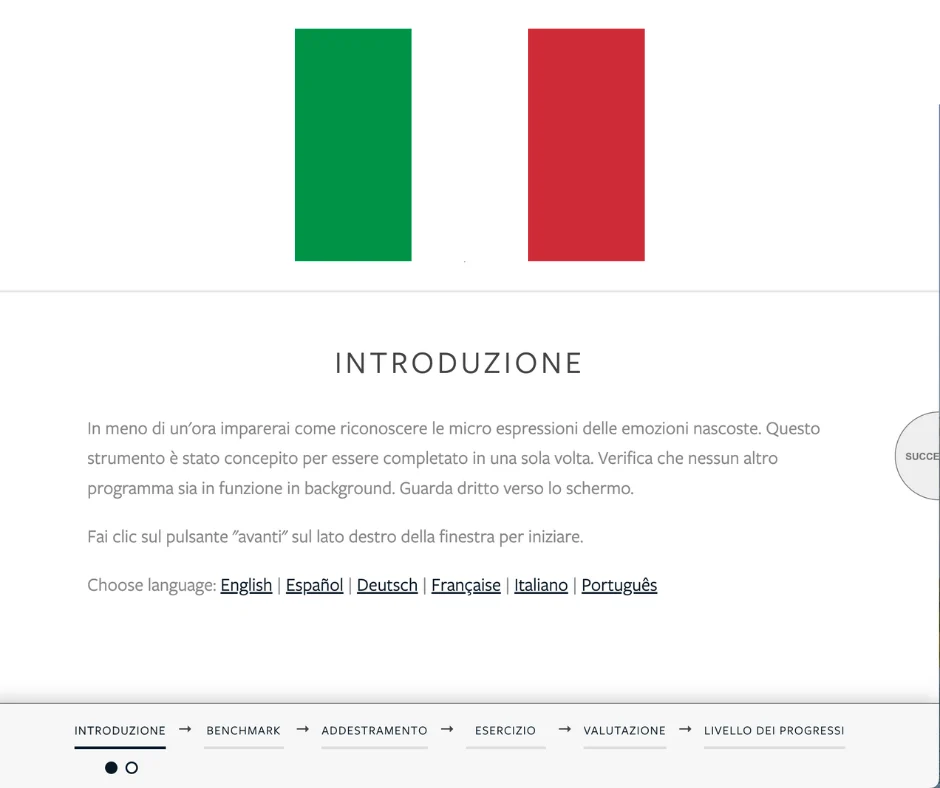
The Paul Ekman Group, a leading authority in the science of emotions and facial expressions, has announced a significant expansion of its online micro-expression training tools, introducing comprehensive translations into Italian, French, and German. This strategic initiative aims to make the group’s scientifically-backed emotional intelligence education more accessible to a broader international audience, reinforcing its mission to foster deeper self-understanding and improved interpersonal connections worldwide. The newly translated modules are now available, marking a pivotal step in democratizing access to crucial skills in emotional awareness and deception detection.
Expanding Access to Emotional Intelligence Training
The core of this expansion lies in the full translation of all seven of the Paul Ekman Group’s primary online micro-expression training tools. These tools, previously available in English, Spanish, and Portuguese, now offer users the option to engage with the material in Italian, French, and German. This multilingual approach is designed to break down language barriers, enabling individuals, educators, professionals, and organizations across Europe and beyond to acquire these vital skills in their native tongues.
Upon initiating any of the training programs, users will be prompted to select their preferred language from a clear, user-friendly menu. This thoughtful integration ensures a seamless learning experience, allowing individuals to focus on mastering the complexities of micro-expressions without the hindrance of language comprehension. The Paul Ekman Group has long championed the universality of human emotions, and this expansion directly reflects that commitment, aiming to empower a more diverse global community with enhanced emotional literacy.
The Science Behind Micro-Expressions and Their Significance
Micro-expressions are fleeting, involuntary facial movements that can betray a person’s true emotional state, often revealing feelings that individuals may be consciously attempting to conceal. These subtle yet powerful expressions typically last for a fraction of a second, manifesting outside of conscious awareness for both the expresser and the observer. Their significance lies in their ability to provide a window into genuine emotional truths, offering invaluable insights in a wide array of contexts.
For professionals in fields such as law enforcement, education, healthcare, and leadership, the ability to recognize micro-expressions can be transformative. It can lead to more accurate threat assessments, improved patient care, more effective teaching strategies, and more insightful leadership. Beyond professional applications, understanding micro-expressions can profoundly enhance personal relationships, enabling individuals to respond with greater empathy, precision, and intuition. These skills are fundamental components of emotional intelligence, fostering stronger, more authentic connections in daily life.
Dr. Paul Ekman’s seminal research has consistently underscored the universality of basic human emotions and their corresponding facial expressions across cultures. This foundational principle is the bedrock upon which the Paul Ekman Group’s training programs are built. By translating these resources into multiple languages, the group is extending the reach of this vital scientific knowledge, making it actionable for millions more individuals globally.
A Timeline of Global Outreach
The Paul Ekman Group’s journey toward global accessibility has been a gradual but deliberate process. While the exact initial launch date of their online training tools is not specified in the provided material, the expansion into Spanish and Portuguese preceded the most recent rollout of Italian, French, and German. This suggests a phased approach to localization, prioritizing languages with significant user bases or strategic importance.
The current announcement signifies a major acceleration in this localization effort, reflecting a growing demand for emotional intelligence training across continental Europe. The addition of three major European languages in a single announcement indicates a significant investment in translation and platform adaptation. This move is likely driven by the increasing recognition of the importance of emotional intelligence in professional development and personal well-being, coupled with a desire to cater to a more diverse client base.
The fact that the tools have already been utilized in over 230 countries indicates a robust existing global presence. This new linguistic expansion is not about building from scratch but rather about deepening engagement within already established markets and opening doors to new ones where English may not be the primary language of instruction.
Supporting Data and Scientific Foundation
The efficacy of the Paul Ekman Group’s training is rooted in decades of scientific research. Dr. Ekman’s work, including his groundbreaking studies on facial expressions and emotions, has been instrumental in shaping the fields of psychology, criminology, and neuroscience. His research, often conducted in collaboration with other leading scientists, has identified a set of universal emotions—anger, fear, disgust, surprise, sadness, and happiness—that are expressed through distinct facial configurations, observable even in fleeting micro-expressions.
The training tools themselves are designed to help individuals develop the ability to accurately identify these micro-expressions. They typically involve rigorous testing methodologies, presenting users with images or video clips of facial expressions and requiring them to correctly categorize the emotion being displayed. The training modules are structured to progressively build proficiency, often incorporating feedback mechanisms and progress tracking to guide learners toward mastery.
The global reach of these tools, now extending to over 230 countries, is a testament to the perceived value and scientific validity of the training. While specific user numbers are not provided, the broad international adoption suggests a significant impact on how emotional awareness and deception detection are understood and taught worldwide.
Reactions and Implications for Global Communication
The expansion of multilingual training tools by the Paul Ekman Group is poised to have several significant implications:
- Enhanced Cross-Cultural Communication: By providing training in local languages, the group is enabling individuals from diverse linguistic backgrounds to better understand and interpret the emotional cues of others, fostering more nuanced and effective cross-cultural communication. This is particularly relevant in an increasingly globalized business environment and in international diplomatic relations.
- Improved Professional Practice: Professionals in fields that rely heavily on interpersonal interaction—such as law enforcement, customer service, healthcare, and education—will benefit from more precise emotional understanding. This can lead to better decision-making, improved client/patient satisfaction, and more effective conflict resolution. For instance, law enforcement officers trained in micro-expression recognition might be better equipped to assess deception during interrogations, potentially leading to more accurate outcomes. Similarly, healthcare professionals could gain a deeper understanding of a patient’s unspoken distress or discomfort.
- Democratization of Emotional Intelligence Skills: Historically, advanced training in areas like micro-expression analysis might have been perceived as exclusive or accessible primarily to those with strong English language proficiency. This expansion actively democratizes these skills, making them available to a much wider segment of the global population.
- Academic and Research Advancement: The availability of these tools in multiple languages could also stimulate further academic research into emotional expression and perception within different linguistic and cultural contexts. It provides a standardized framework for researchers to investigate the nuances of emotional communication across diverse populations.
While official statements from specific organizations or governments regarding this particular announcement are not available, the general sentiment within the fields of psychology, communication, and international relations is one of support for initiatives that enhance emotional literacy and understanding. The Paul Ekman Group’s proactive approach aligns with a growing global emphasis on the importance of soft skills and emotional intelligence in both personal and professional spheres.
The Future of Emotional Intelligence Training
The Paul Ekman Group has indicated that this is not the end of their linguistic expansion. They are actively working on introducing additional languages and have invited their community to suggest languages they would like to see offered. This forward-looking approach suggests a commitment to continuous improvement and responsiveness to global user needs.
The ongoing development and translation of these training tools represent a significant contribution to the field of emotional intelligence. By making scientifically validated knowledge more accessible, the Paul Ekman Group is empowering individuals worldwide to navigate the complexities of human emotion with greater insight and understanding, ultimately fostering a more empathetic and connected global community. The commitment to offering training in a user’s native language underscores a deep respect for diverse cultures and a dedication to truly inclusive education.
