

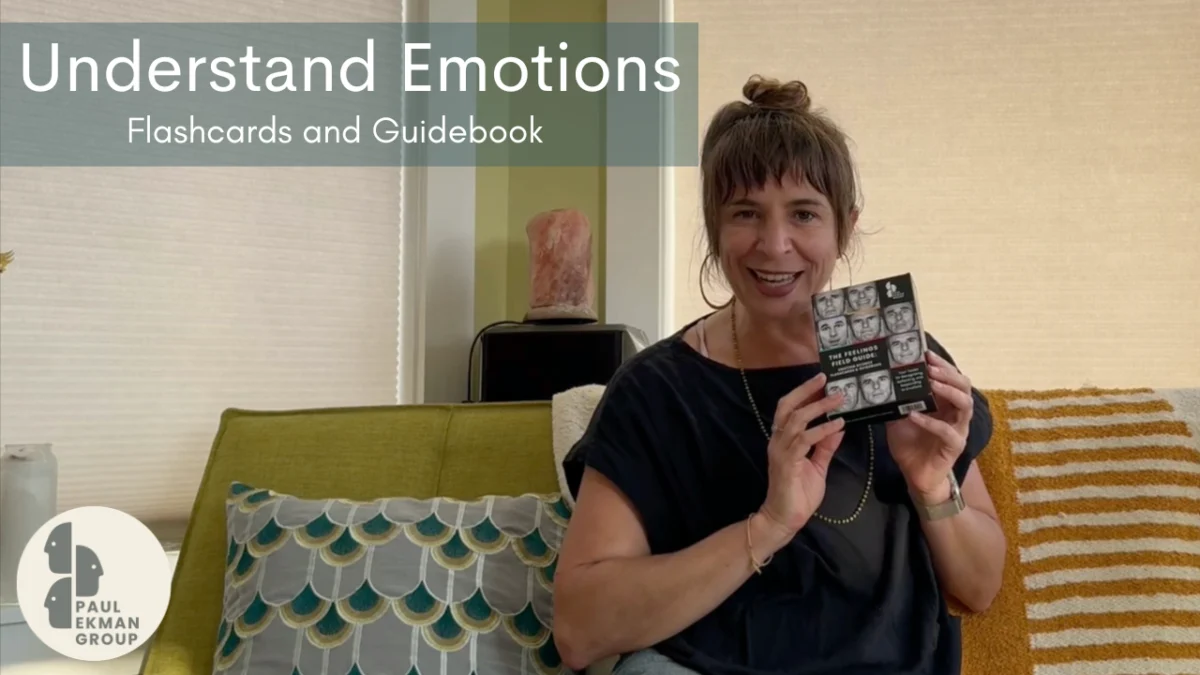
The intricate landscape of human emotions, often perceived as abstract and elusive, is now being made more accessible through a scientifically developed tool. The Feelings Field Guide, a creation born from over five decades of pioneering research by Drs. Paul and Eve Ekman, aims to translate complex behavioral science into practical, everyday skills for enhanced emotional intelligence and communication. This comprehensive toolkit is designed to empower individuals, from parents seeking to understand their children’s anxieties to professionals navigating high-stakes negotiations, by providing a tangible method for identifying universal facial expressions and fostering constructive responses.
Unpacking the Feelings Field Guide: A Scientific Approach to Emotional Literacy
At its core, the Feelings Field Guide is a meticulously crafted educational resource. It comprises 92 expertly designed emotion flashcards, each depicting a distinct facial expression, accompanied by a scientific guidebook. This dual-component system is engineered to cultivate deeper emotional awareness and refine non-verbal communication skills. The scientific foundation of the guide is rooted in the extensive work of Dr. Paul Ekman, a psychologist renowned for his research on facial expressions and emotions. His groundbreaking studies, which began in the mid-20th century, established the existence of universal facial expressions associated with basic emotions, transcending cultural boundaries.
Dr. Eve Ekman, following in her father’s footsteps, plays a pivotal role in introducing and explaining the methodology behind the Feelings Field Guide. The guide focuses on the seven universal emotions that have been extensively documented: happiness, sadness, anger, fear, surprise, disgust, and contempt. The visual representation on the flashcards, coupled with the explanatory text in the guidebook, allows users to systematically learn to recognize these expressions with remarkable accuracy. The accompanying video, featuring Dr. Eve Ekman, offers an introductory glimpse into the science and practical application of the Field Guide, underscoring its role as a bridge between academic research and real-world utility.
From Research to Reality: The Transformative Power of the Feelings Field Guide
The development of the Feelings Field Guide represents a significant transition from theoretical insights to actionable strategies. Drawing upon over 50 years of rigorous scientific inquiry into emotion and facial expression, the Ekman team has distilled this vast body of knowledge into a user-friendly and highly practical instrument. The guide is not merely about identifying emotions; it is about fostering a profound understanding of what to do with that awareness. This proactive approach differentiates it from passive learning tools, emphasizing the application of emotional intelligence in daily interactions.
While the specific contents of the physical toolkit were not fully detailed in the provided excerpt, the emphasis on its tactile nature and scientific backing suggests a robust collection. The flashcards likely serve as the primary visual learning aid, enabling users to practice identifying expressions and their associated emotional states. The scientific guidebook would then provide the theoretical framework, explaining the nuances of each emotion, the physiological underpinnings, and the behavioral implications. This comprehensive approach ensures that users gain not only recognition but also a deeper comprehension of the emotional spectrum.
Designed for Adaptability: A Personalized Journey to Emotional Mastery
One of the key strengths of the Feelings Field Guide lies in its inherent flexibility. Recognizing that individuals learn and interact with information in diverse ways, the guide is structured to accommodate a variety of learning styles and personal objectives. Users are encouraged to explore its contents in a manner that best suits their needs, whether that involves:
- Self-Quizzing: Utilizing the expression cards for independent practice and self-assessment.
- Focused Learning: Concentrating on one specific emotion at a time to develop a nuanced understanding.
- Reflective Exercises: Engaging with prompts and activities designed to deepen introspection and application.
This adaptable design philosophy underscores the guide’s commitment to empowering users to chart their own course toward improved emotional intelligence. There is no prescribed "right" way to engage with the Feelings Field Guide; instead, the emphasis is on discovering the most effective and personally beneficial methods of utilization. This personalized approach can significantly enhance engagement and the long-term retention of learned skills.
Voices of Experience: Testimonials Underscoring the Guide’s Impact
The efficacy and value of the Feelings Field Guide are corroborated by the experiences of its users. Testimonials highlight its practical benefits across different demographics and professional fields.
Mark B., a parent navigating the complexities of his son’s anxiety and social regression, found the guide to be an "effective tool to use in discussing emotions." His statement, "Knowing that this science was practically pioneered by Dr. Ekman gave me a very high degree of confidence in the validity of this product," speaks to the trust and credibility associated with the Ekman name and the scientific rigor behind the guide. This sentiment suggests that the guide provides a reliable and scientifically validated framework for parents seeking to support their children’s emotional development.
Simon B., working in information security and data protection, emphasizes the professional advantages gained from using the guide. He describes it as a "great tool to have" for understanding micro-expressions and emotions, which has "helped me understand colleagues, customers and suppliers better and improved my interactions with people." His observation that these skills are particularly valuable for security professionals, enabling them to "determin[e] what people really feel compared to what they are saying," points to the guide’s utility in discerning subtle emotional cues that might otherwise be missed. This highlights the guide’s capacity to enhance interpersonal judgment and improve communication effectiveness in professional settings.
The Profound Importance of Understanding Emotions: Why the Feelings Field Guide Matters
Emotions are not merely fleeting feelings; they are fundamental drivers of human thought, communication, and decision-making, often exerting a more profound influence than consciously recognized. Misinterpreting these emotional signals, whether in ourselves or in others, can lead to a cascade of negative consequences, including misunderstandings, interpersonal conflicts, and missed opportunities for genuine connection. Conversely, the ability to accurately recognize and respond to emotions unlocks a range of significant benefits:
- Enhanced Self-Awareness: A deeper understanding of one’s own emotional states, triggers, and responses.
- Improved Interpersonal Relationships: Fostering stronger connections through more empathetic and effective communication.
- Reduced Conflict: Proactively addressing misunderstandings by recognizing and responding to underlying emotions.
- Increased Empathy: Developing the capacity to understand and share the feelings of others.
- More Effective Decision-Making: Integrating emotional intelligence into cognitive processes for more balanced and informed choices.
The Feelings Field Guide is meticulously designed to cultivate these crucial skills, providing a grounded, practical, and repeatable pathway to emotional mastery. By equipping individuals with the tools to decode the language of emotions, the guide empowers them to navigate their internal worlds and their social interactions with greater confidence and efficacy.
Addressing Common Inquiries: Frequently Asked Questions about the Feelings Field Guide
To further clarify the unique value proposition of the Feelings Field Guide, several common questions are addressed:
How is this different from other emotion flashcards?
The distinction lies in its scientific foundation. While many emotion flashcards offer simple labels, the Feelings Field Guide is the only tool grounded in the Facial Action Coding System (FACS). Developed by Dr. Paul Ekman and Wallace Friesen, FACS is a comprehensive system for describing all observable facial movements. This scientific basis ensures that the expressions presented in the guide are not subjective interpretations but are universally recognized and scientifically validated indicators of specific emotions. This adherence to FACS provides an unparalleled level of accuracy and reliability.
Is there a digital version?
The Feelings Field Guide is intentionally designed as a physical, tactile tool to facilitate hands-on learning and engagement. However, for individuals seeking advanced, performance-based mastery of micro-expressions, it is often complemented by the Micro-expression Training Tools. These digital resources provide a different, yet equally valuable, avenue for developing sophisticated emotional recognition skills, particularly for those who require certified proficiency. The physical guide serves as an accessible entry point, while the digital tools offer pathways for deeper, more specialized training.
Broader Implications and Future Directions
The development and dissemination of tools like the Feelings Field Guide signify a growing societal recognition of the critical role emotional intelligence plays in individual well-being and collective harmony. In an increasingly complex and interconnected world, the ability to understand and manage emotions is no longer a soft skill but a fundamental necessity for success in personal relationships, professional endeavors, and civic engagement.
The implications of widespread emotional literacy are far-reaching. In educational settings, it can lead to more supportive learning environments and reduced instances of bullying and social exclusion. In the workplace, it can foster more collaborative teams, improve leadership effectiveness, and enhance customer satisfaction. On a societal level, it has the potential to mitigate polarization and promote more constructive dialogue on contentious issues.
As research in affective neuroscience and psychology continues to expand our understanding of the brain’s emotional circuitry, tools like the Feelings Field Guide are likely to evolve, incorporating new insights and methodologies. The future may see even more sophisticated applications, potentially leveraging artificial intelligence and virtual reality to create immersive and personalized emotional learning experiences. However, the enduring value of a tangible, science-backed tool like the Feelings Field Guide, rooted in the foundational work of pioneers like the Ekmans, is its ability to democratize access to critical emotional understanding, empowering individuals to navigate the human experience with greater wisdom and compassion.
