

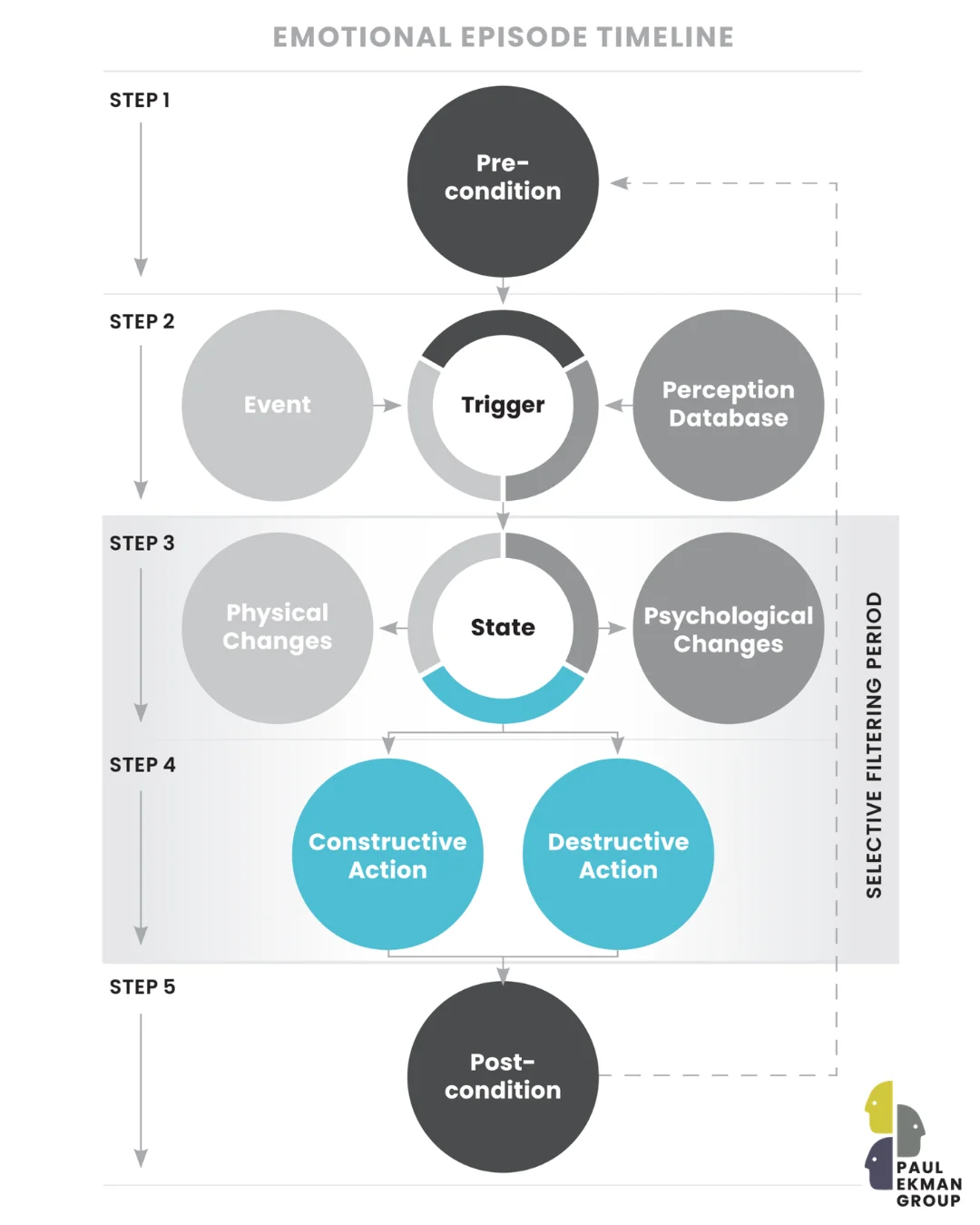
The intricate landscape of human emotion, often perceived as a sudden, unpredictable surge, actually unfolds through a structured, five-stage process, according to leading emotion scientists. This framework, known as the Emotional Episode Timeline, offers a nuanced understanding of how we experience and react to feelings, providing valuable insights for individuals seeking greater emotional intelligence and skillful responses. By dissecting the journey from initial stirrings to lasting impact, this model illuminates the subtle interplay of our internal states and external circumstances.
The Foundation of Emotional Response: Pre-Condition
The genesis of any emotional experience lies in the "pre-condition," a multifaceted state that represents our baseline emotional and physical context at any given moment. This is not a static entity but a dynamic sum of our recent experiences, physiological status, and prevailing psychological atmosphere. Factors such as sleep quality, nutritional intake, stress levels, and even recent positive or negative news can significantly influence this initial state. For instance, a person who has had a night of poor sleep and is already experiencing work-related stress might find themselves more susceptible to irritation or frustration when faced with a minor inconvenience. Conversely, someone feeling rested and content is likely to navigate the same situation with greater equanimity. Research in psychophysiology has consistently demonstrated that baseline physiological arousal, influenced by factors like heart rate variability and cortisol levels, can prime the body for specific emotional responses. A heightened baseline of stress hormones, for example, can lower the threshold for activating the fight-or-flight response, making anxiety or anger more readily accessible. This pre-condition acts as the fertile ground upon which emotional triggers land, determining the intensity and speed with which an emotion can manifest.
The Trigger: A Symphony of Event and Perception
The second stage, the "trigger," is where the emotional episode truly ignites. It is not a singular event but a complex interaction between an external or internal occurrence and our personal "perception database." An event can be anything from a direct sensory input—a sudden loud noise, a pleasant aroma, a visual cue—to an internal mental process such as a memory surfacing or a spontaneous thought. This event is then instantaneously processed through our unique perception database, an internal repository of accumulated life experiences, learned associations, and innate predispositions. This database acts as an "emotional alert system," rapidly evaluating the significance of the event in relation to our past experiences and current goals.
This evaluation process, known as automatic appraisal, occurs at a subconscious level, enabling us to react with remarkable speed. Consider the scenario of suddenly swerving a car to avoid an animal. The visual event of the animal entering the roadway is processed, and our perception database, drawing on learned knowledge about the dangers of collisions and the instinct for self-preservation, triggers an immediate, automatic appraisal of threat. Similarly, if a new acquaintance fails to reply to a text message, an individual whose perception database contains past experiences of rejection might automatically appraise this silence as a sign of disinterest or disapproval, even if other interpretations are possible. The contents of this database are shaped by a confluence of factors, including genetics, which can predispose individuals to certain emotional temperaments, and learned experiences, which create specific emotional associations. For example, early childhood experiences of consistent nurturing can build a perception database that interprets social interactions more positively, while experiences of neglect or trauma can lead to a database that is highly attuned to potential threats and betrayals.
The State: The Embodied Experience of Emotion
The "state" represents the core emotional experience itself, encompassing both the physiological and psychological manifestations of an emotion. This is the visceral, felt sense of what it means to be angry, sad, joyful, or fearful. Physiologically, emotions are accompanied by distinct bodily changes. Anger might manifest as a racing heart, flushed face, and tensed muscles. Fear can induce a rapid heartbeat, shallow breathing, and a feeling of coldness. Sadness might involve a heavy chest, lethargic movements, and tearfulness. These physiological shifts are not random; research by emotion scientists like Dr. Paul Ekman has identified that each universal emotion is associated with a unique and predictable pattern of bodily changes, evolved to prepare the organism for specific actions. For instance, the physiological changes associated with fear, such as increased blood flow to muscles and heightened alertness, are designed to facilitate escape.
Simultaneously, psychological changes define the subjective quality of the emotional experience. This is the internal "flavor" that colors our consciousness. Sadness might feel like a pervasive weight, a slowing down of thought and action. Joy can feel light, expansive, and energizing. The interplay between these physical and psychological changes creates the rich tapestry of our emotional lives. It is during this stage that the "selective filtering period" becomes particularly influential. When an emotion is active, our perception tends to narrow, focusing our attention on information that aligns with the prevailing emotion. In a state of fear, we become hyper-vigilant to potential threats, often amplifying their perceived danger. Conversely, in anger, our focus may sharpen on the frustrating aspects of a situation, potentially overlooking mitigating factors or positive elements. This filtering mechanism, while crucial for survival by prioritizing relevant stimuli, can also lead to biased interpretations of reality if not recognized.
The Action: Navigating Constructive and Destructive Responses
Emotions are inherently action-oriented. The "action" stage refers to the outward behaviors or internal adjustments that arise from the emotional state. These actions are not predetermined as "positive" or "negative" but are better categorized as "constructive" or "destructive" based on their impact on ourselves and others. A constructive response to anger, for example, might involve calmly articulating one’s boundaries or seeking a resolution to the underlying issue. A destructive response could involve lashing out verbally or physically. Similarly, while sadness might prompt withdrawal, a constructive response could involve seeking support from loved ones or engaging in self-care activities. A destructive response might involve prolonged rumination or self-isolation.
The distinction between constructive and destructive actions is critical for emotional regulation. For instance, anger, often perceived negatively, can be a powerful catalyst for positive change when channeled constructively. It can signal injustice, motivate the defense of oneself or others, and drive efforts to rectify wrongs. However, if expressed destructively, anger can damage relationships, lead to regret, and escalate conflict. The capacity to choose between constructive and destructive actions is a cornerstone of emotional intelligence. This choice is influenced by our pre-condition, the nature of the trigger, and our learned coping mechanisms. Developing the ability to pause between experiencing an emotion and acting upon it allows for a more deliberate and skillful response, fostering personal growth and healthier interactions.
The Post-Condition: The Lingering Echo and Future Influence
The final stage, "post-condition," acknowledges that every emotional episode leaves a residue, an impact that can ripple outward and influence subsequent experiences. If an emotional outburst resulted in strained communication, the lingering tension can set the stage for future conflict. Suppressing an emotion, while seemingly resolving an immediate issue, can lead to an internal build-up of unresolved feelings, potentially manifesting as irritability or emotional fatigue later on. These post-conditions are not merely passive outcomes; they can actively contribute to the pre-condition of the next emotional episode, creating cyclical patterns.
However, the post-condition also presents a vital opportunity for reflection and learning. By examining the aftermath of an emotional experience, individuals can gain profound insights into their triggers, their typical responses, and the effectiveness of their actions. This reflective process can help to identify maladaptive patterns—such as a tendency to blame others when frustrated or to withdraw when feeling anxious—and to develop more adaptive strategies. This continuous cycle of experience, action, and reflection is fundamental to developing resilience and emotional maturity over time. The scientific study of emotion, exemplified by resources like the Atlas of Emotions, emphasizes this cyclical nature and the potential for conscious intervention at various stages to foster greater well-being.
The Science Behind the Timeline: Research and Application
The Emotional Episode Timeline is not merely a theoretical construct but is grounded in decades of research in psychology, neuroscience, and physiology. Pioneering work by Dr. Paul Ekman and his colleagues has established the universality of certain basic emotions and the distinct physiological signatures associated with them. His research, along with that of numerous other scientists, has illuminated the complex neural pathways involved in emotion processing, from the rapid subcortical responses of the amygdala to the more nuanced processing in the prefrontal cortex.
The implications of understanding this timeline are far-reaching. In clinical settings, therapists utilize this framework to help individuals identify and manage emotional dysregulation, trauma responses, and interpersonal difficulties. In educational contexts, it provides a basis for teaching emotional literacy to children and adolescents, equipping them with the tools to understand and navigate their feelings. In the professional realm, it informs leadership training, conflict resolution strategies, and team-building initiatives by fostering greater empathy and understanding among colleagues. The Atlas of Emotions, a free interactive tool developed by Drs. Paul and Eve Ekman, further disseminates this knowledge, offering users a comprehensive resource for exploring the nuances of emotional experience. The ongoing development of resources, such as the forthcoming Atlas of Emotions book, underscores the continuing commitment to making these scientific insights accessible and applicable to a wider audience. By demystifying the process of emotional experience, the Emotional Episode Timeline empowers individuals to move from reactive patterns to more intentional and fulfilling ways of engaging with their inner lives and the world around them.
