

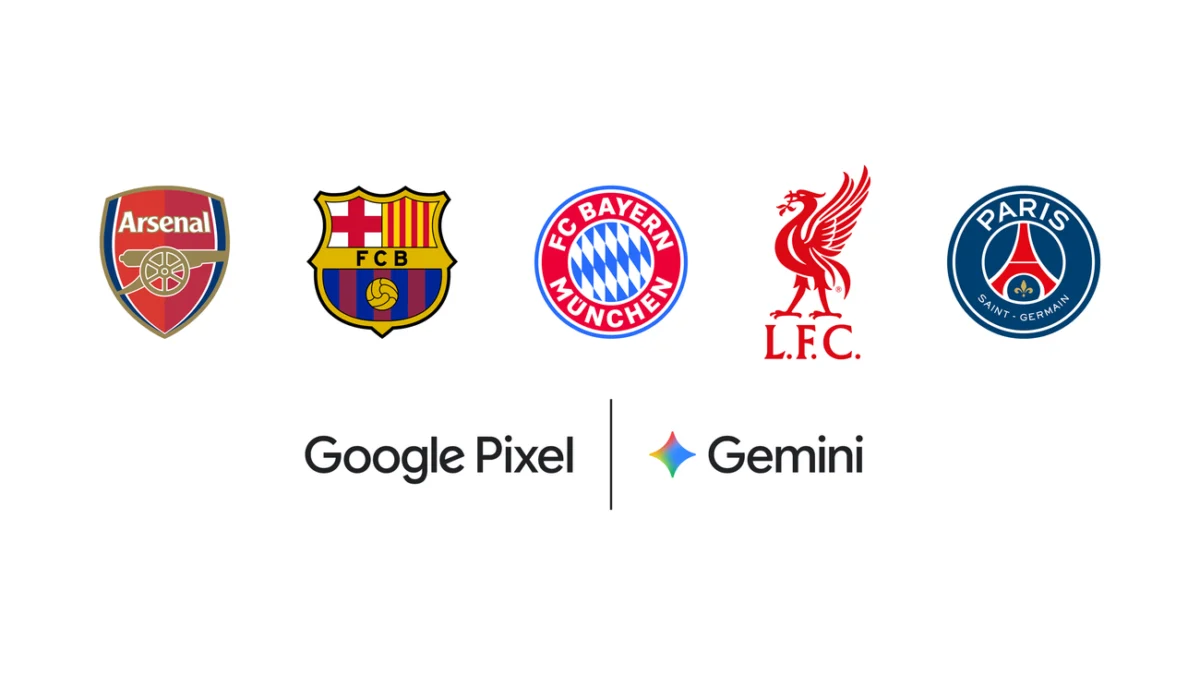
Google has officially announced a series of landmark, long-term partnerships with five of the most storied and successful football clubs in the world: Arsenal FC, FC Barcelona, FC Bayern München, Liverpool FC, and Paris Saint-Germain. By assuming the dual roles of Official Consumer AI Partner and Official Smartphone Partner, Google aims to integrate its Gemini AI platform and Pixel hardware directly into the fabric of the global football experience. This multi-year collaboration represents a significant escalation in Google’s sports marketing strategy, positioning its latest technological innovations—specifically the Gemini AI suite and the Pixel 11 series—at the center of the world’s most popular sport. The initiative is designed to bridge the gap between the digital and physical worlds of football, providing fans with unprecedented access to their favorite clubs while simultaneously addressing systemic visibility issues within women’s professional football.
A New Era of Digital Integration in Professional Football
The announcement marks a paradigm shift in how technology companies interact with professional sports franchises. Rather than traditional sponsorship models that focus primarily on logo placement and stadium branding, Google’s approach emphasizes functional integration. By partnering with clubs across the English Premier League, Spain’s La Liga, Germany’s Bundesliga, and France’s Ligue 1, Google has secured a foothold in the most influential football markets on the planet. These five clubs—Arsenal, Barcelona, Bayern München, Liverpool, and PSG—possess a combined global following that numbers in the hundreds of millions, providing a massive testing ground for Google’s "agentic" AI capabilities.
The primary objective of these partnerships is to put fans at the heart of the action through "supercharged" matchday experiences. As the Official Consumer AI, Gemini is being positioned as a sophisticated personal assistant for the modern football supporter. The integration is intended to go beyond simple search queries, utilizing Gemini’s advanced large language models to provide deep insights into match tactics, club history, and real-time statistics. This move reflects a broader trend in the tech industry where AI is no longer a peripheral tool but a central component of consumer hardware and software ecosystems.
Supercharging the Matchday Experience with Gemini AI
For the modern football fan, the ninety minutes on the pitch are only a fraction of the overall experience. Supporters today engage in a constant cycle of pre-match speculation, mid-game analysis, and post-match debate. Google’s Gemini AI is designed to facilitate this entire lifecycle by acting as a proactive information agent. During a high-stakes European club clash, for example, a fan might use Gemini to understand a sudden mid-game formation change or to analyze the heat map of a specific player.
The "agentic" nature of Gemini means it is capable of handling complex tasks on behalf of the user. This includes settling debates over head-to-head historical records or providing nuanced breakdowns of a team’s performance metrics over the course of a season. By placing these capabilities in the hands of supporters, Google is attempting to democratize sports analytics, which was previously the domain of professional scouts and specialized media outlets. The goal is to provide a seamless flow of information that keeps fans connected to the narrative of the game without requiring them to navigate multiple disparate apps or websites.
Capturing the Unfiltered Game: The Role of Pixel Hardware
While Gemini handles the data and insights, the Google Pixel serves as the physical conduit for the fan experience. As the Official Smartphone Partner, Google is working closely with the internal media teams of Arsenal, Barcelona, Bayern, Liverpool, and PSG. These teams will be equipped with the latest Pixel 11 devices to capture raw, unfiltered, behind-the-scenes content that was previously inaccessible to the general public.
A cornerstone of this hardware integration is the "Shot on Pixel" series. This content initiative will leverage the Pixel’s advanced camera systems and AI-powered editing tools—such as Magic Editor and Best Take—to produce high-quality social media content that highlights the emotions of the players and the atmosphere of the stadiums. By utilizing the same hardware available to consumers, the clubs are demonstrating the practical applications of Google’s mobile technology in a professional setting. Furthermore, Google is allowing fans to personalize their own devices with official club wallpapers and themes, further cementing the brand’s connection to the supporter’s identity.
Bridging the Gender Gap: A Commitment to Women’s Football Visibility
A fundamental pillar of these five partnerships is a dedicated commitment to advancing women’s football. Despite record-breaking attendance figures at major tournaments like the UEFA Women’s Euro and the FIFA Women’s World Cup, the women’s game continues to face a significant "visibility gap" compared to the men’s game. This disparity manifests in lower media coverage, fewer broadcast slots, and less behind-the-scenes storytelling.

Google has pledged to partner equally across both the men’s and women’s teams of its five partner clubs. The objective is to use Google’s technology to amplify the reach of women’s football globally. This includes capturing pitch-side action with Pixel devices and producing high-value digital content specifically focused on women’s players and their journeys. By providing the same level of technological support and content production to women’s teams, Google and its partner clubs aim to inspire the next generation of female players and ensure that the growth of the sport is supported by robust digital infrastructure. This initiative aligns with Google’s broader corporate social responsibility goals of promoting equity and inclusion through its technological reach.
The Strategic Evolution of Google’s Sports Partnerships
This latest announcement is the culmination of a multi-year strategy by Google to embed itself within the sports industry. Previously, Google has established successful partnerships with organizations such as the NBA, the WNBA, and the English Football Association (The FA). However, the simultaneous partnership with five of Europe’s "super clubs" represents a significant scaling up of these efforts.
Historically, the sports technology sector was dominated by data providers and broadcast equipment manufacturers. The entry of a consumer-facing tech giant like Google into this space changes the dynamics of fan engagement. By controlling both the hardware (Pixel) and the intelligence layer (Gemini), Google creates a closed-loop ecosystem where it can manage the entire digital experience of a football fan. This strategy is also a defensive move against competitors like Apple and Samsung, who have also sought to align their brands with major sporting events and athletes.
Technical Analysis: Agentic AI and the Future of Sports Analytics
From a technical perspective, the use of the term "agentic capabilities" in the partnership announcement is particularly noteworthy. In the context of AI, an "agent" is a system that can take actions to achieve a specific goal, rather than just generating text or images. For football fans, this could eventually mean Gemini being able to book travel for away matches, purchase official merchandise, or automatically curate a highlight reel of a fan’s favorite player after every game.
The integration of Gemini into the football ecosystem also provides Google with a unique dataset to refine its models. Football is a game of high complexity and unpredictability, making it an ideal environment for testing the limits of real-time AI processing. As Gemini learns to interpret the nuances of football tactics and fan sentiment, the underlying technology will become more sophisticated, benefiting users across all sectors, not just sports.
Global Market Impact and the Competitive Landscape
The selection of Arsenal, FC Barcelona, FC Bayern München, Liverpool FC, and Paris Saint-Germain is no coincidence. These clubs are not just sports teams; they are global brands with massive commercial footprints in North America, Asia, and the Middle East. By aligning with these specific institutions, Google ensures that its Gemini and Pixel brands are seen by a diverse, international audience.
This move is expected to have a ripple effect across the sports industry. Other technology companies may feel pressured to form similar alliances to avoid being sidelined in the race for digital fan engagement. Furthermore, the emphasis on women’s football sets a new standard for corporate sponsorships, suggesting that future partnerships will be increasingly judged on their contribution to social equity and the development of the sport as a whole.
Conclusion: A Vision for the Future Fan
The partnership between Google and these five iconic clubs is more than a marketing campaign; it is a vision for the future of sports consumption. As AI continues to evolve, the distinction between "watching" a game and "experiencing" it will continue to blur. Through the combined power of Gemini and Pixel, Google is betting that fans want a deeper, more interactive, and more personalized relationship with their clubs.
By providing the tools to settle debates, capture exclusive moments, and elevate the visibility of the women’s game, Google is positioning itself as an essential part of the footballing world. As these stories unfold throughout the season across the official channels of Arsenal, Barcelona, Bayern, Liverpool, and PSG, the global football community will get its first real look at how AI and mobile technology can transform the beautiful game for the digital age. The success of this initiative will likely determine the blueprint for sports partnerships for the next decade, marking a new chapter in the intersection of technology and human passion.
