

The traditional dinner party, long considered a cornerstone of social cohesion and domestic artistry, is undergoing a significant digital transformation. As modern consumers increasingly seek authentic, real-world connections to counter digital fatigue, Google has introduced a suite of artificial intelligence features within its Search ecosystem designed to streamline the complexities of event hosting. By leveraging multimodal AI capabilities, Google Search now functions as a comprehensive concierge, assisting users with everything from aesthetic visualization to culinary logistics and atmospheric curation. This integration represents a pivotal shift in how generative AI is applied to everyday lifestyle management, moving beyond simple information retrieval toward proactive, creative problem-solving.
The Cultural Shift Toward Real-Life Connection
The release of these AI-driven hosting tools comes at a time when "real-life connection" is more than just a sentiment; it is a measurable data trend. According to internal Google Search data and broader social trend reports, queries related to "hosting dinner parties," "tablescape inspiration," and "group dining at home" have seen a marked increase over the past 24 months. Industry analysts attribute this resurgence to a post-pandemic desire for intimate, curated social experiences that offer a reprieve from the anonymity of social media.
Google’s "Touch Grass" trend report highlights that younger demographics, particularly Gen Z and Millennials, are prioritizing offline gatherings. However, the logistical burden of planning such events—managing dietary restrictions, designing décor, and selecting music—often acts as a barrier to entry. By embedding AI Mode and the "Nano Banana" generative features into the search experience, Google aims to lower this barrier, transforming the search engine into a utility for physical world engagement.
1. Visualizing the Aesthetic: The Role of Nano Banana in Tablescaping
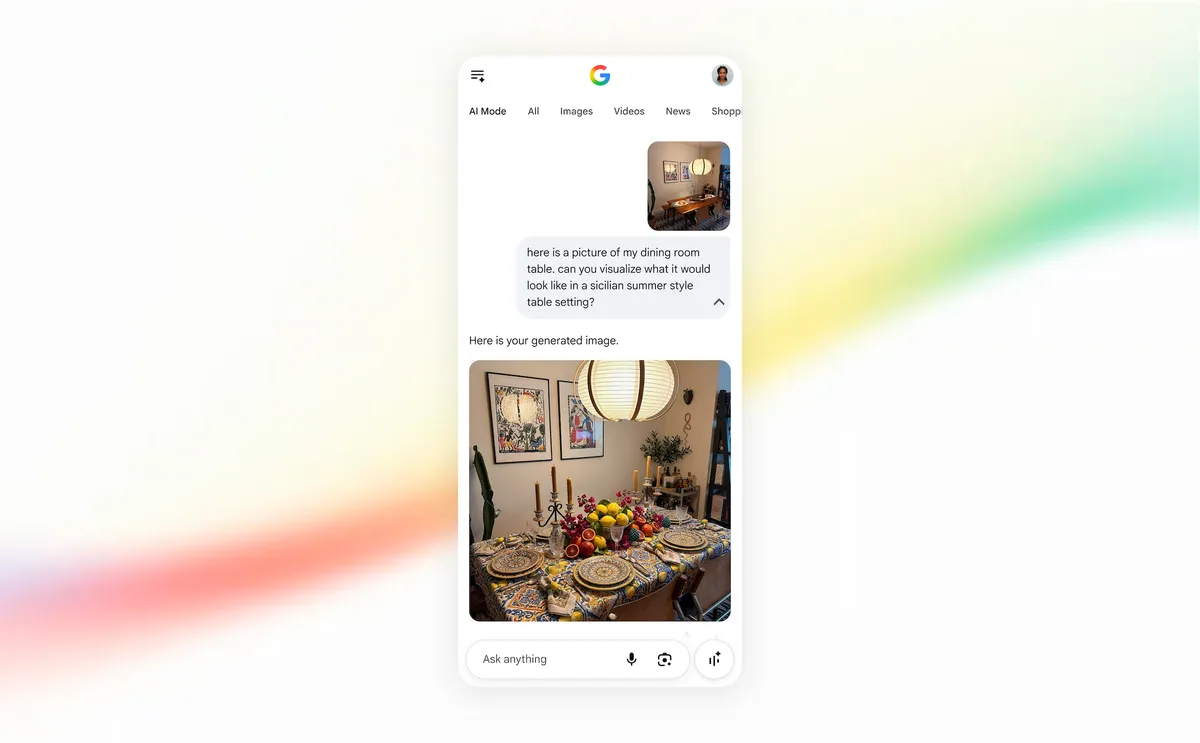
One of the most complex aspects of hosting is the visual presentation, or "tablescaping." For many hosts, translating a vague thematic idea into a physical arrangement is a challenge. Google’s "Nano Banana" integration within AI Mode addresses this by allowing users to generate high-fidelity visualizations of table settings based on specific prompts.

This feature utilizes advanced generative image models, likely building upon Google’s Imagen architecture, to synthesize user preferences—such as "mid-century modern," "rustic Italian," or "minimalist botanical"—into a coherent visual guide. Users can iterate on these designs, adjusting colors, floral arrangements, and lighting styles in real-time. This capability serves as a digital mood board that moves beyond static image results, providing a customized blueprint for the host’s specific space and resources.
2. Culinary Curation and the Creator Economy
The menu remains the central pillar of any dinner party, yet the process of recipe discovery has historically been fragmented. Google Search has updated its AI Mode to provide a more sophisticated visual treatment for recipe discovery. When a user searches for menu inspiration, the AI does not merely list links; it synthesizes a selection of dishes that align with the party’s "vibe" or theme.
Crucially, this update emphasizes the creator economy. Prominent links at the top of AI-generated responses now feature high-quality imagery, creator names, recipe ratings, and ingredient counts. This factual transparency allows hosts to assess the difficulty and quality of a dish at a glance. From a journalistic perspective, this move is significant as it attempts to balance the convenience of AI summaries with the necessity of driving traffic back to the original content creators—the chefs and food bloggers who provide the underlying data. This synergy ensures that the AI remains a bridge to expert knowledge rather than a replacement for it.
3. Algorithmic Sommelier: Precision Drink Pairings
Beyond the main course, Google’s AI Mode now offers specialized assistance in beverage pairing. This feature functions by analyzing the flavor profiles of the selected menu—such as acidity, fat content, and spice levels—to recommend complementary drinks. For instance, if a host is serving a complex dish like miso salmon alongside a cheese platter and a citrus-heavy dessert like key lime pie, the AI can cross-reference culinary databases to suggest specific varietals of wine, craft beers, or non-alcoholic pairings.
This application of AI demonstrates the technology’s ability to handle multi-variable logic. It provides not just a list of drinks, but the rationale behind each choice, educating the host in the process. By explaining why a dry Riesling or a specific sparkling water complements the umami of the salmon, the tool empowers the host with knowledge that enhances the guest experience.

4. Ecosystem Integration: The Connected Apps Advantage
The utility of Google Search in party planning is further amplified by its integration with the broader Google Workspace and entertainment ecosystem. Through "Connected Apps," AI Mode can transition from a planning tool to an execution tool. A primary example of this is the integration with YouTube Music.
Once a host has established the "vibe" of their party through their décor and menu searches, they can prompt the AI to curate a matching playlist. The AI analyzes the temporal and thematic context of the event—for example, a "50th birthday jazz brunch" or a "low-fi study dinner"—and generates a sequence of tracks. With a single command, this playlist is saved to the user’s YouTube Music library and can be broadcast immediately. This seamless handoff between search, creation, and playback represents a significant evolution in user interface design, reducing the "app-switching" friction that often complicates digital task management.
5. Tangible Design: From Digital Concept to Physical Menu
The final touch in professional-grade hosting is the physical menu. Traditionally, this required graphic design skills or the use of third-party templates. Google has bridged this gap by allowing Nano Banana in AI Mode to design printable menus that reflect the host’s specific style and finalized food choices.
By inputting the finalized courses—such as a caprese salad followed by chicken piccata and tiramisu—the AI can generate a formatted, aesthetically pleasing menu layout. This feature highlights the multimodal nature of modern search; it is no longer just about finding information, but about producing a tangible output that contributes to the physical environment of the party. The ability to generate these designs in seconds democratizes high-end hosting aesthetics, making them accessible to the casual entertainer.
Technical Evolution and Timeline
The introduction of these features is the result of a multi-year trajectory in Google’s development of Large Language Models (LLMs).
- Early 2023: Google introduced the Search Generative Experience (SGE) as an experimental phase in Search Labs, testing how users interacted with AI-generated snapshots.
- Late 2023: The integration of multimodal capabilities allowed the AI to understand and generate both text and images with higher contextual awareness.
- Mid-2024: The rollout of specific lifestyle "modes," such as the hosting tools described, marked a shift toward vertical-specific AI applications.
The "Nano Banana" model mentioned in the context of these features suggests a specialized, perhaps more efficient version of Google’s Gemini models, optimized for quick, creative tasks within the mobile and desktop search interface.
Analysis of Implications for the Digital Landscape
The enrichment of Google Search with these AI tools has broader implications for the technology industry and the "hosting economy." First, it positions Google as a direct competitor to discovery-based platforms like Pinterest and specialized event-planning apps. By providing inspiration and execution in one place, Google increases user "stickiness" within its ecosystem.
Second, the move reflects a sophisticated approach to the "Utility AI" market. While much of the public discourse around AI focuses on academic or professional productivity, Google is betting on the "domestic utility" of AI. By solving small, relatable problems—like what wine goes with salmon or how to format a menu—Google is normalizing AI interaction for the general public.
However, this shift also raises questions regarding data privacy and the future of the open web. As users provide more specific details about their personal lives and social gatherings to the AI, the depth of user profiles grows. Furthermore, as AI Mode becomes the primary interface for finding recipes, the traditional SEO (Search Engine Optimization) model for food bloggers may need to evolve to ensure they remain visible within these AI-synthesized responses.
Conclusion: The Future of the "Host with the Most"
The integration of AI into the art of the dinner party is a testament to the technology’s growing versatility. By handling the "heavy lifting" of logistics, visualization, and curation, Google Search allows hosts to focus on the human element of the evening: conversation, connection, and hospitality. As these tools continue to evolve, the line between digital assistant and creative partner will continue to blur, ushering in a new era of tech-enabled domesticity where the "ultimate dinner party" is only a search query away. For the modern host, the challenge is no longer the "how" of planning, but the "who" of the guest list, as the technical hurdles of hosting are increasingly managed by the silicon intelligence in their pocket.
