

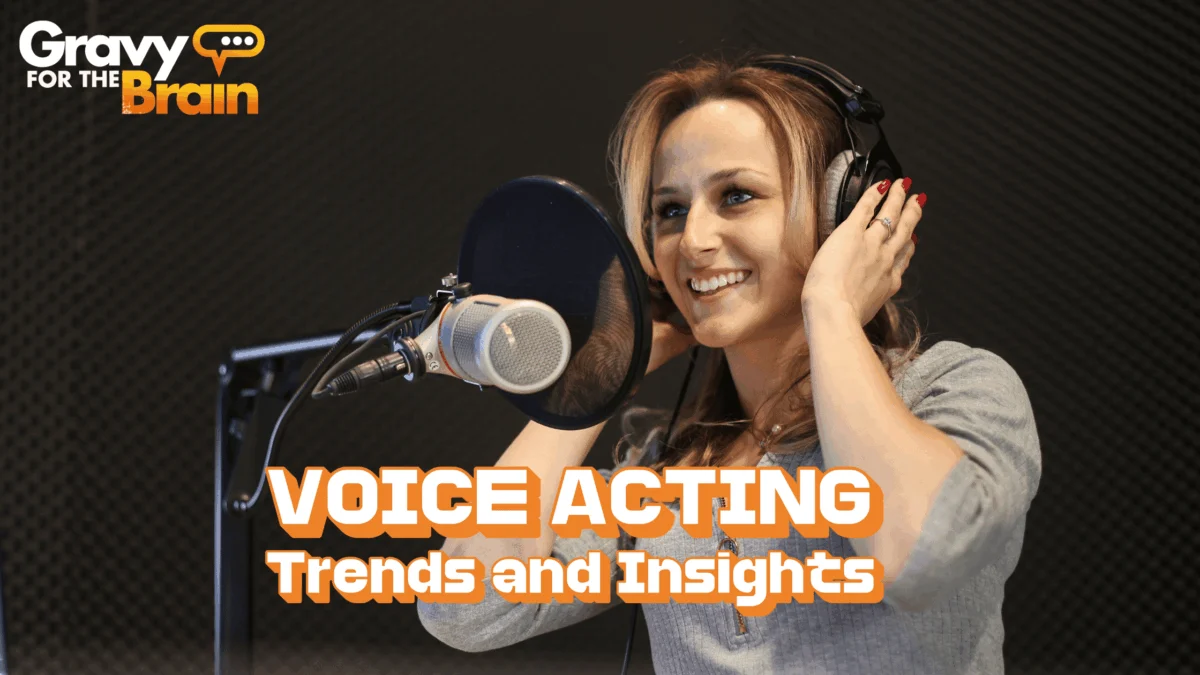
The voice acting industry has experienced a period of unprecedented and rapid transformation throughout 2025, reshaping workflows, redefining creative possibilities, and challenging established norms. This dynamic evolution, driven by technological advancements and shifting market demands, has seen remote production become the standard and artificial intelligence-powered voice cloning achieve remarkable levels of sophistication. Yet, amidst these significant innovations, the intrinsic value of authentic human performance has not only endured but has, in many respects, become more pronounced. Brands and content creators continue to recognize that genuine human voices are indispensable for forging meaningful connections with audiences. This comprehensive analysis delves into the pivotal trends and insights that characterized voice acting in 2025, drawing upon extensive industry surveys, trend reports, and expert commentary from global thought leaders. By examining these developments, we aim to provide a clear understanding of their implications for the future trajectory of voice careers and casting strategies.
Key Takeaway: The year 2025 underscored that while Artificial Intelligence can serve as a valuable adjunct in specific areas of voice work, it will not fully supplant human performers. Emotionally resonant content, in particular, will continue to rely heavily on the nuanced expressiveness of human voices. Furthermore, the shift to remote work within home studios has solidified its position as the industry’s new normal, while the demand for diverse, authentic, and multilingual voices continues its upward trajectory.
The Unfolding Narrative of Voice Acting in 2025
Enduring Demand for Authentic Human Voice Talent
Despite the burgeoning capabilities of AI, a significant online survey of voice-over buyers revealed a resounding affirmation of the critical role played by real human voice actors within the global creative ecosystem. Over half of the surveyed companies indicated their intention to engage human voice talent for brand marketing initiatives in 2025. A substantial proportion, nearly 50%, also anticipated a continued need for these professionals in the realms of animation, broadcast media, online advertising, and television production. The survey further highlighted the increasing influence of digital channels, with 58% of respondents citing streaming platforms, social media, and online advertising as the most impactful and effective paid media avenues, largely attributed to their sophisticated targeting capabilities. These findings unequivocally demonstrate that authentic human voices remain a fundamental element in effective brand storytelling, consistently yielding enhanced audience engagement. In essence, the overwhelming majority of brands, broadcasters, and content creators continue to regard the human voice actor as an indispensable strategic asset.
AI Voices: A Catalyst for Curiosity and Calculated Caution
The advancements in generative AI voice technology throughout 2025 were nothing short of remarkable. AI-driven speech systems are now capable of producing natural-sounding phrases and even engaging in interactive exchanges with human participants. However, a palpable sense of caution permeated the professional buyer community regarding the widespread adoption of these technologies. When queried about their sentiment towards AI integration, survey respondents exhibited a near-even split. Approximately one-third expressed an increased openness compared to the previous year, while a similar proportion reported growing hesitation. The remaining segment indicated no discernible shift in their stance. On average, only about a quarter of clients experimented with AI voices in their projects, and when they did, the usage was typically limited to less than a quarter of their assignments. Notably, some clients reported abandoning AI solutions altogether for certain projects, citing the prohibitive time investment required for fine-tuning to achieve satisfactory results.
The paramount consideration for clients when evaluating AI voices is their ability to authentically replicate human performance, a benchmark that most current AI offerings still fall short of achieving. While cost-effectiveness and rapid turnaround times were acknowledged as secondary factors, they did not supersede the imperative for genuine human-like quality. These insights strongly suggest that AI is unlikely to precipitate a swift displacement of human voice actors. Instead, large language models are more plausibly poised for increased integration into interactive voice response (IVR) systems, the creation of cost-effective explainer videos, and as a rapid, low-cost tool for script prototyping, generating guide tracks, or facilitating content localization. Nevertheless, the final recordings for projects demanding emotional depth and nuanced performance are expected to continue relying on the expertise of professional voice actors.
Broadening Horizons: New Markets and Languages for Voice Actors
The global appetite for content consumed in native languages has witnessed a significant surge. The aforementioned survey indicated that 58% of buyers had either engaged with or were planning to engage with non-English voice acting talent. Spanish emerged as the most frequently requested language following English, with French securing the third position. While nearly half of businesses continued to prioritize English, both Spanish and, intriguingly, Chinese were identified as languages slated for significant growth.
Technological advancements are acting as a potent accelerant for this global linguistic trend. Speech-to-speech translation, a technology capable of converting spoken words from one language to another while preserving the original tone, is making it more accessible to dub videos, audiobooks, and support multilingual customer service operations. As emerging markets such as Latin America and China continue their expansive growth trajectories, the value of multilingual proficiency and the ability to collaborate effectively with translators is set to increase exponentially for voice actors.
Emergence of New Genres and Immersive Voice Acting Experiences
While voice actors have consistently found opportunities in established domains such as gaming, audiobooks, and e-learning, 2025 also marked a period of notable expansion in short-form and interactive content. The demand for voiceovers for social media clips, podcast intros, and branded explainer videos has seen consistent growth. Furthermore, the burgeoning landscape of emerging technologies, including virtual reality (VR), augmented reality (AR), and other immersive media, is actively creating novel roles for voice talent. As VR and AR transition from niche applications to mainstream tools for education, entertainment, and wellness, voice actors possessing the ability to deliver compelling performances within 360-degree environments are poised to become highly sought after.
Implications for Voice Actors and Producers
The enduring preference for performances that resonate with authenticity and relatability among both audiences and advertisers remains a constant. The era where a generic announcer voice could unilaterally drive sales has largely passed; contemporary listeners are demonstrably more receptive to conversational, peer-to-peer reads that evoke a sense of trust and familiarity, akin to that of a trusted friend or advisor. In an increasingly AI-populated audio landscape, genuine human warmth and subtle nuance are emerging as critical differentiators. Indeed, a segment of filmmakers and advertisers has begun to explicitly market their content as "AI-free," a deliberate signal of their commitment to authenticity and their dedication to employing real human voice acting talent.
For voice actors, this evolving landscape necessitates a strategic focus on cultivating and amplifying their unique, authentic vocal signatures, whether that be a playful and upbeat tone or a calm and authoritative delivery. The ability to render dialogue with naturalism and conviction is paramount. Investing in broader acting skills, including improvisation, comedic timing, and the expansion of one’s emotional range, will be instrumental in maintaining a competitive edge against the limitations of synthetic AI voices.
Expanding the Voice Acting Skill Set
Clients are increasingly seeking voice talent who possess capabilities extending beyond mere script recitation. Many producers place a high value on voice actors who also demonstrate proficiency in audio editing, sound processing, foundational sound design, or script consultation. The capacity to deliver polished audio directly from one’s home studio has now become a baseline expectation within the industry. Acquiring additional competencies, such as a working knowledge of professional digital audio workstations (DAWs) or the ability to manage multilingual projects, can significantly elevate a voice actor’s professional profile and marketability.

The cultivation of a strong personal brand and robust networking strategies are also playing increasingly significant roles in career advancement. Showcasing high-quality demo reels, maintaining an up-to-date portfolio, and actively engaging with voice acting communities and industry conferences, such as One Voice, can serve to differentiate performers in an increasingly competitive marketplace. Furthermore, developing a specialized niche, whether it be in children’s audiobooks, character voices, or instructional videos, can further distinguish a voice actor from generalists.
Embracing Diversity, Inclusion, and Multilingual Proficiency in Voice Acting
A growing imperative for brands is the pursuit of voices that authentically represent a broader spectrum of cultures and dialects, thereby ensuring a more accurate reflection of their target audiences. Authenticity in this context extends beyond mere linguistic accuracy; it encompasses the conveyance of lived experience and nuanced cultural understanding. Voice actors who possess multilingual capabilities or can authentically perform regional accents are strongly encouraged to highlight these specialized skills. For those who do not, pursuing accent coaching or establishing collaborative relationships with translators can be valuable avenues for expanding their professional reach.
From a producer’s perspective, a commitment to inclusive casting practices within voice acting, coupled with a proactive prioritization of underrepresented voices, can lead to more resonant and socially responsible advertising campaigns.
Safeguarding Rights and Staying Informed as a Voice Actor
The ethical and legal ramifications surrounding the use of AI-generated voices have become a focal point of ongoing negotiations within professional unions, including EQUITY in the UK and SAG-AFTRA and NAVA in the USA, which represent voice actors. As AI models continue to advance in sophistication, it is imperative to ensure that voice actors are fairly compensated when their vocal data is utilized to train large language model algorithms. Consequently, it is crucial for voice actors and their representatives to meticulously review contractual clauses pertaining to AI usage and to remain diligently informed through professional organizations and dedicated voice acting industry news channels.
Looking Ahead: Projections for Voice Acting in 2026 and Beyond
New Markets and Sustained Multilingual Growth
The global demand for voice-over content is projected to continue its diversification. Key growth languages, including Spanish, French, German, Chinese, and Hindi, are expected to remain at the forefront. Advances in speech-to-speech translation technology are further simplifying the process of reaching international audiences without the necessity of re-shooting or re-voicing entire projects. Producers will increasingly adopt a strategy of tailoring content to specific regional markets, thereby increasing the demand for voice actors adept at navigating cross-cultural storytelling.
Immersive and Interactive Experiences
As VR and AR applications expand their reach beyond gaming into sectors such as education, healthcare, and corporate training, voice acting talent will play an integral role in guiding users through these evolving virtual environments. Interactive narratives that present multiple narrative pathways will necessitate that actors deliver a range of varied responses while maintaining character nuance, empathy, and continuity. Those actors who are comfortable with improvisation and non-linear storytelling are poised to lead this emerging domain.
Ethics, Trust, and the Imperative of Emotional Realism
While current technology can generate speech that sounds convincingly human, it often struggles to capture the full spectrum of emotional depth and range. Consumers and regulatory bodies are increasingly advocating for transparency regarding the use of AI voice data, emphasizing that synthetic voices should never be employed to mislead audiences. Brands that proactively highlight their commitment to ethical sourcing and human involvement will cultivate greater trust among their clientele. Voice actors, in turn, should be prepared to address inquiries regarding the potential utilization of AI in their projects and to advocate for the fair and ethical use of their vocal data.
Continuous Learning and Adaptability as Core Competencies
The pace of innovation in voice-generated technology and media consumption remains relentlessly rapid. To effectively navigate this dynamic landscape, both voice actors and producers must cultivate a mindset of insatiable curiosity. This involves actively seeking out training opportunities in acting techniques, audio engineering, dialect work, and emerging technologies. Networking with peers and mentors to exchange strategies and insights is also invaluable. Embracing a philosophy of lifelong learning is paramount; those who adapt and evolve in tandem with the industry are destined to thrive, while those who resist change risk being left behind.
The transformative events of 2025 have unequivocally demonstrated that the voice acting industry is neither immune to disruption nor entirely at risk. Authentic human voices continue to be indispensable for compelling brand storytelling and emotionally resonant content. The confluence of AI tools, remote production methodologies, and increasing globalization is actively expanding, rather than diminishing, the opportunities available within the field.
As the industry gears up for 2026, a strategic focus on amplifying what makes an individual voice unique is paramount. Investing in high-quality home studio setups, mastering the use of evolving tools, engaging ethically with AI, and maintaining a keen awareness of market trends are essential. Exploring new genres and languages, and actively advocating for fair compensation and ethical data utilization, will further enhance professional standing. By artfully blending traditional craft with the judicious adoption of emerging technologies, voice actors can confidently navigate a future where human and synthetic voices coexist to create richer, more inclusive, and profoundly engaging narrative experiences.
Aspiring to a Career in Voice Acting?
Gravy for the Brain, accessible at www.gravyforthebrain.com, stands as the world’s premier online voice acting training academy. The platform offers comprehensive mentorship, a diverse array of courses, webinars, workshops, personalized one-to-one training sessions, industry-standard rate guides, technical support, expert advice on studio construction, and a curated shop. Moreover, it fosters a vibrant and supportive community dedicated to assisting individuals in launching and advancing their careers, refining their artistic craft, understanding the latest technological advancements, and identifying their unique niche. Gravy for the Brain serves as an indispensable resource for all individuals within the voice acting profession, regardless of their current career stage, ensuring a feeling of unwavering support and camaraderie.
Download their comprehensive free PDF for deeper, valuable insights and sign up for a discounted membership offer to access their world-class training platform. Together, the aim is to ensure that every voice has the opportunity to be heard, reinforcing the core philosophy that every voice deserves to be heard.
