


The Paul Ekman Group, a leading authority in the science of emotions and facial expressions, has announced a significant expansion of its online microexpression training programs, introducing comprehensive translations into Italian, French, and German. This strategic initiative aims to democratize access to vital emotional intelligence and deception detection skills for a broader international audience. The newly available languages join existing translations in Spanish and Portuguese, further solidifying the organization’s commitment to making its scientifically-backed methodologies accessible worldwide.
The expansion, which was formally rolled out in October 2025, encompasses all seven core online training tools developed by the Paul Ekman Group. These tools are designed to teach individuals how to identify the subtle, fleeting facial expressions known as microexpressions, which often betray a person’s true emotional state. The organization reports that users can now select their preferred language at the commencement of each course. This move is a direct response to growing global demand for accessible, high-quality emotional awareness training.
A Mission Rooted in Understanding
At its core, the Paul Ekman Group’s mission is to foster a deeper understanding of oneself and others through enhanced emotional awareness. Dr. Paul Ekman, a pioneering psychologist and Emeritus Professor of Psychology at the University of California, San Francisco, has dedicated his career to studying human emotions and their universal expressions. His groundbreaking research, particularly on the universality of facial expressions across cultures, forms the bedrock of the group’s training methodologies.
"Our mission is to empower individuals across the globe to better understand themselves and those around them, thereby improving their emotional awareness skills," stated a representative from the Paul Ekman Group. "With these new translations, we are making it significantly easier for individuals, educators, professionals, and organizations in Europe and beyond to learn how to recognize facial microexpressions in their native tongue. This is about breaking down language barriers and making the science of emotions accessible to everyone."
The decision to prioritize Italian, French, and German reflects the substantial influence and interest in emotional intelligence and forensic psychology within these European linguistic communities. These languages are spoken by hundreds of millions of people, and their inclusion in the training materials is expected to dramatically increase the reach of Ekman’s work.
The Significance of Microexpressions: Unveiling the Unspoken
Microexpressions are involuntary, brief facial displays that occur within fractions of a second, typically when a person is trying to conceal or suppress an emotion. They are considered universal, meaning they are expressed and recognized across different cultures, a key finding from Dr. Ekman’s extensive research. These fleeting expressions can offer profound insights into a person’s genuine feelings, particularly in situations where verbal communication may be misleading or incomplete.
The ability to detect microexpressions is not merely an academic pursuit; it has tangible benefits across numerous professional fields. Law enforcement officers, for instance, can use this skill to assess truthfulness and understand the emotional state of individuals during interrogations or in sensitive public interactions. Healthcare professionals can gain a deeper understanding of patient distress or discomfort, even when patients struggle to articulate their feelings. Educators can better gauge student engagement and emotional well-being, while business leaders and team managers can improve interpersonal dynamics, negotiation outcomes, and overall team cohesion.
"Whether you are a law enforcement professional, a teacher, a healthcare provider, a team leader, or simply someone curious about understanding human emotions better, Paul Ekman’s microexpression training offers immense benefits," the group elaborated. "Learning to recognize microexpressions can enhance your ability to respond with empathy, accuracy, and insight—elements that are fundamental to emotional intelligence and effective relationships."
The training modules are structured to guide learners through the identification of the seven universal emotions: happiness, sadness, anger, fear, surprise, disgust, and contempt. By understanding the subtle muscular movements associated with each emotion, participants can develop a more nuanced perception of human behavior.
A Global Footprint: Building on Decades of Research
The Paul Ekman Group’s training tools have already achieved a significant global presence, with their programs utilized in over 230 countries. This extensive reach underscores the universal nature of emotions and the enduring relevance of Dr. Ekman’s research. The recent linguistic expansion is a natural progression, aiming to consolidate and broaden this global impact.
"Dr. Ekman’s work has always been grounded in the universality of emotions and facial expressions," the organization stated. "With tools already in use in over 230 countries, these new language translations represent another step in our commitment to making emotional awareness and deception detection skills accessible to a global audience. We hope these new versions will offer greater opportunity to all individuals whose native language is not English, Spanish, or Portuguese."
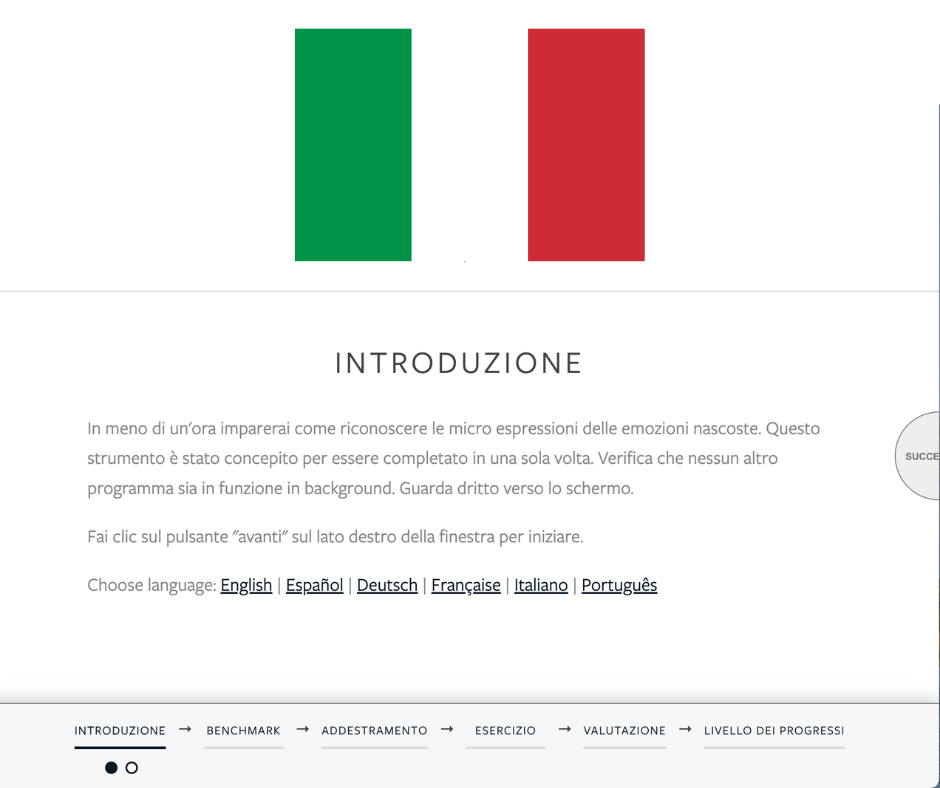
The development of these translations represents a significant investment in time and resources, involving meticulous translation and cultural adaptation of the training content. This ensures that the nuances of Dr. Ekman’s scientific findings are accurately conveyed in each new language, maintaining the integrity and effectiveness of the original programs.
Timeline of Expansion and Future Prospects
The journey to this multilingual offering has been a gradual but deliberate one. Following the initial development and widespread adoption of the English-language training tools, the Paul Ekman Group began a phased approach to localization. Spanish and Portuguese were among the first languages to be incorporated, reflecting their significant speaker bases in the Americas and other regions. The addition of Italian, French, and German marks a crucial next phase, targeting major European markets with high potential for impact.
The current rollout in October 2025 signifies the completion of this phase, making a total of five languages available for the core microexpression training modules. However, the organization has indicated that this is not the final stage of their localization efforts.
Looking Ahead: A Commitment to Continued Accessibility
The Paul Ekman Group has explicitly stated its ongoing commitment to expanding its language offerings. They are actively working to develop and introduce new translations to cater to an even wider array of linguistic communities.
"We are actively working to expand our offerings with new languages," the group announced. "If there is a language you would like to see available, please let us know here [[email protected]]." This direct invitation for user feedback demonstrates a user-centric approach to content development and accessibility.
This proactive engagement with their global community suggests that future language additions will be driven by expressed user demand, ensuring that the most needed languages are prioritized. The organization’s vision is to create a world where language is no longer a barrier to understanding and improving emotional intelligence.
Implications for Global Communication and Professional Development
The expanded availability of microexpression training in multiple languages carries significant implications for global communication, professional development, and intercultural understanding. In an increasingly interconnected world, the ability to accurately interpret emotional cues across linguistic and cultural divides is paramount.
For multinational corporations, the training can equip employees with the skills to navigate diverse workforces and enhance cross-cultural communication. This can lead to improved team collaboration, more effective leadership, and reduced misunderstandings. In diplomatic and international relations, a nuanced understanding of emotional expressions can foster greater empathy and more productive negotiations.
The accessibility of these tools in local languages also empowers individuals within their own cultural contexts. For example, an Italian police officer can now receive training in Italian, allowing for a deeper and more immediate application of the learned skills in their daily work. Similarly, educators in France can integrate microexpression analysis into their pedagogy, fostering emotionally intelligent younger generations.
The implications for mental health professionals are also substantial. Therapists and counselors can leverage these skills to better understand the unspoken emotional states of their clients, particularly in cases where verbal expression is difficult or incomplete. This can lead to more effective therapeutic interventions and improved patient outcomes.
Furthermore, the training’s emphasis on recognizing deception, a component often intertwined with microexpression analysis, has broad applications. In fields such as journalism, market research, and human resources, the ability to discern truthfulness can be invaluable.
The Paul Ekman Group’s strategic expansion into these new languages represents a significant milestone in the dissemination of scientific knowledge related to human emotions. By removing language barriers, they are not only making their valuable training more accessible but also contributing to a more emotionally intelligent and understanding global society. The invitation for user input on future language development ensures that their growth will continue to be guided by the needs of their diverse international community, reinforcing their position as a leader in the science of emotions.
