


The burgeoning integration of Artificial Intelligence (AI) into content creation workflows has ignited a critical debate within professional circles, particularly among influencers and thought leaders. A recent surge in discussions, prompted by a bold LinkedIn declaration – "I don’t use AI to write my content" – has brought to the forefront a nuanced distinction: the difference between leveraging AI as a tool to enhance human thought and allowing it to supplant genuine expertise. This divergence carries significant implications for authenticity, trust, and the very definition of influence in the digital age.
The statement, while initially appearing as a badge of honor for content purists, was quickly contextualized by its author not as a declaration of superiority, but as a reflection of a broader principle. The core argument posits that the ultimate value of content, regardless of its origin, lies in its ability to provide tangible worth to the audience. This perspective, while holding merit, overlooks a more profound ethical and practical consideration: the potential for AI to become a surrogate for authentic human experience and original thought.
The Rise of AI in Content Augmentation
AI-powered tools have rapidly evolved from novelties to indispensable assets for many professionals. Their capabilities span a wide spectrum, from organizing complex ideas and challenging pre-existing assumptions to refining clarity and polishing prose. For many, AI serves as a sophisticated digital assistant, akin to a trusted colleague with whom ideas are brainstormed and refined. This collaborative approach, when used judiciously, can significantly elevate the quality and efficiency of content production.
For instance, in the realm of marketing and communications, AI-driven platforms can analyze vast datasets to identify trending topics, optimize keyword density for search engine visibility, and even generate initial drafts of social media posts. A study by Statista in 2023 indicated that over 70% of marketers were already experimenting with or actively using AI in their content strategies, citing benefits such as increased efficiency and improved content personalization. This widespread adoption underscores the perceived utility of AI in streamlining the often-demanding process of content creation.
Distinguishing Enhancement from Replacement
The critical juncture, however, arises when the line between AI as an enhancer and AI as a replacement becomes blurred. This distinction is not merely semantic; it strikes at the heart of what constitutes genuine expertise and the trust audiences place in individuals. Imagine a scenario where an individual has meticulously built a reputation through extensive publications, educational courses, and public engagements. Their audience has invested time and trust in the perceived depth of their knowledge and the authenticity of their voice.
If, upon direct interaction, this individual’s discourse, insights, and fundamental understanding diverge significantly from the content they have consistently produced, a profound sense of dissonance would likely emerge. The realization that the authoritative voice and well-articulated ideas were not the product of the individual’s own lived experience and intellectual labor, but rather the output of an AI, would invariably lead to disappointment and a fracturing of trust.
This phenomenon echoes historical precedents, most notably the Milli Vanilli scandal of the late 1980s. The pop duo achieved meteoric success, earning Grammy awards and selling millions of albums. Their downfall came with the revelation that they had not sung any of the songs attributed to them. While the musical quality of the tracks themselves did not diminish, the deception surrounding their authorship shattered their credibility and careers. The audience felt misled, having invested their admiration in a facade rather than in genuine talent.
The Erosion of Authority and Authenticity
The principle of Authority, as outlined by Dr. Robert Cialdini in his seminal work on influence, dictates that individuals tend to place greater trust in those who demonstrate genuine expertise. However, this authority is contingent upon its authenticity. When AI generates an individual’s core ideas, narrative examples, personal anecdotes, and even their concluding arguments, the expertise being showcased is not their own, but rather their proficiency in prompt engineering. This is a fundamental shift, moving from demonstrating intellectual capital to demonstrating technical skill in interacting with a sophisticated tool.
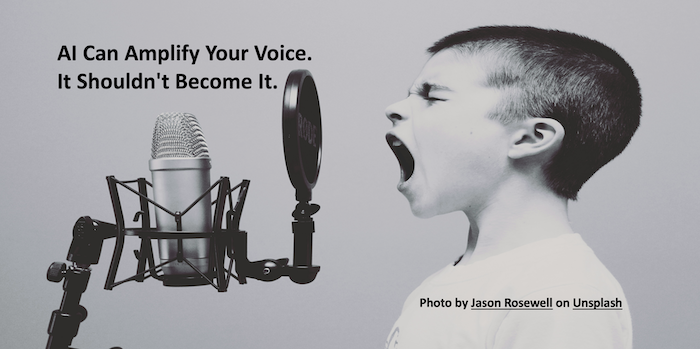
The implications of this shift are far-reaching. If thought leaders and influencers increasingly rely on AI to generate their core intellectual output, the unique perspectives and lived experiences that form the bedrock of genuine influence could be diluted or altogether lost. The stories of personal struggle, hard-won lessons, and deeply held convictions – elements that forge authentic connections with audiences – are inherently human and cannot be replicated by algorithms, no matter how sophisticated. These are the very elements that imbue a voice with its distinctiveness and persuasive power.
The Future of AI and Expertise
The trajectory suggests that the individuals who will ultimately benefit most from AI over the coming decade will not be those who delegate their thinking to it, but rather those who have already cultivated substantial expertise and then leverage AI to amplify their communication of that knowledge. AI can serve as a powerful amplifier, extending the reach of an individual’s voice, but it should never become the voice itself.
The ethical imperative lies in maintaining transparency and integrity. Audiences deserve to know the source of the ideas and insights they consume. For professionals utilizing AI, clear disclosure of its role in the content creation process becomes paramount. This does not necessarily mean attributing every sentence to an AI, but rather ensuring that the foundational thinking, the unique perspective, and the ultimate responsibility for the content remain firmly with the human author.
Broader Industry Implications
The widespread adoption of AI-generated content, particularly if unscrutinized for authenticity, could lead to a market saturated with superficially polished but substantively hollow material. This could devalue genuine expertise and make it more challenging for authentic voices to cut through the noise. Industries that rely heavily on personal branding, thought leadership, and expert testimony – such as consulting, coaching, academia, and creative fields – are particularly susceptible to this trend.
Navigating the Ethical Landscape
The core question for professionals and audiences alike is where to draw the line. The distinction between using AI as a sophisticated tool for augmentation and allowing it to become the de facto author of one’s expertise is critical. This requires a conscious and consistent effort to prioritize original thought, lived experience, and personal conviction.
For content creators, this means:
- Prioritizing original ideas: AI can help refine these ideas, but they must originate from the creator’s own intellect and experience.
- Injecting personal narrative: Sharing personal stories, challenges, and lessons learned adds an irreplaceable human element.
- Maintaining intellectual ownership: Ensuring that the core arguments and insights are the creator’s own, even if AI assists in their articulation.
- Practicing transparency: Being open about the tools used in the creation process, particularly when AI plays a significant role in generating substantive content.
For audiences, this means cultivating a discerning eye and questioning the authenticity of the content they consume. Seeking out creators who demonstrably blend their own expertise with thoughtful use of technology is key.
The evolution of AI presents both unprecedented opportunities and significant challenges. By understanding the critical difference between enhancement and replacement, and by committing to authenticity and transparency, professionals can navigate this new landscape responsibly, ensuring that influence remains rooted in genuine expertise and earned trust. The future of credible communication hinges on this delicate balance.
