

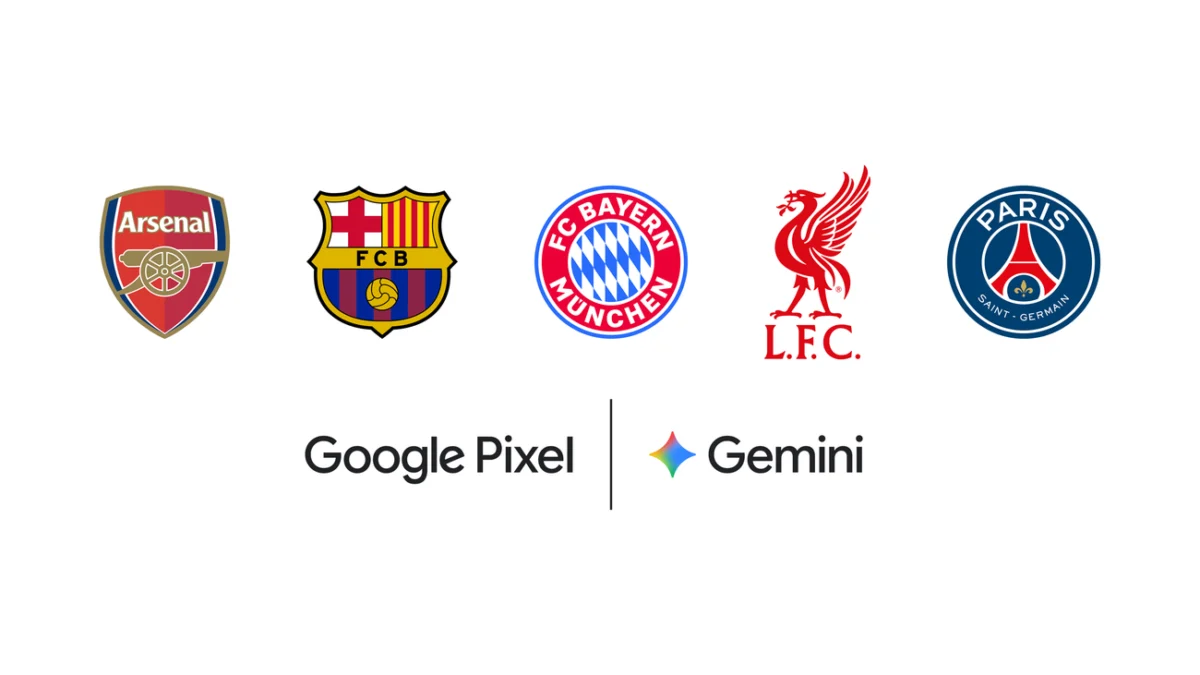
In a move that signals a significant convergence of professional sports and generative artificial intelligence, Google has announced a multi-year collaborative agreement with five of the world’s most prominent football organizations. Under the terms of this expansive partnership, Google’s Gemini AI and its Pixel smartphone line will serve as the Official Consumer AI and Official Smartphone Partner for Arsenal FC, FC Barcelona, FC Bayern Munich, Liverpool FC, and Paris Saint-Germain. This strategic alliance is designed to integrate advanced technology into the fan experience, providing supporters with unprecedented access to club insights, behind-the-scenes content, and enhanced match-day interactions. The partnership spans both the men’s and women’s teams of these clubs, reflecting a concerted effort to leverage technology to address historical disparities in media coverage and visibility within the sport.
A New Era of Fan Engagement Through Generative AI
The integration of Gemini, Google’s most capable family of AI models, marks a shift in how sports fans consume data and interact with their favorite teams. Traditionally, fan engagement has been passive, consisting of watching broadcasts and reading post-match reports. However, the introduction of Gemini as a "personal assistant" for supporters aims to transform this into an active, conversational experience. By utilizing Gemini’s advanced agentic capabilities, fans can now engage in real-time analysis of match dynamics. For instance, during a high-stakes European fixture, a supporter could use Gemini to dissect a manager’s mid-game formation shift, compare live player performance metrics against historical data, or resolve debates regarding head-to-head statistics with instantaneous, verified information.
The "agentic" nature of this AI refers to its ability to proactively handle tasks on behalf of the user. In the context of football, this could involve Gemini synthesizing vast amounts of scouting reports, injury news, and tactical trends to provide a comprehensive preview of an upcoming match. For the clubs involved—Arsenal, Barcelona, Bayern Munich, Liverpool, and PSG—this provides a digital bridge to their global fanbases, which collectively number in the hundreds of millions. By putting these tools directly into the hands of fans, the clubs are not merely providing a service but are fostering a deeper, more analytical connection to the sport.
Hardware Integration and the Shot on Pixel Initiative
While Gemini provides the cognitive framework for this partnership, the Google Pixel smartphone serves as the physical interface. As the Official Smartphone Partner, Google is equipping the media and social teams of these five clubs with the latest Pixel hardware, including the newly featured Pixel 11. This collaboration is centered on capturing the "raw and unfiltered" moments that define the football experience—elements that are often lost in polished, high-production broadcasts.
Central to this effort is the "Shot on Pixel" content series. By utilizing the Pixel’s advanced camera systems and AI-powered editing tools, club media teams will produce exclusive content that offers fans a pitch-side perspective. This includes everything from the emotional reactions in the tunnel pre-match to the technical precision of training ground drills. The objective is to provide a level of authenticity that resonates with a modern audience that increasingly values transparency and "real" content over traditional advertising. Furthermore, the partnership extends to device personalization, allowing fans to customize their Pixel 11 handsets with official club wallpapers and themes, effectively turning the smartphone into a digital badge of loyalty.
Addressing the Visibility Gap in Women’s Football
A cornerstone of this multi-club agreement is a dedicated commitment to the advancement of women’s football. Despite record-breaking attendance figures at recent international and domestic tournaments, the women’s game continues to face a significant "visibility gap" compared to the men’s game. This gap manifests in lower media coverage, fewer sponsorship opportunities, and less frequent broadcast slots. Google has stated that a fundamental objective of these partnerships is to use its technological ecosystem to help close this divide.
By establishing equal partnerships across both men’s and women’s teams, Google and its partner clubs intend to amplify the reach of the women’s game. This involves producing the same high-quality, AI-enhanced content for women’s fixtures as is produced for the men’s side. The "Shot on Pixel" series will feature women’s players prominently, showcasing their skill and athleticism to a global audience. This initiative is backed by the logic that increased visibility leads to increased commercial viability, which in turn inspires the next generation of female athletes. The clubs—many of whom, like FC Barcelona Femení and Arsenal Women, are already leaders in the space—view this as a vital step in the professionalization and global scaling of women’s sports.

Historical Context and Strategic Alignment
Google’s entry into these long-term partnerships is not an isolated event but rather the latest step in a broader strategy to dominate the intersection of sports and technology. In recent years, Google has established significant footprints in other major sporting arenas, including partnerships with the NBA, MLB, and the McLaren Formula 1 team. However, the simultaneous signing of five of Europe’s "Big Five" league giants represents a major escalation in its commitment to global football.
The timing is also significant. The football industry is currently undergoing a digital transformation, with clubs seeking new ways to monetize their global fanbases outside of traditional ticket sales and television rights. By partnering with a tech giant like Google, clubs like Liverpool and Bayern Munich are positioning themselves at the forefront of the "Sports 4.0" movement, where data, AI, and mobile-first content are the primary drivers of growth. For Google, these partnerships provide a massive, highly engaged testing ground for its AI products, ensuring that Gemini becomes a household name among sports enthusiasts worldwide.
Data-Driven Insights and Market Implications
The economic and social implications of this partnership are supported by emerging data in the sports tech sector. According to market research, the global sports technology market is expected to reach nearly $50 billion by 2030, with AI being one of the fastest-growing segments. Fans are increasingly using "second screen" devices—smartphones and tablets—while watching live sports, with over 70% of fans reporting that they look up stats or social media content during a match.
By integrating Gemini and Pixel into this second-screen experience, Google is capturing a critical moment in the consumer journey. The ability to provide "matchday insights" that are more accurate and faster than traditional search engines gives Google a competitive edge in the smartphone market, particularly against rivals like Apple and Samsung. For the clubs, the benefit lies in the data. Understanding how fans interact with AI to learn about their team provides invaluable insights into fan sentiment and behavior, which can then be used to tailor marketing and retail strategies.
Official Perspectives and Future Outlook
While specific financial terms of the deals remain undisclosed, the language from all parties involved suggests a focus on long-term brand integration rather than short-term gains. Representatives from the clubs have noted that the partnership is about more than just branding; it is about providing "tools for the modern fan." The consensus among club executives is that AI is no longer a futuristic concept but a necessary component of the modern sporting infrastructure.
Google’s leadership has echoed this sentiment, emphasizing that the goal is to "bring supporters closer to the stories and stats that define their favorite teams." As the current football season progresses, fans can expect to see an influx of AI-generated content and Pixel-exclusive footage across social media platforms. The success of this initiative will likely be measured by the adoption rates of Gemini among the partner clubs’ followers and the measurable increase in engagement for women’s football content.
Conclusion: The Technological Transformation of the Pitch
The partnership between Google, Arsenal, Barcelona, Bayern Munich, Liverpool, and Paris Saint-Germain represents a landmark moment in the commercial evolution of football. By combining the analytical power of Gemini AI with the creative capabilities of the Pixel smartphone, Google is attempting to redefine what it means to be a "supporter" in the 21st century.
This collaboration moves beyond traditional sponsorship logos on jerseys; it embeds technology into the very fabric of how the game is watched, analyzed, and shared. As the "Shot on Pixel" series begins to roll out and Gemini becomes a fixture of match-day rituals, the football world will be watching closely to see if this high-tech approach can truly bridge the gap between the stadium and the smartphone, and more importantly, between the men’s and women’s game. For now, the message is clear: the future of football is not just played on the pitch, but is also powered by the algorithms and lenses in the palms of the fans’ hands.
