

The intersection of historical narrative and modern leadership theory provides a unique lens through which organizational resilience can be understood. In the latest installment of the Anecdotally Speaking podcast, Episode 284, hosts Mark and Shawn utilize the extraordinary life of Tsutomu Yamaguchi to explore how the internal stories individuals and leaders construct dictate their capacity to endure crisis and drive institutional change. The episode moves beyond simple biographical retelling, positioning the narrative of the only officially recognized survivor of both the Hiroshima and Nagasaki atomic bombings as a foundational case study in meaning-making. By analyzing the psychological frameworks of resilience and the technical execution of storytelling, the discussion offers a blueprint for leaders tasked with navigating complex organizational shifts and maintaining integrity during periods of high-stakes decision-making.
The Historical Context of the Double Survivor
To understand the magnitude of the narrative discussed in Episode 284, one must first look at the factual record of Tsutomu Yamaguchi. Born in 1916, Yamaguchi was a 29-year-old naval engineer for Mitsubishi Heavy Industries during the closing months of World War II. His presence in both Hiroshima and Nagasaki during their respective destructions was not a matter of military service, but of industrial necessity.
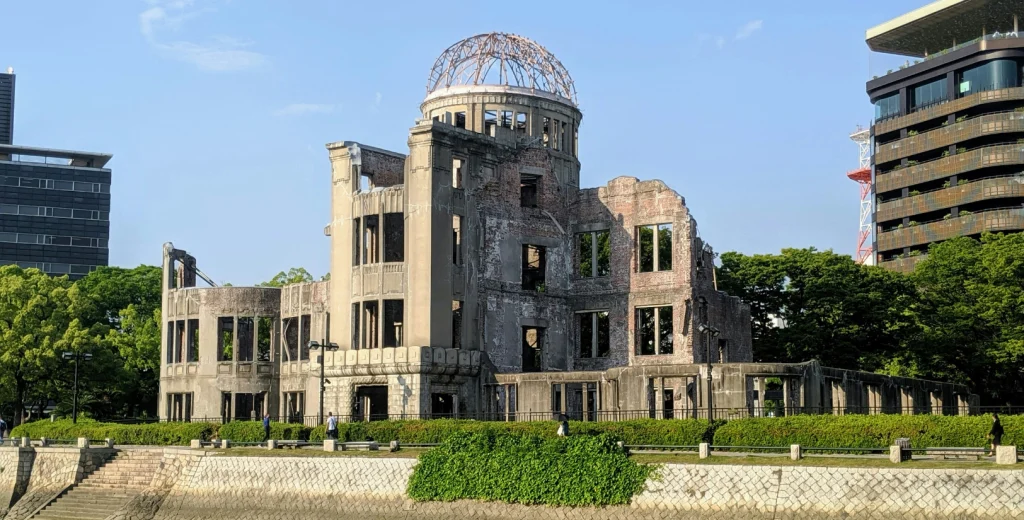
On August 6, 1945, Yamaguchi was concluding a three-month business trip to Hiroshima. As he walked toward the Mitsubishi shipyard to finalize travel documents, the B-29 bomber Enola Gay released the "Little Boy" atomic bomb. At 8:15 a.m., the device detonated approximately 1,900 feet above the city center. Yamaguchi was roughly three kilometers (1.9 miles) from the hypocenter. The resulting blast produced a blinding flash, ruptured his eardrums, and inflicted serious thermal burns across the left side of his upper body. Despite the devastation, which resulted in an estimated 140,000 fatalities by the end of 1945, Yamaguchi survived the night in a makeshift air-raid shelter.
The chronology of his survival is marked by a determined, if agonizing, return to his hometown of Nagasaki. On August 7, he navigated the ruins of Hiroshima to reach the railway station, which miraculously remained functional on the city’s periphery. Upon arriving in Nagasaki on August 8, he sought medical treatment for his extensive burns. On the morning of August 9, despite his physical condition, Yamaguchi reported to the Mitsubishi office to provide a status report to his superiors. It was during this meeting, while he was attempting to describe the "single flash" that had leveled Hiroshima, that the second atomic bomb, "Fat Man," was dropped by the bomber Bockscar. Again, Yamaguchi was approximately three kilometers from the hypocenter; again, he survived.
The Psychology of Narrative Meaning: Luck versus Tragedy
A central theme of the podcast episode is the concept of "meaning-making." Mark and Shawn posit that while the facts of Yamaguchi’s life are immutable, the interpretation of those facts is a choice that dictates one’s psychological trajectory. In the context of the "Nijuu Hibakusha" (double-bombed people), two distinct narratives emerge.
The first narrative frames Yamaguchi as the unluckiest man in history—a victim of a statistical impossibility who was pursued by nuclear devastation across two cities. The second narrative frames him as one of the luckiest—a man who looked into the heart of two suns and lived to tell the story for nearly 95 years. Data from psychological studies on survivor guilt and resilience suggest that individuals who adopt the latter "growth-oriented" narrative tend to exhibit higher levels of long-term mental health and social efficacy.
Yamaguchi himself did not immediately embrace his role as a public storyteller. For decades, he focused on recovery and his career at Mitsubishi. It was only later in life, particularly after the death of his son—who also survived the Nagasaki blast but succumbed to cancer years later—that Yamaguchi re-evaluated his narrative. He transformed his survival from a private burden into a public mission for nuclear disarmament. This transition illustrates the podcast’s core argument: leaders and individuals have the agency to rewrite their internal scripts to serve a higher purpose, thereby fostering resilience in the face of insurmountable odds.
Leadership and the Power of Internal Narratives
The episode bridges the gap between historical survival and corporate leadership by examining how internal stories influence decision-making. In a modern business environment, leaders are frequently confronted with "organizational trauma"—failed mergers, mass layoffs, or market disruptions. The "story" a leader tells themselves about these events determines the "story" they tell their team.

If a leader views a market downturn as an unfair stroke of bad luck, their communication is likely to be defensive and reactive. Conversely, if the narrative is framed as a crucible for innovation, the leader can mobilize their workforce with a sense of agency. The podcast emphasizes that resilience is not the absence of hardship, but the ability to integrate that hardship into a productive future-facing narrative.
Supporting Data on Resilience in Leadership
Research from the American Psychological Association (APA) identifies "reframing" as a key component of resilience. In corporate settings, teams led by individuals who practice cognitive reframing report 31% higher productivity levels during periods of change. Furthermore, a study by the Harvard Business Review indicates that leaders who utilize storytelling to contextualize organizational challenges see a 20% increase in employee retention during crises. These statistics underscore the practical value of the techniques discussed by Mark and Shawn in Episode 284.
Storytelling Techniques: Foreshadowing and Audience Participation
The podcast also delves into the technical aspects of how stories are constructed to maximize impact. Two specific techniques are highlighted: foreshadowing and audience participation.
- Foreshadowing: By subtly hinting at future events within a narrative, a speaker can create a sense of inevitability and tension. In the story of Yamaguchi, his initial survival in Hiroshima serves as a grim foreshadowing of the events in Nagasaki. For leaders, foreshadowing can be used to prepare teams for upcoming shifts, ensuring that when a "second blast" of change occurs, the organization is psychologically primed to respond.
- Audience Participation in Meaning-Making: The hosts discuss how the most effective stories leave "space" for the listener to draw their own conclusions. When Mark recounts Yamaguchi’s story, he does not explicitly state whether the man was lucky or unlucky; he allows the audience to weigh the evidence. This technique is vital for leaders because it fosters a sense of ownership among employees. When staff members arrive at a conclusion themselves, they are more likely to commit to the resulting course of action.
Communicating Decisions with Integrity
One of the more nuanced discussions in the episode revolves around the challenge of communicating decisions that a leader may not personally agree with. This is a common occurrence in mid-to-upper management, where directives from a board or head office must be implemented by those on the ground.
The podcast suggests that maintaining authenticity in these moments requires a sophisticated approach to narrative. Rather than feigning enthusiasm—which often erodes trust—leaders can find a "larger story" to tell. This involves acknowledging the difficulty of the decision while focusing on the long-term integrity of the organization. By framing the decision within the context of survival or future stability, the leader can maintain their personal integrity while fulfilling their professional obligations.
Broader Impact and Implications
The story of Tsutomu Yamaguchi, who passed away in 2010 at the age of 93, serves as a permanent reminder of the human spirit’s endurance. However, the application of his story to the field of professional storytelling and leadership development, as championed by Anecdote International, represents a broader shift in how we view the "soft skills" of management.
In an era dominated by data and algorithmic decision-making, the ability to craft a compelling narrative remains a uniquely human advantage. The insights from Episode 284 suggest that the stories we tell are not merely descriptions of reality; they are the architects of it. For an organization, a well-told story can be the difference between a workforce that feels like a victim of circumstance and one that feels like the protagonist of a successful turnaround.
As Anecdote International continues to expand its global network of partners, the focus remains on "bringing humanity back to the workforce." Through the analysis of historical figures like Yamaguchi, the organization demonstrates that the principles of resilience and meaning-making are universal, transcending the boundaries of time, culture, and industry. The final takeaway for the listener is clear: while we cannot always control the "bombs" that drop on our professional or personal lives, we retain absolute control over the meaning we assign to the fallout.
