


Voiceover professionals, particularly those new to the industry, often grapple with a phenomenon known as "blocking," which significantly hinders the natural flow of spoken dialogue. This article delves into the intricacies of voiceover flow, defines blocking, and provides actionable strategies for its eradication, ensuring more engaging and professional audio productions. Understanding and applying these principles is paramount for any voice actor aiming to connect effectively with their audience.
The Crucial Element of Voiceover Flow
At the heart of compelling voiceover lies "flow"—the rhythmic and natural progression of speech that mirrors human conversation. When we engage in casual conversation with friends or observe interactions in public, we notice an inherent cadence, a natural ebb and flow punctuated by pauses for breath, thought, or emphasis. This organic rhythm is what listeners subconsciously expect and respond to. A successful voiceover delivery captures this natural cadence, making the dialogue easy to absorb and relatable.
The nature of this flow, however, is not monolithic. It adapts to the specific demands of the voiceover genre. For instance, a character voice for animation requires a distinct pacing and energy compared to the measured tones of an e-learning module or the authoritative delivery of a corporate narration. Corporate voiceovers often demand clarity and conciseness, while e-learning necessitates a pedagogical pace that allows for comprehension. Animation and character work, on the other hand, thrive on expressiveness and dynamism. Despite these variations, the underlying principle remains: the delivery must be appropriate for its context, maintaining listener engagement through judicious pacing and strategic pauses. This often involves introducing subtle humanizing elements, such as hesitations or slight shifts in tone, which, when executed thoughtfully, enhance the perceived authenticity of the performance.
The ultimate goal of achieving good voiceover flow is to create an auditory experience where the listener does not have to exert undue effort to comprehend or accept the message. As industry veteran Hugh Edwards notes, "It’s crucial that we deliver dialogue with a good, human flow to it, so that the listener doesn’t have to work to understand or accept it." This seamless integration of spoken word and auditory perception is the hallmark of professional voice acting.

Defining and Visualizing "Blocking" in Voiceover
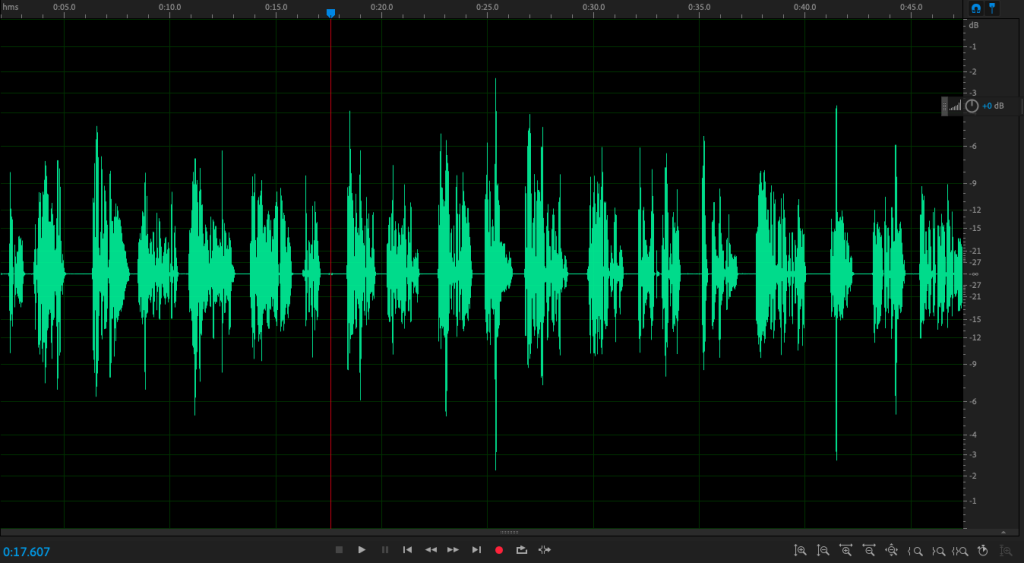
"Blocking" is the antithesis of natural voiceover flow, characterized by an unnatural and disjointed delivery. The term originates from the visual representation of audio in digital editing software, where "blocking" manifests as distinct, isolated segments of waveform separated by unnaturally long silences. These "blocks" create a staccato effect, disrupting the continuity and fluidity of speech.
Observing a waveform with blocking reveals clear, sharp peaks representing spoken words, followed by expansive, empty spaces where natural speech should exist. This visual pattern directly correlates to the auditory experience of the listener. Audio exhibiting blocking sounds choppy, abrupt, and disjointed. It forces the listener into a state of anticipation, waiting for the next segment of speech rather than being immersed in the narrative or information being conveyed. This creates an unpleasant listening experience, detracting from the effectiveness of the voiceover.
The "Hairy Caterpillar" of Natural Dialogue
In contrast to the stark, blocky waveforms of problematic deliveries, a well-executed voiceover typically exhibits what is colloquially referred to as a "hairy caterpillar" waveform. This descriptive term refers to the dense, continuous, and undulating pattern that represents natural speech. Instead of distinct blocks, the waveform shows a more consistent presence of audio, with subtle variations in amplitude that reflect the natural inflections and rhythms of human speech.
The "hairy caterpillar" waveform signifies a delivery that is rich in subtle nuances, including natural breath sounds, minute pauses for articulation, and the inherent variations in vocal intensity that characterize genuine human communication. This visual representation is a powerful indicator of an engaging and authentic audio performance, where the spoken word flows seamlessly, allowing the listener to process information without strain.
Root Causes of Voiceover Blocking
Blocking is a common challenge, particularly for newcomers to the voiceover industry, though it is not exclusively confined to them. Several factors contribute to its occurrence:

- Inexperience with Pacing and Pausing: New voice actors may struggle with accurately gauging the appropriate pace for a given script and determining where to insert natural pauses. This can lead to overly long silences between phrases or sentences, creating the blocked effect.
- Over-reliance on Scripted Pauses: Some performers may rigidly adhere to pre-defined pauses within a script, neglecting to incorporate the more organic pauses that naturally occur during human speech. This can result in an artificial, metronomic delivery.
- Lack of Breath Control: Inadequate breath management can lead to performers taking excessively deep breaths or holding their breath for too long, creating noticeable gaps in the audio.
- Fear of Silence: A psychological aversion to silence can cause performers to rush their delivery, squeezing words together and subsequently creating larger, more noticeable gaps when they do pause to breathe or reformulate a thought.
- Misinterpretation of "Enunciation": An overzealous focus on enunciating every single word with extreme clarity can lead to a detached, overly precise delivery that lacks natural vocal cadence. This can inadvertently create the "blocking" effect.
- Editing Practices: In some instances, aggressive editing that removes what are perceived as "unnecessary" breaths or small hesitations can inadvertently contribute to blocking by creating artificial silences.
The Opposite Extreme: Over-editing and Information Overload
While blocking represents an excess of silence, its opposite is equally detrimental to listener comprehension. This extreme occurs when dialogue is over-edited, excessively de-breathed, or delivered at an impractically fast pace. The result is a complete absence of breathing room for the listener to process the information.
This phenomenon is often observed in local radio advertisements, particularly in markets like the United States, where scriptwriters might attempt to cram an excessive amount of dialogue into a limited time slot. The listener is bombarded with information at such a rapid pace that by the end of the commercial, they are left with little to no understanding of what was presented. This is not a result of too much silence, but rather an overwhelming surfeit of spoken content with insufficient temporal space for assimilation. This can be just as disengaging and frustrating for the audience as blocking.
Situational Relevance of Blocking
Despite its general classification as a detrimental vocal habit, there are specific contexts where a more staccato or segmented delivery might be intentionally employed for artistic or narrative effect. These exceptions are crucial to acknowledge:
- Portraying Characters with Specific Speech Patterns: Characters experiencing extreme stress, fear, or shock might exhibit a fragmented speech pattern that intentionally resembles blocking. This is a deliberate performance choice to convey emotional distress.
- Communicating in Noisy Environments: In scenarios where the character is in a loud or chaotic environment, their dialogue might be delivered in short, sharp bursts to be heard over the din.
- Artistic or Stylistic Choices: Certain genres or experimental productions may deliberately employ a staccato delivery as a stylistic element, distinct from natural conversation. This could include certain types of theatrical monologues or avant-garde audio dramas.
- Conveying Urgency or Panic: A rapid-fire, almost breathless delivery, while potentially bordering on blocking, can be used effectively to communicate extreme urgency or panic in specific narrative contexts.
The critical distinction in these cases is intentionality. When a voiceover artist consciously chooses a segmented delivery to serve a specific narrative or artistic purpose, it is a sophisticated performance technique. This is fundamentally different from unintentional blocking, which arises from a lack of awareness or skill. As Edwards points out, "When delivering professional voiceover dialogue, the artist makes conscious choices to deliver their dialogue in a certain way. If that choice includes a staccato delivery, that’s their choice and perfectly fine. However, most people who are guilty of blocking are not aware they are doing it."
Strategies for Eliminating and Preventing Blocking
Fortunately, rectifying and preventing blocking is an achievable goal for voiceover artists. It primarily involves cultivating awareness and practicing mindful delivery techniques.
1. Develop Acute Self-Awareness:
- Record and Review Regularly: The most effective method is to consistently record your practice sessions and critically listen back. Pay close attention to the silences between words and phrases. Are they natural breaths, or are they prolonged voids?
- Utilize Waveform Visualization: Actively study your audio waveforms. Compare your recordings to examples of natural dialogue. Identify the "blocks" and understand how they disrupt the flow.
2. Master Pacing and Rhythm:
- Practice with a Metronome: While not for direct performance, using a metronome during practice can help develop an internal sense of consistent rhythm and timing.
- Slow Down Intentionally: Consciously deliver lines at a slower pace than you think is necessary. This allows for more natural breathing and reduces the likelihood of rushing.
- Embrace the Pause: Understand that pauses are not empty spaces to be feared, but essential tools for clarity and comprehension. They allow the listener to digest information and the performer to breathe.
3. Enhance Breath Control:
- Diaphragmatic Breathing Exercises: Practice deep breathing exercises to improve lung capacity and control. This will enable smoother, less disruptive breaths during recording.
- Strategic Inhalation: Learn to take quick, quiet breaths at natural points in your sentences, often at the end of phrases or clauses.
4. Focus on Natural Speech Patterns:
- Listen to Conversational Audio: Immerse yourself in recordings of natural, unscripted conversations. Analyze the timing, the hesitations, the inflections, and the flow.
- Read Aloud Extensively: The more you read aloud, the more comfortable you will become with the rhythm and cadence of spoken language. Experiment with different approaches to pacing and emphasis.
5. Refine Script Interpretation:
- Understand the Subtext: Beyond the literal words, consider the emotional and narrative context of the script. This will inform your pacing and the natural ebb and flow of your delivery.
- Mark Up Your Scripts: Identify potential breathing points, moments for emphasis, and natural pauses that enhance meaning.
6. Collaborate with Sound Engineers:
- Seek Feedback: A skilled sound engineer can provide invaluable insights into your vocal performance, often identifying issues like blocking that you might miss.
- Discuss Editing Practices: Understand how editing might impact your natural delivery and communicate your desired flow to the engineer.
Conclusion: The Voice Actor as Conductor
Ultimately, the responsibility for delivering compelling and natural voiceover rests with the professional artist. The ability to choose how to perform a script—whether it’s fast-paced, staccato, or naturalistic—is a testament to mastery. As the conductor of the auditory experience, the voice actor understands the listener, anticipates their reception of the message, and employs the tools at their disposal to create maximum engagement.
When a voiceover artist possesses control over their pacing, their breath, and their vocal delivery, they can intentionally craft a performance that aligns with the project’s requirements. The issue arises not from employing specific techniques, but from an unconscious execution of them, or a lack of awareness of their impact. By understanding the nuances of flow, recognizing the pitfalls of blocking, and diligently practicing these techniques, voice actors can elevate their performances, ensuring their messages resonate powerfully and effectively with their intended audience. The journey to eliminating blocking is a journey towards greater vocal artistry and a deeper connection with the listener.
