


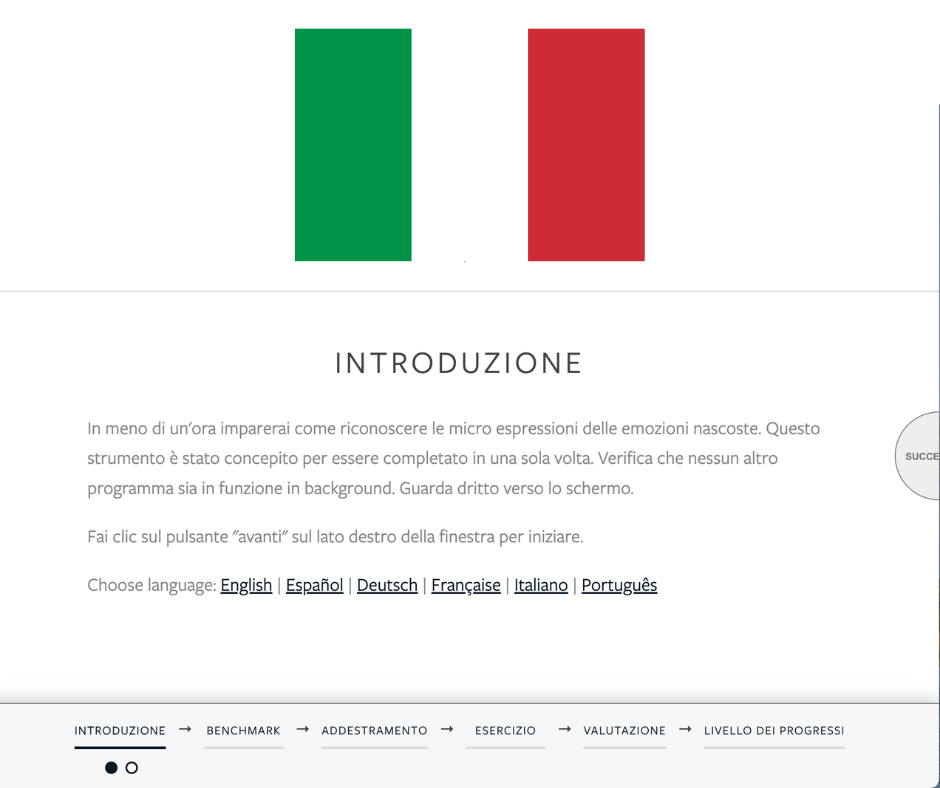
San Francisco, CA – October 27, 2025 – The Paul Ekman Group, a globally recognized leader in emotion science and microexpression training, today announced a significant expansion of its online training platforms, introducing comprehensive courses in Italian, French, and German. This strategic move dramatically increases the accessibility of its acclaimed microexpression training programs, which are built upon decades of scientific research into human emotions and facial expressions. The initiative aims to empower a broader international audience with enhanced emotional intelligence and the ability to accurately interpret subtle, involuntary facial cues.
The newly translated modules encompass all seven of the Paul Ekman Group’s core online microexpression training tools, which are offered across three distinct training packages. These additions complement the existing Spanish and Portuguese language versions, further solidifying the organization’s commitment to global outreach. Users will be prompted to select their preferred language at the commencement of each course, ensuring a personalized and immersive learning experience.
A Mission to Foster Global Emotional Understanding
The Paul Ekman Group’s overarching mission is to equip individuals worldwide with a deeper understanding of themselves and others by cultivating sophisticated emotional awareness. "Our mission is to help people around the world better understand themselves and others, improving emotional awareness skills," stated a representative from the Paul Ekman Group. "With these new translations, we are making it easier for individuals, educators, professionals, and organizations in Europe and beyond to learn to recognize facial microexpressions in their native language."
This expansion is particularly significant given the universal nature of emotions, a core tenet of Dr. Paul Ekman’s groundbreaking work. His research, which began in the 1960s, established the universality of seven basic emotions – happiness, sadness, anger, fear, surprise, disgust, and contempt – and their associated facial expressions across diverse cultures. The development of microexpression training tools has been a direct outgrowth of this foundational research, aiming to translate complex scientific findings into practical, actionable skills.
The Science of Microexpressions: Unlocking Hidden Emotional Truths
Microexpressions are fleeting, involuntary facial movements that betray a person’s true emotional state, often occurring outside conscious awareness. These subtle, rapid shifts in facial musculature can provide critical insights into genuine feelings, particularly in situations where individuals may be attempting to conceal their emotions or present a different facade. The ability to detect and interpret these microexpressions is considered a cornerstone of advanced emotional intelligence.
The Paul Ekman Group emphasizes the profound benefits of this training for a wide array of professionals and individuals:
- Law Enforcement and Security Personnel: Enhanced ability to assess credibility, detect deception, and de-escalate tense situations.
- Healthcare Professionals: Improved patient rapport, more accurate diagnosis of emotional distress, and greater empathy in caregiving.
- Educators: Better understanding of student engagement, emotional well-being, and learning challenges.
- Business Leaders and Teams: Fostering stronger interpersonal relationships, improving negotiation skills, and enhancing team dynamics through nuanced emotional understanding.
- Individuals: Deeper self-awareness, improved personal relationships, and a more profound understanding of human interaction.
By learning to recognize microexpressions, individuals can respond with greater empathy, precision, and intuition – qualities that are fundamental to effective emotional intelligence and the cultivation of robust, authentic relationships.
A Timeline of Global Expansion
The journey towards making microexpression training accessible in multiple languages has been a progressive endeavor, reflecting the Paul Ekman Group’s commitment to its global mission.
- Early Research & Development (1960s-1990s): Dr. Paul Ekman’s foundational research into universal facial expressions and the discovery of microexpressions laid the scientific groundwork.
- Development of Training Tools (Late 1990s – Early 2000s): The initial development of rigorous training programs, primarily in English, to teach the identification of microexpressions.
- International Reach (2000s – 2010s): The Paul Ekman Group began to see its tools utilized by organizations and individuals in numerous countries, highlighting a growing global demand for this specialized knowledge. Early efforts to translate materials, often on a less systematic basis, commenced during this period.
- Strategic Language Expansion (Mid-2010s onwards): Recognizing the need for structured, official translations to ensure accuracy and fidelity to the original scientific content, the Group initiated a phased approach to broader language localization.
- Introduction of Spanish and Portuguese (Circa 2018-2020): Significant investment was made to translate the core training modules into Spanish and Portuguese, opening up access to vast audiences in Latin America and Iberian Peninsula.
- Recent Expansion: Italian, French, and German (October 2025): The latest phase represents a substantial leap in accessibility, with comprehensive translations now available in three of Europe’s most widely spoken languages. This move directly addresses a long-standing request from a significant segment of the global user base.
This phased expansion reflects a strategic approach to ensure the highest quality of translation and cultural relevance, while progressively broadening the reach of the training.
Supporting Data: Global Reach and Impact
The Paul Ekman Group’s training programs have already demonstrated a significant global footprint, with tools being utilized in over 230 countries. This widespread adoption underscores the universal applicability of microexpression science. The introduction of Italian, French, and German is expected to further amplify this reach, potentially impacting millions of new users.
- European Market Potential: Italy, France, and Germany represent substantial markets with millions of potential users across professional sectors and educational institutions. The economic and social interconnectedness of these regions makes proficiency in understanding subtle emotional cues increasingly valuable.
- Growth in Professional Development: The global market for emotional intelligence training has seen consistent growth. According to recent industry reports, the global emotional intelligence market size was valued at USD 2.4 billion in 2023 and is projected to grow at a compound annual growth rate (CAGR) of 11.5% from 2024 to 2030. The addition of new language options directly taps into this expanding demand.
- Academic and Research Applications: Universities and research institutions in these countries can now more readily integrate Ekman’s methodologies into their curricula and studies, fostering the next generation of emotion researchers and practitioners.
Official Responses and Community Engagement
The announcement has been met with positive reception from the international community of professionals and individuals who have sought access to this specialized training. While direct quotes from specific individuals are not yet available, the general sentiment is one of enthusiasm for increased accessibility.
"We are thrilled to offer our advanced training in Italian, French, and German," a spokesperson for the Paul Ekman Group reiterated. "Our aim is to break down language barriers and make the science of emotions accessible to everyone, everywhere. We believe that enhanced emotional awareness is a powerful tool for personal and professional growth, and we are committed to facilitating that growth on a global scale."
The organization actively encourages user feedback and has provided a direct channel for suggestions regarding future language additions. "If there is a language you would like to see made available, please let us know," the announcement stated, directing users to email [email protected]. This proactive approach to community engagement ensures that the Paul Ekman Group remains responsive to the evolving needs of its global audience.
Broader Impact and Implications: A More Emotionally Literate World
The expansion of microexpression training into Italian, French, and German carries significant implications for interpersonal dynamics, professional efficacy, and societal understanding.
- Enhanced Cross-Cultural Communication: In an increasingly globalized world, the ability to accurately interpret emotional cues across linguistic and cultural divides is paramount. This training can help bridge communication gaps and foster greater understanding between individuals from different backgrounds.
- Improved Professional Practice: For professions that rely heavily on human interaction and assessment, such as psychology, law enforcement, diplomacy, and customer service, the ability to detect subtle emotional signals can lead to more effective outcomes, improved decision-making, and stronger client relationships.
- Personal Development and Well-being: On a personal level, understanding microexpressions can lead to greater self-awareness, improved empathy in relationships, and a more nuanced understanding of social dynamics, contributing to overall psychological well-being.
- Combating Misinformation and Deception: In an era where misinformation can spread rapidly, the skills taught through microexpression training can equip individuals with a critical tool for assessing sincerity and detecting potential deception, fostering a more discerning and informed populace.
The Paul Ekman Group’s initiative represents a significant step towards building a more emotionally intelligent and interconnected world. By democratizing access to scientifically validated tools for understanding human emotions, the organization is empowering individuals to navigate the complexities of human interaction with greater insight, empathy, and accuracy, regardless of their linguistic background. The continued development and expansion of these resources promise to further enrich the global discourse on emotion science and its practical applications.
