


The nuanced landscape of influence, a topic explored in recent discourse, is being re-examined through a lens that transcends mere ethical adherence. This evolution in understanding posits that the most profound and impactful approach to influence is not simply "Lasting and Ethical," but rather "Loving and Eternal." This perspective challenges practitioners and observers alike to consider the internal disposition that underpins external actions, suggesting that genuine influence stems from a transformed inner self, rather than a meticulously crafted outward presentation.
This deeper exploration was prompted by a pertinent question posed by Reyes Castillo, a LinkedIn connection, to Brian Ahearn, a recognized authority in the field of ethical influence and Chief Influence Officer at Influence PEOPLE. Castillo’s query focused on the practical application of this "Loving and Eternal" framework in coaching scenarios. Specifically, he asked: "What’s the first thing someone usually has to stop doing once they start asking what’s best for the other person instead of what’s allowed?"
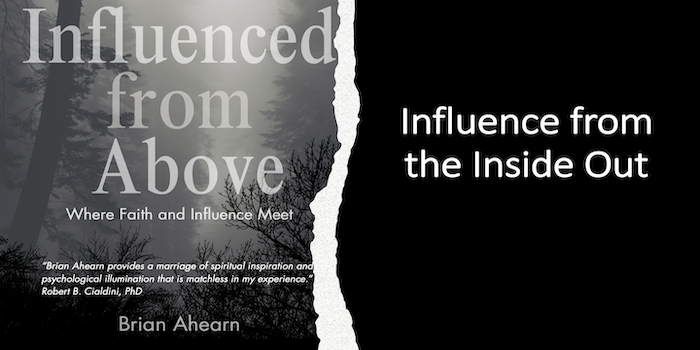
Ahearn’s reflection on this question, often occurring during his morning walks, led to a pivotal insight: the shift doesn’t begin with cessation, but with initiation. The core of his argument rests on the principle of "influence from the inside out." This concept draws parallels to ancient wisdom, referencing Jesus’ teachings on the importance of cleansing the inner vessel before the outer, and the analogy of a healthy tree bearing good fruit. The underlying message is that outward expressions of influence are intrinsically linked to the internal state of the influencer. This perspective posits that genuine transformation is not primarily about mastering techniques, but about cultivating a specific way of being.
The Internal Shift: From Self-Focus to Other-Focus
Ahearn identifies Cialdini’s principle of Liking as a key illustration of this internal shift. The principle states that individuals are more inclined to agree with those they know and like. While the common reaction to this principle is to seek ways to be liked, Ahearn proposes a counterintuitive yet more effective approach: instead of trying to elicit liking, one should actively seek reasons to genuinely like others.
This subtle but significant recalibration of intent has profound implications. When an individual actively looks for commonalities or admirable qualities in another, they are more likely to discover shared interests or offer sincere compliments. The outward behaviors—asking questions, offering praise—might appear identical whether the underlying motivation is to gain favor or to foster genuine connection. However, the internal experience is vastly different. The focus shifts from self-gratification to genuine engagement with the other person.
This internal transformation, the shift from self-concern to other-concern, is often palpable. When individuals perceive that another person genuinely likes them, they are more likely to develop trust. This trust is fundamental to effective influence, as it implies a belief that the influencer has the other person’s best interests at heart, akin to the trust placed in a friend. This, Ahearn argues, is the essence of influence operating from the inside out.
Ethical vs. Loving Influence: A Deeper Dichotomy
The distinction between "Lasting and Ethical" and "Loving and Eternal" influence lies in the foundational questions asked. Ethical influence prioritizes inquiries such as: Is this action honest? Is it appropriate? Does it respect the other person’s freedom of choice? These are crucial benchmarks, long emphasized in the study and practice of influence.
However, "Loving" influence introduces an additional, higher-level question: "Do I genuinely want what’s best for this person?" This query elevates the standard of influence, demanding a deeper level of commitment to the well-being of the individual being influenced. The challenge lies in the fact that two individuals employing identical techniques, asking the same questions, and using the same influence principles can operate with vastly different internal motivations. One might be driven by a desire for a "yes," while the other is motivated by a genuine commitment to helping the other person make the optimal decision for themselves.
The outward manifestation may be indistinguishable, but the internal compass points in fundamentally different directions. This underscores Ahearn’s assertion that transitioning from ethical to loving influence is less about acquiring new techniques and more about undergoing a personal transformation. It’s about becoming a different kind of person, where internal change naturally precipitates a corresponding evolution in outward behavior.
The Genesis of Transformation: A Question of Becoming
In response to Castillo’s original query about what to stop doing, Ahearn posits that the initial step is not about cessation but about intentional growth. The question "What should I stop doing?" might be less productive than asking, "Who am I becoming, and what do I genuinely want for the person I am trying to influence?" This reframing encourages a proactive approach to personal development, emphasizing self-awareness and intentionality in the pursuit of meaningful influence.
This perspective has significant implications for professional development and ethical conduct across various sectors, including sales, leadership, and coaching. For decades, the established paradigms of influence, rooted in the work of scholars like Robert Cialdini, have focused on the science of persuasion and ethical application. Cialdini himself, a leading social psychologist whose work is foundational to understanding influence, has consistently advocated for ethical practices. His research has identified universal principles of persuasion, such as reciprocity, commitment and consistency, social proof, liking, authority, and scarcity. These principles, when applied thoughtfully, can lead to mutually beneficial outcomes.
However, the "Loving and Eternal" framework suggests a further refinement, moving beyond mere adherence to ethical guidelines towards a more deeply ingrained empathetic and altruistic approach. This is particularly relevant in fields like coaching, where the practitioner’s primary objective is the growth and well-being of the client.
Data and Analysis: The Impact of Genuine Care
While direct quantitative data on the impact of "Loving and Eternal" influence versus "Lasting and Ethical" influence is nascent, qualitative evidence and related psychological research offer compelling insights. Studies in positive psychology and organizational behavior consistently demonstrate that genuine care and empathy from leaders, colleagues, and service providers lead to increased trust, higher engagement, improved performance, and greater job satisfaction. For instance, research by the Gallup organization has repeatedly shown a strong correlation between employee engagement and the perception that their managers care about them as individuals. A 2020 report indicated that employees who feel their manager cares about them are significantly more likely to be engaged at work, leading to a 41% reduction in absenteeism and a 17% increase in productivity.
Similarly, in sales contexts, the principle of liking, as amplified by a genuine desire to help the customer, often translates into long-term customer loyalty and repeat business. A study published in the Journal of Consumer Research found that when salespeople focused on understanding and meeting customer needs beyond the immediate transaction, it fostered stronger relational bonds, leading to higher customer lifetime value. This suggests that the "internal shift" described by Ahearn can have tangible economic benefits, not just as a byproduct, but as a direct consequence of prioritizing the other person’s well-being.
The implication of this shift is that the very tools of influence, when wielded with a genuinely loving intent, become more potent and sustainable. Rather than viewing influence as a means to an end, it becomes a natural extension of a person’s character and their commitment to the betterment of others. This aligns with the concept of transformational leadership, where leaders inspire and motivate by appealing to higher ideals and fostering personal growth in their followers.
Broader Impact and Future Directions
The discourse initiated by Ahearn and Castillo highlights a critical juncture in the evolution of influence as a discipline. It suggests a move away from a potentially transactional understanding towards a more relational and humanistic paradigm. This has profound implications for how influence is taught, practiced, and understood in professional and personal contexts.
The challenge for practitioners is to cultivate this internal disposition. This might involve introspection, mindfulness practices, and a conscious effort to reframe interactions through the lens of genuine care. The "first thing someone usually has to stop doing" might not be a specific behavior, but rather the habit of prioritizing self-interest, or a narrow interpretation of what is "allowed," over a broader consideration of what is truly beneficial for another.
Brian Ahearn’s work, grounded in the principles of Robert Cialdini, has consistently emphasized ethical application. His role as Chief Influence Officer at Influence PEOPLE and faculty member at the Cialdini Institute positions him as a key figure in disseminating this evolving understanding. His previous works, including the best-selling book Influence PEOPLE and numerous LinkedIn courses, have reached a vast audience, indicating a widespread interest in mastering the art of ethical persuasion. The introduction of the "Loving and Eternal" framework represents a potential next frontier in this field, pushing the boundaries of how we conceptualize and enact influence for the greater good.
As the professional world continues to grapple with the complexities of human interaction and persuasion, the emphasis on genuine care and a deep-seated desire for the well-being of others may prove to be the most powerful and enduring form of influence. It suggests that true mastery lies not in the techniques employed, but in the heart and mind from which those techniques originate. The question for all involved is not just how to influence, but how to influence with love and for eternity.
