


Understanding the nuances of human emotion has long been a pursuit of scientists and laypeople alike. Now, decades of pioneering research in behavioral science and non-verbal communication are being distilled into a tangible tool designed to enhance emotional intelligence for individuals across various walks of life. The Feelings Field Guide, developed by Drs. Paul and Eve Ekman, aims to bridge the gap between abstract psychological concepts and practical, everyday application.
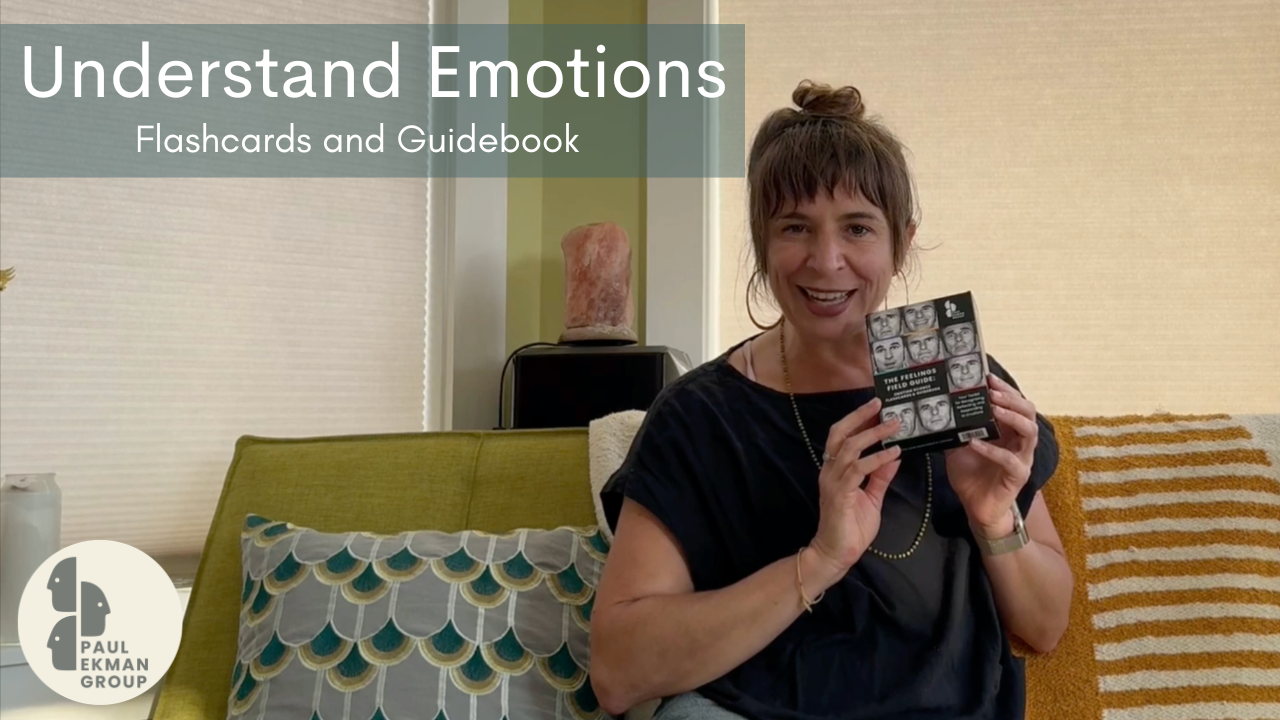
The guide is presented as a comprehensive toolkit, featuring 92 emotion flashcards and an accompanying scientific guidebook. Its core purpose is to empower users to identify universal facial expressions associated with a spectrum of emotions and to foster more constructive responses to these emotional cues. This initiative stems from Dr. Paul Ekman’s seminal work, which established the universality of certain basic emotions and their corresponding facial expressions across cultures. His research, spanning over five decades, has laid the groundwork for understanding the biological underpinnings of human emotional expression.
A Foundation in Scientific Research
At the heart of The Feelings Field Guide lies a robust scientific foundation. Dr. Paul Ekman’s groundbreaking work in the 1960s and 1970s, particularly his studies on facial expressions, demonstrated that seven emotions—anger, fear, disgust, surprise, sadness, happiness, and contempt—are universally recognized by people regardless of their cultural background. This universality is attributed to the innate biological mechanisms that govern facial muscle movements in response to emotional stimuli. The Facial Action Coding System (FACS), developed by Dr. Ekman and Dr. Wallace Friesen, provides a standardized method for describing all observable facial movements, known as Action Units (AUs). The Feelings Field Guide leverages this detailed understanding of facial anatomy and its correlation with emotional states.
"Understanding emotions doesn’t have to be abstract," states the official description of the guide. "The Feelings Field Guide is a science-backed tool developed by Drs. Paul and Eve Ekman to translate over 50 years of behavioral research into everyday skills." This underscores the transition from academic theory to practical utility, making complex scientific findings accessible to a broader audience.
The Components of the Field Guide
The Feelings Field Guide is designed to be a hands-on learning experience. The kit comprises:
- 92 Emotion Flashcards: These cards are the central visual component, each depicting a specific facial expression linked to a universal emotion. The scientific accuracy of these expressions is a key differentiator, drawing directly from FACS coding.
- Scientific Guidebook: This companion manual provides the theoretical underpinnings of the emotions represented, explanations of the underlying facial mechanics, and guidance on how to interpret and utilize the information presented in the flashcards. It delves into the research that supports the universality of these expressions and offers strategies for applying this knowledge.
Dr. Eve Ekman, who plays a significant role in the development and dissemination of the Ekman Group’s educational tools, introduces the Field Guide in accompanying materials, explaining the methodology behind recognizing the seven universal emotions. Her involvement ensures that the practical application of the research is emphasized, moving beyond mere identification to foster a deeper understanding and more effective interaction.
From Insight to Action: Practical Applications
The efficacy of The Feelings Field Guide lies in its ability to translate complex emotional insights into actionable skills. The guide is not merely about recognizing an emotion on someone’s face; it emphasizes the crucial step of knowing "what to do with that awareness." This focus on response and application is what sets it apart from other tools that might offer superficial labeling of emotions.
The guide is designed for adaptability, catering to diverse user needs and learning styles. It can be used in various contexts:
- Personal Development: Individuals can quiz themselves using the expression cards to build their observational skills and enhance self-awareness.
- Parenting: Parents can utilize the guide to better understand and respond to their children’s emotional states, especially in situations involving anxiety or social regression, as highlighted by one user testimonial.
- Professional Settings: Professionals in fields such as negotiation, sales, customer service, and security can leverage the guide to improve interpersonal communication, build rapport, and navigate complex social dynamics. For instance, in information security, understanding micro-expressions can aid in assessing sincerity and identifying potential risks.
- Therapeutic and Educational Environments: The guide can serve as a valuable resource for therapists, counselors, educators, and coaches working to improve emotional literacy in their clients or students.
The flexibility in its use means there is no single "right" way to engage with the guide. Users are encouraged to explore different methods, whether focusing on individual emotions, engaging in reflection exercises, or practicing with specific scenarios.
User Experiences and Testimonials
The impact of The Feelings Field Guide is reflected in the experiences of its users. Testimonials provided by individuals like Mark B. and Simon B. offer compelling evidence of its practical value.
Mark B., who has no formal background in behavioral sciences, found the guide to be an "effective tool to use in discussing emotions with my son," who struggles with anxiety and social regression. His confidence in the product is bolstered by the knowledge that its scientific basis was pioneered by Dr. Ekman, lending it a high degree of validity. This highlights the guide’s utility in addressing real-world family challenges by providing a concrete framework for discussing sensitive emotional topics.
Simon B., working in information security and data protection, emphasizes the professional benefits derived from the guide. He states, "Working in information security and data protection, understanding micro-expressions and emotions has helped me understand colleagues, customers and suppliers better and improved my interactions with people." He further notes that these are "great skills to have as a security professional, especially in determining what people really feel compared to what they are saying." This testimonial underscores the guide’s capacity to enhance critical judgment and interpersonal effectiveness in high-stakes professional environments, particularly in roles where discerning truthfulness and underlying sentiment is crucial.
The Broader Significance of Emotional Intelligence
The importance of emotional intelligence, and by extension, the skills fostered by The Feelings Field Guide, cannot be overstated. Emotions are fundamental drivers of human thought, communication, and decision-making, often operating at a subconscious level. Misinterpreting these emotional signals, whether in oneself or others, can lead to a cascade of negative consequences, including misunderstandings, interpersonal conflicts, strained relationships, and missed opportunities for connection and collaboration.
Conversely, the development of accurate emotional recognition and response skills yields significant benefits:
- Improved Relationships: Enhanced empathy and understanding lead to stronger, more authentic connections with others.
- Reduced Conflict: The ability to de-escalate tense situations and address underlying emotional needs can prevent or mitigate conflict.
- Enhanced Communication: More precise interpretation of emotional cues allows for clearer and more effective communication.
- Better Decision-Making: Understanding one’s own emotions and those of others can lead to more balanced and informed decisions.
- Increased Empathy and Compassion: A deeper appreciation for the emotional experiences of others fosters greater compassion and a more prosocial outlook.
The Feelings Field Guide is positioned as a tool that actively cultivates these essential skills. By grounding its methodology in rigorous scientific research and offering a practical, repeatable learning experience, it aims to equip individuals with the emotional literacy necessary to navigate the complexities of human interaction more effectively.
Addressing Common Inquiries: The FAQ
To further clarify the nature and benefits of The Feelings Field Guide, several frequently asked questions are addressed:
How is this different from other emotion flashcards?
A key distinction lies in the scientific rigor underpinning the guide. While many emotion flashcards offer subjective interpretations or simplified labels, The Feelings Field Guide is the only tool directly based on the Facial Action Coding System (FACS). This scientific framework ensures that the facial expressions depicted are not merely representations but are rooted in a systematic, objective analysis of muscle movements, thereby guaranteeing their accuracy and universal recognition. This adherence to FACS differentiates it from less scientifically validated resources.
Is there a digital version?
The Feelings Field Guide is intentionally designed as a physical, tactile tool to facilitate hands-on learning and direct engagement with the visual representations of emotions. While the physical guide is the primary offering, it is often complemented by digital resources. For individuals seeking certified, performance-based mastery of emotion recognition, the Ekman Group offers Micro-expression Training Tools, which are digital in nature and provide a more advanced level of training. This dual approach caters to different learning preferences and levels of commitment.
Background and Chronology of Development
The conceptualization and development of The Feelings Field Guide can be traced back to the extensive body of work established by Dr. Paul Ekman. His research, which began in the 1950s and gained significant traction through the 1970s and beyond, systematically investigated the universality of facial expressions and the underlying mechanisms. Key milestones in this research include:
- 1960s-1970s: Dr. Paul Ekman’s cross-cultural studies identifying universal facial expressions for basic emotions.
- 1970s: Development of the Facial Action Coding System (FACS) with Dr. Wallace Friesen, providing a comprehensive catalog of facial movements.
- Ongoing Research and Refinement: Continuous research by Dr. Ekman and his colleagues, including Dr. Eve Ekman, has refined the understanding of micro-expressions, emotion regulation, and the application of emotion science in various fields.
- Development of Educational Tools: The Ekman Group has consistently focused on translating this scientific knowledge into practical tools, leading to the creation of various training programs and resources. The Feelings Field Guide represents a more recent iteration, specifically designed for accessible, everyday use.
The release of The Feelings Field Guide can be seen as a culmination of this lifelong dedication to understanding and disseminating knowledge about human emotions. It represents a strategic effort to make the complex findings of decades of research readily available and applicable to a broad audience.
Broader Implications and Future Outlook
The availability of tools like The Feelings Field Guide has significant implications for fostering a more emotionally intelligent society. As our understanding of the impact of emotions on mental well-being, interpersonal relationships, and societal functioning continues to grow, the demand for practical skills in emotional literacy is likely to increase.
In an era where digital communication can sometimes obscure emotional nuances, and societal pressures can exacerbate emotional challenges, having accessible tools that promote emotional understanding is invaluable. The Ekman Group’s commitment to science-based education suggests a continued trajectory of developing resources that empower individuals to navigate their emotional lives and interactions with greater confidence and effectiveness. The success of The Feelings Field Guide indicates a strong market for such practical applications of psychological science, paving the way for further innovations in this field.
