

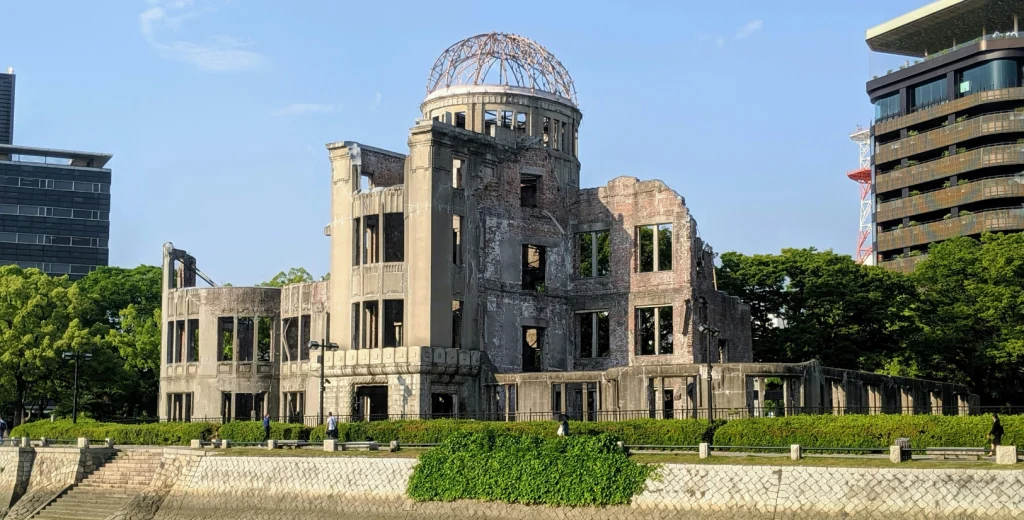
The intersection of historical trauma and modern leadership development provides a unique lens through which to view human resilience and the psychological construction of meaning. In the latest installment of the Anecdotally Speaking podcast, Episode 284, hosts Mark Schenk and Shawn Callahan explore the harrowing yet profound life of Tsutomu Yamaguchi, the only person officially recognized by the Japanese government as a survivor of both the Hiroshima and Nagasaki atomic bombings. This narrative serves as a foundation for a broader discussion on how the stories individuals tell themselves—and the stories leaders tell their teams—shape organizational culture, decision-making, and the ability to withstand crisis.
The Dual Survival of Tsutomu Yamaguchi: A Chronology of Fortitude
The historical record of Tsutomu Yamaguchi is a testament to the thin line between catastrophic misfortune and miraculous survival. In the summer of 1945, Yamaguchi was a 29-year-old naval engineer for Mitsubishi Heavy Industries. His experience during the final days of World War II remains one of the most statistically improbable sequences of events in human history.
On August 6, 1945, Yamaguchi was in Hiroshima on the final day of a three-month business trip. As he walked toward the Mitsubishi shipyard to finalize paperwork before returning home, the B-29 bomber Enola Gay released "Little Boy," a uranium-core atomic bomb, over the city. Yamaguchi was approximately three kilometers (1.9 miles) from the hypocenter when the blast occurred. The explosion resulted in a blinding flash of light, followed by a shockwave that threw him into a potato patch. He suffered severe burns on the left side of his body, ruptured eardrums, and temporary blindness. Despite these injuries, he managed to find a shelter and spend the night in Hiroshima.
The following day, Yamaguchi navigated the ruined city to reach the railway station. In an act of sheer determination, he boarded a train filled with other wounded survivors, destined for his hometown: Nagasaki. On August 8, he arrived in Nagasaki and sought medical treatment at a local hospital.
The climax of this extraordinary narrative occurred on August 9, 1945. Despite his injuries, Yamaguchi reported to the Mitsubishi office in Nagasaki to brief his supervisor on the devastation he had witnessed in Hiroshima. Historical accounts note that his supervisor was skeptical, questioning how a single bomb could destroy an entire city. As Yamaguchi attempted to explain the scale of the destruction, "Fat Man," a plutonium-core bomb, was dropped on Nagasaki. Once again, Yamaguchi was roughly three kilometers from the blast’s center. Though the office was leveled, he survived a second atomic detonation within the span of three days.
Statistical Context and the Rarity of the "Nijyuu Hibakusha"
To understand the magnitude of Yamaguchi’s experience, one must consider the casualty data associated with the 1945 bombings. In Hiroshima, an estimated 70,000 to 80,000 people—roughly 30% of the population—were killed instantly by the blast and the resulting firestorm. By the end of 1945, the death toll rose to over 140,000 due to radiation and secondary injuries. In Nagasaki, the death toll was estimated between 60,000 and 80,000.
While there are approximately 165 individuals known to have been in both cities during the bombings, Yamaguchi remains the only person to receive official government certification as a "nijyuu hibakusha" (twice-bombed person) for both events. The Japanese government did not officially recognize his double-survivor status until 2009, just one year before his death at the age of 93.
The podcast highlights a pivotal question that defines the study of resilience: Was Tsutomu Yamaguchi the unluckiest man in history for being present at both bombings, or the luckiest man for surviving both? This dichotomy illustrates the core principle of meaning-making. The facts of the event—the dates, the locations, the thermal radiation, and the shockwaves—remain static. However, the narrative constructed around those facts determines the psychological outcome for the individual and the legacy they leave behind.
Narrative Meaning-Making in Organizational Leadership
The transition from historical survival to corporate leadership may seem distant, yet the psychological mechanisms are identical. Mark and Shawn argue that the "stories we tell ourselves" are the primary drivers of professional resilience. In a corporate environment, a failed product launch, a hostile takeover, or a global economic downturn are the "blasts" that leaders must navigate.
Psychological research into "narrative identity" suggests that individuals who frame their life challenges through a lens of "redemption"—where a negative event leads to a positive outcome—exhibit higher levels of mental health and professional persistence. Conversely, those who frame events through "contamination"—where a good event is ruined by a negative follow-up—often struggle with long-term motivation.

For leaders, the ability to frame organizational setbacks as part of a larger, purposeful journey is a critical skill. The Anecdotally Speaking episode delves into how leaders can use the Yamaguchi story to illustrate that while we cannot always control external crises, we maintain absolute sovereignty over the interpretation of those crises.
Storytelling Techniques: Foreshadowing and Audience Participation
Beyond the philosophical implications of resilience, the podcast discusses the technical aspects of storytelling that make narratives effective in a business context. Two specific techniques are highlighted: foreshadowing and audience participation.
-
Foreshadowing: In the context of Yamaguchi’s story, the mention of his return to Nagasaki to "explain the impossible" to his boss serves as a narrative anchor. In leadership, foreshadowing involves setting the stage for change by subtly introducing concepts before they are fully implemented. This reduces organizational shock and builds a sense of inevitability and preparedness.
-
Audience Participation in Meaning-Making: A story is not a monologue; it is a collaborative act between the teller and the listener. When a leader shares a story of resilience, they invite their employees to find their own place within that narrative. By leaving space for the audience to draw their own conclusions—such as deciding for themselves whether Yamaguchi was lucky or unlucky—the leader fosters a sense of agency and critical thinking within the team.
Communicating Difficult Decisions with Integrity
A significant portion of the discussion focuses on a common leadership dilemma: how to communicate a corporate decision that the leader may not personally agree with. This is a test of authenticity and integrity.
The hosts suggest that instead of relying on "corporate speak" or distancing oneself from the decision by blaming "the board" or "headquarters," effective leaders use storytelling to bridge the gap. By acknowledging the reality of the situation—much like Yamaguchi acknowledging the reality of the destruction—leaders can maintain trust. Authenticity is not about constant agreement; it is about transparency regarding the process and the "why" behind a decision. When leaders communicate with integrity, they provide a stable narrative framework that allows the workforce to process change without losing their sense of purpose.
Broader Implications for the Future of Work
The mission of Anecdote International, as discussed in the episode, is to "bring humanity back to the workforce." In an era increasingly dominated by data, algorithms, and remote interactions, the human element of storytelling serves as a vital connective tissue.
The story of Tsutomu Yamaguchi eventually became a vessel for peace advocacy. In his later years, he became a vocal critic of nuclear weapons, famously saying, "The reason that I hate the atomic bomb is because of what it does to the dignity of human beings." He chose to turn a story of victimhood into a story of global responsibility.
For modern organizations, the implications are clear:
- Resilience is a Narrative Choice: Teams that view challenges as opportunities for growth outperform those that view them as insurmountable obstacles.
- Leadership is Storytelling: The most effective leaders are those who can synthesize complex facts into a coherent, meaningful narrative that inspires action.
- Authenticity Drives Engagement: In a world of "fake news" and corporate jargon, simple, truthful stories have the power to align large, diverse workforces.
Conclusion: The Lasting Legacy of the Narrative
Tsutomu Yamaguchi’s life did not end in the ruins of 1945. He lived a full life, working as a translator for the U.S. occupation forces and later as a teacher, before returning to Mitsubishi Heavy Industries. He raised a family and, in his 80s, wrote a memoir and became an activist.
His survival reminds us that the human spirit is remarkably durable, but his story reminds us that survival alone is not enough. It is the meaning we extract from our survival that defines our character. As leaders and professionals navigate the complexities of the 21st-century economy, the lessons from Episode 284 of Anecdotally Speaking suggest that the most powerful tool in any toolkit is not a spreadsheet or a strategy document, but the ability to tell a story that turns "unlucky" facts into "lucky" futures.
