


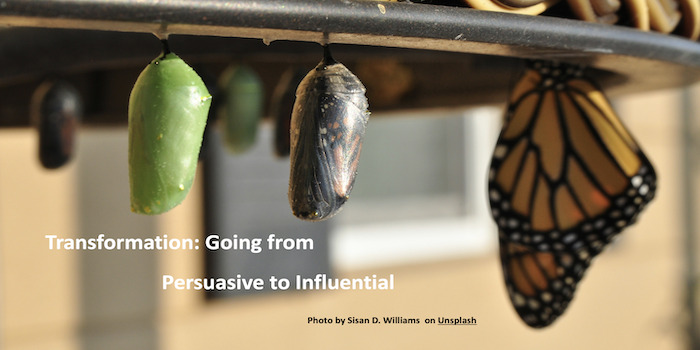
The pursuit of enhanced persuasive abilities often centers on mastering the mechanics of communication – the precise phrasing, the strategic deployment of arguments, the nuanced understanding of psychological triggers. Yet, a more profound question lingers beneath this surface-level mastery: who are we becoming as we acquire these skills? This distinction lies at the heart of the difference between merely applying influence principles and allowing them to fundamentally reshape our inner landscape, thereby altering our very interactions with others. This article delves into the concept that genuine, enduring influence is not solely about what we say, but more crucially, about who we are becoming.
The author’s personal journey offers a compelling illustration of this transformative process. For years, his athletic identity was forged in the crucible of strength training, with a particular focus on powerlifting and bodybuilding. During this era, his sentiment towards running was decidedly negative, characterized by a dismissive view that saw it as a wasteful expenditure of energy better suited for the gym. This perspective, deeply ingrained by years of dedication to a specific discipline, highlights how identity can shape perception and dictate behavior. The narrative then shifts to a pivotal moment approximately a decade after he ceased competitive weightlifting. A friend’s challenge to complete the Columbus Marathon, coupled with encouragement from his wife, prompted him to embark on a new athletic endeavor.
The experience of training for and completing the marathon proved to be a revelation. Far from the anticipated drudgery, he discovered an unexpected enjoyment in running, particularly the profound sense of well-being that followed each session. This initial appreciation gradually blossomed into a deep affection for the sport, fundamentally altering his self-perception. The identity of "weightlifter" gradually receded, replaced by the emergent identity of a "runner." This shift was not merely semantic; it manifested in tangible changes in his daily routine. Waking early to run in the pre-dawn darkness transitioned from a conscious effort requiring daily deliberation to an ingrained, almost instinctual habit. As he articulated, "Runners run, and I was a runner." This internal congruence meant that the physical demands of running – the burning lungs during speed work or the aching muscles after long weekend runs – were met with a natural willingness, a readiness that stemmed from a deeper, internalized commitment. This contrast between effort and willingness underscores the power of a transformed identity.
This profound distinction between performing an action and embodying a state of being was recently amplified through reflection on a podcast featuring Dallas Willard, a philosopher and theologian known for his insights into spiritual transformation. Willard’s work often explores the concept of "doing flowing from becoming," a principle that resonates deeply with the author’s experience.
When Doing Flows from Becoming: The Internal Shift
Many of the ethical and spiritual imperatives presented by figures like Jesus can appear daunting, even insurmountable, without an accompanying internal transformation. Consider the challenge of loving one’s enemies. If an individual is consumed by resentment, extending love to someone who has caused them harm can feel like an arduous, Sisyphean task. Similarly, if the internal disposition is one of an unwavering determination to be proven right, responding with gentleness and humility to opposing viewpoints can feel nearly impossible. While outward actions can be mimicked or forced, true adherence to such principles requires a deeper, internal recalibration.
Within the Christian theological framework, this ongoing process of internal change is termed "sanctification." It is understood as a gradual journey of conforming one’s character and actions to the likeness of Christ, fostered through trust and relationship with the divine. As this inner transformation deepens, an individual’s responses to life’s challenges begin to originate from a transformed heart, rather than from mere external pressure or a calculated attempt to achieve a desired outcome.
While loving a difficult person might still entail personal cost, and responding with patience may still demand conscious effort, the willingness to undertake these actions becomes progressively more natural. This growing ease stems from the fact that these actions increasingly reflect the person’s evolving internal identity. Just as the author’s transformation into a runner altered his relationship with the act of running itself, an internal transformation significantly reshapes an individual’s relationship with the principles and practices they are called to embody. This internal shift moves beyond behavioral modification to a fundamental reorientation of being.
The Interplay Between Personal Transformation and Ethical Influence
The principles of ethical influence, as elucidated by researchers like Dr. Robert Cialdini, provide a framework for understanding how individuals are persuaded. When these principles are taught as skills, individuals learn practical techniques for more effective communication. These skills are undeniably valuable. The ability to articulate a clear request, establish credibility through demonstrable expertise, or identify common ground with others can indeed lead to more positive outcomes and foster agreement. However, a critical question arises: are we merely becoming more adept at securing compliance, or are we evolving into individuals whom others have genuine reason to trust and willingly follow?
In his recent work, "Influenced from Above," the author explores the synergistic relationship between Dr. Cialdini’s empirically validated principles of influence and the transformative journey of faith. This exploration suggests that the most profound and ethical application of influence arises not from the skillful manipulation of psychological triggers, but from an internal disposition that naturally aligns with these principles.
Consider the principle of "liking." The act of finding commonalities and offering sincere praise can significantly strengthen interpersonal bonds. When an individual genuinely cultivates an interest in others, these practices naturally emanate from a place of authentic curiosity and appreciation. This outward expression of genuine regard can be seen as a foundational step towards a more profound, even "brotherly," love for others.
The principle of "unity," which emphasizes the power of shared identity in fostering agreement, invites a deeper engagement. Recognizing a common bond not only facilitates consensus but also cultivates a genuine concern for the well-being of others, as we perceive ourselves as part of a collective. This resonates with the concept of "agape" love, a selfless and unconditional form of affection.
"Commitment and consistency" remind us of the crucial importance of honoring our word. Living by the principle of "let your yes be yes and your no be no" builds trust through consistent, everyday faithfulness. This adherence to one’s commitments, when rooted in a transformed character, becomes an inherent part of one’s being.
The principle of "reciprocity," which explains how generosity often begets further generosity, can be viewed through the lens of the Golden Rule. This ethical guideline encourages us to extend our consideration beyond the potential for personal gain and to actively consider how we would wish to be treated if we were in another’s circumstances. When this principle is applied from a place of genuine empathy, it transcends mere transactional exchange and becomes an expression of profound care.
These principles, when understood through the lens of inner transformation, illuminate how influence can be wielded ethically and effectively. While the principles themselves offer practical guidance, the internal transformation shapes the fundamental motivations for their application. This inner shift significantly diminishes the potential for manipulation, as the intention shifts from gaining an advantage to serving others. When individuals operate from a place of genuine care and integrity, the distinction between manipulation and ethical influence becomes virtually non-existent, much like one would never intentionally manipulate a close friend.
Cultivating Practice with a Higher Purpose
The journey of transformation does not necessitate waiting for a complete metamorphosis before engaging in ethical practices. The act of "doing" often serves as a catalyst for "becoming." Just as the author became a runner through the consistent act of running, individuals can cultivate virtues such as generosity, honesty, and compassion through dedicated practice.
However, the ultimate aspiration extends beyond the mere acquisition of influence techniques. The true objective is to evolve into individuals whose words and actions consistently reflect a sincere concern for others. This involves developing the capacity to accept a "no" without jeopardizing the underlying relationship. It is in this state of being – where ethical influence naturally emanates from one’s core identity – that true and lasting impact is achieved.
This perspective invites introspection: what skills or practices, initially approached as deliberate efforts, have subsequently become integral aspects of your personal identity? This question encourages an examination of how external learning can lead to profound internal change, ultimately shaping the very essence of who we are and how we interact with the world.
The broader implications of this paradigm shift are significant. In a world increasingly focused on measurable outcomes and rapid results, the emphasis on inner transformation offers a counterpoint, advocating for a more sustainable and authentic approach to personal and interpersonal development. Organizations and leaders who foster environments that encourage this kind of growth are likely to build stronger, more resilient relationships and achieve more meaningful, long-term success. The science of influence, when integrated with the wisdom of inner change, provides a powerful pathway to becoming individuals who not only persuade but also inspire, lead, and uplift others. The journey of becoming is, in essence, the ultimate art of influence.
