

The intersection of historical trauma and modern leadership development took center stage in the latest installment of Anecdotally Speaking, a podcast produced by Anecdote International. In Episode 284, hosts Mark and Shawn utilized the harrowing yet profound life of Tsutomu Yamaguchi to illustrate a fundamental principle of human psychology: while the facts of a situation remain static, the meaning derived from those facts is entirely dependent on the narrative lens through which they are viewed. Yamaguchi, the only person officially recognized by the Japanese government as a survivor of both the Hiroshima and Nagasaki atomic bombings, serves as a case study for resilience, leadership, and the art of organizational storytelling.
The podcast explores how the stories individuals tell themselves—and those that leaders tell their teams—shape the capacity for endurance and the ability to find meaning in the wake of catastrophic change. By examining Yamaguchi’s life, the episode bridges the gap between historical survival and the contemporary challenges of navigating complex corporate environments.
The Chronology of a Double Survival
The historical record of Tsutomu Yamaguchi’s experience in August 1945 is a testament to the improbable. A 29-year-old naval engineer for Mitsubishi Heavy Industries, Yamaguchi was nearing the end of a three-month business trip to Hiroshima. On the morning of August 6, 1945, as he was preparing to leave for the train station to return home to Nagasaki, he realized he had forgotten his "hanko" (a personal identification stamp) and returned to the shipyard to retrieve it.
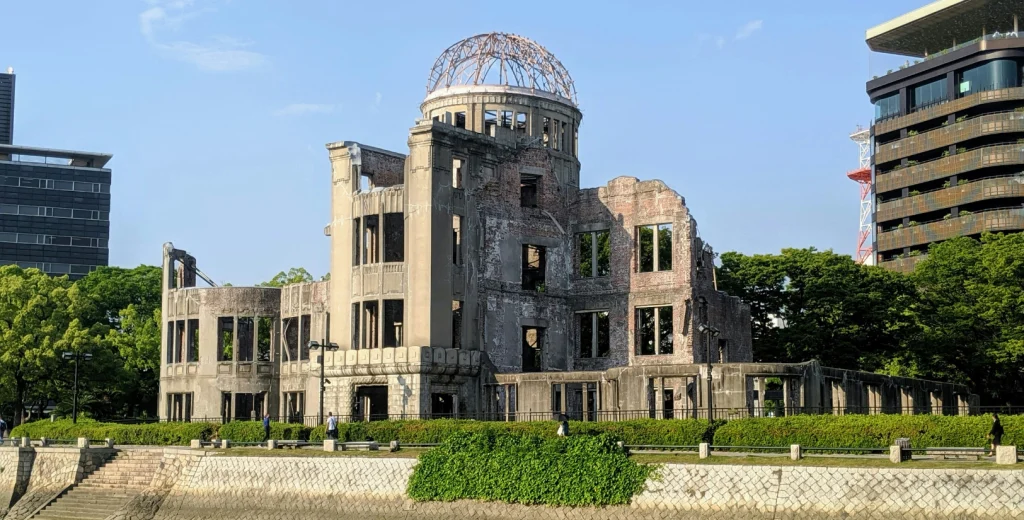
At 8:15 AM, the B-29 bomber Enola Gay dropped the "Little Boy" atomic bomb over the center of Hiroshima. Yamaguchi was approximately three kilometers from the hypocenter. The blast resulted in a blinding flash of light, followed by a shockwave that threw him into a potato patch. He sustained significant burns to the left side of his upper body, suffered ruptured eardrums, and was temporarily blinded. Despite the devastation, he managed to find shelter and, the following day, navigated the ruins of the city to reach the train station.
Yamaguchi arrived in Nagasaki on August 8 and sought medical treatment for his burns. Despite his injuries, he reported for work at the Mitsubishi office on the morning of August 9. He was in the middle of explaining the scale of the Hiroshima disaster to his supervisor—who reportedly expressed skepticism that a single bomb could level an entire city—when the second atomic bomb, "Fat Man," was detonated over Nagasaki at 11:02 AM. Once again, Yamaguchi was roughly three kilometers from the blast center. Though the office was destroyed, he survived a second time, eventually finding his family, who had also survived the blast in a reinforced shelter.
Statistical Context and the Nijū Hibakusha Status
To understand the magnitude of Yamaguchi’s survival, one must look at the data surrounding the atomic bombings. According to records from the Radiation Effects Research Foundation, the Hiroshima blast killed an estimated 140,000 people by the end of 1945. The Nagasaki blast claimed approximately 74,000 lives. The sheer statistical improbability of surviving two such events is staggering.
While the Japanese government has identified approximately 165 individuals who are believed to have been present in both cities during the respective bombings, Tsutomu Yamaguchi remains the only person to be officially certified as a "Nijū Hibakusha" (double-bombed person) for both events. This recognition was granted in 2009, just one year before his death at the age of 93.
In the podcast, Mark and Shawn emphasize that Yamaguchi’s story can be framed in two diametrically opposed ways. One narrative suggests he was the "unluckiest man in history" for being present at ground zero of the only two nuclear attacks in human warfare. The alternative narrative frames him as "the luckiest man alive" for surviving both. The podcast posits that the facts of the radiation, the burns, and the blasts do not change, but the internal story Yamaguchi chose to tell determined his subsequent 65 years of life and advocacy.
Narrative Framing as a Tool for Resilience
A core theme of Episode 284 is the role of narrative framing in resilience. Resilience is often defined in corporate settings as the ability to "bounce back," but the hosts argue it is more accurately the ability to "frame forward." By choosing a narrative of survival and purpose rather than one of victimhood and misfortune, individuals can maintain agency during periods of extreme volatility.

In the context of modern leadership, this concept is applied to change management. When an organization undergoes a merger, a massive layoff, or a pivot in strategy, the "facts" are often viewed as negative by the workforce. The role of the leader, as discussed by the Anecdote International team, is to help the collective find a productive meaning within those facts. This is not about "spinning" the truth or ignoring reality, but about identifying a path toward meaning-making that allows the organization to function and grow.
Storytelling Techniques: Foreshadowing and Audience Participation
The podcast delves into the technical aspects of storytelling that leaders can utilize to improve their communication. One such technique is "foreshadowing." In the retelling of Yamaguchi’s story, the mention of his return to the shipyard for his hanko serves as a narrative device that builds tension. In a business context, foreshadowing can be used to prepare a team for upcoming changes, allowing them to process information incrementally rather than being overwhelmed by a sudden shift.
Furthermore, the hosts discuss the role of audience participation in meaning-making. When a story is told effectively, the listener fills in the gaps with their own experiences and emotions. This co-creation of meaning is what makes storytelling a more powerful tool for leadership than a simple recitation of data. By sharing a story like Yamaguchi’s, a leader invites their team to reflect on their own resilience, thereby internalizing the lesson more deeply than they would through a PowerPoint presentation on "Resilience Metrics."
Leadership Integrity and Communicating Difficult Decisions
One of the more complex discussions in the episode revolves around how leaders communicate decisions they may not personally agree with. This is a common dilemma in middle and upper management. The hosts argue that maintaining authenticity and integrity is paramount. If a leader attempts to sell a decision they don’t believe in using a false narrative, they risk losing the trust of their team.
The solution, according to Anecdote International, lies in "ownership of the narrative." A leader can acknowledge the difficulty of a decision or the reality of a situation while still focusing on the "why" and the "how" of moving forward. This mirrors Yamaguchi’s later life; he did not deny the horror of the bombs, but he channeled that experience into a narrative of peace and anti-nuclear advocacy, eventually addressing the United Nations in 2006. He maintained his integrity by refusing to be a silent victim, instead becoming an active storyteller for a global cause.
Broader Implications for the Modern Workforce
The episode concludes by connecting these historical and psychological threads to the current state of the global workforce. As organizations face unprecedented levels of burnout and "change fatigue," the ability to craft and share meaningful stories is no longer a "soft skill"—it is a strategic necessity.
Anecdote International’s work with over 60 partners in 28 countries suggests that humanity is the missing element in many modern corporate environments. By utilizing stories like that of Tsutomu Yamaguchi, leaders can re-humanize their communication. The data supports this approach: studies in organizational psychology indicate that employees who find meaning in their work are more engaged, more productive, and more likely to remain with their employers during times of crisis.
The story of the "Double Hibakusha" serves as a reminder that humans are not merely the sum of the events that happen to them. Rather, they are the authors of the stories they tell about those events. In the realm of leadership, the power to frame a narrative is the power to shape the future of the organization.
About Anecdote International
Anecdote International is a global leader in the field of business storytelling. Founded on the principle that stories are the most effective way to transmit values, share knowledge, and lead change, the company provides training and consulting services to some of the world’s largest organizations. With programs translated into 11 languages, Anecdote helps leaders and sales professionals move beyond data and logic to connect with their audiences on a human level. The Anecdotally Speaking podcast is part of their commitment to providing accessible, high-quality content that demonstrates the practical application of storytelling in the professional world.
